

Research and biotech labs
Assay development, biobanks and discovery work.
- Sample lineage and aliquot tracking
- Flexible protocols that change weekly
- Freezer and storage location maps


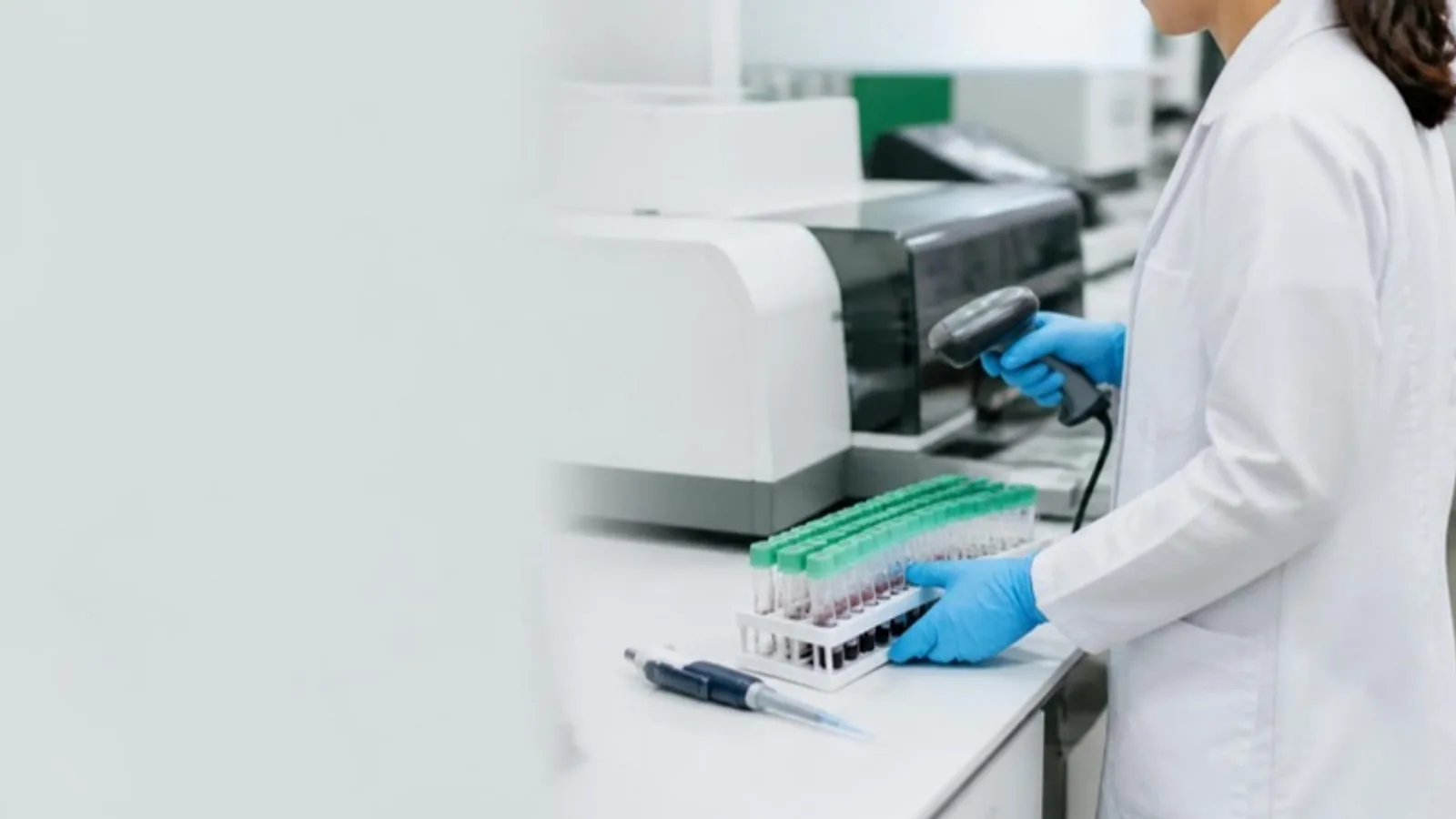
Research, quality control and specialty labs lose samples to spreadsheets, retype instrument results and cannot show a clean audit trail. Agnotic Technologies builds laboratory management software (LIMS) around your sample lifecycle, instruments and review rules, with 21 CFR Part 11 controls where the lab is regulated.
Trusted by global innovators











Laboratory management software, often called a LIMS, tracks samples from receipt to result, records instrument data, runs test workflows and keeps the audit trail a regulated lab must show. Agnotic Technologies builds laboratory management software for research, quality control and specialty labs, with 21 CFR Part 11 controls, instrument interfaces and inventory built around how the lab actually works.
Packaged LIMS products fit a standard lab. These labs usually are not standard, and the gap shows up in the workflow.
Assay development, biobanks and discovery work.
Pharma, food and chemical QC under CGMP or similar rules.
Genomics, toxicology and environmental testing.
New labs that need a system before the first customer.
No. A LIMS is sample-centric; a laboratory information system (LIS) is patient-order-centric and exchanges orders and results with an EHR. Both are often called lab software, and choosing the wrong model is the most expensive early mistake. The signs a lab needs a LIMS rather than a LIS:
The unit of work is a sample, batch or lot, not a patient order from a clinician.
Results are reviewed against specifications or research protocols, not reported to an EHR.
Instruments, reagents, inventory and storage locations need to be tracked alongside the sample.
The regulator is FDA under CGMP or an accreditation body, not CLIA.
If orders arrive from an EHR and results go back to clinicians, you need a laboratory information system instead.
A LIMS fails when the lab changes its process to match the software. We do the reverse.
States, handoffs and review points mapped with bench staff before any screen is designed.
File drops, serial connections or vendor APIs bring instrument data in with the run context, so nothing is retyped.
Audit trail and electronic signatures where 21 CFR Part 11 applies; lighter controls for research work that does not need them.
Modules delivered as part of laboratory software development, in the order your lab needs them.
Barcode labels, chain of custody, aliquots and storage locations.
Protocol steps, batch runs and worklists with status at each bench.
Result capture from analyzers, sequencers and balances with run metadata.
Specification checks, out-of-specification flags and electronic sign-off.
Lot tracking, expiry alerts and consumption per run.
Who did what and when on every record, plus certificates and run reports.
Chosen for data integrity, long support and fit with lab hardware.
The states we model in most laboratory management software builds, with what the system records at each one. Your lab's names and rules replace these on the scoping call.
| State | Trigger | What is recorded | Who signs |
|---|---|---|---|
| Registered | Sample logged or imported | Source, container, label, storage location | Receiving technician |
| In testing | Assigned to a worklist or run | Protocol version, instrument, reagent lots, operator | Analyst |
| Results captured | Instrument file or manual entry | Raw values, units, run metadata, calculation inputs | Analyst |
| Under review | Specification or protocol check | Pass or fail per test, out-of-specification flags, comments | Reviewer |
| Released | Approval | Final result, report version, electronic signature meaning | Approver |
| Archived or disposed | Retention rule | Disposal record, retained aliquot location | Custodian |
There is no fixed price. These factors move effort most, and we size each on the scoping call.
Each protocol with its own steps, review rules and reports adds configuration and testing.
Each analyzer or sequencer has its own output format and connection method.
Regulated labs need audit trails, electronic signatures and validation evidence; research labs may not.
Legacy spreadsheets and databases migrated with their history intact.
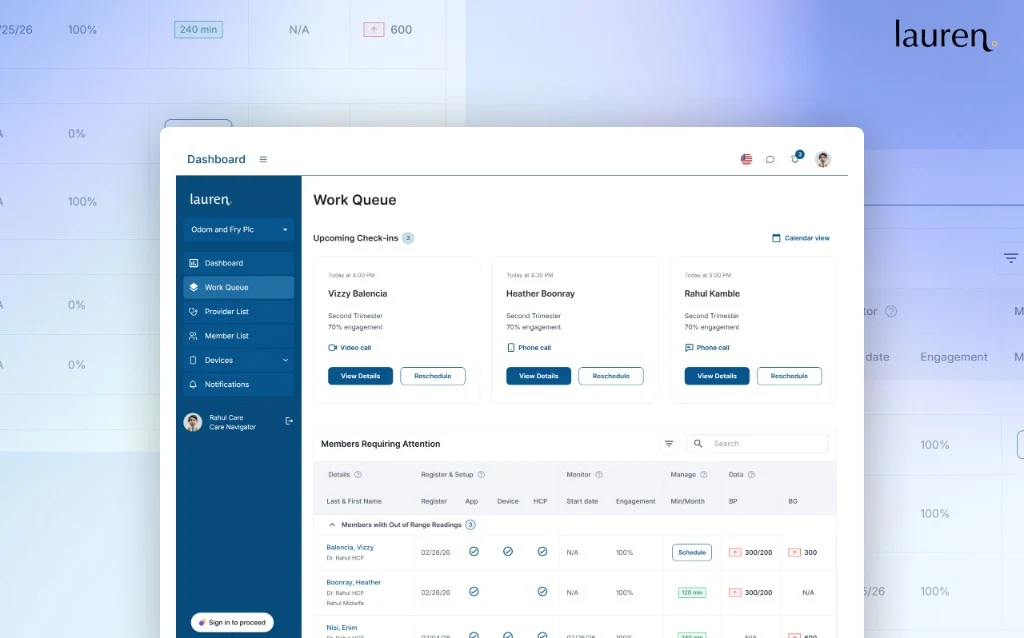
A HIPAA-ready maternal health platform enabling remote patient monitoring, care coordination, and personalized engagement from pre-pregnancy through postpartum.
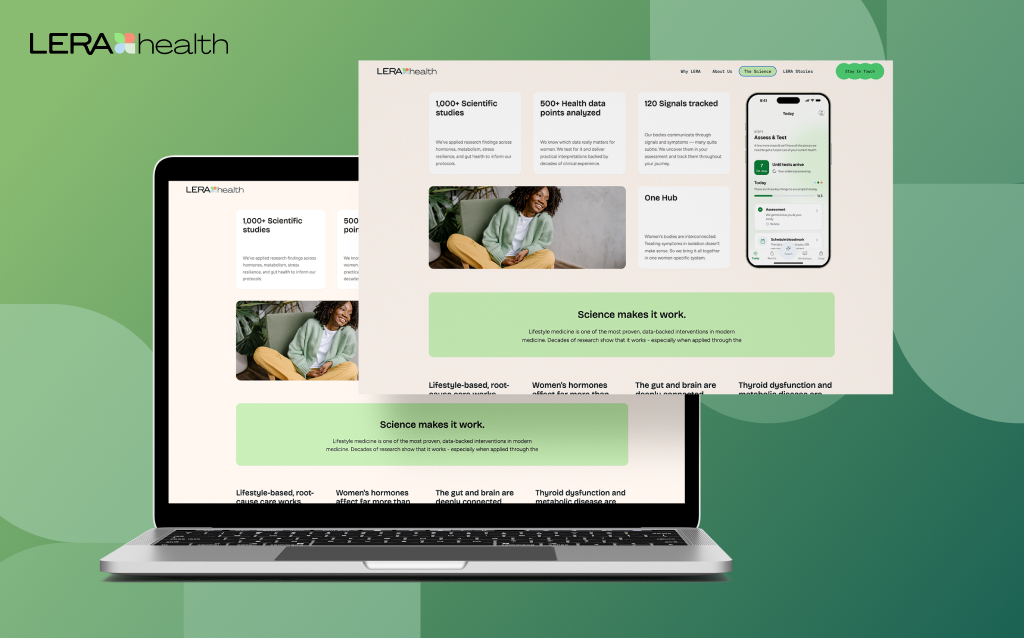
A women’s health product experience focused on guided care journeys, education, and compliance-aware workflows to support long-term engagement.
Typical first releases for the lab types above.
Barcoded samples and storage maps replacing a shared spreadsheet.
One analyzer connected, with results landing on the sample automatically.
Specification checks and sign-off for a single product line.
Lineage, consent flags and freezer positions for stored material.
Lot tracking and expiry alerts tied to runs.
Versioned reports generated from released results.
The systems and hardware a laboratory management system usually talks to.
We build secure, scalable products designed for privacy, interoperability, and regulatory readiness from day one across every sector we serve.

Protect PHI with privacy-first architecture, encrypted storage and transmission, and strict access controls.
We combine deep technical expertise with industry-specific knowledge to deliver solutions that aren't just functional, but transformational.
We implement rigorous security protocols and compliance standards (HIPAA, GDPR, SOC2) across all industrial solutions to protect sensitive data.
Our architectures are built to handle massive data loads and user bases, keeping performance steady whether you're serving ten or ten million.
Using our suite of internal tools and proven frameworks, we reduce development cycles and get your product to market 40% faster.
Beyond simple wrappers, we build deep-learning integrations and predictive analytics directly into the core of your industry-specific workflows.
Timing depends on workflows and instruments. We agree a fixed first release on the scoping call.
We agree the lab type, the first workflow, the instruments and the controls that apply.
Sample states, handoffs and review rules mapped with bench staff and QA.
One workflow and one instrument in production, with weekly demos and an audit trail from day one.
Further interfaces, inventory and reporting added in the order the lab needs them.
Test evidence where the lab is regulated, then change control for every later release.
Facts we design around, each linked to its primary source.
21 CFR Part 11 sets FDA's requirements for electronic records and electronic signatures, including secure, computer-generated audit trails.
Source: 21 CFR Part 11 (eCFR)21 CFR 11.10(e) requires secure, computer-generated, time-stamped audit trails that record the date and time of operator entries and actions that create, modify or delete electronic records, and record changes must not obscure previously recorded information.
Source: 21 CFR 11.10 (eCFR)21 CFR 211.194 requires laboratory records to include complete data derived from all tests necessary to assure compliance with established specifications, starting with a description of the sample received and its source.
Source: 21 CFR 211.194 (eCFR)21 CFR 211.68 requires that computers used in drug manufacturing have input and output checked for accuracy and that a backup file of entered data is maintained, secure from alteration, inadvertent erasure or loss.
Source: 21 CFR 211.68 (eCFR)We don't just build products; we forge lasting partnerships. See how we've helped industry leaders transform their vision into technical reality.
“I can clearly see how Agnotic has a unique way of handling end-to-end development. They are always active on quick chat and provide support quickly.”

Aaron Phelan
Founder, Benchmark
“Agnotic combines deep technical expertise with strong domain knowledge. They understand the business context, anticipate challenges, and make collaboration smooth and effective.”

John Pasmore
Founder, Latimer
“Agnotic is the best technical team we evaluated. Their engineering excellence made our work dramatically easier and allowed us to stay focused on what matters most for maternal care outcomes. They took full ownership of the technical execution, and we are always happy to continue working together.”

Kim Smith
Founder, My Lauren
Pages that cover the work next to a LIMS build.
The clinical LIS: EHR orders and results, LOINC and CLIA reporting.
Connecting lab systems to EHRs and other clinical platforms.
Pipelines and warehouses for instrument and result data.
Test scripts and evidence for validated lab systems.
Our main service page for custom healthcare builds.
Explore other production-grade engineering platforms we deliver across healthcare.
The technical patterns behind this platform translate naturally into adjacent verticals.