

01
Hospital laboratories
An LIS integrated with the hospital EHR over HL7 v2 and FHIR.


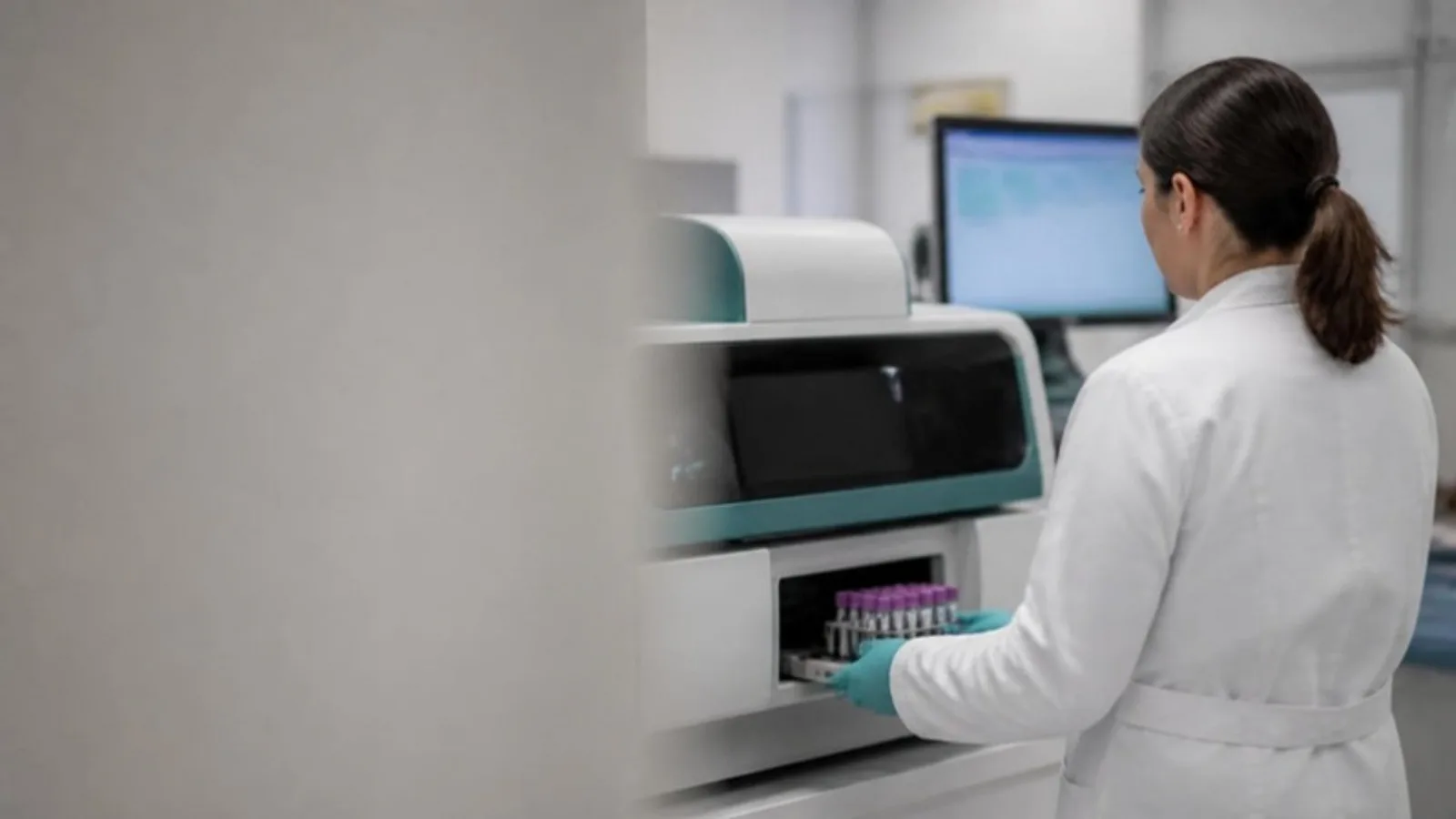
Clinical labs run on the handoffs: an order from the EHR, a specimen at the bench, a result back to the clinician, a charge to billing. Agnotic Technologies builds laboratory information systems that carry those handoffs over HL7 v2 and FHIR R4, with LOINC coding and CLIA report requirements designed in.
Trusted by global innovators











A laboratory information system (LIS) is the clinical lab's system of record: it receives orders from the EHR, routes specimens and analyzer results, applies LOINC codes, releases reports to clinicians and hands off charges to billing. Agnotic Technologies builds laboratory information systems for hospital, reference and physician office labs, with HL7 v2, FHIR R4 and CLIA reporting designed in.
Failure points we check first when a lab asks us to replace or extend its LIS.
Orders that do not match: an ORM message arrives with a test code the LIS does not map, and the specimen waits.
Results without codes: a result goes back as free text with no LOINC code, so the EHR cannot trend it.
Critical values by phone only: the alert is made but not recorded, so the lab cannot prove it happened.
Corrected results that overwrite: the first value disappears instead of being marked superseded.
Charges typed twice: the LIS and the billing system disagree on what was performed.
Interface rules we build into every LIS so the EHR, the bench and billing agree.
Order codes, LOINC codes and billing codes maintained in one place, with unmapped orders routed to a queue instead of silently failing.
Preliminary, final and corrected results keep their history, and the EHR receives the status with each ORU message.
Critical value notifications capture who was told, when and by whom, as CLIA expects.
Modules delivered for clinical laboratory information systems, in the order the lab needs them.
Orders from the EHR, portal or paper, with specimen requirements and labels.
Collection, receipt, routing and storage with barcodes.
Bidirectional connections to chemistry, hematology and molecular analyzers.
Auto-verification rules, delta checks, critical value handling and sign-out.
ORU messages, FHIR DiagnosticReport, PDF reports and portal release.
Performed tests mapped to charges and sent to the billing system or clearinghouse.
The reference path we build for a laboratory information system. Each step has a message, a record and a status the EHR can see.
The EHR sends an HL7 v2 ORM (or a FHIR ServiceRequest). The LIS maps the order code, creates the accession and prints labels.
Collection time, container and receipt are recorded against the accession, as CLIA test records require.
The instrument receives the worklist and returns raw results with flags, linked to the accession and the operator.
Auto-verification or a technologist releases the result; critical values trigger a recorded notification.
An HL7 v2 ORU message or a FHIR DiagnosticReport with Observation resources, each LOINC-coded, reaches the EHR and the portal.
Performed tests are mapped to charges and handed to billing, with the accession as the reference.
Standards at the edges so the EHR, analyzers and billing can change behind them.
The messages and resources a LIS exchanges, and what each one must carry. This is the map we agree with the EHR team before the first interface is built.
| Handoff | HL7 v2 | FHIR R4 | Must carry |
|---|---|---|---|
| Patient registration | ADT (A01, A04, A08) | Patient | Identifiers, demographics, visit |
| Order placed | ORM^O01 (OML in newer versions) | ServiceRequest | Order code, priority, specimen requirements, ordering clinician |
| Order status | ORR, ORM with status | ServiceRequest.status | Received, in progress, cancelled |
| Result released | ORU^R01 | DiagnosticReport with Observation | LOINC code, value, units, reference range, status, performing lab |
| Corrected result | ORU^R01 with corrected status | DiagnosticReport.status amended | Superseded value kept, correction reason |
| Charge | DFT^P03 | ChargeItem | Performed test, accession, date of service |
There is no fixed price. These factors move effort most, and we size each on the scoping call.
Each EHR feed and each analyzer has its own message profile and testing cycle.
Every test needs order, LOINC and billing codes, reference ranges and release rules.
Multiple sites add routing, send-out and reporting rules.
Result history migrated so trends in the EHR stay intact.
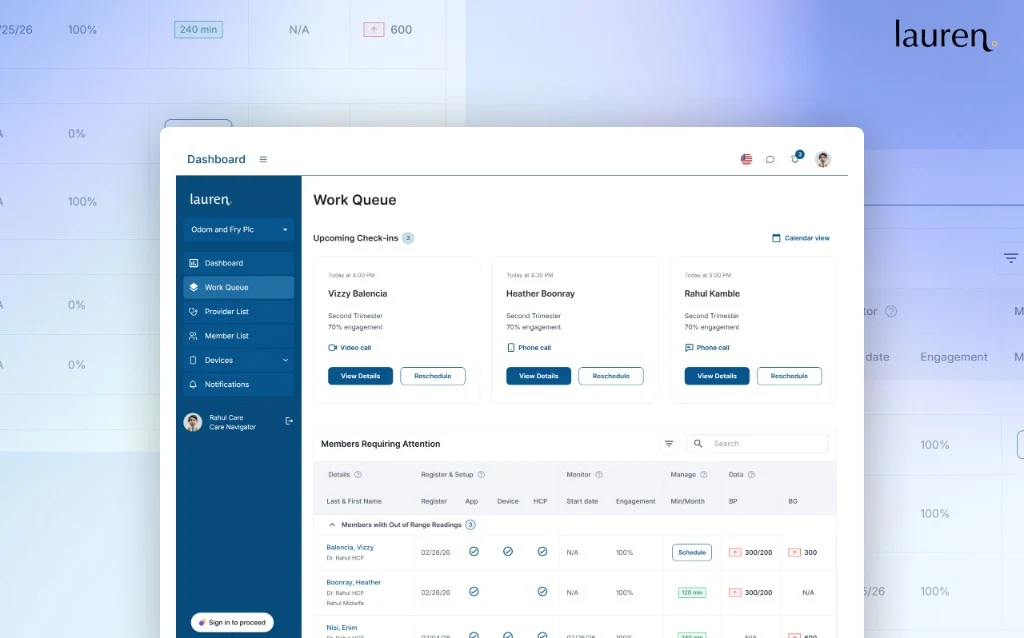
A HIPAA-ready maternal health platform enabling remote patient monitoring, care coordination, and personalized engagement from pre-pregnancy through postpartum.
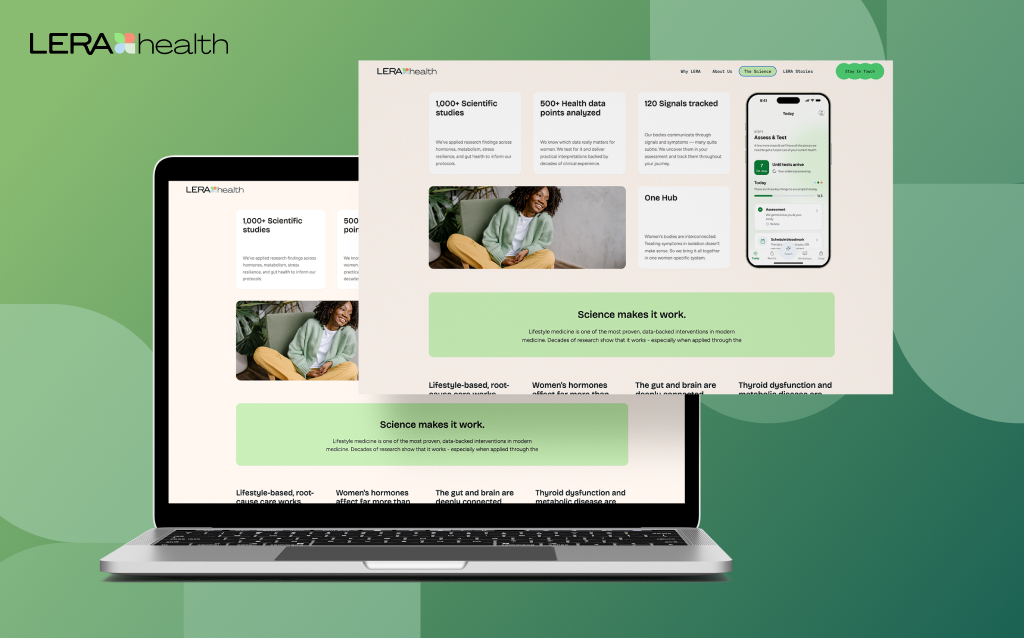
A women’s health product experience focused on guided care journeys, education, and compliance-aware workflows to support long-term engagement.
Lab types and first releases we scope most often.
An LIS integrated with the hospital EHR over HL7 v2 and FHIR.
Orders and results from many client EHRs, with routing and send-out.
A small LIS with analyzer connections and portal reporting.
Complex reports delivered as structured results plus PDF.
Device results captured and sent to the record with the right codes.
A fixed-scope first release before the first client EHR is connected.
The systems around a clinical lab, and the standards used to reach them.
What we confirm with the lab and the EHR team before an interface carries real orders and results.
We build secure, scalable products designed for privacy, interoperability, and regulatory readiness from day one across every sector we serve.

Protect PHI with privacy-first architecture, encrypted storage and transmission, and strict access controls.

Enabling standardized health data exchange through standards-based API mappings.

Supporting enterprise-grade interoperability for clinical messaging and record workflows.
We combine deep technical expertise with industry-specific knowledge to deliver solutions that aren't just functional, but transformational.
We implement rigorous security protocols and compliance standards (HIPAA, GDPR, SOC2) across all industrial solutions to protect sensitive data.
Our architectures are built to handle massive data loads and user bases, keeping performance steady whether you're serving ten or ten million.
Using our suite of internal tools and proven frameworks, we reduce development cycles and get your product to market 40% faster.
Beyond simple wrappers, we build deep-learning integrations and predictive analytics directly into the core of your industry-specific workflows.
Timing depends on interfaces and test menu size. We agree a fixed first release on the scoping call.
We agree the lab type, the EHRs and analyzers involved and the first test menu.
Order, result and charge messages mapped with the EHR team using real examples.
One EHR feed, one analyzer and one lab section in production, with weekly demos.
More analyzers, client EHRs and lab sections added in order of volume.
Interface monitoring, message replay and change control for every later release.
Facts we design around, each linked to its primary source.
CLIA regulations at 42 CFR 493.1291 require each test report to show patient identification, the name and address of the laboratory that performed the test, the report date, the test performed, the specimen source where appropriate, and the result with its units or interpretation.
Source: 42 CFR 493.1291 (eCFR)42 CFR 493.1291(g) requires the laboratory to immediately alert the individual or entity that requested the test when a result indicates an imminently life-threatening condition or a panic (critical) value.
Source: 42 CFR 493.1291(g) (eCFR)42 CFR 493.1283 requires a laboratory record system that includes positive identification of each specimen, the date and time of specimen receipt, and the records and dates of all specimen testing, including the identity of the personnel who performed each test.
Source: 42 CFR 493.1283 (eCFR)The HL7 FHIR R4 DiagnosticReport resource carries the findings and interpretation of diagnostic tests, references Observation resources for the individual results, and links back to the originating order through basedOn.
Source: HL7 FHIR R4, DiagnosticReportThe HL7 FHIR R4 Observation resource represents measurements and simple assertions made about a patient, device or other subject, and is the resource individual laboratory results are exchanged as.
Source: HL7 FHIR R4, ObservationWe don't just build products; we forge lasting partnerships. See how we've helped industry leaders transform their vision into technical reality.
“I can clearly see how Agnotic has a unique way of handling end-to-end development. They are always active on quick chat and provide support quickly.”

Aaron Phelan
Founder, Benchmark
“Agnotic combines deep technical expertise with strong domain knowledge. They understand the business context, anticipate challenges, and make collaboration smooth and effective.”

John Pasmore
Founder, Latimer
“Agnotic is the best technical team we evaluated. Their engineering excellence made our work dramatically easier and allowed us to stay focused on what matters most for maternal care outcomes. They took full ownership of the technical execution, and we are always happy to continue working together.”

Kim Smith
Founder, My Lauren
Detailed pages for the standards and services around a laboratory information system.
Connecting lab systems and EHRs: orders in, results out.
ORM, ORU and ADT message handling and interface engines.
DiagnosticReport, Observation and ServiceRequest over FHIR R4.
The sample-centric LIMS for research, QC and specialty labs.
Custom EHR modules and platforms built around clinical workflows.
The safeguards we build into every system that handles PHI.
Explore other production-grade engineering platforms we deliver across healthcare.
The technical patterns behind this platform translate naturally into adjacent verticals.