

CIO, CTO and IT leadership
Teams that own the EHR, the integration engine and a long project backlog.
- More requests than in-house developers can deliver
- Point solutions that do not connect to the EHR
- Legacy applications nobody wants to touch


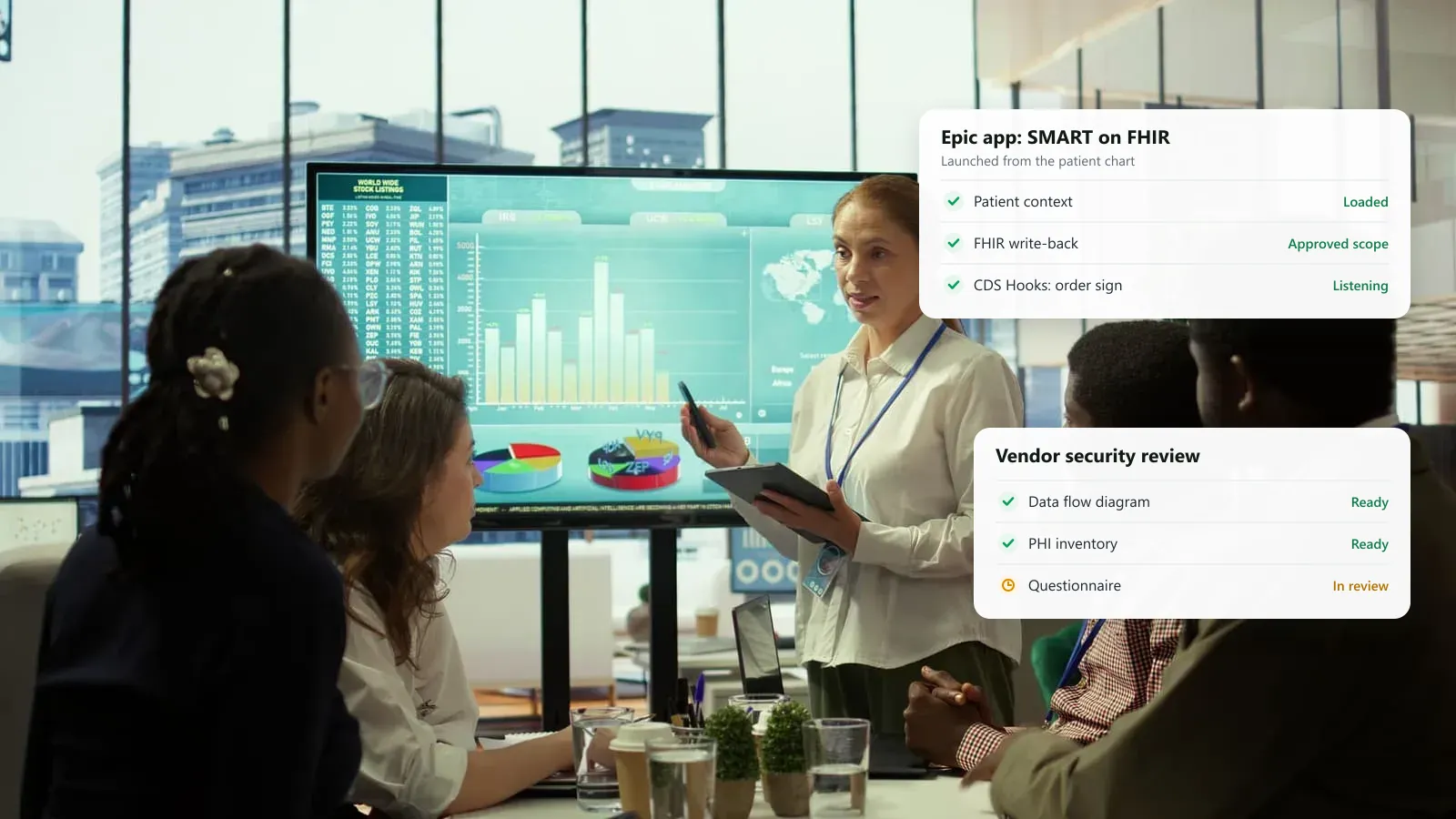
Hospital IT teams carry long project backlogs, AI pilots that never reach the floor and tools that sit outside the EHR. Agnotic Technologies builds Epic and Oracle Health integrated applications, takes AI pilots into production and modernizes the systems clinicians rely on every shift.
Trusted by global innovators











Software development for hospitals and health systems is building and integrating the applications that clinicians, operations and revenue teams use every day, connected to the EHR rather than beside it. Agnotic Technologies does this as a services partner for hospital IT: EHR-integrated apps, AI that reaches production, interfaces and modernization of legacy systems.
Each team inside a hospital feels the gaps in its software differently. These are the groups we usually work with.
Teams that own the EHR, the integration engine and a long project backlog.
Teams that turn clinical needs into EHR builds and new tools.
Teams that manage beds, staffing, discharge and transfers.
Teams that turn encounters into paid claims.
Most stalled pilots fail on integration, ownership and review, not on the model itself. These are the patterns we plan around from the start.
No path into the EHR: the pilot runs in a separate screen that clinicians do not open during a busy shift.
No clear owner: nobody is named to monitor the model, review its errors or decide when to switch it off.
Late security review: the vendor review starts after the pilot ends, and the project waits while it runs.
Clean test data: the model was tested on a tidy extract, not on the live feeds it has to handle in production.
Security review is often the longest step between a working pilot and production. We prepare the evidence while we build, not after.
| Review item | What reviewers want to know | What we prepare |
|---|---|---|
| Data flow | Where patient data goes and which systems store it | Data flow diagram and an inventory of every place PHI is stored |
| Access control | Who can see what, and how users sign in | Role-based access design and single sign-on with your identity provider (SAML or OpenID Connect) |
| Audit logging | Whether every view and change of PHI is recorded | Audit log design covering reads and writes, exportable to your security tools |
| Encryption | How data is protected in transit and at rest | TLS for all traffic and encryption at rest with managed keys |
| Agreements | Which contracts cover PHI | Business associate agreement terms agreed before any PHI is shared |
| Vulnerabilities | How security issues are found and fixed | Dependency scanning, patching process and support for your penetration testing |
We plan the production path before the pilot starts, so a successful pilot does not need a second project to go live.
The output appears where the clinician already works, inside the EHR through SMART on FHIR or CDS Hooks, not in another portal.
A named owner, monitoring of model performance, human review of recommendations and a documented way to roll back.
Architecture, data flow and security documents are prepared during the build, so review runs alongside the pilot.
Applications and integrations that work with your EHR and integration engine, not around them.
SMART on FHIR apps that open from the patient chart with the right patient and user context.
AI documentation tools integrated into the note workflow, with clinician review before anything is filed.
Bed, discharge and transfer views built from ADT feeds and your scheduling systems.
Referral tracking and handoffs between departments, sites and outside partners.
HL7 v2 and FHIR interfaces through your integration engine, with monitoring and error handling.
Replacing or wrapping aging applications without disrupting the people who depend on them.
The standards, EHRs and platforms we work with on hospital engagements.
Clear ownership keeps hospital projects moving. This is how responsibilities usually split.
| Area | Your team owns | Agnotic owns |
|---|---|---|
| Clinical direction | Workflow decisions, clinical sign-off and the go-live decision | Turning agreed workflows into working software |
| EHR build | Configuration inside Epic or Oracle Health and app activation | The external app, its APIs and integration testing |
| Security | The security review decision and access approvals | Security design, evidence and fixes found in review |
| Interfaces | Integration engine routing and production access | Interface specifications, mapping and testing |
| Support | First-line support for staff | Fixes, releases and monitoring under the agreed support terms |
We agree these measures at kickoff and track them against your own baseline, not an industry average.
Clinicians who use the app in a normal week, divided by those it was built for.
Clicks and screens needed to finish the task before and after the app.
Share of time the app and its interfaces are working during clinical hours.
Time from an approved pilot to everyday use on the unit.
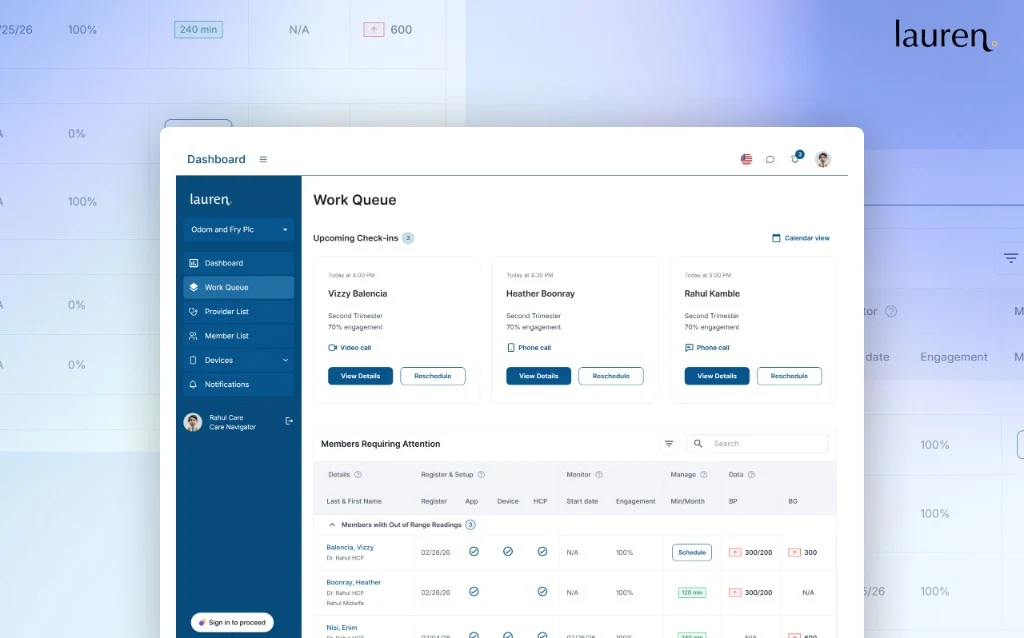
A HIPAA-ready maternal health platform enabling remote patient monitoring, care coordination, and personalized engagement from pre-pregnancy through postpartum.
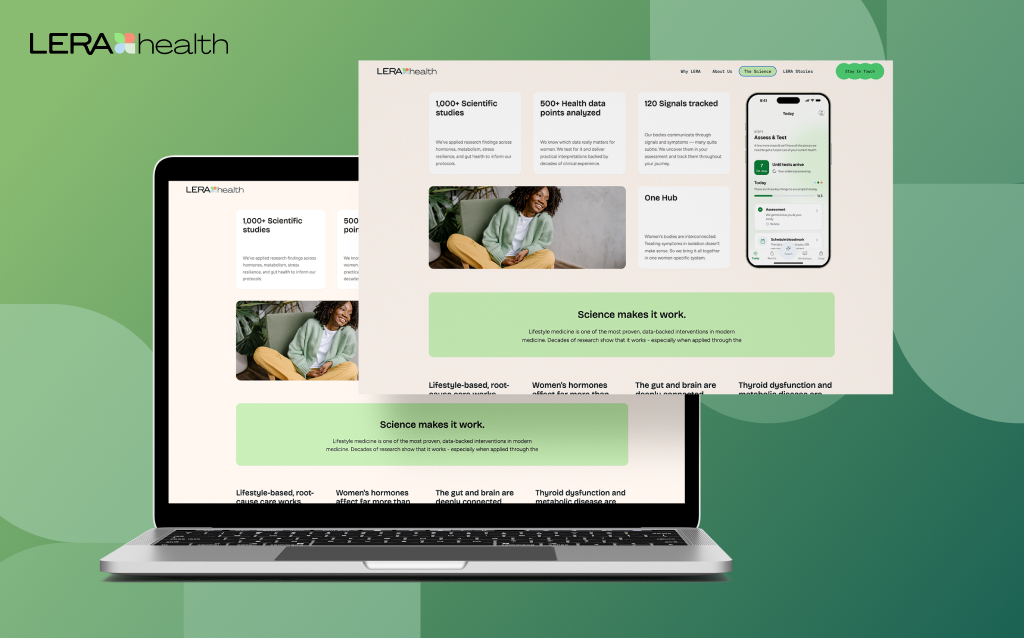
A women’s health product experience focused on guided care journeys, education, and compliance-aware workflows to support long-term engagement.
Examples of the workflow gaps hospitals bring to us.
Shared discharge checklists across nursing, case management and pharmacy, driven by ADT events.
One view of beds, pending admissions and transfers across units.
AI-assisted notes that clinicians review and sign inside the EHR.
Referrals followed from order to completed visit, inside and outside the network.
Authorization status for imaging and surgery visible to schedulers and clinicians.
Patient intake, scheduling and messaging connected to the EHR.
Connections we build between hospital systems and the applications we deliver.
We build secure, scalable products designed for privacy, interoperability, and regulatory readiness from day one across every sector we serve.

Protect PHI with privacy-first architecture, encrypted storage and transmission, and strict access controls.

Enabling standardized health data exchange through standards-based API mappings.

Supporting enterprise-grade interoperability for clinical messaging and record workflows.
We combine deep technical expertise with industry-specific knowledge to deliver solutions that aren't just functional, but transformational.
We implement rigorous security protocols and compliance standards (HIPAA, GDPR, SOC2) across all industrial solutions to protect sensitive data.
Our architectures are built to handle massive data loads and user bases, keeping performance steady whether you're serving ten or ten million.
Using our suite of internal tools and proven frameworks, we reduce development cycles and get your product to market 40% faster.
Beyond simple wrappers, we build deep-learning integrations and predictive analytics directly into the core of your industry-specific workflows.
We start small, prove the workflow on one unit and scale from there. Timing depends on your systems and review process, and we agree it on the scoping call.
We agree the workflow, the users, the systems involved and what success looks like.
We meet your EHR, integration and security teams to confirm interfaces and review steps.
We build the agreed scope and prepare the security evidence as we go.
The app goes live where its owner can watch it closely and report problems.
We roll out to more units and sites and keep improving under agreed support terms.
Short facts on the regulations and standards behind hospital software, each linked to its official source.
The HIPAA Security Rule requires administrative, physical and technical safeguards for electronic protected health information.
Source: 45 CFR Part 164 Subpart C (eCFR)ONC certification criterion 170.315(g)(10) requires certified EHRs to offer a standardized API for patient and population services based on HL7 FHIR.
Source: 45 CFR 170.315 (eCFR)The information blocking regulations restrict practices by health care providers, certified health IT developers and health information networks that interfere with access, exchange or use of electronic health information.
Source: 45 CFR Part 171 (eCFR)SMART App Launch is an HL7 FHIR implementation guide that lets an app launch from inside an EHR with the current user and patient context.
Source: HL7 InternationalWe don't just build products; we forge lasting partnerships. See how we've helped industry leaders transform their vision into technical reality.
“I can clearly see how Agnotic has a unique way of handling end-to-end development. They are always active on quick chat and provide support quickly.”

Aaron Phelan
Founder, Benchmark
“Agnotic combines deep technical expertise with strong domain knowledge. They understand the business context, anticipate challenges, and make collaboration smooth and effective.”

John Pasmore
Founder, Latimer
“Agnotic is the best technical team we evaluated. Their engineering excellence made our work dramatically easier and allowed us to stay focused on what matters most for maternal care outcomes. They took full ownership of the technical execution, and we are always happy to continue working together.”

Kim Smith
Founder, My Lauren
Detailed pages for the services hospitals and health systems ask us about.
Custom EHR modules and platforms built around clinical workflows.
Virtual visit platforms with scheduling, video and EHR integration.
Device data, care team workflows and billing support for RPM programs.
Clinical documentation agents that draft notes for clinician review.
SMART on FHIR apps, FHIR APIs and HL7 v2 interfaces for Epic.
The safeguards we build into every healthcare product.
Explore other production-grade engineering platforms we deliver across healthcare.
The technical patterns behind this platform translate naturally into adjacent verticals.
Tell us about the workflow, your EHR and your review process, and we will scope a first release with you.
contact@agnotic.com
Partnerships
contact@agnotic.com