Challenge
Results arrive as unstructured text instead of discrete values
Agnotic approach
We parse OBX segments into discrete observations with LOINC codes, units, and reference ranges so results are usable for decisions and analytics.


Lab integration is HL7 v2 at its core — ORU results and ORM/OML orders across Quest, LabCorp, and hospital LIS. We build real bidirectional lab interfaces with LOINC-mapped results, not just a one-off results feed.
Trusted by global innovators











Lab integration connects a clinical platform to reference labs such as Quest Diagnostics and LabCorp and to hospital Laboratory Information Systems (LIS) so orders flow out and results flow back. At its core it is HL7 v2: ORU^R01 messages carry results, ORM^O01 (and the newer OML^O21) carry orders, and ACK messages confirm receipt. Results have to be mapped to LOINC, tied to the correct patient and order, and rendered with reference ranges, abnormal flags, and units intact.
The non-trivial part is that no two lab interfaces are identical. Quest and LabCorp each publish their own interface specifications and test procedures, every LIS has its own compendium and result formatting, and Ask-at-Order-Entry (AOE) questions, reflex testing, and corrected results all need explicit handling. We scope the labs, message types, and compendium mapping up front so results land structured and complete rather than as unparseable text blobs.
See how we design bidirectional lab interfaces — orders out, LOINC-mapped results back, with corrected-result and reflex handling built in.
Common failure modes
Challenge
Results arrive as unstructured text instead of discrete values
Agnotic approach
We parse OBX segments into discrete observations with LOINC codes, units, and reference ranges so results are usable for decisions and analytics.
Challenge
Every lab and LIS has a different interface spec
Agnotic approach
Per-lab discovery of message specs, compendium, and certification test procedures before we build, so surprises surface early.
Challenge
Corrected results duplicate instead of updating
Agnotic approach
Explicit corrected- and amended-result handling that updates the existing result and preserves an audit trail rather than creating a second entry.
Challenge
Results don't match cleanly to patient and order
Agnotic approach
Deterministic result-to-order matching with explicit fallback rules and a reconciliation queue for ambiguous records.
The exact HL7 v2 message types, lab interfaces, and coding systems that carry orders and results.
ORU^R01 result messages parsed into structured observations with values, units, reference ranges, and abnormal flags tied to the correct order.
ORM^O01 and the newer OML^O21 order messages for outbound test ordering, including Ask-at-Order-Entry (AOE) questions.
Reference-lab connectivity built to Quest Diagnostics and LabCorp interface specifications and their test and certification procedures.
Hospital Laboratory Information System interfaces — compendium ingestion, result formatting, and site-specific configuration.
LOINC mapping for results and SNOMED and CPT where needed, so lab data is comparable and analytics-ready across sources.
Explicit handling for reflex testing, corrected and amended results, and preliminary-to-final transitions so the record stays accurate.
Where it runs
In-workflow lab ordering and structured result review inside the chart.
Biomarker and at-home testing platforms with LOINC-mapped results.
Virtual-visit lab ordering with results returned to the visit record.
Recurring lab data feeding chronic-disease and monitoring programs.
Structured, LOINC-coded lab data for population and research analytics.
Hospital LIS interfaces for orders, results, and longitudinal lab data.
A result you can't parse is a result you can't act on. We build interfaces that deliver discrete, LOINC-coded observations, not text blobs.

Health Insurance Portability and Accountability Act
Protect PHI with privacy-first architecture, encrypted storage and transmission, strict access controls, and traceable audit logs.

General Data Protection Regulation
Implement lawful consent flows, data minimization, retention controls, and secure processing for sensitive health data.

Fast Healthcare Interoperability Resources
Enable standardized health data exchange across apps, care teams, and systems through robust FHIR-ready APIs.

Health Level Seven International
Support enterprise-grade interoperability with HL7-based integrations for records, events, and clinical messaging workflows.

Health Information Trust Alliance
Align security programs to healthcare-specific control and risk management practices trusted by providers and ecosystem partners.

Health Information Technology for Economic and Clinical Health Act
Design with breach notification readiness, digital record safeguards, and operational controls that support regulated care programs.

FDA Software as a Medical Device
Plan software quality, traceability, and documentation pathways for products that may require SaMD review and submission.

Medical Device Regulation (European Union)
Prepare EU market-ready processes for risk classification, evidence tracking, and lifecycle governance under MDR expectations.

Substance Abuse and Mental Health Services Administration
Apply confidentiality controls and consent-aware sharing models for behavioral and mental health data experiences.
Standards we build against
We treat interface access, compendium mapping, and go-live as parallel tracks so lab orders and results flow reliably.
We map the labs, message types, and compendium in play — ORU, ORM/OML, AOE, reflex — before any code is written.
We initiate Quest, LabCorp, or LIS interface onboarding, secure the connection, and confirm message specs and test procedures.
We build the HL7 v2 parsers and order generation with LOINC mapping, validating against lab-supplied test messages and certification scripts.
Phased cutover with interface dashboards, ACK tracking, and alerting for missed results or corrected-result mismatches.
Message table
How we approach the main data flows — the HL7 message type, typical timeline, and the friction to expect.
| Data flow | HL7 v2 message | Typical timeline | Notes |
|---|---|---|---|
| Inbound results | ORU^R01 | 3–6 weeks | OBX parsing, units, ranges, and abnormal flags must survive intact. |
| Outbound orders | ORM^O01 / OML^O21 | 4–6 weeks | AOE questions and order compendium mapping add work. |
| Quest / LabCorp | Vendor interface spec | 4–8 weeks | Each lab has its own spec and certification test procedures. |
| Hospital LIS | ORU / ORM per LIS | 4–8 weeks | Compendium and result formatting vary by site and LIS vendor. |
| Corrected results | ORU with correction flag | 2–3 weeks | Must update, not duplicate, the prior result in the record. |
Timelines assume interface access and lab test procedures are available. Compendium mapping and certification drive the schedule more than parsing.
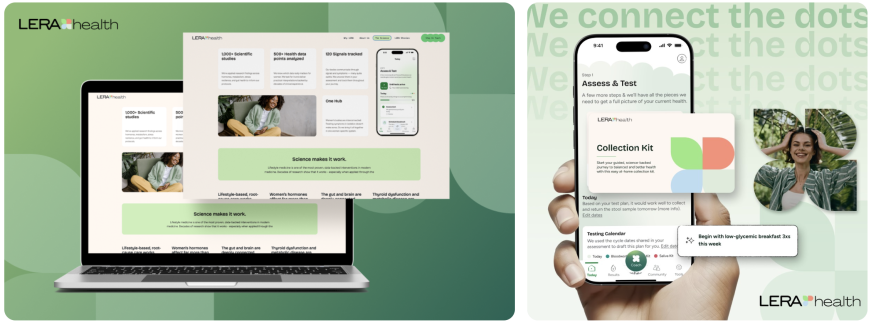
Lera Health turns targeted biomarker testing into personalized care, so lab data flow is central to it — honest proof of structured results handling, a privacy-first data layer, and a compliant, integration-heavy platform delivered end to end.
We bring the HL7 v2 depth and compendium discipline that lab interfaces actually require.
HIPAA controls and result-integrity safeguards designed into the interface from the start, with audit trails on every result.
We know ORU segments, LOINC mapping, reflex, and corrected results — your lab team won't be explaining an OBX to ours.
We map results into discrete, LOINC-coded observations so data is usable for decisions and analytics, not just a scanned report.
One accountable team across discovery, build, QA, and monitoring, with a named engineer for interface and result issues.

Real integrations, not just familiarity.
Tell us your labs and message types. We'll return a realistic plan with the interface-onboarding timeline and compendium-mapping scope.
contact@agnotic.com
Partnerships
contact@agnotic.com