Challenge
Channels sprawl into an unmaintainable mess
Agnotic approach
Consistent naming, shared code templates, and documented channel topology so the hundredth interface is as clean as the first.


We design, build, and operate Mirth Connect (NextGen Connect) interface engines — channels, source and destination connectors, and transformers that move HL7 v2, FHIR, X12, and flat files reliably between systems.
Trusted by global innovators











Mirth Connect (now NextGen Connect) is the most widely deployed open-source healthcare interface engine. It routes messages through channels — each with a source connector, one or more destination connectors, and transformer/filter steps written in JavaScript — supporting HL7 v2 (MLLP), FHIR, X12, delimited files, database reads, and web services.
The engine is easy to start and easy to get wrong. Production interface engines live or die on error handling, message reprocessing, alerting, and channel design that stays maintainable as interface counts grow. We build channels with clean transformers, code templates, and a monitoring posture, so a hospital's feeds keep flowing and failures are visible instead of silent.
See how we design Mirth channel topologies, transformer logic, and error handling that scale with interface count.

Common failure modes
Challenge
Channels sprawl into an unmaintainable mess
Agnotic approach
Consistent naming, shared code templates, and documented channel topology so the hundredth interface is as clean as the first.
Challenge
Failed messages disappear silently
Agnotic approach
Error queues, alerting, and a reprocessing runbook so operations sees and recovers every failure.
Challenge
Transformer logic hides business rules
Agnotic approach
We keep transformers readable and factor shared logic into code templates with tests against real samples.
Challenge
Upgrades and migrations drop live feeds
Agnotic approach
Staged migration with parallel run and message-count reconciliation before decommissioning the old engine.
The exact interface-engine surface behind reliable healthcare message routing.
Source and destination connectors for MLLP/HL7 v2, HTTP/FHIR, TCP, file readers/writers, database, and web services.
JavaScript transformer and filter steps, code templates, and channel maps for HL7-to-FHIR, HL7-to-X12, and custom mappings.
Message storage, error queues, automatic and manual reprocessing, and alerting so failed messages never disappear.
Route and transform HL7 v2 ADT/ORU/ORM/SIU, FHIR R4 resources, X12, and CDA across many endpoints from one engine.
Where it runs
Route ADT, orders, and results between EHRs, ancillary systems, and apps.
Bidirectional ORM/ORU feeds to and from LIS and reference labs.
Expose legacy HL7 feeds as FHIR R4 for modern applications.
Consolidate or replace aging interface engines without downtime.
Funnel feeds from many sources into a warehouse or data lake.
Mirth is easy to start and hard to keep clean. We design for the fiftieth channel, not the first.
Health Insurance Portability and Accountability Act
Protect PHI with privacy-first architecture, encrypted storage and transmission, strict access controls, and traceable audit logs.

General Data Protection Regulation
Implement lawful consent flows, data minimization, retention controls, and secure processing for sensitive health data.

Fast Healthcare Interoperability Resources
Enable standardized health data exchange across apps, care teams, and systems through robust FHIR-ready APIs.

Health Level Seven International
Support enterprise-grade interoperability with HL7-based integrations for records, events, and clinical messaging workflows.

Health Information Trust Alliance
Align security programs to healthcare-specific control and risk management practices trusted by providers and ecosystem partners.

Health Information Technology for Economic and Clinical Health Act
Design with breach notification readiness, digital record safeguards, and operational controls that support regulated care programs.

FDA Software as a Medical Device
Plan software quality, traceability, and documentation pathways for products that may require SaMD review and submission.

Medical Device Regulation (European Union)
Prepare EU market-ready processes for risk classification, evidence tracking, and lifecycle governance under MDR expectations.

Substance Abuse and Mental Health Services Administration
Apply confidentiality controls and consent-aware sharing models for behavioral and mental health data experiences.
Standards we build against
Channel design, transformer discipline, and monitoring treated as the real work.
We inventory every feed — source, destination, message type, and volume — and design the channel topology.
We build channels with clean transformers, reusable code templates, and consistent naming and error handling.
We validate channels against real message samples, including malformed and out-of-order messages.
Cutover with dashboards, alerting, and a reprocessing runbook so operations can act on failures.
Lera Health is related proof of integration-heavy, compliant delivery — a data-first platform built end to end. Interface-engine work draws on the same strengths: reliable data movement, careful transformation, and operational visibility under HIPAA.
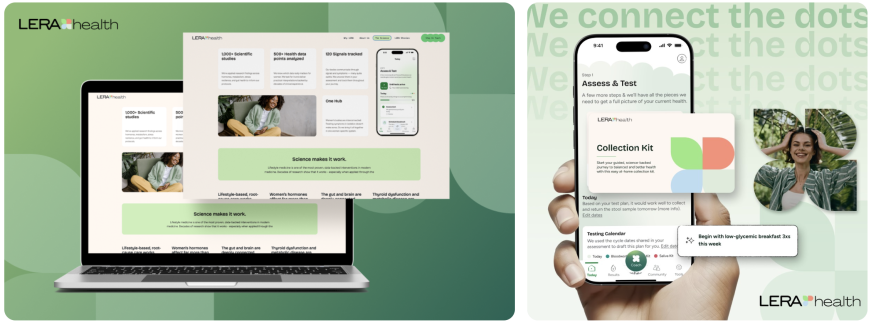
Interface engines that stay operable as they grow.
HIPAA-ready message storage, PHI-aware logging, and audit trails around every channel.
We know Mirth's channels, transformers, code templates, and error model beyond the getting-started guide.
We build the alerting and reprocessing that keep feeds flowing after go-live, not just at launch.
HL7 v2, FHIR, X12, and CDA all routed and transformed from one maintainable engine.

Interface engines that keep feeds flowing
Send us your feed list and message types. We will return a realistic channel design and delivery plan.
contact@agnotic.com
Partnerships
contact@agnotic.com