

01
ICU monitor integration
Continuous vitals into the flowsheet so nurses validate instead of transcribe.


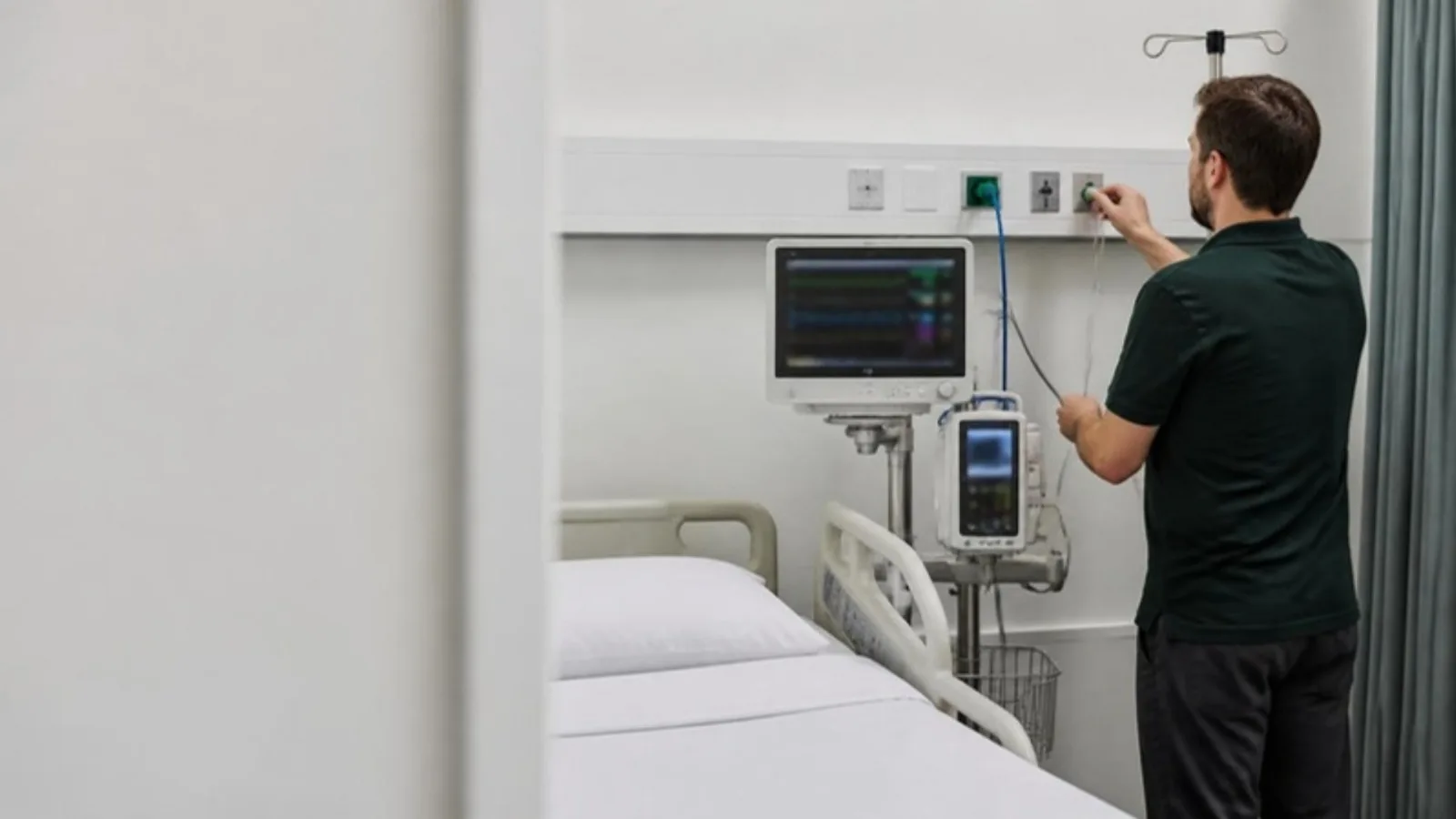
Bedside monitors, infusion pumps, ventilators and point-of-care analyzers produce data that nurses still copy into the chart by hand. Agnotic Technologies builds the device connectivity software that moves readings, settings and alarms into the EHR and clinical systems, with the cybersecurity controls connected devices need.
Trusted by global innovators











Medical device connectivity is the software that moves readings, settings and alarms from bedside monitors, infusion pumps, ventilators and point-of-care analyzers into the EHR and other clinical systems. Agnotic Technologies builds this device connectivity for hospitals and clinics: protocol adapters, integration middleware, HL7 v2 and FHIR interfaces, alarm routing and the cybersecurity controls connected devices need.
Most hospitals already own connected devices. The gaps are in the path between the device and the chart, and they show up in the same places.
Manual transcription: vitals and pump settings typed into flowsheets minutes or hours after the reading, with transcription errors nobody can trace.
Vendor silos: each device family ships its own gateway, so the hospital runs several middleware products with different patient association rules.
Patient and bed association: a reading filed to the wrong patient because the device was moved and nobody confirmed the new association.
Alarm overload: every device alarm forwarded to every nurse, so the important ones are ignored along with the noise.
Unmanaged devices: devices on the clinical network with unknown software versions, default credentials and no patching plan.
Three decisions made on the scoping call decide most of the architecture. We make them with your clinical engineering, nursing informatics and IT security teams together.
Whether the device, the gateway or the nurse confirms which patient a stream belongs to, and what happens when the device moves.
Which measurements go to the chart as validated results, which feed dashboards only, and which alarms reach a person and how fast.
HL7 v2 ORU results feeds are still the most common path into Epic and Oracle Health (Cerner); FHIR Observation write-back is used where the EHR supports it.
The building blocks of a hospital device connectivity program, built for your device fleet and your EHR.
Drivers for IEEE 11073, serial, vendor APIs and gateway exports, normalised into one internal data model.
Patient and bed association, validation, buffering during network outages and replay once the EHR is back.
HL7 v2 ORU results feeds and FHIR Observation, Device and DeviceMetric resources, mapped to your flowsheets and MAR.
Rules that decide which alarms reach nurse call, mobile devices or a central monitoring dashboard, with escalation when nobody acknowledges.
Device inventory, network segmentation, encrypted transport, credential management and vulnerability monitoring for the connected fleet.
Interface dashboards, message tracing and an audit log of what was sent where, kept apart from application logs.
A reading passes through five stages before it is trusted in the patient record. This is the data-flow map we design, build and monitor; each stage has a failure mode that the next stage must handle.
The monitor, pump, ventilator or analyzer emits a measurement, setting or alarm over its native interface: IEEE 11073, serial, a vendor gateway or an API.
The adapter parses the native format, attaches device identity and timestamps, and converts units into one internal model. Unknown message types are quarantined, not dropped.
The middleware matches the device to a patient using the ADT feed, the bed board or a nurse confirmation. Nothing is filed until the association is confirmed.
Values are checked against ranges and duplicates, buffered if the EHR is unreachable, and routed: validated results to the chart, alarms to nurse call and dashboards.
Results are sent as HL7 v2 ORU messages or FHIR Observation resources that reference the FHIR Device, and the acknowledgement is recorded in the audit log.
Chosen to match your device fleet, your EHR and your network team's tooling.
Device types differ in how they expose data and where that data belongs. This table shows the usual path for each; your fleet decides the final mapping.
| Device type | Typical interface | Message or resource | Where it lands |
|---|---|---|---|
| Bedside and central monitors | Vendor gateway or IEEE 11073 stream | HL7 v2 ORU or FHIR Observation | Vitals flowsheet, alarm routing |
| Infusion pumps | Pump server API or gateway export | HL7 v2 ORU, pump programming messages | MAR documentation, infusion dashboards |
| Ventilators and anesthesia machines | Serial or network protocol via gateway | FHIR Observation with DeviceMetric | Respiratory flowsheet, alarm routing |
| Point-of-care analyzers | Device manager or middleware export | HL7 v2 ORU results | Lab results, order reconciliation |
| Imaging devices | DICOM | FHIR ImagingStudy reference | PACS and the imaging record |
Measures we build interface dashboards around and review with your clinical engineering team.
Time from a reading at the device to its appearance in the EHR.
Share of readings filed only after a confirmed patient and bed association.
Messages the EHR acknowledged, with every rejection traced to a cause.
Alarms that reached a person and how long acknowledgement took.
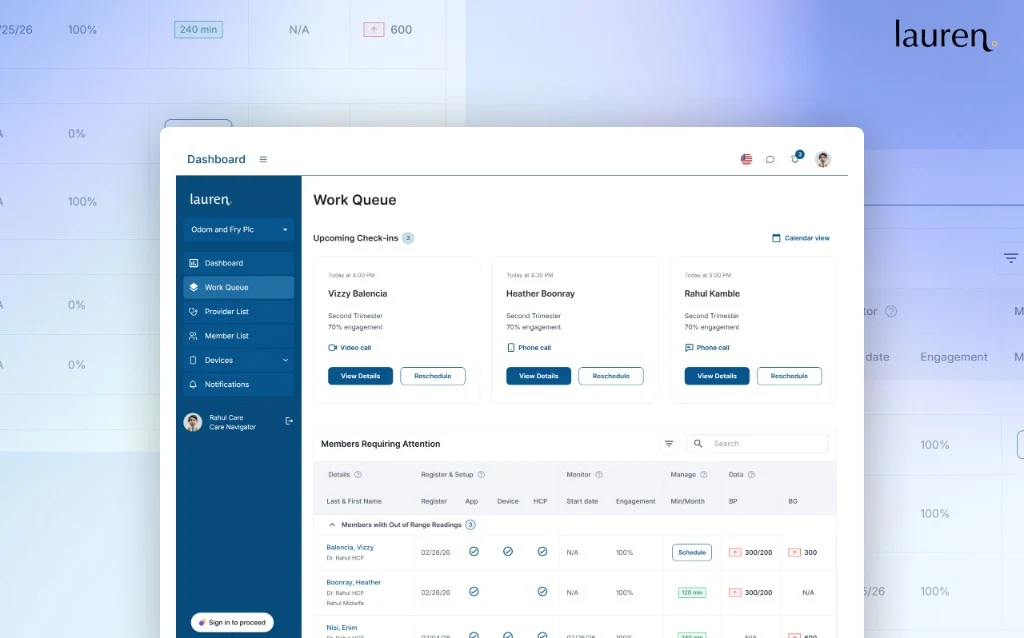
A HIPAA-ready maternal health platform enabling remote patient monitoring, care coordination, and personalized engagement from pre-pregnancy through postpartum.
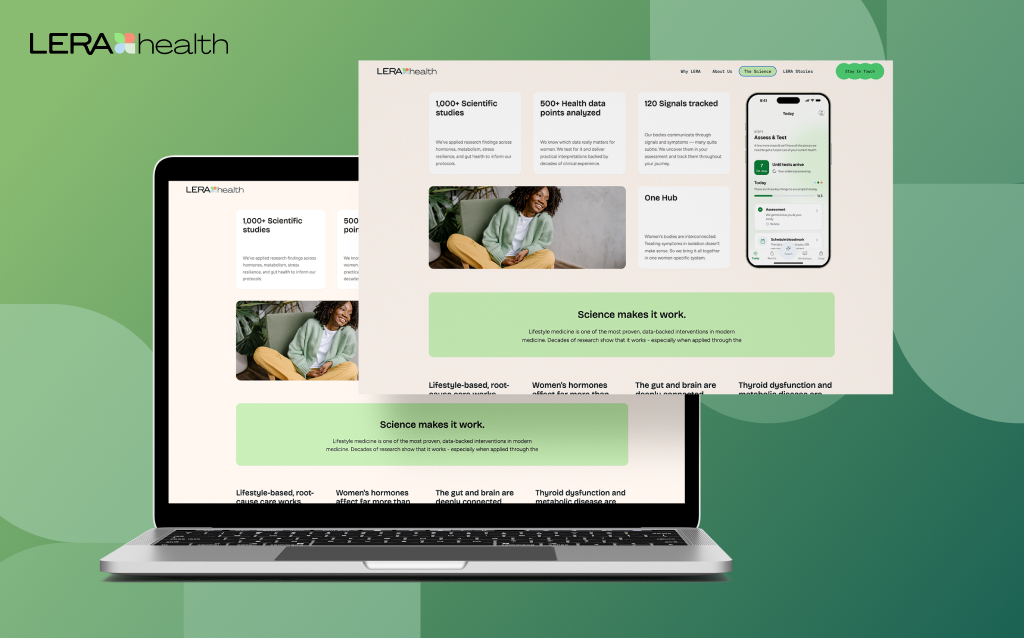
A women’s health product experience focused on guided care journeys, education, and compliance-aware workflows to support long-term engagement.
Common first releases, each scoped to one unit or one device family before it spreads.
Continuous vitals into the flowsheet so nurses validate instead of transcribe.
Pump settings and status filed to the MAR, with programming checks against the order.
Settings and measured values recorded at the interval respiratory therapy needs.
Blood gas and glucose results reconciled with orders and filed as lab results.
One rule set for which alarms reach nurse call, mobile devices or a central station.
Device connectivity for startups whose product must file data into a hospital EHR before the first site goes live.
The systems a hospital device connectivity program depends on.
We build secure, scalable products designed for privacy, interoperability, and regulatory readiness from day one across every sector we serve.

Protect PHI with privacy-first architecture, encrypted storage and transmission, and strict access controls.

Enabling standardized health data exchange through standards-based API mappings.

Supporting enterprise-grade interoperability for clinical messaging and record workflows.
We combine deep technical expertise with industry-specific knowledge to deliver solutions that aren't just functional, but transformational.
We implement rigorous security protocols and compliance standards (HIPAA, GDPR, SOC2) across all industrial solutions to protect sensitive data.
Our architectures are built to handle massive data loads and user bases, keeping performance steady whether you're serving ten or ten million.
Using our suite of internal tools and proven frameworks, we reduce development cycles and get your product to market 40% faster.
Beyond simple wrappers, we build deep-learning integrations and predictive analytics directly into the core of your industry-specific workflows.
How to build device connectivity without disrupting care: one device family on one unit first, then the fleet. Timing depends on the device mix and the EHR interface approvals; we agree it on the scoping call.
We list the device families, the EHR interfaces available and the unit for the first release.
Inventory of devices, gateways, protocols and network segments, with your clinical engineering and security teams.
One device family on one unit, running through the full device-to-chart path with monitoring and an audit log.
More device families and units, with alarm routing rules tuned with nursing leadership.
Interface monitoring, device firmware changes and EHR upgrades handled under agreed change control.
Short facts we design around, each linked to its primary source.
In HL7 FHIR R4, the Observation resource carries measurements and simple assertions made about a patient, device or other subject, and it can reference the device that produced the value.
Source: HL7 FHIR R4, ObservationThe HL7 FHIR R4 Device resource represents a manufactured item used in the provision of healthcare, medical or not, and is used to record and transmit Unique Device Identifier (UDI) information.
Source: HL7 FHIR R4, DeviceThe HL7 FHIR R4 DeviceMetric resource describes a measurement, calculation or setting capability of a medical device, with an initial scope aimed at devices that implement or derive from the ISO/IEEE 11073 standard.
Source: HL7 FHIR R4, DeviceMetricSection 524B of the FD&C Act sets cybersecurity requirements for cyber devices, and FDA guidance describes the cybersecurity documentation it recommends in premarket submissions for devices with cybersecurity risk.
Source: FDA, Cybersecurity in Medical DevicesThe HIPAA Security Rule requires administrative, physical and technical safeguards for electronic protected health information.
Source: 45 CFR Part 164 Subpart C (eCFR)We don't just build products; we forge lasting partnerships. See how we've helped industry leaders transform their vision into technical reality.
“I can clearly see how Agnotic has a unique way of handling end-to-end development. They are always active on quick chat and provide support quickly.”

Aaron Phelan
Founder, Benchmark
“Agnotic combines deep technical expertise with strong domain knowledge. They understand the business context, anticipate challenges, and make collaboration smooth and effective.”

John Pasmore
Founder, Latimer
“Agnotic is the best technical team we evaluated. Their engineering excellence made our work dramatically easier and allowed us to stay focused on what matters most for maternal care outcomes. They took full ownership of the technical execution, and we are always happy to continue working together.”

Kim Smith
Founder, My Lauren
This page covers hospital and clinic devices. These pages cover the home, consumer and manufacturer side of device software.
Home blood pressure cuffs, scales and glucose meters feeding a remote patient monitoring program.
Bluetooth Low Energy devices connected to patient apps through the Bluetooth SIG health profiles.
Cloud platforms for fleets of connected medical devices, from ingestion to analytics.
Device software, companion apps and cloud platforms for MedTech manufacturers.
HL7 v2 and FHIR interfaces to Epic, Oracle Health (Cerner), athenahealth and other EHRs.
The safeguards we build into every system that handles protected health information.
Explore other production-grade engineering platforms we deliver across healthcare.
The technical patterns behind this platform translate naturally into adjacent verticals.