

01
Patient intake and referrals
Referral tracking and intake flows that must keep matching the EHR.



A Salesforce Health Cloud org needs an admin, a developer and an integration engineer long after go-live, and most healthcare teams cannot staff all three. Agnotic Technologies manages your org: configuration, users and permissions, FHIR and EHR integrations, three seasonal releases a year and day-to-day support.
Trusted by global innovators











Salesforce managed services for healthcare are the ongoing administration, configuration, integration, release management and support of a healthcare organisation's Salesforce org, usually Health Cloud. Agnotic Technologies delivers them as a service team: we keep users, permissions and PHI controls correct, build and maintain FHIR and EHR integrations, test every seasonal release in a sandbox and run the support queue.
The implementation partner leaves, the admin inherits everything, and the org slowly stops matching how the organisation works. The usual causes:
Seasonal releases land untested, and a flow or Lightning page breaks on a Monday morning.
Permission sets and sharing rules grow until nobody can say who can see PHI.
EHR integrations fail quietly when an API version or a FHIR profile changes.
Technical debt builds up: hard-coded IDs, abandoned flows and reports nobody owns.
How the three ways of running a healthcare Salesforce org compare on the points that matter.
| Criteria | In-house admin | Project partner | Managed services team |
|---|---|---|---|
| Best fit | A stable org with few integrations | A defined build with a clear end | A live org that keeps changing |
| Seasonal release testing | Depends on one person's time | Out of scope after go-live | Scheduled for every release |
| FHIR and EHR integration skills | Rarely in one role | During the project only | Admin, developer and integration engineer on one team |
| PHI access reviews | If time allows | Not covered | Part of the monthly routine |
| Cost shape | Salary and training | Per project | A monthly scope sized to the org |
| Who holds the knowledge | One employee | The partner, until handover | Documented in the org and shared with you |
Three habits keep a healthcare org correct as it changes.
Support cases, configuration changes, integration work and release fixes live in one prioritised list you can see.
Nothing is changed in production by hand. Changes are built in a sandbox, tested and deployed with a metadata pipeline.
Profiles, permission sets and sharing rules are reviewed against who needs PHI for their job, and changes are logged.
The work a healthcare Salesforce org needs every month.
Users, licences, profiles, permission sets, sharing rules and login policies kept current.
Objects, fields, page layouts, flows and validation rules changed through a controlled process.
Patient, encounter and care plan data mapped from Epic, Oracle Health (Cerner) and other EHRs into Health Cloud.
Every Salesforce seasonal release tested in a preview sandbox, with fixes deployed before it reaches production.
Duplicate rules, matching, imports and corrections with a record of who changed what.
Health Check findings, Shield settings, event monitoring and field history reviewed and reported.
Salesforce delivers three seasonal releases a year. This is the cycle we run for each one so production is never the first place a change is seen.
List the features, retirements and API changes that touch your objects, flows and integrations.
Make sure a sandbox sits on a preview instance before the cutoff so it receives the release early.
Flows, Lightning pages, permission sets, FHIR integrations and reports are checked against the new version.
Changes are made in the sandbox and deployed through the metadata pipeline with a rollback plan.
After the release weekend we re-run the critical checks and update the runbooks.
The products, tools and standards a healthcare org usually involves.
Measures that show the org is healthy, agreed with you at transition.
What is open, how old it is and what is waiting on you.
Features tested in the preview sandbox before each seasonal release.
EHR and payer syncs that ran, failed and were replayed.
Every change to who can see PHI, reviewed and logged.
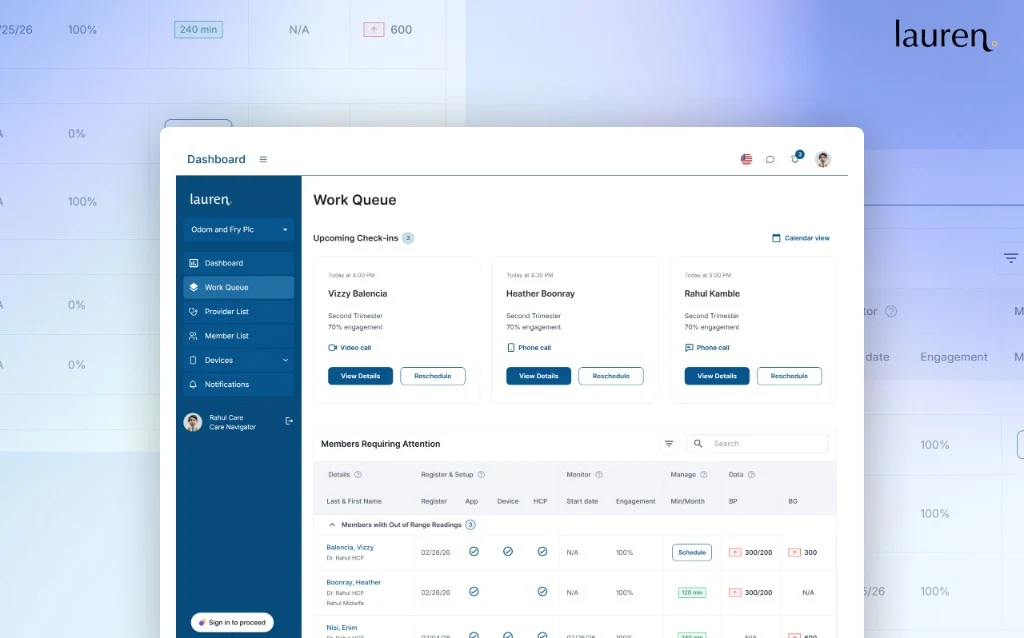
A HIPAA-ready maternal health platform enabling remote patient monitoring, care coordination, and personalized engagement from pre-pregnancy through postpartum.
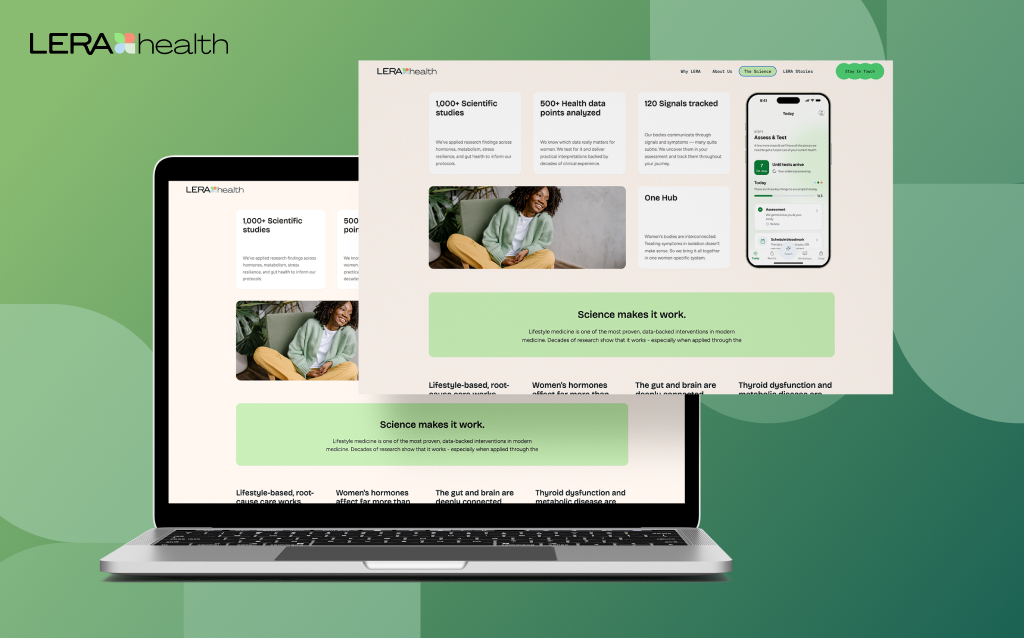
A women’s health product experience focused on guided care journeys, education, and compliance-aware workflows to support long-term engagement.
The Health Cloud workflows that depend on an org being kept correct.
Referral tracking and intake flows that must keep matching the EHR.
Care plans, tasks and care team records shared across roles with the right access.
Agents who see EHR context in Salesforce and log every interaction.
Outreach to referring providers with clean, de-duplicated data.
Member cases, benefits questions and outreach campaigns.
Candidate tracking with consent and PHI controls built into the object model.
The connections a healthcare org usually carries, kept working release after release.
We build secure, scalable products designed for privacy, interoperability, and regulatory readiness from day one across every sector we serve.

Protect PHI with privacy-first architecture, encrypted storage and transmission, and strict access controls.

Enabling standardized health data exchange through standards-based API mappings.
We combine deep technical expertise with industry-specific knowledge to deliver solutions that aren't just functional, but transformational.
We implement rigorous security protocols and compliance standards (HIPAA, GDPR, SOC2) across all industrial solutions to protect sensitive data.
Our architectures are built to handle massive data loads and user bases, keeping performance steady whether you're serving ten or ten million.
Using our suite of internal tools and proven frameworks, we reduce development cycles and get your product to market 40% faster.
Beyond simple wrappers, we build deep-learning integrations and predictive analytics directly into the core of your industry-specific workflows.
Timing depends on the size of the org; we agree the transition plan on the scoping call.
Which clouds, how many users, which integrations, and what support you need.
Health Check score, permission model, integrations, technical debt and open defects, written up as a backlog.
Access under a BAA, documentation, runbooks and a support queue your staff can use.
Support cases, configuration changes, integration fixes and release testing under the agreed scope.
Backlog, usage and the next seasonal release are reviewed with you, and the scope adjusts.
Vendor documentation and regulation we plan the service around, each linked to its source.
Salesforce delivers three seasonal releases every year, Spring, Summer and Winter, and upgrades eligible sandboxes early in a Sandbox Preview window so changes can be tested before production.
Source: Salesforce, release readiness documentationSalesforce describes Health Cloud as an engagement, data aggregation and collaboration layer that extends the EHR, built on FHIR-aligned data models.
Source: Salesforce, Health Cloud overviewSalesforce Shield adds Platform Encryption policies for sensitive data, Event Monitoring that tracks what data users and AI agents access, and Field Audit Trail records of field-level changes.
Source: Salesforce, Shield product documentationA HIPAA covered entity may share protected health information with a business associate, such as a software vendor, only under a business associate agreement that commits the vendor to safeguard it.
Source: 45 CFR 164.502(e) and 164.504(e) (eCFR)The HIPAA Security Rule audit controls standard requires hardware, software or procedural mechanisms that record and examine activity in information systems that contain or use ePHI.
Source: 45 CFR 164.312(b) (eCFR)We don't just build products; we forge lasting partnerships. See how we've helped industry leaders transform their vision into technical reality.
“I can clearly see how Agnotic has a unique way of handling end-to-end development. They are always active on quick chat and provide support quickly.”

Aaron Phelan
Founder, Benchmark
“Agnotic combines deep technical expertise with strong domain knowledge. They understand the business context, anticipate challenges, and make collaboration smooth and effective.”

John Pasmore
Founder, Latimer
“Agnotic is the best technical team we evaluated. Their engineering excellence made our work dramatically easier and allowed us to stay focused on what matters most for maternal care outcomes. They took full ownership of the technical execution, and we are always happy to continue working together.”

Kim Smith
Founder, My Lauren
The integration and compliance pages behind a managed Salesforce org.
How we connect Health Cloud to EHRs and other systems.
FHIR R4 APIs that feed clinical data into Salesforce.
Epic FHIR APIs and SMART on FHIR connections.
FHIR R4 and HL7 v2 connections to Oracle Health.
Middleware, MuleSoft and API work across your systems.
The safeguards the org's permission model and audit settings implement.
Explore other production-grade engineering platforms we deliver across healthcare.
The technical patterns behind this platform translate naturally into adjacent verticals.