

Interoperability and IT
Teams responsible for the federal API requirements and data exchange.
- Patient Access, Provider Access and Payer-to-Payer APIs
- Mapping claims and clinical data to FHIR
- API security and member authorization



Health plans face federal API rules, slow prior authorization and member experiences that lag behind retail. Agnotic Technologies builds payer software for interoperability APIs, prior authorization, member and provider portals and claims automation, working in FHIR and X12.
Trusted by global innovators











Payer software development is building the systems health plans use to exchange data, decide prior authorizations, pay claims and serve members and providers. Agnotic Technologies builds these for health plans and insurtech companies, including the FHIR APIs required by CMS-0057-F, connected to the core administration system you already run.
Payer programs cross several departments. These are the teams that usually own the work.
Teams responsible for the federal API requirements and data exchange.
Clinical teams that review prior authorization requests.
Teams that own apps, portals and the call center experience.
Teams that pay claims and support the provider network.
The same manual work shows up across most health plans, and each step is a candidate for automation.
Prior authorization by fax and phone: requests arrive incomplete and staff chase documents by hand.
Data requests answered manually: member and provider requests for records go through email and file transfers.
Portals that send members to the phone: when the app cannot answer a question, the call center does.
Claims pended for information: claims wait for data that could have been checked when they arrived.
The four FHIR APIs in the CMS Interoperability and Prior Authorization Final Rule, and the HL7 implementation guides commonly used to build them.
| API | Who uses it | What it shares | Common implementation guides |
|---|---|---|---|
| Patient Access API | Members, through apps they choose | Claims and encounter data, clinical data and prior authorization information | CARIN Blue Button, US Core, Da Vinci PDex |
| Provider Access API | In-network providers with a treatment relationship | Claims, clinical and prior authorization data for their patients | Da Vinci PDex, US Core, Bulk FHIR |
| Payer-to-Payer API | The member's new health plan, with the member's permission | Claims, clinical and prior authorization data when a member changes plans | Da Vinci PDex |
| Prior Authorization API | Providers and their EHRs | Whether authorization is required, what documentation is needed, and the request and decision | Da Vinci CRD, DTR and PAS |
Automation handles the routine cases so clinical reviewers and claims staff spend their time on the exceptions.
Providers see whether authorization is needed while ordering, through Da Vinci CRD.
Required documentation is gathered from the provider's EHR through Da Vinci DTR, not by fax.
Requests that meet your criteria are approved automatically; everything else goes to a clinical reviewer.
Missing or inconsistent claim data is caught at intake, before the claim pends.
Self-service that answers the questions members and providers would otherwise call about.
Digital ID card, benefits, claim status and finding in-network care.
Eligibility checks, prior authorization submission and claim status for network providers.
Directory data published through FHIR and kept current from your source systems.
Messages between members, providers and plan staff, with an audit trail.
Interfaces designed and tested against WCAG accessibility guidelines.
Members approve third-party app access through OAuth, and can revoke it.
The transactions, implementation guides and platforms we work with on payer engagements.
Measures we build reporting around. CMS-0057-F also requires impacted payers to publicly report certain prior authorization metrics.
Time from a complete request to a decision, for standard and expedited requests.
Prior authorization requests that arrive electronically instead of by fax or phone.
Share of time the FHIR APIs respond correctly.
Members who use the app or portal for a task they used to call about.
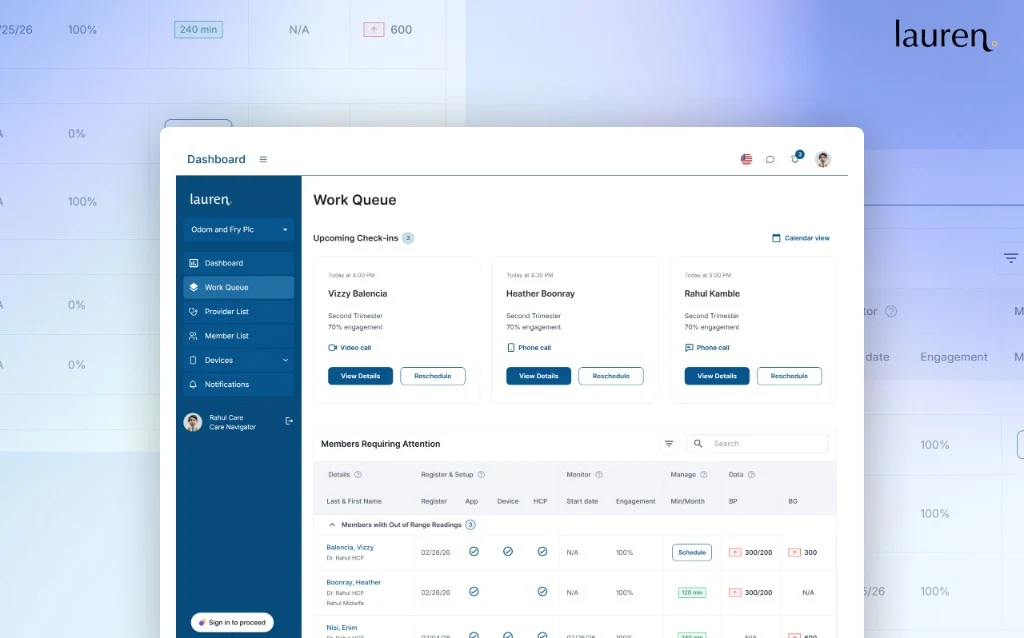
A HIPAA-ready maternal health platform enabling remote patient monitoring, care coordination, and personalized engagement from pre-pregnancy through postpartum.
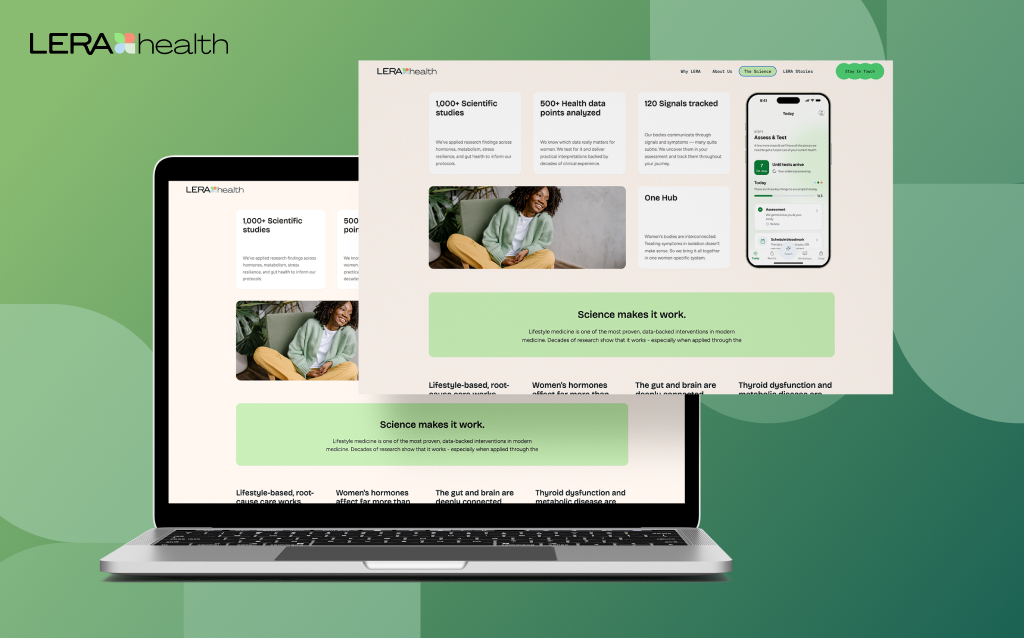
A women’s health product experience focused on guided care journeys, education, and compliance-aware workflows to support long-term engagement.
Payer types with different rules, members and systems.
API programs, prior authorization and member engagement for Medicare members.
Interoperability and member access across state program requirements.
Member apps and data exchange for qualified health plan issuers.
Claims and member tools for administrators serving employers.
New plan models and member experiences built on modern APIs.
Data sharing and reporting between plans and provider partners.
Connections between payer systems and the people and organizations that need their data.
We build secure, scalable products designed for privacy, interoperability, and regulatory readiness from day one across every sector we serve.

Protect PHI with privacy-first architecture, encrypted storage and transmission, and strict access controls.

Enabling standardized health data exchange through standards-based API mappings.
We combine deep technical expertise with industry-specific knowledge to deliver solutions that aren't just functional, but transformational.
We implement rigorous security protocols and compliance standards (HIPAA, GDPR, SOC2) across all industrial solutions to protect sensitive data.
Our architectures are built to handle massive data loads and user bases, keeping performance steady whether you're serving ten or ten million.
Using our suite of internal tools and proven frameworks, we reduce development cycles and get your product to market 40% faster.
Beyond simple wrappers, we build deep-learning integrations and predictive analytics directly into the core of your industry-specific workflows.
We sequence work around your regulatory deadlines and your core system's release cycle, and agree timing on the scoping call.
We agree which APIs, workflows or member tools come first.
We map your core system's data to the FHIR implementation guides.
We build the APIs or applications and test them against the implementation guides and with real partners.
Production release with monitoring, logging and runbooks.
More APIs, partners and workflows under agreed support terms.
Short facts on the regulations behind payer software, each linked to its official source.
The CMS Interoperability and Prior Authorization Final Rule (CMS-0057-F) requires impacted payers to implement FHIR APIs, including a Prior Authorization API, and to publicly report certain prior authorization metrics.
Source: Federal Register, February 8, 2024 (CMS-0057-F)The earlier CMS Interoperability and Patient Access Final Rule (CMS-9115-F) first required impacted payers to offer a Patient Access API based on HL7 FHIR.
Source: Federal Register, May 1, 2020 (CMS-9115-F)HIPAA names the ASC X12 278 as the standard transaction for health care services review requests and responses, which includes prior authorization.
Source: 45 CFR Part 162 Subpart M (eCFR)The HIPAA Security Rule requires administrative, physical and technical safeguards for electronic protected health information.
Source: 45 CFR Part 164 Subpart C (eCFR)We don't just build products; we forge lasting partnerships. See how we've helped industry leaders transform their vision into technical reality.
“I can clearly see how Agnotic has a unique way of handling end-to-end development. They are always active on quick chat and provide support quickly.”

Aaron Phelan
Founder, Benchmark
“Agnotic combines deep technical expertise with strong domain knowledge. They understand the business context, anticipate challenges, and make collaboration smooth and effective.”

John Pasmore
Founder, Latimer
“Agnotic is the best technical team we evaluated. Their engineering excellence made our work dramatically easier and allowed us to stay focused on what matters most for maternal care outcomes. They took full ownership of the technical execution, and we are always happy to continue working together.”

Kim Smith
Founder, My Lauren
Detailed pages for the services payers and insurtech companies ask us about.
AI agents that gather documentation and route requests for review.
Claim intake, checks and status tracking.
Edits, pricing rules, pend queues and 835 remittance for payers and TPAs.
Enrollment, benefits, provider data and claims platforms, built or modernized.
Service, appeals and authorization workflow tools.
Data sharing and analytics for value-based contracts.
FHIR APIs and SMART on FHIR apps.
Device data, care team workflows and billing support for RPM programs.
Virtual visit platforms with scheduling, video and EHR integration.
Custom EHR modules and platforms built around clinical workflows.
The safeguards we build into every healthcare product.
Explore other production-grade engineering platforms we deliver across healthcare.
The technical patterns behind this platform translate naturally into adjacent verticals.
Tell us which APIs or workflows come first, and we will scope a first release with you.
contact@agnotic.com
Partnerships
contact@agnotic.com