

Enrollment and eligibility
Members, subscribers, dependents and coverage spans.
- 834 enrollment files from employers, exchanges and states
- 270/271 eligibility inquiry and response
- ID cards and effective-dated coverage



A core administration system holds every member, benefit, provider and claim a health plan runs on, and most of them are older than the APIs now required around them. Agnotic Technologies builds payer core modules, puts APIs around a legacy core and replaces modules one at a time, working in X12 and FHIR.
Trusted by global innovators











A payer core administration system is the software a health plan runs on: enrollment and eligibility, benefits configuration, provider data and contracts, premium billing and claims. Agnotic Technologies builds payer core modules for health plans and TPAs, and modernizes legacy core admin systems by putting APIs around them and replacing modules one at a time.
The functions a core administration system covers. Each one can be built, extended or replaced on its own.
Members, subscribers, dependents and coverage spans.
Products, plan designs and cost sharing.
The network and what each provider is paid.
Invoicing and payment for groups and individuals.
Adjudication and payment.
What the rest of the plan needs from the core.
The core touches everything, and most plans cannot stop it to replace it.
Everything depends on it: portals, APIs, finance and reporting all read the core, so a change in one table reaches every team.
Rules live in the code: decades of benefit and pricing logic with no specification other than the system itself.
Batch by design: nightly files, where portals and CMS-0057-F APIs now need answers in seconds.
Vendor timelines: a module the plan needs this year sits on a roadmap the vendor controls.
How the two paths compare on the points that decide most core programs. Many plans do both: APIs around the core now, module replacement over time.
| Criteria | Modernize around the core | Replace the core |
|---|---|---|
| Best fit | The core works but cannot expose data or change fast enough | The core cannot express your products or is leaving vendor support |
| First result | An API or module in production while the core keeps running | A full migration and cutover before value shows |
| Risk shape | Small per step; each API or module can be rolled back | Concentrated in migration and cutover |
| Data migration | None at first; the core stays the source of truth | Full member, provider, benefit and claims history |
| Rules | Documented as each one is wrapped or replaced | Rediscovered and rebuilt all at once |
| Vendor dependence | Reduced module by module | Moves to another vendor, or to your own team |
| Cost shape | Spread over releases | Concentrated up front |
| Where it ends | A core with modern edges, with modules replaced as needed | A new core, with the same integration work afterwards |
The sequence we use so the core keeps running while its edges change.
An API layer reads enrollment, benefits, provider and claims data from the core through its database, extracts or existing interfaces.
Updates go through the core's own transactions, so its rules and audit trail still apply.
When a module is rebuilt, the API keeps the same contract and its consumers do not change.
Core functions with no remaining consumers are switched off, with the data archived.
Core modules and the layer around them, built for the lines of business you run.
Enrollment files from employers, exchanges and state agencies, with effective-dated coverage and exception handling.
270/271 responses and real-time eligibility APIs for portals, providers and the call center.
Plan designs your analysts configure, version and test without a developer.
A provider record of truth with NPIs, locations, contracts and directory feeds.
820 payment processing, invoicing, adjustments and reconciliation with enrollment.
FHIR and REST APIs over the core for member apps, provider portals and CMS-0057-F.
The transactions, implementation guides and platforms we work with on core programs.
Measures we build reporting around, agreed with your operations and IT leads before launch.
Enrollment transactions processed with no exception.
How long a portal or a provider waits for a coverage answer.
Measured per plan version.
Tracked down as the API layer takes over.
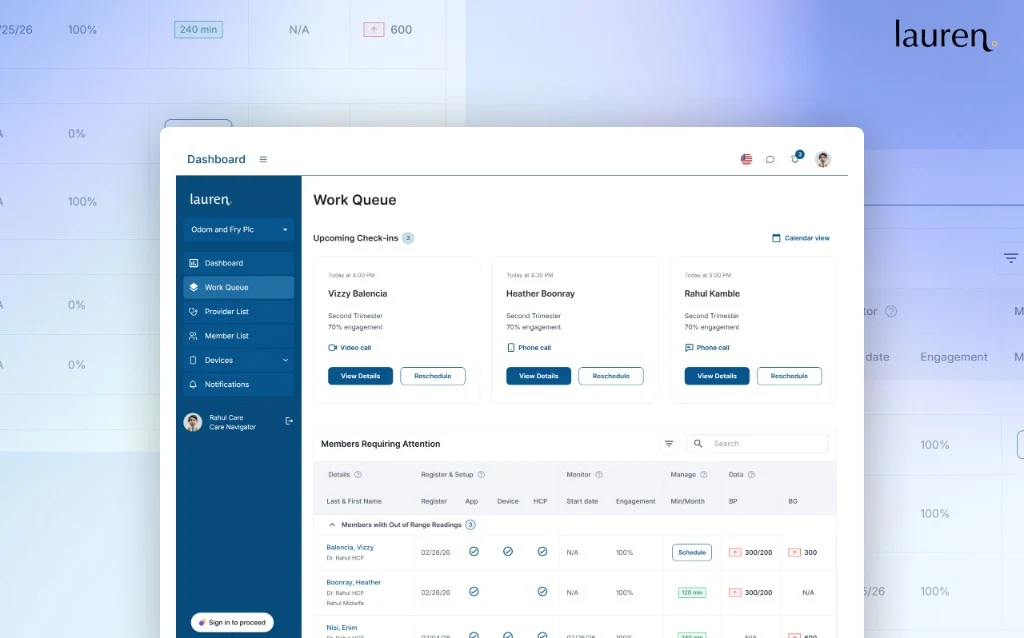
A HIPAA-ready maternal health platform enabling remote patient monitoring, care coordination, and personalized engagement from pre-pregnancy through postpartum.
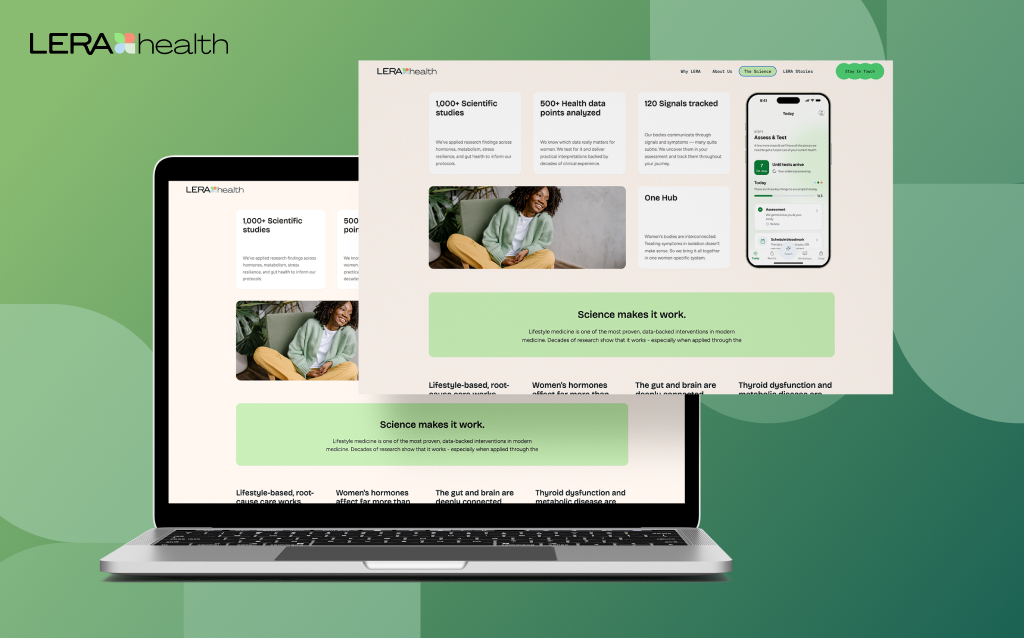
A women’s health product experience focused on guided care journeys, education, and compliance-aware workflows to support long-term engagement.
Payer organizations whose core cannot keep up with their products or their APIs.
Plans on a legacy core that cannot expose data or change benefit designs fast enough.
State 834 files, program-specific benefits and reporting.
Multi-client plan designs, billing and claims on one platform.
Payer core for startups: a first release with enrollment, eligibility and benefits before the full core.
Plans built on a health system's data that need a core connected to the EHR.
Cores for products that general-purpose systems model poorly.
The feeds in and the consumers out that a core program has to keep working.
We build secure, scalable products designed for privacy, interoperability, and regulatory readiness from day one across every sector we serve.

Protect PHI with privacy-first architecture, encrypted storage and transmission, and strict access controls.

Enabling standardized health data exchange through standards-based API mappings.
We combine deep technical expertise with industry-specific knowledge to deliver solutions that aren't just functional, but transformational.
We implement rigorous security protocols and compliance standards (HIPAA, GDPR, SOC2) across all industrial solutions to protect sensitive data.
Our architectures are built to handle massive data loads and user bases, keeping performance steady whether you're serving ten or ten million.
Using our suite of internal tools and proven frameworks, we reduce development cycles and get your product to market 40% faster.
Beyond simple wrappers, we build deep-learning integrations and predictive analytics directly into the core of your industry-specific workflows.
How to build payer core software without a stop-the-plan cutover. Timing depends on scope and is agreed on the scoping call.
We agree which module or API comes first and which systems it must keep working with.
We document the core's tables, feeds and rules for that module, including the undocumented ones.
One module or API in production, reading from or writing through the existing core.
Replacement modules go live behind stable APIs, each with a parallel run and a rollback path.
Plan versions, new lines of business and regulatory changes under agreed support terms.
Short facts behind core administration systems, each linked to its primary source.
HIPAA adopts the ASC X12 834 Benefit Enrollment and Maintenance transaction (version 005010X220) as the standard for enrollment and disenrollment in a health plan.
Source: 45 CFR 162.1502 (eCFR)HIPAA adopts the ASC X12 270/271 Health Care Eligibility Benefit Inquiry and Response as the standard for dental, professional and institutional eligibility transactions with a health plan.
Source: 45 CFR 162.1202 (eCFR)HIPAA adopts the ASC X12 820 Payroll Deducted and Other Group Premium Payment for Insurance Products transaction (version 005010X218) as the standard for health plan premium payments.
Source: 45 CFR 162.1702 (eCFR)CMS-0057-F requires impacted payers to build a FHIR-based Prior Authorization API, along with Provider Access and Payer-to-Payer APIs, with compliance dates generally beginning January 1, 2027.
Source: Federal Register, February 8, 2024 (CMS-0057-F)The HIPAA Security Rule requires administrative, physical and technical safeguards for electronic protected health information.
Source: 45 CFR Part 164 Subpart C (eCFR)We don't just build products; we forge lasting partnerships. See how we've helped industry leaders transform their vision into technical reality.
“I can clearly see how Agnotic has a unique way of handling end-to-end development. They are always active on quick chat and provide support quickly.”

Aaron Phelan
Founder, Benchmark
“Agnotic combines deep technical expertise with strong domain knowledge. They understand the business context, anticipate challenges, and make collaboration smooth and effective.”

John Pasmore
Founder, Latimer
“Agnotic is the best technical team we evaluated. Their engineering excellence made our work dramatically easier and allowed us to stay focused on what matters most for maternal care outcomes. They took full ownership of the technical execution, and we are always happy to continue working together.”

Kim Smith
Founder, My Lauren
Detailed pages for the work that usually sits next to a core program.
Our payer page: CMS-0057-F APIs, prior authorization, member and provider portals.
Modernizing legacy healthcare systems without a big-bang rewrite.
FHIR R4 APIs and SMART on FHIR apps over your core data.
834, 820, 270/271, 837 and 835 transactions with trading partners.
Connecting the core to portals, EHRs and data platforms.
Automated eligibility checks that read from the core.
Our healthcare industry page, with every service and audience we build for.
The safeguards we build into every system that holds member data.
Explore other production-grade engineering platforms we deliver across healthcare.
The technical patterns behind this platform translate naturally into adjacent verticals.