

Rehabilitation and therapy clinics
Physical, occupational and speech therapy providers.
- Therapy plans and home exercise programs
- Progress notes and outcome measures
- Visit authorization tracking


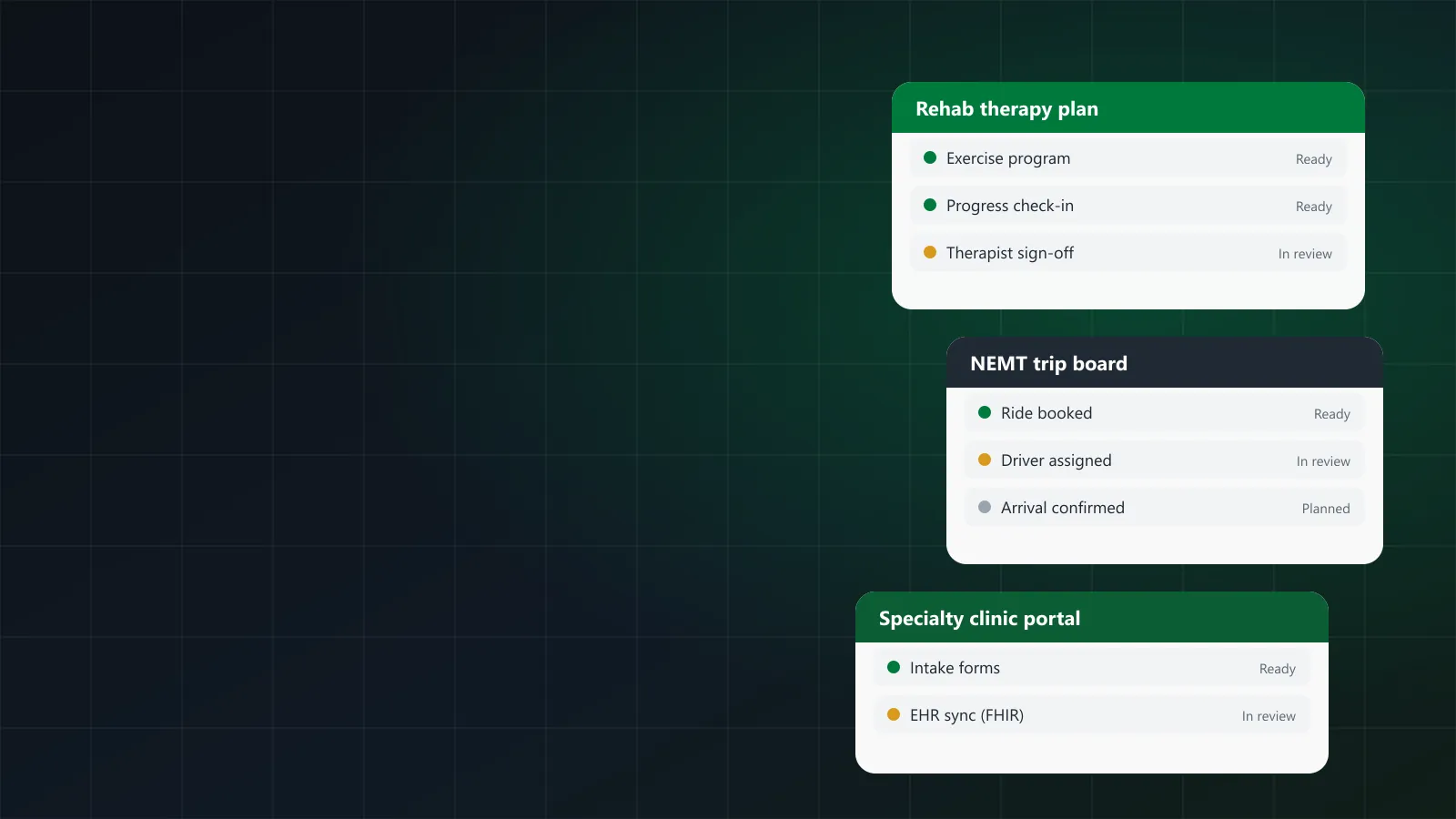
Rehab clinics, NEMT providers and specialty practices often outgrow packaged software. Agnotic Technologies builds custom software around how your team works, connected to your EHR and billing systems, with HIPAA safeguards designed in.
Trusted by global innovators











Custom software development is designing and building software for one organization's workflow instead of adapting a packaged product. For healthcare teams such as rehab clinics, NEMT providers and specialty practices, Agnotic Technologies builds apps, portals and back-office tools connected to the EHR and billing systems, with HIPAA safeguards designed in.
Packaged software is built for the average practice. These teams usually are not average.
Physical, occupational and speech therapy providers.
Non-emergency medical transportation for patients and payers.
Clinics with workflows general EHRs handle poorly.
Founders building a care model, not buying one.
The gaps usually show up in the same places.
Workflow fit: staff keep side spreadsheets because the product does not match how care is delivered.
Integration gaps: data is typed twice between the app, the EHR and billing.
Billing rules: payer-specific eligibility and claim rules the vendor does not support.
Change speed: waiting on a vendor roadmap for features the team needs this quarter.
How the three options compare on the points that decide most projects.
| Criteria | Buy a packaged product | Extend what you have | Build custom |
|---|---|---|---|
| Best fit | Standard workflows | A product that covers most needs | Workflows no product supports |
| Workflow control | The vendor's | Shared | Full |
| EHR and billing integration | The vendor's connectors | Add what is missing | Built for your systems |
| Time to first use | Usually fastest | Depends on the gaps | Longest up front |
| Ongoing cost | Licence fees | Licence plus extensions | Engineering and hosting |
| Who owns the roadmap | The vendor | Mostly the vendor | You |
Custom does not have to mean fragile. These practices keep it supportable for years.
HL7 FHIR, HL7 v2 and X12 at the edges, so systems can change behind them.
Code review, automated tests and CI on every change.
Architecture notes, runbooks and handover material written as we build.
Common building blocks for custom healthcare software.
Scheduling, reminders, forms and secure messaging on iOS, Android and web.
Templates, task queues and dashboards built around your workflow.
Trip and visit scheduling, driver or clinician apps and proof of service.
FHIR and HL7 v2 connections to Epic, Oracle Health (Cerner), athenahealth and others.
X12 270/271 eligibility and 837/835 claims through your clearinghouse.
Operational and outcome reporting from the data your team already captures.
Chosen to fit your team and your systems.
Measures we build reporting around, agreed with you before launch.
Staff using the tool each week, divided by staff who should.
Fields entered in more than one system, tracked down to zero.
Time from a task appearing to it being done.
Claims accepted by the clearinghouse on first submission.
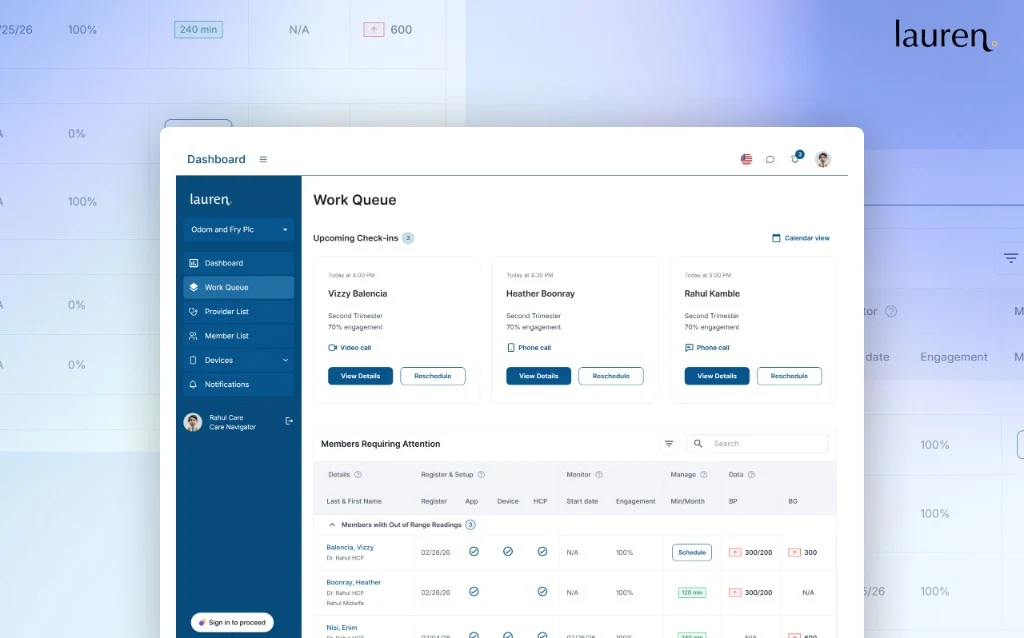
A HIPAA-ready maternal health platform enabling remote patient monitoring, care coordination, and personalized engagement from pre-pregnancy through postpartum.
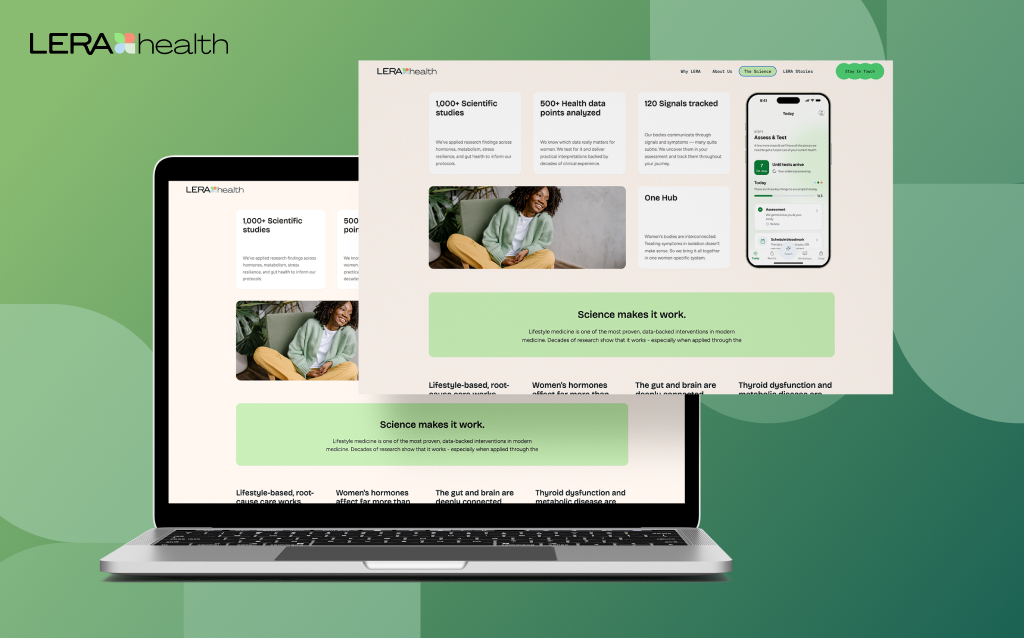
A women’s health product experience focused on guided care journeys, education, and compliance-aware workflows to support long-term engagement.
Common first releases for the care settings above.
Therapy plans patients follow at home, with progress the clinician can see.
Trip booking, driver assignment and proof of service in one place.
Intake forms and templates built for one specialty's questions.
Visit limits and authorizations tracked before they run out.
Secure updates and reminders for families and caregivers.
Schedules, queues and claims status for managers.
The systems custom healthcare software usually depends on.
We build secure, scalable products designed for privacy, interoperability, and regulatory readiness from day one across every sector we serve.

Protect PHI with privacy-first architecture, encrypted storage and transmission, and strict access controls.

Enabling standardized health data exchange through standards-based API mappings.
We combine deep technical expertise with industry-specific knowledge to deliver solutions that aren't just functional, but transformational.
We implement rigorous security protocols and compliance standards (HIPAA, GDPR, SOC2) across all industrial solutions to protect sensitive data.
Our architectures are built to handle massive data loads and user bases, keeping performance steady whether you're serving ten or ten million.
Using our suite of internal tools and proven frameworks, we reduce development cycles and get your product to market 40% faster.
Beyond simple wrappers, we build deep-learning integrations and predictive analytics directly into the core of your industry-specific workflows.
Timing depends on scope, and we agree it on the scoping call.
We agree the workflow, the users and the systems involved.
User flows and a data map reviewed with your team before building.
One workflow for one team, built with weekly demos and released with monitoring.
EHR, billing and identity connections added in order of value.
New features, sites and roles based on what your team needs next.
Short facts we design around, each linked to its primary source.
The HIPAA Security Rule requires administrative, physical and technical safeguards for electronic protected health information.
Source: 45 CFR Part 164 Subpart C (eCFR)A HIPAA covered entity may share protected health information with a business associate, such as a software vendor, only under a business associate agreement that commits the vendor to safeguard it.
Source: 45 CFR 164.502(e) and 164.504(e) (eCFR)HIPAA adopts ASC X12 standards for electronic transactions, including health care claims (837), payment and remittance advice (835), eligibility inquiries (270/271) and prior authorization requests (278).
Source: 45 CFR Part 162 (eCFR)ONC certification criterion 170.315(g)(10) requires certified EHRs to offer a standardized API for patient and population services based on HL7 FHIR.
Source: 45 CFR 170.315 (eCFR)We don't just build products; we forge lasting partnerships. See how we've helped industry leaders transform their vision into technical reality.
“I can clearly see how Agnotic has a unique way of handling end-to-end development. They are always active on quick chat and provide support quickly.”

Aaron Phelan
Founder, Benchmark
“Agnotic combines deep technical expertise with strong domain knowledge. They understand the business context, anticipate challenges, and make collaboration smooth and effective.”

John Pasmore
Founder, Latimer
“Agnotic is the best technical team we evaluated. Their engineering excellence made our work dramatically easier and allowed us to stay focused on what matters most for maternal care outcomes. They took full ownership of the technical execution, and we are always happy to continue working together.”

Kim Smith
Founder, My Lauren
Detailed pages for the services these teams ask us about.
Our main service page for custom healthcare builds.
Virtual visit platforms with scheduling, video and EHR integration.
Device data, care team workflows and billing support for RPM programs.
Custom EHR modules and platforms built around clinical workflows.
The safeguards we build into every healthcare product.
A fixed-scope first release to test the idea with real users.
Explore other production-grade engineering platforms we deliver across healthcare.
The technical patterns behind this platform translate naturally into adjacent verticals.
Tell us which workflow hurts most today, and we will scope a first release with you on a scoping call.
contact@agnotic.com
Partnerships
contact@agnotic.com