Two people reviewing printed summary reports with bar and pie charts on a clipboard, beside a laptop and a calculator on a dark wooden desk
    Healthcare / Government Programs

    Medicare Advantage and Medicaid plan software

    A government programs health plan answers to CMS and to every state it serves, through files that must reconcile month after month. Agnotic Technologies builds the enrollment, payment, encounter and dual eligible data exchanges behind Medicare Advantage, Medicaid managed care and D-SNP plans.

    Enrollment
    Every transaction matched to its reply
    Encounters
    Accepted, corrected or resubmitted
    Duals
    D-SNP notices sent the way the State asks

    Trusted by global innovators

    Benchmark
    Chibasco
    Fundency
    Lantimer
    Lauren
    Lera
    One Minute
    Pento Pix
    TAP
    Xtrium
    Healthevolve
    Benchmark
    Chibasco
    Fundency
    Lantimer
    Lauren
    Lera
    One Minute
    Pento Pix
    TAP
    Xtrium
    Healthevolve
    Benchmark
    Chibasco
    Fundency
    Lantimer
    Lauren
    Lera
    One Minute
    Pento Pix
    TAP
    Xtrium
    Healthevolve
    Benchmark
    Chibasco
    Fundency
    Lantimer
    Lauren
    Lera
    One Minute
    Pento Pix
    TAP
    Xtrium
    Healthevolve
    Industry Overview

    What is Medicare Advantage and Medicaid plan software?

    Medicare Advantage and Medicaid plan software runs the data exchanges only government programs health plans have: enrollment and payment reconciliation with CMS, encounter data for risk adjustment, Medicaid managed care encounter and enrollment files with each state, and D-SNP coordination for dual eligible members. Agnotic Technologies builds these pipelines and reconciliation tools for health plans.

    Program types

    Which government program is your plan running?

    Each program brings its own counterparty and rules. Many plans run more than one, and the software has to keep them apart.

    Medicare Advantage organization

    Contracts with CMS and exchanges enrollment, payment and risk adjustment data with it.

    • Enrollment and disenrollment transactions and replies
    • Monthly membership and payment reconciliation
    • Encounter data for risk adjustment

    Medicaid managed care organization

    Contracts with a State Medicaid agency, often in several states.

    • State enrollment files
    • Encounter data in the formats the contract sets
    • State validation results worked to closure

    Dual eligible special needs plan

    A Medicare Advantage plan with a contract with the State Medicaid agency.

    • Admission notifications for high-risk members
    • Medicare and Medicaid eligibility kept in step
    • Coordination records for care teams

    Plans in several states

    The same program, with a different companion guide in each state.

    • State rules held as configuration
    • One member identity across contracts
    • Reports per state and per contract
    Industry Challenges

    Where do government program plans lose members, money or data?

    The gaps we look for first, because each one costs revenue or a compliance finding.

    • Membership in the core system differs from the members CMS paid for, so the plan covers people it is not paid for, or the other way round.

    • Enrollment rejections sit in a folder and are never worked.

    • Encounters the state rejects are never corrected and resubmitted.

    • Encounter records are missing the identifiers of the provider who delivered the service.

    • D-SNP admission notices go late, or only for some hospitals.

    • Medicaid members lose coverage at renewal, return a month later and get a second member ID.

    • Each state's file layout is handled by a separate script that only one person understands.

    Reference table

    Which data exchanges does a government programs plan run?

    The table we start every engagement with. Counterparties and formats come from the regulations and your contracts; the exact layouts and schedules come from CMS instructions and each state's companion guide, which we build to as written.

    Government program data exchanges with their counterparty, cadence, format and the reconciliation check we build
    Data exchangeCounterpartyCadenceFormat or standardReconciliation check
    Medicare Advantage enrollment and disenrollment, and the repliesCMSAs members join, change or leaveCMS enrollment transaction layoutsEvery transaction has a reply, and every rejection is worked
    Membership and payment reconciliationCMSMonthly, as CMS pays in advance for each monthCMS membership and payment reportsMembers in the core system equal members CMS paid for, month by month
    Risk adjustment dataCMSOn the schedule CMS instructions setAs CMS instructions specifyEach submitted record accepted, or corrected and resubmitted
    Medicaid enrollmentState Medicaid agencySet by the State contractASC X12 834Members in the state file equal members in the core system
    Medicaid encounter dataState Medicaid agencySet by CMS and the StateASC X12N 837, NCPDP and ASC X12N 835 as appropriateState acceptance and validation tracked per encounter
    D-SNP admission notificationsState Medicaid agency or its designeeTimeframe set by the StateMethod set by the StateEvery qualifying hospital or SNF admission notified on time
    Our Approach

    How should a plan approach these exchanges?

    Three design choices that make month-end reconciliation routine.

    Keep one ledger of members per month

    For each member and month, the ledger holds what the core system says, what CMS or the state says and what was paid. Every difference is a line someone owns.

    Treat every reply as work

    Rejections, errors and validation results become queue items with an owner and a due date, not files in a shared folder.

    Hold state differences as configuration

    File layouts, schedules and rules per state live in configuration with tests, so a new state contract is a set-up task, not a new script.

    Capabilities

    What do we build for government programs plans?

    Components we build around your core administration system.

    Enrollment transaction engine

    Builds outbound transactions, reads replies and matches each one to the member and the request.

    Monthly reconciliation workbench

    The member ledger, with differences grouped by cause and assigned to an owner.

    Encounter submission pipeline

    Encounters assembled from claims, validated before sending and tracked through acceptance.

    Rejection and correction queues

    Every rejected record with its reason, the fix applied and the resubmission.

    State file adapters

    Enrollment and encounter files per state, driven by tested configuration.

    D-SNP notification service

    Admission events turned into notices to the State in the method and timeframe it sets.

    Renewal and return tracking

    Medicaid renewal dates, coverage gaps and members who return, linked to one identity.

    Audit trail

    Who sent, received, changed or resolved each record, and when.

    Engineering Stack

    Which standards and systems sit behind the exchanges?

    We build to the published standards and to your contracts' companion guides.

    X12 transactions

    834 enrollment837 encounters835 payment999 and 277CA acknowledgements

    Pharmacy

    NCPDP formats for pharmacy encounters

    Connectivity

    Secure file transfer to CMS and state systemsScheduled jobs with retry and alerting

    Platform

    Data warehouse for the member ledgerWork queuesAudit loggingAWS or Azure in your account
    Measured Impact

    What should a government programs plan reconcile every month?

    Measures we build into the reconciliation workbench.

    Membership
    Ledger match

    Members where the core system, CMS or state and payment all agree.

    Payment
    Variance by cause

    Differences between expected and received payment, grouped by reason.

    Encounters
    Acceptance

    Submitted encounters accepted, rejected and resubmitted.

    Notices
    D-SNP timeliness

    Admission notices sent within the State's timeframe.

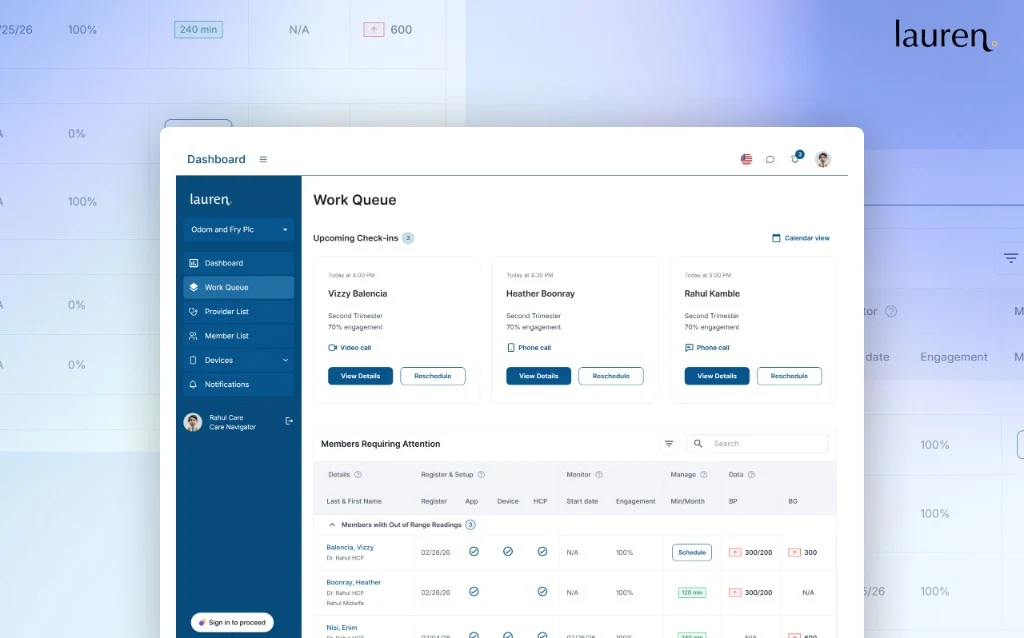
    My Lauren Maternal Health Platform | Built by Agnotic

    A HIPAA-ready maternal health platform enabling remote patient monitoring, care coordination, and personalized engagement from pre-pregnancy through postpartum.

    Case Study
    My Lauren Maternal Health Platform | Built by Agnotic
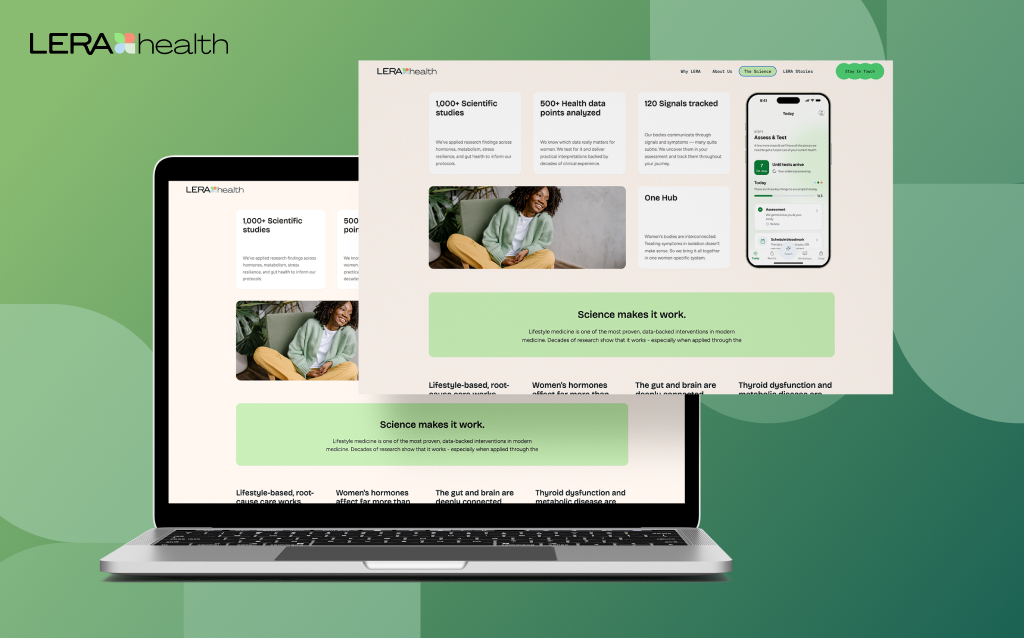
    LERA Health: Women's Health App Platform

    LERA Health: Women's Health App Platform

    A women’s health product experience focused on guided care journeys, education, and compliance-aware workflows to support long-term engagement.

    Case Study
    Use Cases

    Who builds government programs software with us?

    Plans and their administrators, at launch or when they outgrow manual work.

    01

    Regional Medicare Advantage plans

    Enrollment and payment reconciliation moved off spreadsheets.

    02

    Provider-sponsored plans

    Government program data exchanges for a health system's own plan.

    03

    Medicaid MCOs entering a new state

    State files and encounter submission set up from the companion guide.

    04

    Plans launching a D-SNP

    State contract duties, including admission notifications, built in.

    05

    Administrators serving several plans

    One platform that keeps each plan's contracts and data apart.

    06

    Plans after an audit finding

    Encounter and enrollment gaps closed with a full audit trail.

    Integrations

    Which systems does the platform connect to?

    The systems around the member ledger.

    Members, claims and payments

    Core administration system

    Enrollment, payment and risk adjustment data

    CMS connectivity

    Enrollment and encounters

    State Medicaid systems

    D-SNP notifications

    Hospital admission feeds

    Provider identifiers on encounters

    Provider data management

    Dual eligible coordination

    Care management

    Compliance-First Development Services Backed by Global Standards

    We build secure, scalable products designed for privacy, interoperability, and regulatory readiness from day one across every sector we serve.

    HIPAA logo

    Health Insurance Portability and Accountability Act

    Protect PHI with privacy-first architecture, encrypted storage and transmission, and strict access controls.

    Our Edge

    Why Global Leaders Choose Us

    We combine deep technical expertise with industry-specific knowledge to deliver solutions that aren't just functional, but transformational.

    Enterprise-Grade Security

    We implement rigorous security protocols and compliance standards (HIPAA, GDPR, SOC2) across all industrial solutions to protect sensitive data.

    High-Performance Scaling

    Our architectures are built to handle massive data loads and user bases, keeping performance steady whether you're serving ten or ten million.

    Accelerated Time-to-Market

    Using our suite of internal tools and proven frameworks, we cut setup work so your first release reaches users sooner.

    Embedded AI Integration

    Beyond simple wrappers, we build deep-learning integrations and predictive analytics directly into the core of your industry-specific workflows.

    Engagement Model

    How does a government programs engagement work?

    We start from your exchange inventory. Timing depends on scope; we agree a fixed first release on the scoping call.

    01

    Scoping call

    We review your programs, states, core system and where reconciliation breaks today.

    02

    Exchange inventory

    The reference table above, filled in for your plan, with owners for each exchange.

    03

    First release

    One exchange working end to end, usually monthly membership reconciliation.

    04

    More exchanges and states

    Encounters, state files and D-SNP notices added on the same ledger.

    05

    Support through rule changes

    Companion guide and contract updates handled under change control.

    Facts and sources

    Which rules shape government program data exchanges?

    Short facts we design the ledger and the exchanges around, each linked to its primary source.

    • CMS makes advance monthly payments to Medicare Advantage organizations for each enrollee in an MA payment area for the month.

      Source: 42 CFR 422.304(a) (eCFR)
    • Each Medicare Advantage organization must submit to CMS, in accordance with CMS instructions, the data needed to characterize the context and purposes of each item and service provided to an enrollee.

      Source: 42 CFR 422.310(b) (eCFR)
    • State contracts with Medicaid managed care plans must require encounter data that identifies the provider of each service, submitted to the State at a frequency set by CMS and the State, in ASC X12N 837 and NCPDP formats and the ASC X12N 835 format as appropriate.

      Source: 42 CFR 438.242(c) (eCFR)
    • A dual eligible special needs plan that is not fully or highly integrated must notify the State Medicaid agency, or its designee, of hospital and skilled nursing facility admissions for at least one group of high-risk full-benefit dual eligible members, in the timeframe and method the State sets.

      Source: 42 CFR 422.107(d)(1) (eCFR)
    • Medicaid eligibility based on MAGI income must be renewed once every 12 months, and the agency must renew without asking the member for information when reliable data it already holds is enough.

      Source: 42 CFR 435.916(a) (eCFR)

    Voice of success

    We don't just build products; we forge lasting partnerships. See how we've helped industry leaders transform their vision into technical reality.

    Benchmark

    “I can clearly see how Agnotic has a unique way of handling end-to-end development. They are always active on quick chat and provide support quickly.”

    Aaron Phelan

    Aaron Phelan

    Founder, Benchmark

    Latimer

    “Agnotic combines deep technical expertise with strong domain knowledge. They understand the business context, anticipate challenges, and make collaboration smooth and effective.”

    John Pasmore

    John Pasmore

    Founder, Latimer

    My Lauren

    “Agnotic is the best technical team we evaluated. Their engineering excellence made our work dramatically easier and allowed us to stay focused on what matters most for maternal care outcomes. They took full ownership of the technical execution, and we are always happy to continue working together.”

    Kim Smith

    Kim Smith

    Founder, My Lauren

    Related services

    Related payer software

    This page covers CMS and state data exchanges. These pages cover the APIs, analytics and core systems around them.

    More in Healthcare

    More Healthcare Solutions

    Explore other production-grade engineering platforms we deliver across healthcare.

    Cross-Industry Reach

    The Same Engineering Patterns, Across Other Industries

    The technical patterns behind this platform translate naturally into adjacent verticals.

    Frequently Asked Questions

    The core system holds members, benefits and claims. This software sits around it and handles the exchanges with CMS and the states: what was sent, what came back, what differs and who is fixing it. It reads from the core system and posts corrections through its normal interfaces.