

01
Third-party administrators
TPAs that administer self-funded plans and need rules per client plan design.



Claims that pend for data a system could have checked at intake cost health plans and TPAs examiner time and provider goodwill. Agnotic Technologies builds claims adjudication systems that take in X12 837 claims, run edits and benefit and pricing rules, auto-adjudicate clean claims and route the rest to pend queues with a reason.
Trusted by global innovators











Claim adjudication software is the system a health plan or TPA uses to receive X12 837 claims, validate them, apply benefit and pricing rules, decide what to pay and return an 835 remittance. Agnotic Technologies builds claims adjudication systems for payers and TPAs, with auto-adjudication for clean claims and reasoned pend queues for everything else.
Most adjudication problems are not pricing errors. They are claims that stop moving.
Edits that run late: a claim passes intake, then fails a code set or provider check that could have run on arrival.
Pends without a reason: examiners open a claim to find out why it stopped, which turns a queue into a backlog.
Rules nobody can read: benefit and pricing logic buried in code or spreadsheets, so every change waits for a developer.
Remittance mismatches: 835 files that do not reconcile to the decisions the system made, which triggers provider calls and appeals.
Auto-adjudication pays or denies claims that meet every rule without a person touching them. Pend queues hold the rest with a reason, an owner and a deadline.
Edits, benefit rules and pricing schedules are configuration your analysts maintain, versioned and testable, not code.
Every claim either reaches a decision or lands in a named queue with a pend reason and the data needed to clear it.
One screen with the claim, the rule that fired, the member's benefits and the provider's contract, with an audit trail of every change.
An appeal opens against the original adjudication record, so reviewers see what was decided and why.
Modules we build for payers and TPAs, on their own or as part of a core administration system.
Professional, institutional and dental 837 files from clearinghouses and portals, acknowledged with 999 and 277CA.
Code set, provider, member and duplicate checks run at intake, each with a configurable action: reject, pend or warn.
Plan designs, accumulators, cost sharing and coverage rules applied per member and date of service.
Fee schedules, contract terms and reference pricing applied to each line, with the pricing source recorded.
Queues by reason, routing to the right team, aging and deadlines, and bulk resolution when a rule or a record changes.
Remittance files and explanations of payment generated from the decision, plus an appeals workflow tied to it.
The decision flow we build, from file receipt to remittance. Each step either passes the claim on or pends it with a reason.
The 837 file is parsed, the 999 acknowledgement is returned and each claim gets an identifier and a timestamp.
Syntax, code set, duplicate and provider checks run. Failures return a 277CA rejection or pend the claim by reason.
Eligibility on the date of service, plan and product, coordination of benefits and any prior authorization on file.
Covered services, limits, accumulators and cost sharing are calculated per line, and the rule version is recorded.
Contract terms, fee schedules and modifiers set the allowed amount, with the pricing source stored on the line.
Claims that meet every rule are auto-adjudicated. The rest go to a pend queue with the reason and the data needed to clear it.
The 835 remittance and the explanation of payment are generated from the decision, and the record is kept for appeals and audits.
The transactions, code sets and platforms behind the claims adjudication systems we build.
Common pend reasons, the step in the flow that raises them and what clears them. We configure the list with your claims team.
| Pend reason | Raised at | What clears it | Usual owner |
|---|---|---|---|
| Member not found or not eligible on the date of service | Member and coverage check | Enrollment correction or an eligibility span update | Enrollment team |
| Provider not on file or not contracted | Front-end edits | Provider record or contract update | Provider data team |
| Prior authorization required and not on file | Member and coverage check | A matching authorization or a medical review decision | Utilization management |
| Coordination of benefits unresolved | Member and coverage check | Other coverage confirmed or the primary payer's remittance received | Coordination of benefits unit |
| Possible duplicate claim | Front-end edits | Examiner confirms the duplicate or marks it as a corrected claim | Claims examiner |
| No pricing found for the service or contract | Price the claim | Fee schedule or contract term loaded | Contracting or configuration |
| Medical review or high-dollar threshold | Decide or pend | Clinical or supervisor review | Medical review |
Measures we build reporting around, agreed with your claims team before launch.
Claims that reach a decision with no examiner action, by claim type.
Time in each pend reason, so the slowest reasons are fixed first.
Decisions reopened or reversed, including appeals that are overturned.
Days from the 837 timestamp to the 835 file.
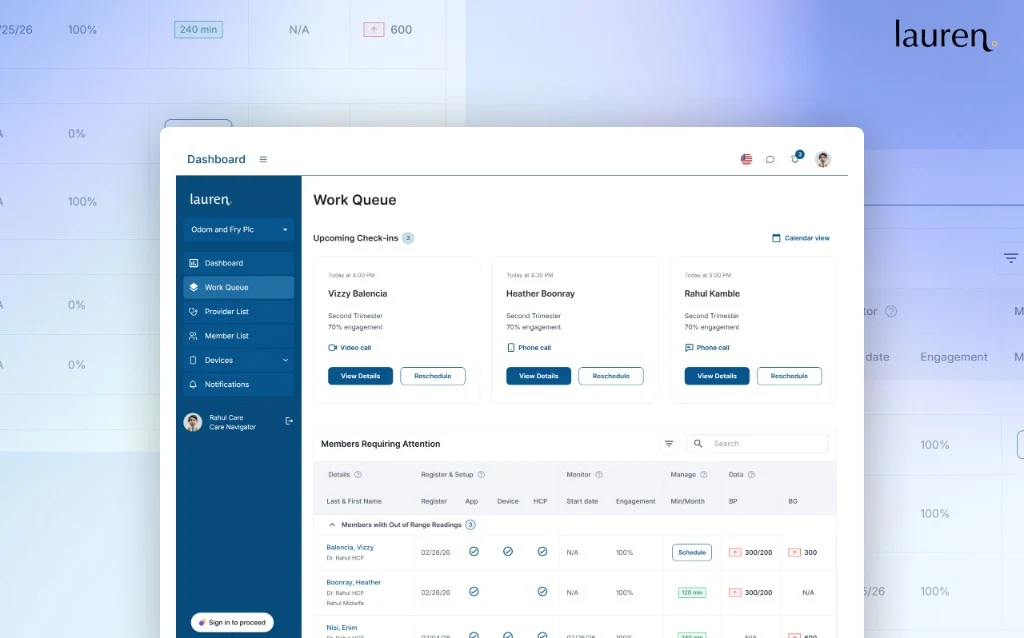
A HIPAA-ready maternal health platform enabling remote patient monitoring, care coordination, and personalized engagement from pre-pregnancy through postpartum.
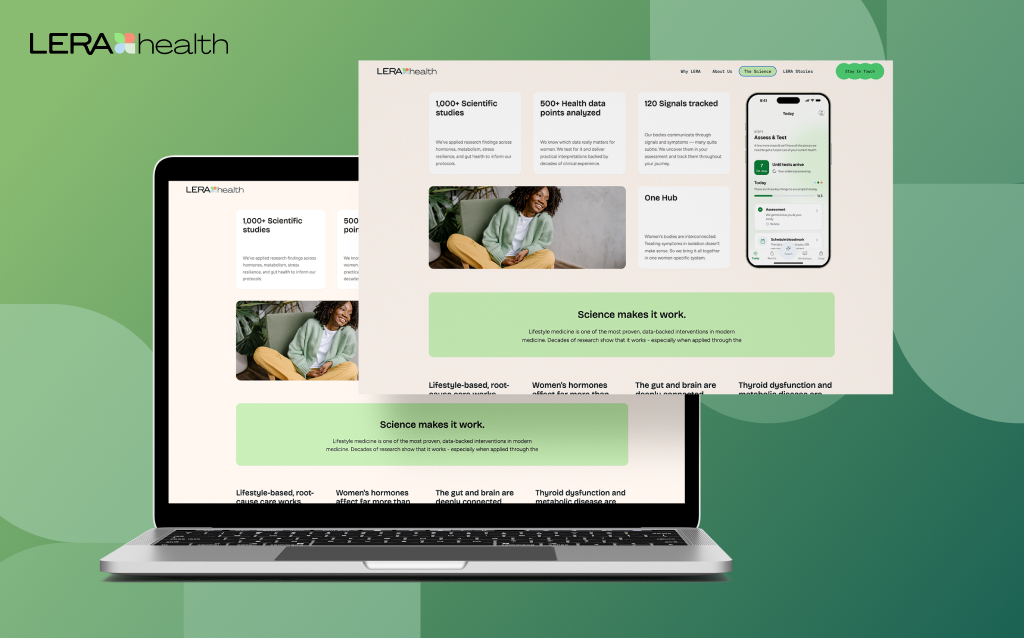
A women’s health product experience focused on guided care journeys, education, and compliance-aware workflows to support long-term engagement.
Payer organizations with rules a packaged system cannot express.
TPAs that administer self-funded plans and need rules per client plan design.
Plans whose vendor system cannot express their contracts or benefit designs.
Claim adjudication for startups: a first release with intake, edits and pricing before full automation.
837D claims with their own code sets, frequency limits and pricing.
Fee schedules and bill review rules that general-purpose systems handle poorly.
Groups that adjudicate capitated claims and report back to the health plan.
The systems a claim touches between receipt and payment.
We build secure, scalable products designed for privacy, interoperability, and regulatory readiness from day one across every sector we serve.

Protect PHI with privacy-first architecture, encrypted storage and transmission, and strict access controls.
We combine deep technical expertise with industry-specific knowledge to deliver solutions that aren't just functional, but transformational.
We implement rigorous security protocols and compliance standards (HIPAA, GDPR, SOC2) across all industrial solutions to protect sensitive data.
Our architectures are built to handle massive data loads and user bases, keeping performance steady whether you're serving ten or ten million.
Using our suite of internal tools and proven frameworks, we reduce development cycles and get your product to market 40% faster.
Beyond simple wrappers, we build deep-learning integrations and predictive analytics directly into the core of your industry-specific workflows.
How to build claim adjudication without a big-bang cutover: one claim type first, run in parallel, then widen. Timing depends on scope, and we agree it on the scoping call.
We agree the claim types, the rule sources and the systems the first release must connect to.
We document the edits, benefit rules and pricing logic your team applies today, including the ones that live in people's heads.
Intake, edits and pend queues for one claim type, run in parallel with your current system on the same claims.
Decisions are compared line by line with the current system until they match, then more claim types and rules are added.
Rule changes, new contracts and reporting under agreed support terms.
Short facts behind claims adjudication systems, each linked to its primary source.
HIPAA adopts ASC X12 standards for electronic transactions, including health care claims (837), payment and remittance advice (835), eligibility inquiries (270/271) and prior authorization requests (278).
Source: 45 CFR Part 162 (eCFR)HIPAA adopts standard medical data code sets for electronic transactions, including ICD-10-CM for diagnoses, ICD-10-PCS for hospital inpatient procedures, and HCPCS together with CPT-4 for other procedures and services.
Source: 45 CFR 162.1002 (eCFR)A health plan must conduct a transaction as a standard transaction when an entity asks it to, and may not delay or reject a standard transaction, or reject it because it contains data elements the plan does not use.
Source: 45 CFR 162.925 (eCFR)The HIPAA Security Rule requires administrative, physical and technical safeguards for electronic protected health information.
Source: 45 CFR Part 164 Subpart C (eCFR)We don't just build products; we forge lasting partnerships. See how we've helped industry leaders transform their vision into technical reality.
“I can clearly see how Agnotic has a unique way of handling end-to-end development. They are always active on quick chat and provide support quickly.”

Aaron Phelan
Founder, Benchmark
“Agnotic combines deep technical expertise with strong domain knowledge. They understand the business context, anticipate challenges, and make collaboration smooth and effective.”

John Pasmore
Founder, Latimer
“Agnotic is the best technical team we evaluated. Their engineering excellence made our work dramatically easier and allowed us to stay focused on what matters most for maternal care outcomes. They took full ownership of the technical execution, and we are always happy to continue working together.”

Kim Smith
Founder, My Lauren
Detailed pages for the work that surrounds claims adjudication.
Claim intake, checks and status tracking for providers and payers.
The provider side: finding denial causes and working appeals.
837, 835, 270/271 and 278 transactions with clearinghouses and trading partners.
The provider's view of the same claim, from charge capture to payment posting.
Billing software that produces the claims adjudication receives.
Remote monitoring billing rules on the provider side of adjudication.
Our payer page: CMS-0057-F APIs, prior authorization, member and provider portals.
The safeguards we build into every system that holds member data.
Explore other production-grade engineering platforms we deliver across healthcare.
The technical patterns behind this platform translate naturally into adjacent verticals.