

01
After buying Splunk
The platform is licensed, and the sources, masking and detections still need building.



Logs from the EHR, FHIR APIs, cloud and identity systems are where a health organization proves who touched PHI, and they are also where PHI leaks if nobody controls them. Agnotic Technologies runs the Splunk deployment you already own: onboarding sources, masking PHI, tuning detections and keeping the activity reviews the HIPAA Security Rule asks for.
Trusted by global innovators











Splunk managed services for healthcare are the ongoing operation of a provider's or health plan's Splunk deployment for security and audit monitoring of PHI systems: onboarding log sources, masking PHI, tuning detections, building audit dashboards and answering alerts. Agnotic Technologies runs this work for the deployment you own, under a business associate agreement.
The platform is bought and running. The gaps are in what is sent to it and who looks at the results.
PHI in the logs: application logs carry patient names, record numbers or full FHIR payloads, and everyone with search access can read them.
Missing sources: the EHR audit trail, the FHIR API gateway or the identity provider was never onboarded, so an auditor's questions have no data behind them.
Alert noise: detections fire constantly, the team mutes them, and the alert that mattered is lost.
No review record: activity is logged, but nobody records that it was reviewed, so there is no evidence of the Security Rule's activity review.
Retention by accident: data is kept for whatever period was set at install, too short for an investigation or longer than your policy allows.
Dashboards without owners: built once for a project and never updated when the systems behind them changed.
Four principles we apply to every deployment we take over.
Each source gets a written log specification: which events, which fields, and which fields must be masked or dropped.
Patient identifiers are masked or tokenized before data is indexed, so search users see what security work needs and no more.
Indexes that hold sensitive events are limited to named roles, and searches on them are recorded too.
A detection does not go live until it has an owner, a severity and written response steps.
The work we take on for the Splunk deployment you own.
EHR audit trails, FHIR API gateways, HL7 v2 interface engines, cloud audit logs and identity providers, each with a log specification.
Masking and field filtering rules, tested with synthetic records, so PHI stays out of general search.
Retention per index set from your written policy, and role-based access to the indexes that hold sensitive events.
Detections for unusual record access, failed logins, privilege changes and API abuse, tuned against your real alert history.
Views for the privacy officer, the security team and incident responders: who accessed which record, from where and when.
A recurring review of access reports and alerts, with the reviewer's sign-off recorded as evidence.
Written response steps for each alert, with escalation paths to your security and privacy teams.
Ingestion checks, storage and data volume tracking, and upgrade testing for your deployment.
The pipeline we set up for each new source. Data reaches general search only after it has been filtered and masked.
Logs are collected from the source over an encrypted channel, with the source's identity and clock checked.
Fields the log specification does not need, such as full request bodies, are dropped.
Patient identifiers are masked or tokenized; any lookup table is kept in a separate, restricted store.
Events go to indexes with their own retention and access roles, so audit data and debug data never share a policy.
Detections run on the indexed data and open alerts that link to their runbook.
Reviews, alert outcomes and incident notes are recorded and kept under your documentation policy.
The healthcare systems we onboard and the practices behind how we run the platform.
How each safeguard turns into work on the logging platform, and the evidence we keep for it. Meeting the safeguards stays your organization's responsibility; the platform is where much of the proof lives.
| Safeguard | What the rule asks | Work on the logging platform | Evidence we keep |
|---|---|---|---|
| Audit controls, 164.312(b) | Mechanisms that record and examine activity in systems that hold ePHI | Onboard every system that holds ePHI, with a log specification per source | Source inventory, log specifications, ingestion health checks |
| Activity review, 164.308(a)(1)(ii)(D) | Regular review of audit logs, access reports and incident tracking reports | Scheduled access reports and a review workflow | Review records with reviewer and date |
| Log-in monitoring, 164.308(a)(5)(ii)(C) | Procedures for monitoring log-in attempts and reporting discrepancies (addressable) | Detections for failed and unusual logins | Detection rules in version control, alert outcomes |
| Incident procedures, 164.308(a)(6)(ii) | Identify, respond to, mitigate and document security incidents | Alert runbooks and incident timelines built from log data | Incident records and their outcomes |
| Access control, 164.312(a) | Access only for people or programs granted access rights | Role-based access to sensitive indexes, with searches on them recorded | Role definitions, access review records |
| Documentation, 164.316(b) | Written records of required actions, kept for 6 years | Review and incident records kept to your documentation policy | Retention settings and the records themselves |
Measures we report each month and review with your security and privacy leads.
Systems in the inventory that send logs, and the ones that do not yet.
Results of recurring scans for identifiers that slipped past masking.
By detection, so noisy rules are tuned or retired.
Scheduled reviews completed and signed off in the period.
A HIPAA-ready maternal health platform enabling remote patient monitoring, care coordination, and personalized engagement from pre-pregnancy through postpartum.
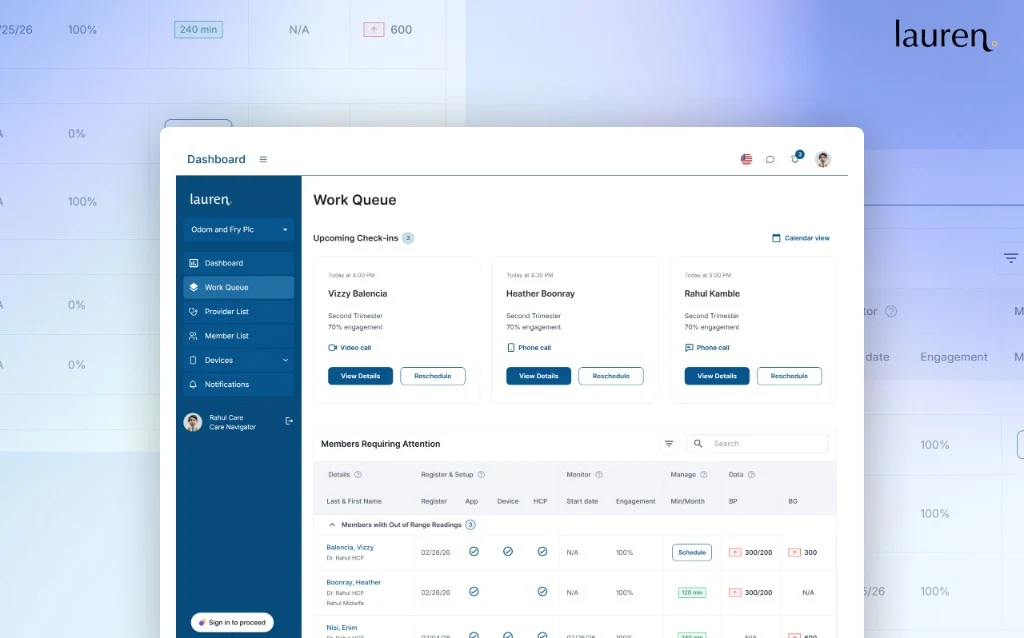
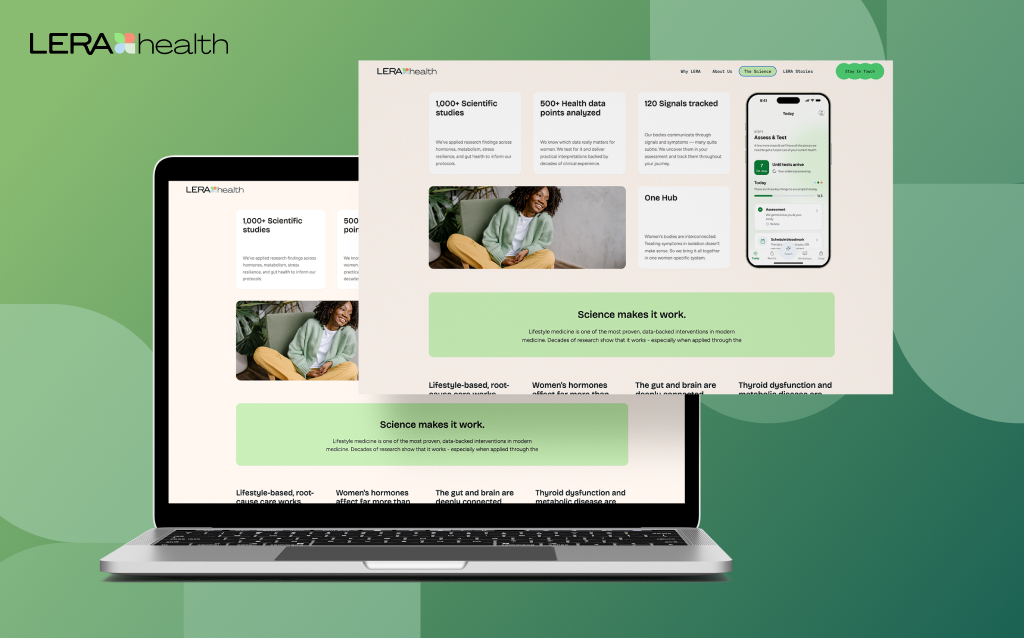
A women’s health product experience focused on guided care journeys, education, and compliance-aware workflows to support long-term engagement.
The moments that most often start a Splunk managed services engagement.
The platform is licensed, and the sources, masking and detections still need building.
Teams that need evidence of audit controls and activity reviews.
An investigation found missing logs, or PHI where it should not be.
Startups that run Splunk and need audit logging evidence for health system security reviews.
New patient or partner APIs that need access logging and abuse detection.
New cloud audit sources to onboard alongside on-premises systems.
The sources we onboard most often for healthcare clients.
Tick what is true today. Every gap is something we would review first when we take over.
We build secure, scalable products designed for privacy, interoperability, and regulatory readiness from day one across every sector we serve.

Protect PHI with privacy-first architecture, encrypted storage and transmission, and strict access controls.
We combine deep technical expertise with industry-specific knowledge to deliver solutions that aren't just functional, but transformational.
We implement rigorous security protocols and compliance standards (HIPAA, GDPR, SOC2) across all industrial solutions to protect sensitive data.
Our architectures are built to handle massive data loads and user bases, keeping performance steady whether you're serving ten or ten million.
Using our suite of internal tools and proven frameworks, we reduce development cycles and get your product to market 40% faster.
Beyond simple wrappers, we build deep-learning integrations and predictive analytics directly into the core of your industry-specific workflows.
We take over in stages, starting with the sources that matter most. Timing depends on scope; we agree a fixed first release on the scoping call.
We review the deployment, the sources it receives, who has access and what your auditors have asked for.
Source inventory, a PHI scan of existing data, an access review and the alert history, with findings in writing.
One priority area, often PHI masking plus the EHR and identity sources, built and documented.
Detections tuned, runbooks written and the activity review cycle started.
Monitoring, tuning, new sources and upgrades under agreed support terms.
Short facts from the HIPAA Security Rule and NIST, each linked to its primary source.
The HIPAA Security Rule requires covered entities and business associates to implement hardware, software or procedural mechanisms that record and examine activity in information systems that contain or use electronic protected health information.
Source: 45 CFR 164.312(b) (eCFR)The HIPAA Security Rule requires procedures to regularly review records of information system activity, such as audit logs, access reports and security incident tracking reports.
Source: 45 CFR 164.308(a)(1)(ii)(D) (eCFR)Under the HIPAA Security Rule, covered entities and business associates must identify and respond to suspected or known security incidents, mitigate their harmful effects where practicable, and document security incidents and their outcomes.
Source: 45 CFR 164.308(a)(6)(ii) (eCFR)Documentation the HIPAA Security Rule requires, including written records of required actions, activities and assessments, must be kept for 6 years from the date of its creation or the date it was last in effect, whichever is later.
Source: 45 CFR 164.316(b) (eCFR)NIST SP 800-92, Guide to Computer Security Log Management (September 2006), gives guidance on establishing log management infrastructures and on developing and performing log management processes across an organization.
Source: NIST SP 800-92 (NIST CSRC)We don't just build products; we forge lasting partnerships. See how we've helped industry leaders transform their vision into technical reality.
“I can clearly see how Agnotic has a unique way of handling end-to-end development. They are always active on quick chat and provide support quickly.”

Aaron Phelan
Founder, Benchmark
“Agnotic combines deep technical expertise with strong domain knowledge. They understand the business context, anticipate challenges, and make collaboration smooth and effective.”

John Pasmore
Founder, Latimer
“Agnotic is the best technical team we evaluated. Their engineering excellence made our work dramatically easier and allowed us to stay focused on what matters most for maternal care outcomes. They took full ownership of the technical execution, and we are always happy to continue working together.”

Kim Smith
Founder, My Lauren
This page covers the logging and monitoring platform. These pages cover running the applications and the cloud it watches.
Support, monitoring, maintenance and releases for live health apps and portals.
AWS, Azure and Google Cloud operations under a BAA.
The safeguards we build into every system that holds patient or member data.
Delivery pipelines where detections and log specifications live in version control.
FHIR APIs whose access logs we onboard and monitor.
Explore other production-grade engineering platforms we deliver across healthcare.
The technical patterns behind this platform translate naturally into adjacent verticals.