

Patient and caregiver apps
iOS, Android and web apps with logins, messaging and device data.
- App store releases and OS updates
- Push, SMS and email delivery
- Crash and error triage



Health apps, patient portals and EHR integrations keep needing work after launch: alerts at night, dependency updates, release testing and user questions. Agnotic Technologies runs application managed services for healthcare software so your product stays available, patched and supported under agreed SLAs.
Trusted by global innovators











Managed services for healthcare software are the ongoing support, monitoring, maintenance and release management of a live health app, portal or integration after launch, delivered under agreed SLAs. Agnotic Technologies provides them as an engineering service: we take over your production system, write the runbooks, handle alerts and incidents, apply patches and ship releases, with HIPAA safeguards and a BAA.
Application managed services cover the software your users already rely on, whoever built it. We support these four kinds of system most often.
iOS, Android and web apps with logins, messaging and device data.
Patient portals, provider portals and admin consoles.
FHIR APIs, HL7 v2 feeds and X12 transactions in production.
Scheduling, reporting and workflow tools staff use daily.
After launch the work changes shape, and the team that built the product usually moves on. These are the gaps we are asked to close.
Nobody is on call: alerts go to an inbox, and a portal outage is found by patients before staff.
Patches wait: frameworks, libraries and mobile OS updates pile up until a release becomes risky.
Integrations fail quietly: an EHR interface backs up for days because no one watches the queue.
Knowledge leaves: runbooks, credentials and deployment steps live in one engineer's head.
Support only works when the response is written down before the alert fires. Three practices carry every engagement.
Each alert, job and integration gets a documented response, an owner and an escalation path before we go on call.
Synthetic checks, error rates and interface backlogs map to the severity levels in your SLA, so paging is predictable.
Every change ships through code review, automated tests and a staged rollout, with release notes your compliance team can file.
The service lines in a typical application managed services contract.
A support queue for your staff, with triage, workarounds and engineer escalation for defects.
Uptime, performance, error and interface monitoring with on-call paging for P1 and P2 events.
Scheduled updates for frameworks, libraries, mobile SDKs and base images, tested before release.
Planned releases and hotfixes through CI, staging and app store review, with rollback steps.
FHIR, HL7 v2 and X12 queue monitoring, message replay and reconciliation with the EHR or clearinghouse.
Access reviews, audit log checks, vulnerability fixes and evidence for your HIPAA risk analysis.
We work inside your existing tooling where it exists and add what is missing.
Targets are agreed per client on the scoping call; this is the structure we start from. The hours for each target are set in your contract, not on this page.
| Severity | Example | Who responds | What the SLA sets |
|---|---|---|---|
| P1 Outage | Patient portal down, or a suspected PHI exposure | On-call engineer and your named contact, immediately | Response and workaround targets, then a root cause report |
| P2 Degraded | EHR interface backlog, slow logins, failed appointment reminders | On-call engineer in support hours, extended by agreement | Response target and a fix in the next hotfix or release |
| P3 Defect | Wrong label, report mismatch, a bug with a workaround | Support queue | Acknowledgement target and a place in the release plan |
| P4 Request | New field, user question, small configuration change | Support queue | Estimate and priority agreed with you |
The measures we report, agreed with you before the handover.
Measured by synthetic checks, not by waiting for complaints.
From first alert to service restored, per incident.
What is open, how old it is and what ships next.
Every release, hotfix and rollback with its evidence.
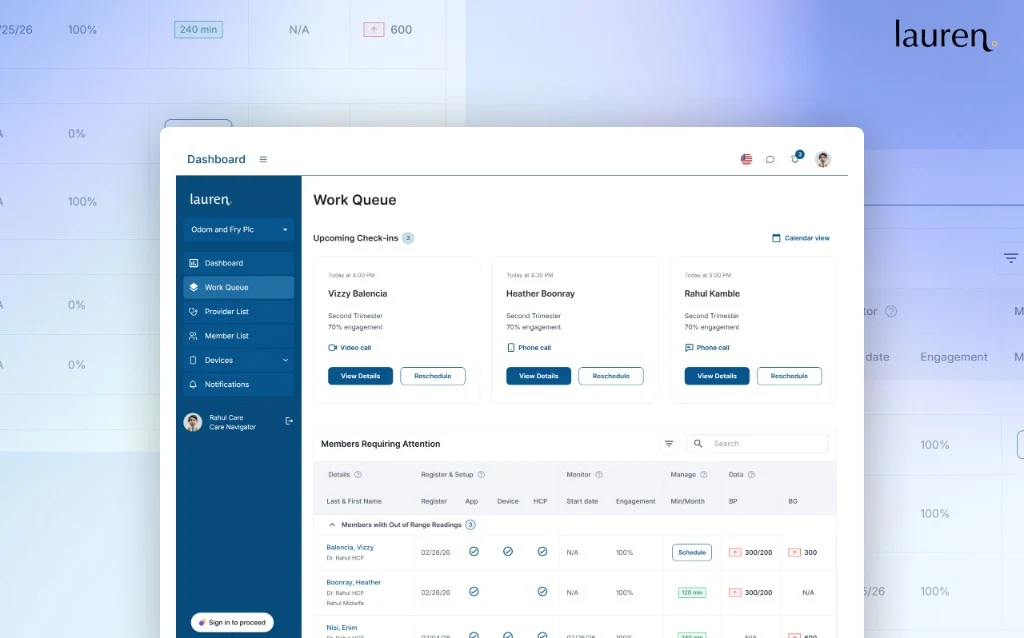
A HIPAA-ready maternal health platform enabling remote patient monitoring, care coordination, and personalized engagement from pre-pregnancy through postpartum.
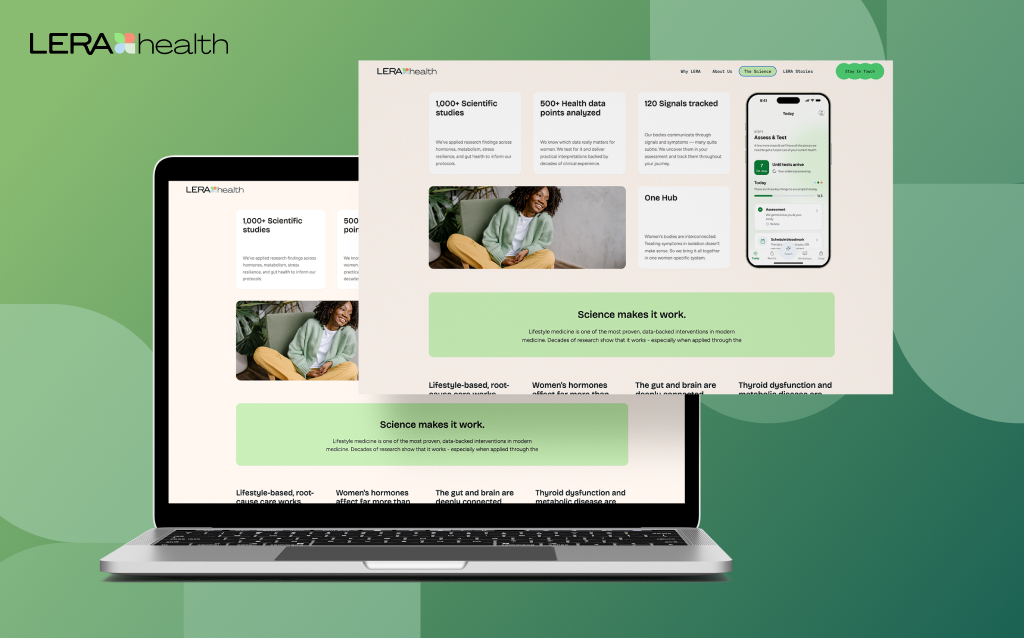
A women’s health product experience focused on guided care journeys, education, and compliance-aware workflows to support long-term engagement.
The situations that most often start a managed services conversation.
A startup has shipped its MVP and needs on-call, patching and support without hiring an operations team.
The agency that built the portal has moved on and nobody owns production.
A pilot app is going to more sites and needs SLAs the IT department will sign off.
Several EHR and payer interfaces now need daily monitoring and reconciliation.
The old system must stay supported while the new one is built.
Access reviews, log checks and change records need to exist before the next risk analysis.
The connections a healthcare application depends on in production.
We build secure, scalable products designed for privacy, interoperability, and regulatory readiness from day one across every sector we serve.

Protect PHI with privacy-first architecture, encrypted storage and transmission, and strict access controls.

Enabling standardized health data exchange through standards-based API mappings.

Supporting enterprise-grade interoperability for clinical messaging and record workflows.
We combine deep technical expertise with industry-specific knowledge to deliver solutions that aren't just functional, but transformational.
We implement rigorous security protocols and compliance standards (HIPAA, GDPR, SOC2) across all industrial solutions to protect sensitive data.
Our architectures are built to handle massive data loads and user bases, keeping performance steady whether you're serving ten or ten million.
Using our suite of internal tools and proven frameworks, we reduce development cycles and get your product to market 40% faster.
Beyond simple wrappers, we build deep-learning integrations and predictive analytics directly into the core of your industry-specific workflows.
Timing depends on the size of the system; we agree the handover scope on the scoping call.
We list the apps, integrations and environments, who supports them today and what the SLA must cover.
Code, infrastructure, access, monitoring and documentation are reviewed and the gaps are listed.
Alerts, dashboards and runbooks are set up and tested before we take the pager.
Support queue, on-call, patch cycles and releases run under the agreed SLA.
Reports, backlog and roadmap are reviewed with you; the scope changes as the product does.
Short facts we build the service around, each linked to its primary source.
A HIPAA covered entity may share protected health information with a business associate, such as a software vendor, only under a business associate agreement that commits the vendor to safeguard it.
Source: 45 CFR 164.502(e) and 164.504(e) (eCFR)The HIPAA Security Rule requires procedures to regularly review records of information system activity, such as audit logs, access reports and security incident tracking reports.
Source: 45 CFR 164.308(a)(1)(ii)(D) (eCFR)The HIPAA Security Rule requires policies and procedures to address security incidents, with response and reporting as a required implementation specification.
Source: 45 CFR 164.308(a)(6) (eCFR)The HIPAA Security Rule requires a periodic technical and nontechnical evaluation, repeated in response to environmental or operational changes that affect the security of ePHI.
Source: 45 CFR 164.308(a)(8) (eCFR)NIST SP 800-218, the Secure Software Development Framework, groups secure development practices into four areas: prepare the organization, protect the software, produce well-secured software and respond to vulnerabilities.
Source: NIST SP 800-218 (SSDF)We don't just build products; we forge lasting partnerships. See how we've helped industry leaders transform their vision into technical reality.
“I can clearly see how Agnotic has a unique way of handling end-to-end development. They are always active on quick chat and provide support quickly.”

Aaron Phelan
Founder, Benchmark
“Agnotic combines deep technical expertise with strong domain knowledge. They understand the business context, anticipate challenges, and make collaboration smooth and effective.”

John Pasmore
Founder, Latimer
“Agnotic is the best technical team we evaluated. Their engineering excellence made our work dramatically easier and allowed us to stay focused on what matters most for maternal care outcomes. They took full ownership of the technical execution, and we are always happy to continue working together.”

Kim Smith
Founder, My Lauren
Pages for the services that sit next to application managed services.
Pipelines, environments and release automation for PHI workloads.
Regression suites and release testing for apps we support.
Replacing or re-platforming systems that have become hard to support.
Custom EHR modules and platforms built around clinical workflows.
The safeguards our support and release processes implement.
New builds that we can support from the first release.
Explore other production-grade engineering platforms we deliver across healthcare.
The technical patterns behind this platform translate naturally into adjacent verticals.