

Critical access hospitals
Small inpatient hospitals with round-the-clock emergency services, often far from the nearest larger hospital.


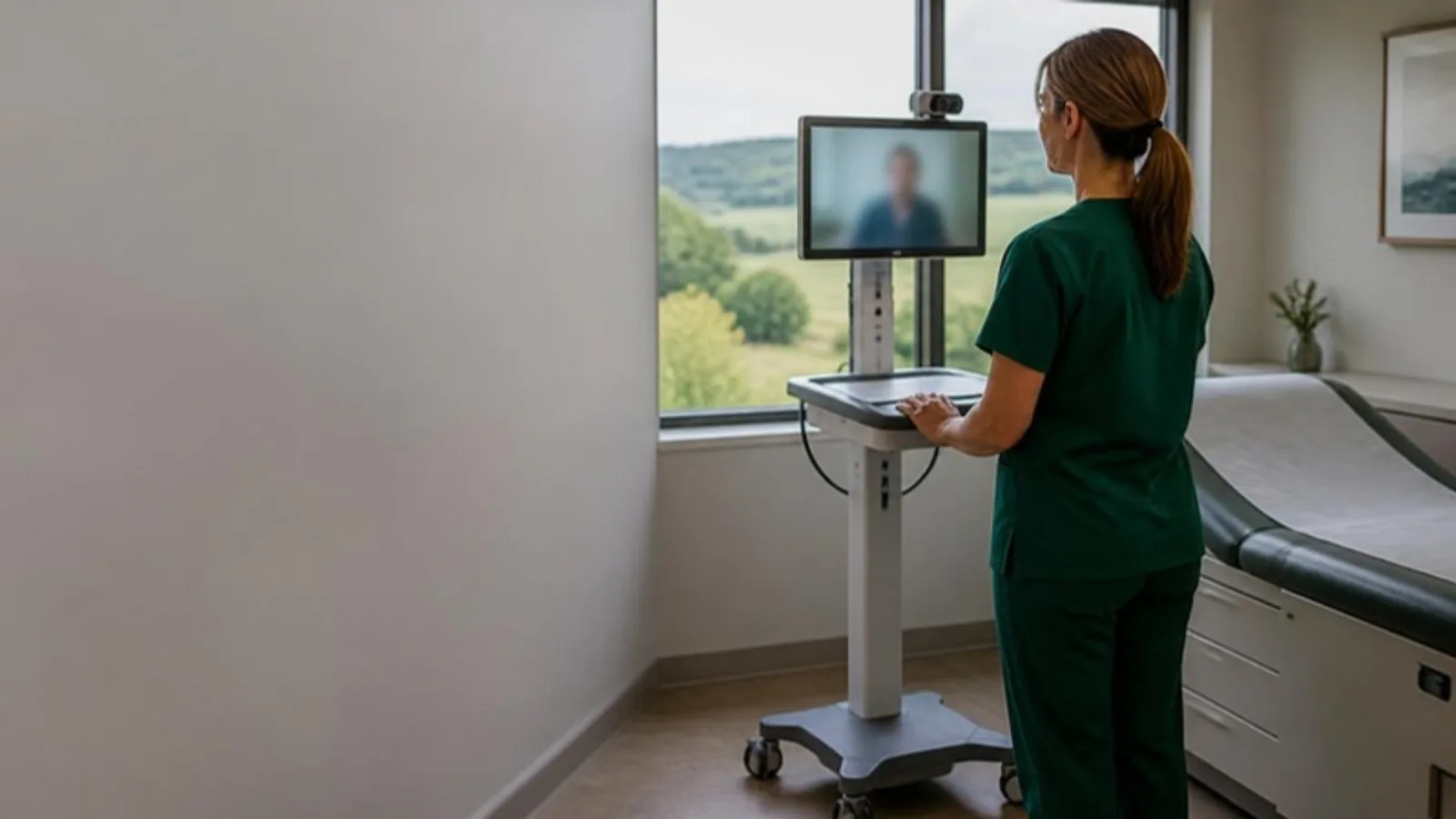
Rural hospitals and clinics run the same clinical systems as large health systems, with smaller teams, weaker connections and tighter budgets. Agnotic Technologies builds rural healthcare technology that works within those limits: telehealth that survives weak connections, remote monitoring, shared services and links to the regional HIE.
Trusted by global innovators











Rural healthcare technology is the software rural hospitals, critical access hospitals and clinics use to deliver care with small teams and limited bandwidth: telehealth, remote patient monitoring, shared clinical and back-office services, and links to regional health information exchanges. Agnotic Technologies builds and integrates these systems around rural constraints.
Rural providers share constraints but not workflows. The first release depends on which one you are.
Small inpatient hospitals with round-the-clock emergency services, often far from the nearest larger hospital.
Primary care sites that need telehealth, referrals and shared records with the hospitals they refer to.
Groups of rural providers that share services such as telemedicine, IT and data exchange.
Larger systems supporting rural affiliates with specialist telehealth and shared platforms.
Rural healthcare technology for startups whose products must work on weak connections and small clinic budgets.
The constraints are well known. Most failed projects ignored one of them.
Bandwidth: video visits that assume a strong connection drop out at the clinic or in the patient's home.
Staffing: one IT person, or a contractor, supports every system, so anything that needs daily care gets neglected.
Distance: patients travel far for specialist care, so a missed follow-up costs more.
Scale: products designed for large systems leave small sites paying for features they cannot staff.
Isolation: records stay in the local EHR while referral hospitals and the regional HIE cannot see them.
We start every rural project from its constraints. This is the mapping we use.
| Constraint | Design decision | In practice |
|---|---|---|
| Weak or unstable bandwidth | Adaptive video with audio fallback | Visits continue as audio when video fails, and reconnect without starting over |
| Patients without home internet | Phone, SMS and cellular devices | Monitoring devices on cellular networks and reminders by text |
| Small IT team | Managed cloud with monitoring and alerts | Updates, backups and security patches handled under a support agreement |
| Distance to specialists | Telehealth into the referral hospital | Specialist visits from the local clinic, with notes returned to the local chart |
| Records in separate systems | HIE and FHIR connections | Admissions, discharges and results shared with the regional HIE and referral partners |
| Budgets shared across sites | Multi-site shared services | One platform serves several clinics, with each site's data kept separate |
Three principles keep rural systems running after the build team leaves.
We test every patient and clinician flow on the weakest connection in the service area, not on office Wi-Fi.
Every system ships with monitoring, alerts and a runbook that a small team or a support partner can follow.
We integrate with the EHR and HIE already in place before suggesting anything new.
Software for rural care delivery, built around your sites, your EHR and your regional partners.
Video visits with adaptive quality and audio fallback, plus store-and-forward for images.
Cellular-connected devices, alert rules and nurse dashboards for patients far from the clinic.
Telemedicine from the critical access hospital to the referral hospital, with documentation returned to the local record.
ADT notifications, results and summaries exchanged with the regional HIE and partner hospitals.
Scheduling, patient communication and reporting run once for several sites in a network.
Records of telemedicine agreements and the distant-site practitioners each one covers.
Chosen for weak connections, small teams and the systems your partners already run.
Measures we report and review with your clinical and IT leads.
Visits finished, including those that fell back to audio.
Where and when connections fail, so fixes go where they matter.
ADT and results messages delivered to the HIE and referral partners.
Patients who missed a planned follow-up, and how they were reached.
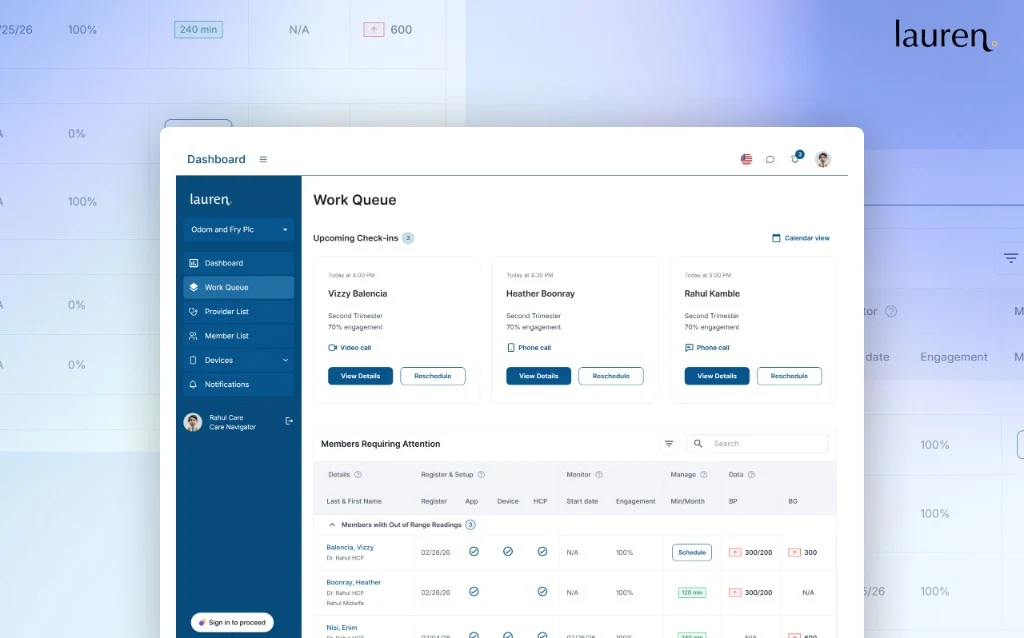
A HIPAA-ready maternal health platform enabling remote patient monitoring, care coordination, and personalized engagement from pre-pregnancy through postpartum.
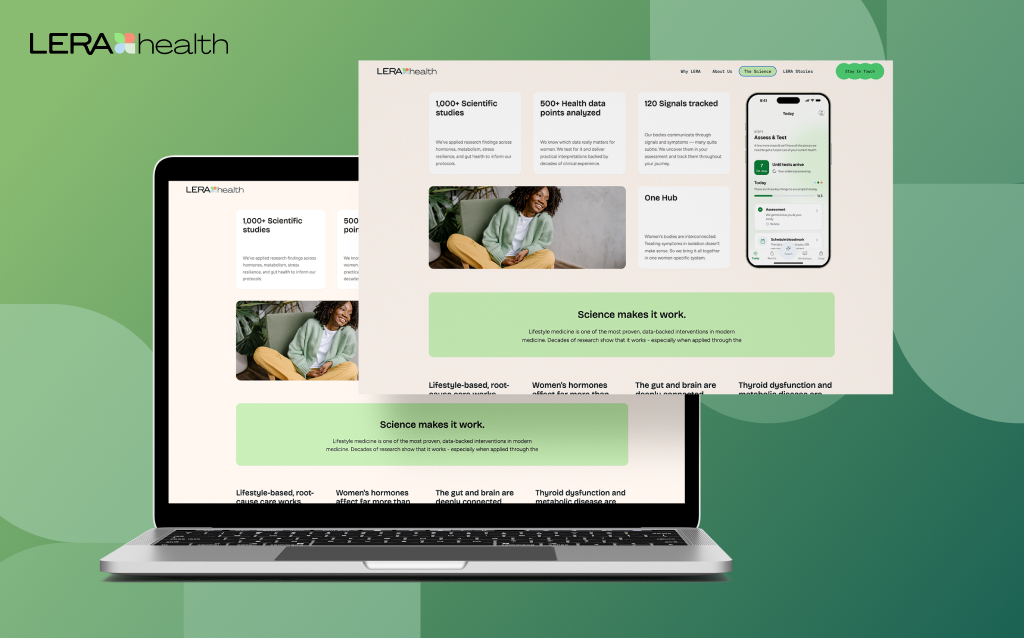
A women’s health product experience focused on guided care journeys, education, and compliance-aware workflows to support long-term engagement.
Common first releases, each at one site before it spreads across a network.
Cardiology, psychiatry or wound care consults from the local clinic.
Video support from a referral hospital for the critical access hospital's emergency team.
Blood pressure, glucose and weight monitoring for patients far from the clinic.
Calls, check-ins and monitoring after a hospital stay.
ADT and results feeds between the local EHR and the regional HIE.
One scheduling and reminder service for several rural clinics.
The systems rural care depends on, local and regional.
We build secure, scalable products designed for privacy, interoperability, and regulatory readiness from day one across every sector we serve.

Protect PHI with privacy-first architecture, encrypted storage and transmission, and strict access controls.

Enabling standardized health data exchange through standards-based API mappings.
We combine deep technical expertise with industry-specific knowledge to deliver solutions that aren't just functional, but transformational.
We implement rigorous security protocols and compliance standards (HIPAA, GDPR, SOC2) across all industrial solutions to protect sensitive data.
Our architectures are built to handle massive data loads and user bases, keeping performance steady whether you're serving ten or ten million.
Using our suite of internal tools and proven frameworks, we reduce development cycles and get your product to market 40% faster.
Beyond simple wrappers, we build deep-learning integrations and predictive analytics directly into the core of your industry-specific workflows.
Timing depends on scope; we agree a fixed first release on the scoping call.
We agree the first service, the first site and who will run it day to day.
Bandwidth tested at each site and in the service area, and workflows mapped with clinical and IT staff.
One service, such as specialist telehealth or RPM, live at one site with monitoring.
More sites and services added on the same platform.
Monitoring, updates and interface changes so a small team is not on call for every system.
Short facts we design around, each linked to its primary source.
A critical access hospital may maintain no more than 25 inpatient beds and must keep acute inpatient stays to an annual average of 96 hours or less per patient.
Source: 42 CFR 485.620 (eCFR)To qualify as a critical access hospital, a facility generally must be more than a 35-mile drive on primary roads from a hospital or another critical access hospital, or a 15-mile drive in mountainous terrain or where only secondary roads exist.
Source: 42 CFR 485.610(c) (eCFR)When a critical access hospital receives telemedicine services through an agreement with a distant-site hospital, its governing body must ensure the agreement is written and sets out the distant-site hospital's credentialing and privileging duties.
Source: 42 CFR 485.616(c) (eCFR)HHS ended its COVID-19 enforcement discretion for telehealth in August 2023, so covered health care providers must now use remote communication technologies in line with the HIPAA Rules.
Source: Federal Register, April 13, 2023 (HHS Office for Civil Rights notice)The information blocking regulations restrict practices by health care providers, certified health IT developers and health information networks that interfere with access, exchange or use of electronic health information.
Source: 45 CFR Part 171 (eCFR)We don't just build products; we forge lasting partnerships. See how we've helped industry leaders transform their vision into technical reality.
“I can clearly see how Agnotic has a unique way of handling end-to-end development. They are always active on quick chat and provide support quickly.”

Aaron Phelan
Founder, Benchmark
“Agnotic combines deep technical expertise with strong domain knowledge. They understand the business context, anticipate challenges, and make collaboration smooth and effective.”

John Pasmore
Founder, Latimer
“Agnotic is the best technical team we evaluated. Their engineering excellence made our work dramatically easier and allowed us to stay focused on what matters most for maternal care outcomes. They took full ownership of the technical execution, and we are always happy to continue working together.”

Kim Smith
Founder, My Lauren
The services rural projects draw on most.
Video visits, scheduling and clinical workflows for virtual care.
Device data, alerts and care team dashboards for patients at home.
Connections between local EHRs and regional health information exchanges.
Explore other production-grade engineering platforms we deliver across healthcare.
The technical patterns behind this platform translate naturally into adjacent verticals.