

01
Downtime reasons on one line
Stops captured with a reason instead of a blank.


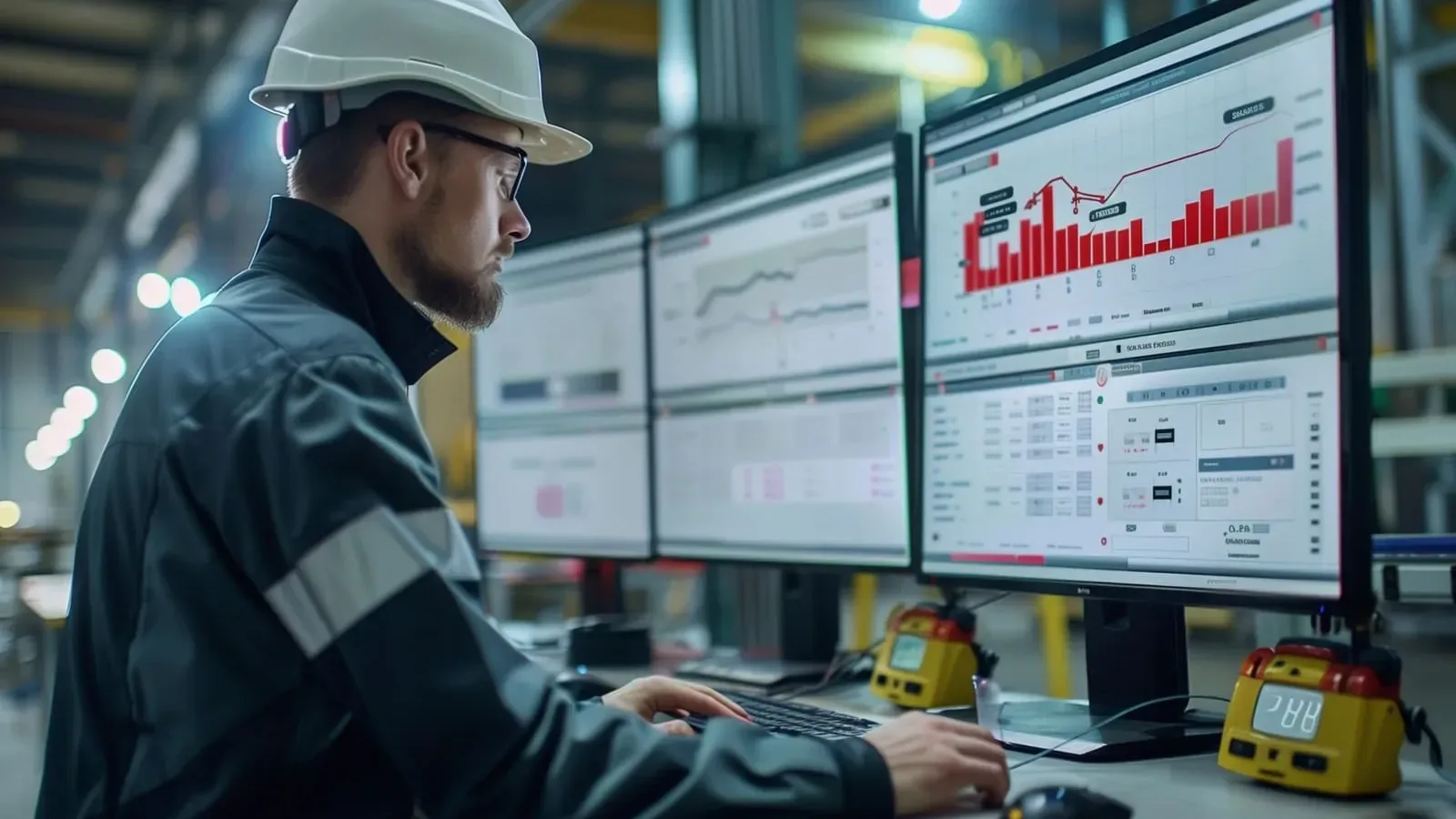
Many smart factory demos look good in a meeting room and stall on the plant floor, because nobody agreed what success meant. Agnotic Technologies helps plants scope a pilot on one line or cell, measure a baseline first, and reach a clear decision to scale, extend or stop.
Trusted by global innovators











A smart factory pilot is a time-boxed trial of connected equipment data, analytics or automation on one production line or cell, judged against a baseline the plant measured beforehand. Agnotic Technologies scopes and builds pilots so a smart factory demo becomes a decision: scale it, extend the trial or stop, on criteria the plant set in advance.
Most stalled pilots were not technical failures. They were scoping failures.
The pilot line was chosen because it was convenient, not because it has the problem the plant most wants solved.
No baseline was measured, so after the pilot nobody can say whether downtime or scrap actually changed.
Success was defined as the dashboard working, not as an operational result the plant manager cares about.
There were no stop criteria, so the pilot carries on as a permanent trial.
The pilot was built in a way that cannot scale: hand-wired connections, a laptop under a desk, data nobody else can reach.
Operators and maintenance were not asked what they need, so the screens go unused after the demo.
At the final review, the result against the baseline and the state of the build decide the outcome. This is the decision table we use with the plant.
| Decision | When the evidence shows | What happens next |
|---|---|---|
| Scale | The success criteria were met against the baseline and the scale-out readiness list is complete | Plan the rollout line by line, reusing the pilot's data model and connectors |
| Extend | Results look promising, but the measurement window missed normal running or one data source was unreliable | Extend the window once, with a fixed end date and the same criteria |
| Rework | The result is real, but the build cannot scale: manual steps, unsupported hardware or no owner | Fix the build on the pilot line before any second line |
| Stop | The criteria were not met, or a stop criterion was triggered | Record what was learned, remove the pilot hardware and keep the baseline data |
Three rules keep a pilot small enough to finish and serious enough to decide on.
Pick the use case first, then the line where it hurts most and can be measured. A second use case waits for the second pilot.
Record the baseline with the same KPI definitions the pilot will use, over a window the plant agrees represents normal running.
Use the connectors, data model and network placement you would use at scale, so a positive result does not need a rebuild.
Only what the use case needs. Platform depth lives on the industrial IoT and MES pages; a pilot uses a thin slice of it.
One edge gateway reading the agreed tags or historian points, placed in the network zone the plant approved.
The ISO 22400-based KPIs from the checklist, calculated the same way before and during the pilot.
One view for operators and one for the plant manager, each showing the KPI against its baseline.
The analytics, alert or model under test, such as a downtime reason prompt or an early warning on one machine.
A final comparison of pilot and baseline, with the evidence for the scale, extend, rework or stop decision.
What changes for the next line: tags, network, hardware, training and support.
Shared definitions matter more than tools when a result has to be trusted.
Four measures the plant reads before deciding.
The use case KPI, pilot window versus baseline window.
Gaps and bad readings, so a result is not judged on partial data.
Whether operators and maintenance actually used what was built.
Open items that would block a second line.
Problems that are common, measurable on one line and visible to the plant manager.
Stops captured with a reason instead of a blank.
A signal before a known failure mode on a critical asset.
Scrap counts and causes tied to the time they happened.
Changeovers measured from last good part to first good part.
Line energy use tied to output.
Paper line logs moved to structured data.
Usually read-only, and only the ones the use case needs.
The checklist we complete with the plant before any hardware is ordered. Each line ends in a written decision, not an open question.
We build secure, scalable products designed for privacy, interoperability, and regulatory readiness from day one across every sector we serve.

Adhering to the international gold standard for managing information security risks.

Ensuring consistent quality in software delivery and operational process optimization.
We combine deep technical expertise with industry-specific knowledge to deliver solutions that aren't just functional, but transformational.
We implement rigorous security protocols and compliance standards (HIPAA, GDPR, SOC2) across all industrial solutions to protect sensitive data.
Our architectures are built to handle massive data loads and user bases, keeping performance steady whether you're serving ten or ten million.
Using our suite of internal tools and proven frameworks, we cut setup work so your first release reaches users sooner.
Beyond simple wrappers, we build deep-learning integrations and predictive analytics directly into the core of your industry-specific workflows.
Smart factory demo services that end in a decision. It depends on scope; we agree the first release and the measurement window on the scoping call.
We complete the pilot scoping checklist with operations, maintenance, controls and OT security.
The agreed KPIs are measured on the pilot line before anything changes.
The edge connection, KPI calculations, line screens and use case logic, built the way line two would be.
The pilot runs through the measurement window the plant agreed.
Results against the baseline and the readiness list lead to a scale, extend, rework or stop decision.
The KPI, model and security references the checklist relies on.
ISO 22400 sets an industry-neutral framework for defining, composing, exchanging and using key performance indicators for manufacturing operations management in batch, continuous and discrete industries.
Source: ISO 22400-1:2014 (ISO)ISO 22400-2:2014 presents a selected set of manufacturing KPIs by their formula and elements, time behaviour, unit and the user group and production methodology they apply to, and relates them to work units as specified in IEC 62264.
Source: ISO 22400-2:2014 (ISO)IEC 62264-1:2013 describes the manufacturing operations management domain (Level 3) and the interface content between it and the enterprise domain (Level 4), with the goal of reducing the risk, cost and errors of implementing those interfaces.
Source: IEC 62264-1:2013 (ISO)The OPC Foundation describes OPC UA, released in 2008, as a platform-independent service-oriented architecture with encryption, authentication and auditing, and an extensible information modeling framework.
Source: OPC Foundation, OPC Unified ArchitectureNIST SP 800-82 Rev. 3, published in September 2023, gives guidance on securing operational technology, including industrial control systems, while addressing its performance, reliability and safety requirements.
Source: NIST SP 800-82 Rev. 3 (NIST CSRC)We don't just build products; we forge lasting partnerships. See how we've helped industry leaders transform their vision into technical reality.
“I can clearly see how Agnotic has a unique way of handling end-to-end development. They are always active on quick chat and provide support quickly.”

Aaron Phelan
Founder, Benchmark
“Agnotic combines deep technical expertise with strong domain knowledge. They understand the business context, anticipate challenges, and make collaboration smooth and effective.”

John Pasmore
Founder, Latimer
“Agnotic is the best technical team we evaluated. Their engineering excellence made our work dramatically easier and allowed us to stay focused on what matters most for maternal care outcomes. They took full ownership of the technical execution, and we are always happy to continue working together.”

Kim Smith
Founder, My Lauren
This page covers scoping and judging a pilot. These pages cover the platforms, connectors and calculations it uses.
OT connectors, asset data model and the platform a successful pilot grows into.
Custom MES for production tracking, genealogy and quality gates.
How availability, performance and quality are calculated and tracked continuously.
Protocol connectivity and the OT and IT boundary, including network segmentation.
Connecting MES with ERP and machine data.
Feasibility work for pilots whose use case depends on a model.
Explore other production-grade engineering platforms we deliver across manufacturing.