

Capture
- First-party event library in each app
- Events checked against the naming plan
- No third-party analytics SDKs in health flows


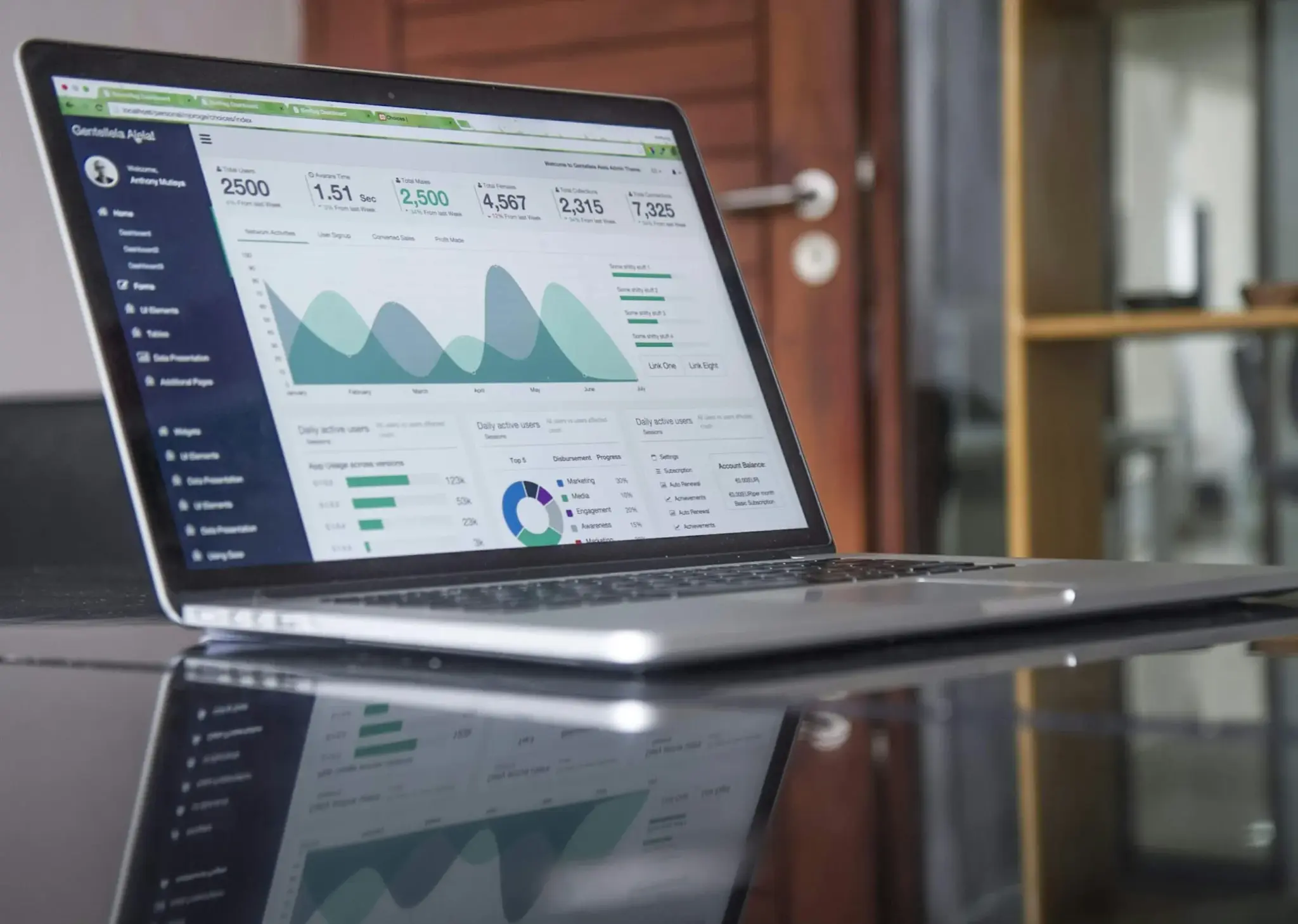
Product teams need funnels and retention; patients need their health information kept out of third-party tools. Agnotic Technologies sets up digital analytics for health apps and portals that gives you both, with events collected into your own warehouse.
Trusted by global innovators











Health app analytics
Digital analytics for a health app is measuring how people use a patient app, portal or digital front door, such as sign-ups, bookings, drop-off and return visits, without sending health information to third parties. Agnotic Technologies designs the event plan, collects events server side into the client's own warehouse and enforces consent.
This page covers logged-in apps and portals. Tag rules for a public marketing website are part of our medical website design work, and dashboards are part of our data engineering work.
In a health product the event name itself can be health information. An event called insulin_dose_logged tells an analytics vendor something about the user even with no other fields, so we review the event plan before any SDK is added.
Event review
We review every planned event against this table with your privacy lead. Your counsel decides which rules apply to your organization.
| Event | May it go to a third-party tool? | What to strip or hash | Rule that applies |
|---|---|---|---|
| Screen view on a public information page | Yes, as an aggregate count, with consent | Path parameters, user ID and precise location | Consent choices; HIPAA if a covered entity offers the app |
| Sign-up or login completed | Only without identifiers, or to a vendor under a BAA | Email, phone and account ID; keep a pseudonymous ID in your own store | HIPAA for covered entities; FTC Health Breach Notification Rule for consumer apps |
| Appointment booked | No, keep it in your environment | Visit reason, specialty, clinician and location | Can reveal a condition, so it is treated as health information |
| Symptom checker answer | No | Never sent as an analytics event; counts only, in your warehouse | Health information under HIPAA or the FTC rule |
| Medication or reading logged | No | The medicine, dose or value; record only that a log happened | Health information under HIPAA or the FTC rule |
| Push notification opened | Only as an aggregate without the message content | Notification text, and the campaign name if it names a condition | Marketing consent; health information if the content is clinical |
When in doubt, an event stays in your warehouse. Product teams still get funnels and retention, from a store you control.
Event taxonomy
A naming plan keeps events the same across iOS, Android and web, and keeps clinical detail out of names.
| Event name | Pattern | How it is used |
|---|---|---|
| account_created | Object, then action in the past tense | One event per completed step, with platform and app version as properties |
| booking_started | Funnel step | Paired with booking_completed to measure drop-off without recording the visit reason |
| booking_completed | Funnel step | Carries an internal booking ID that only your warehouse can join to clinical records |
| log_entry_saved | Generic action | Replaces names such as glucose_logged, so the name reveals nothing clinical |
| message_sent | Generic action | Counts secure messages without recipient, subject or content |
| consent_updated | Consent event | Records the new choice so every downstream tool can honor it |
Collection
Events travel from the app to a collection endpoint you host, then into your warehouse. Nothing reaches a third party unless it passed review.
SDK audit
Third-party SDKs often send more than the feature you added them for. We check each one before release.
Consent
Consent is enforced where the data is collected, not only in the app's settings screen.
Metrics
All of these come from your own event store, with pseudonymous IDs.
The share of new accounts that finish setup and complete a first key action.
Drop-off between booking_started and booking_completed by platform and release, with no visit reasons.
Return visits by sign-up week and channel.
Which features each release is used, counted by generic action names.
Bill payments, record requests and messages completed versus started.
A lean event plan with a few funnel steps, set up so it can grow without renaming everything later.

Health Insurance Portability and Accountability Act
Protect PHI with privacy-first architecture, encrypted storage and transmission, strict access controls, and traceable audit logs.

General Data Protection Regulation
Implement lawful consent flows, data minimization, retention controls, and secure processing for sensitive health data.

Fast Healthcare Interoperability Resources
Enable standardized health data exchange across apps, care teams, and systems through standards-based FHIR APIs.

Health Level Seven International
Support enterprise-grade interoperability with HL7-based integrations for records, events, and clinical messaging workflows.

Health Information Trust Alliance
Align security programs to healthcare-specific control and risk management practices trusted by providers and ecosystem partners.

Health Information Technology for Economic and Clinical Health Act
Design with breach notification readiness, digital record safeguards, and operational controls that support regulated care programs.

FDA Software as a Medical Device
Plan software quality, traceability, and documentation pathways for products that may require SaMD review and submission.

Medical Device Regulation (European Union)
Prepare EU market-ready processes for risk classification, evidence tracking, and lifecycle governance under MDR expectations.

Substance Abuse and Mental Health Services Administration
Apply confidentiality controls and consent-aware sharing models for behavioral and mental health data experiences.
Rules and platforms
The rules behind the event review table. Which ones apply depends on who offers the app.
Rules and vendor statements that shape how a health app is measured, each linked to its primary source.
Under the FTC Health Breach Notification Rule, a breach of security includes an unauthorized disclosure of identifiable health information from a personal health record, not only a hack.
Source: 16 CFR 318.2 (eCFR)Notices to affected individuals under the FTC Health Breach Notification Rule are due no later than 60 calendar days after a breach is discovered, and for 500 or more individuals the FTC must be told at the same time.
Source: 16 CFR 318.4 and 318.5 (eCFR)Google states that it makes no representations that Google Analytics satisfies HIPAA requirements and does not offer business associate agreements for the service.
Source: Google Analytics Help: HIPAA and Google AnalyticsApple reminds developers that they are responsible for all the code a third-party SDK adds to their app, and Xcode combines SDK privacy manifests into one report for the App Store privacy label.
Source: Apple Developer: Third-party SDK requirementsScope and cost
We do not publish prices. These change the size of the work.
iOS, Android, web portal, or all three, and how many app versions are live.
How many third-party SDKs the audit has to cover.
How many funnels and events the first release needs.
Whether you have a warehouse in AWS, Microsoft Azure or Google Cloud, or need one.
Regions, consent types and how choices sync across devices.
Which product and executive views you want on top of the event store.
Three stages, each with a clear output.
We capture what your live apps send today, to whom, and list what must change.
AuditThe naming plan, the review table, the collection endpoint and the warehouse tables, built and tested.
BuildFunnel and retention views, plus a review step your team runs before each new event ships.
Run