Custom EHR software development is designing and building an electronic health record around a specific organization's workflows instead of buying an off-the-shelf system. It covers clinical modules such as charting, orders and e-prescribing, standards such as HL7, FHIR and X12, HIPAA safeguards, and, where incentive programs apply, ONC certification.
This custom EHR software development guide explains when building makes sense, the rules that shape the build, a step by step approach, the development phase, ethical AI, common challenges and mistakes, and what drives cost.
What is custom EHR software development?
Considering a custom EHR?
We design and build custom EHR and EMR software, with the integrations and safeguards it needs.
What is custom EHR software development in practice? It is building the system clinicians use to document care, place orders, review results and prescribe, along with the scheduling, billing and patient portal pieces around it. Teams usually consider it when no commercial product fits a specialty workflow, a care model such as virtual first care, or a product they plan to sell to other providers.
Build, configure or extend?
- Buy and configure: A commercial EHR set up for your organization. Fastest to start, but you work within the vendor's workflows.
- Extend a certified EHR: Keep a commercial EHR as the system of record and build apps around it with SMART on FHIR and other APIs. This fits most specialty needs.
- Build a custom EHR: Your own system of record. Most control, but you take on certification, integrations and long term maintenance.
Advantages of custom healthcare software development
- Workflow fit: Screens and steps match how your clinicians actually work.
- Product control: You decide the roadmap and release schedule.
- Data ownership: Your data model, your exports and your analytics.
- Differentiation: For health tech companies, the EHR can be part of the product itself.
Why does custom EHR software development matter now?
Several rules decide what a custom EHR must do, and some are changing:
- Certification for incentive programs: Hospitals in the Medicare Promoting Interoperability Program, and MIPS clinicians reporting its Promoting Interoperability category, must use certified EHR technology that meets the Base EHR definition (42 CFR 495.4). If your users report to these programs, plan certification or use certified modules.
- Decision support transparency: Under the ASTP/ONC HTI-1 rule, health IT certified under the ONC Health IT Certification Program that supports predictive decision support must let users review source attributes such as intended use, development data and validation (criterion 170.315(b)(11)). The HTI-5 proposed rule of December 2025 would scale back these requirements, but it was not final as of October 2026.
- e-Prescribing: Medicare Part D e-prescribing currently allows NCPDP SCRIPT version 2017071 or 2023011, and from January 1, 2028 only version 2023011 may be used.
- Controlled substances: Before an e-prescribing application can be used for controlled substances, it must pass a third-party audit or certification, and prescribers must sign with two-factor authentication (21 CFR Part 1311).
- Billing transactions: HIPAA requires X12 standards for claims (837), remittance (835) and eligibility (270/271) under 45 CFR Part 162, as adopted and enforced by HHS and CMS.
- Security: The HIPAA Security Rule requires administrative, physical and technical safeguards for electronic PHI (45 CFR Part 164, Subpart C).
How do teams approach custom EHR software development step by step?
This step by step guide to custom healthcare software development follows the order that keeps risk lowest:
- 1. Discover the workflows: Shadow clinicians and staff, map each workflow, and list the decisions the EHR must support.
- 2. Set the regulatory scope: Decide whether you need ONC certification, EPCS, specific payer transactions, and whether any feature could be a medical device.
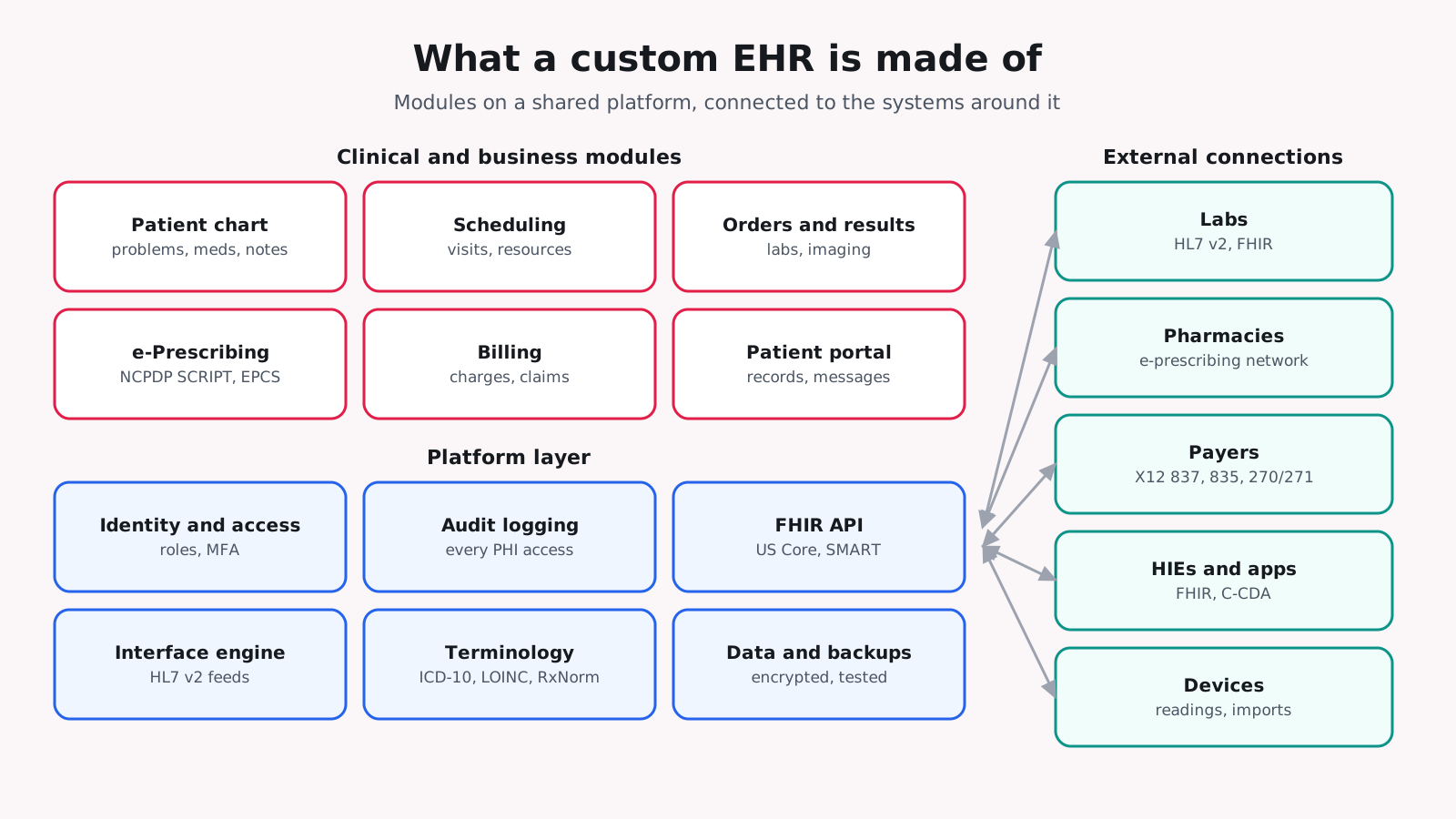
- 3. Design the platform: Identity and access, audit logging, a FHIR API built to US Core, an interface engine for HL7 v2 feeds, terminology services and encrypted storage.
- 4. Choose the first modules: Start with the modules your first users cannot work without, often charting, scheduling and orders.
- 5. Build in short releases: Show working software to clinicians every few weeks and adjust.
- 6. Connect the outside world: Labs, pharmacies, payers, HIEs and devices, each tested with real partners.
- 7. Test thoroughly: Clinical safety review, security testing, accessibility testing against WCAG 2.2, and certification testing if needed.
- 8. Go live in phases: Migrate data, train users, support go-live in person, and expand by site or specialty.
The development phase of custom EHR software development
The development phase works best in short cycles with clinicians reviewing real screens. Keep real PHI out of development and test environments, use realistic synthetic data instead, and treat audit logging, access control and terminology as platform features built once rather than inside each module. Every module should read and write through the same data model and expose its data through the FHIR API.
Interoperability inside a custom EHR
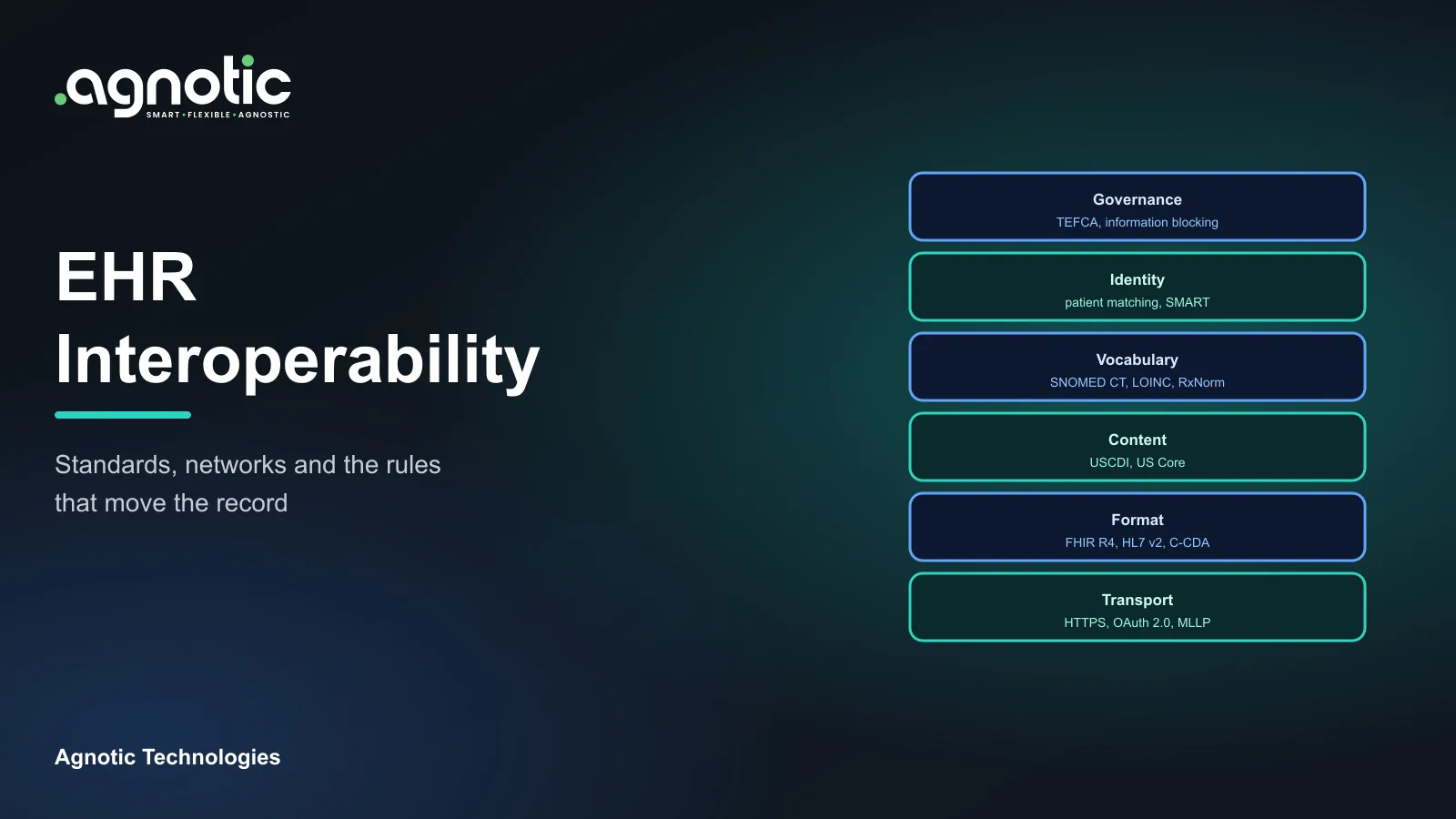
A custom EHR has to speak several standards at once. HL7 v2 still carries most lab results, admissions and orders between hospital systems. FHIR APIs serve apps and newer partners. C-CDA documents, another HL7 International standard, carry summaries for transitions of care. X12 transactions carry claims and eligibility. Plan an interface engine and a FHIR layer from the start, so each new partner is a configuration task rather than custom code.
Security and audit from the first release
Clinicians need fast access, and the organization needs proof of who saw what. Build role based access, emergency access with review, automatic logoff and an audit log of every view and change into the platform. Encrypt data in transit and at rest, test backups by restoring them, and plan for the security reviews that hospital customers will run before they sign.
Custom telemedicine software development
Many custom EHRs include virtual visits. A custom telemedicine software development plan should cover a video vendor that signs a Business Associate Agreement, scheduling and reminders, documentation of the visit in the same chart, and the records needed for billing. Building telehealth as a module of the EHR avoids a second system with its own patient list.
What are the challenges in custom healthcare software development?
- Scope: An EHR touches nearly every part of a practice, so scope grows quickly without firm priorities.
- Certification effort: Meeting ONC criteria and keeping up with new versions is ongoing work.
- Integrations: Each lab, pharmacy network, payer and HIE has its own onboarding and testing.
- Clinical safety: Errors in medication, allergy or result handling can harm patients.
- Maintenance: Code sets, regulations and partner APIs change every year.
What are the common custom healthcare software development mistakes?
- Building everything at once: Trying to match a mature commercial EHR feature for feature in the first release.
- Skipping the build or extend question: Building a full EHR when apps on top of a certified one would do.
- Late certification planning: Discovering certification needs after the architecture is set.
- Custom data formats: Inventing formats instead of using FHIR, HL7 v2, C-CDA and X12.
- Weak audit trails: Not logging who viewed or changed each record from day one.
- Too little clinician time: Designing without regular input from the people who will use it.
How should ethical AI fit into custom EHR software?
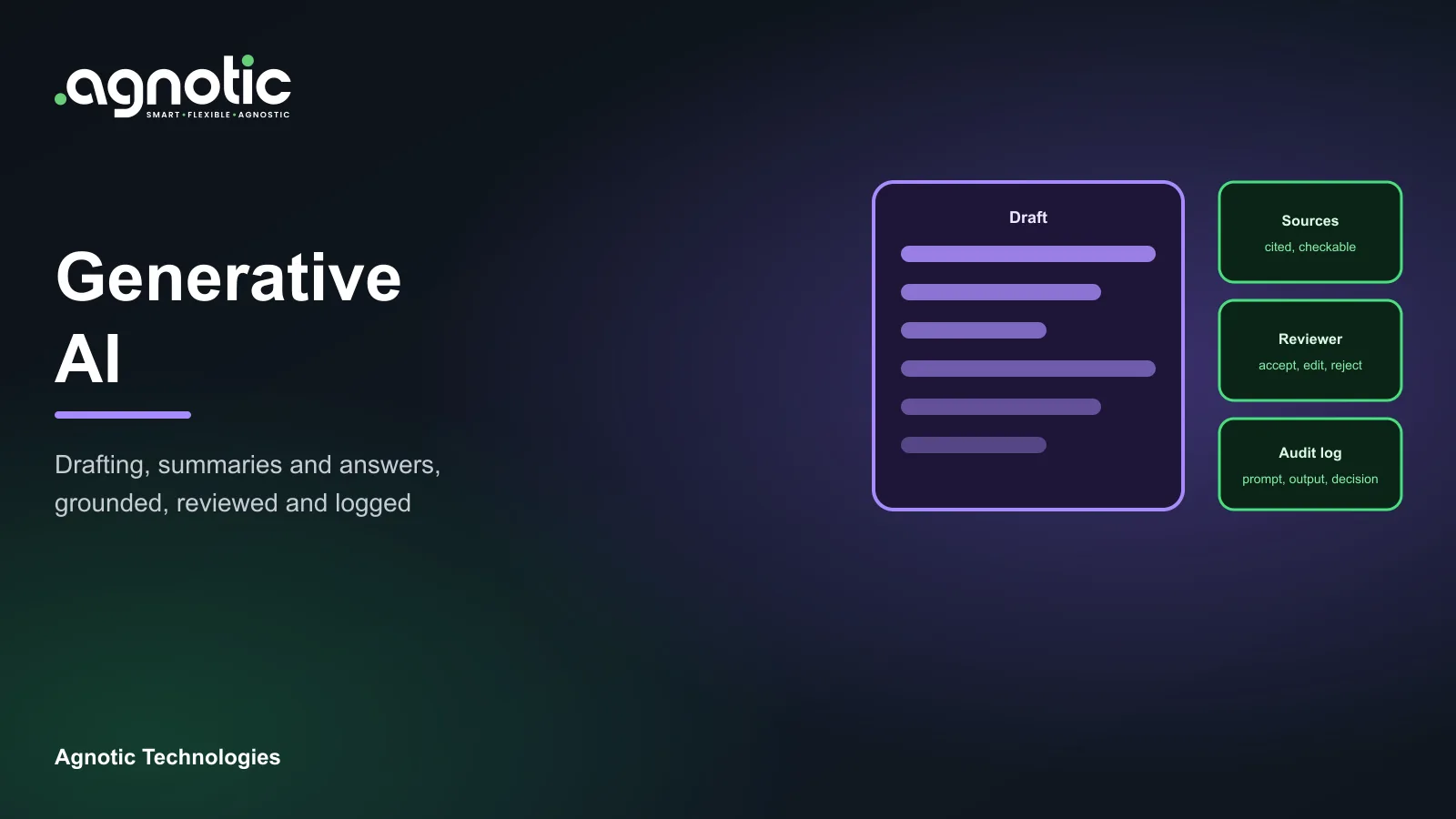
Ethical AI in custom software development starts with the same rules that apply to any clinical tool. The Section 1557 rule (45 CFR 92.210) requires covered entities to make reasonable efforts to identify and reduce discrimination risks from patient care decision support tools. The NIST AI Risk Management Framework gives a voluntary structure to govern, map, measure and manage AI risks. In practice, show clinicians where a suggestion came from, keep a person in the loop for clinical decisions, test models for accuracy and bias across patient groups, and monitor them after launch.
What does custom EHR software development mean for your build plan?
A sound custom healthcare software development strategy starts small and builds on a platform you can extend. These drivers set cost and timeline:
- Modules: The number of clinical and business modules in the first release.
- Specialties: Templates, order sets and rules for each specialty.
- Certification: Whether you need ONC certification, EPCS audit and other approvals.
- Integrations: Labs, pharmacies, payers, HIEs, devices and existing systems.
- Data migration: Moving records from the system you replace.
- Compliance: HIPAA safeguards, BAAs, accessibility and security testing.
- Support: Regulatory updates, code set changes and user support after launch.
If you are reading this as a custom EMR and EHR software development services guide, ask any partner to show how they would phase the work, which modules come first, and how the platform supports the modules that follow.
How Agnotic can help
Agnotic Technologies is a software development services company. We design and build custom EHR and EMR software and the apps that extend commercial EHRs: workflow discovery, platform architecture, clinical modules, HL7, FHIR and X12 integrations, and HIPAA safeguards. You own the code; we build it around your clinicians.
Build your custom EHR with Agnotic
Explore our EHR integration services or browse more articles in our HL7 integration hub.
Related reading on Agnotic
Go deeper on the EHR, telehealth and billing software covered in this guide.
Sources
- 42 CFR 495.4: Definitions, including certified EHR technology
- ASTP/ONC: Decision support interventions, 170.315(b)(11)
- ASTP/ONC HTI-5 Proposed Rule
- CMS: Electronic prescribing
- 21 CFR 1311.300: Requirements for EPCS application providers
- 45 CFR Part 162: HIPAA Administrative Requirements (transactions and code sets)
- 45 CFR Part 164, Subpart C: HIPAA Security Rule
- 45 CFR 92.210: Nondiscrimination in the use of patient care decision support tools