

01
Sponsors with in-house data management
A CDMS that matches their SOPs and standard forms library.



Studies slip at the end when queries pile up, lab data will not reconcile and the SDTM mapping starts too late. Agnotic Technologies builds CDMS and EDC software that designs the eCRF, the edit checks and the exports together, so the database can be locked on plan.
Trusted by global innovators











A clinical data management system (CDMS) is the software a sponsor or CRO uses to collect, clean and lock trial data: electronic case report forms (EDC), edit checks and queries, medical coding, external data loads and CDISC exports. Agnotic Technologies builds clinical trials CDMS platforms and EDC modules around your protocol and data management plan.
Lock is where every earlier shortcut in data management comes due.
Checks added late: edit checks written after go-live, so months of data are queried in one batch.
Query ping-pong: queries worded vaguely, answered vaguely and reopened, with no aging report anyone acts on.
Spreadsheet reconciliation: central lab, eCOA and IRT data matched to the eCRF by hand at the end of the study.
Mapping left to the end: eCRF fields that do not map cleanly to SDTM, found when the datasets are built.
Coding outside the system: adverse events and medications coded in a separate file, with no audit trail of who coded what.
Most cleaning effort is decided when the forms are built. These are the design rules we apply.
Fields follow CDASH where a standard exists, so collection lines up with SDTM from the first form.
Forms and visits come from the protocol's schedule of assessments, with conditional fields instead of free text.
Each field carries its intended SDTM domain and variable, reviewed with your programmers before go-live.
Edit checks are specified and tested with each form, not added once data starts arriving.
Modules we build for a CDMS or EDC, alone or added to the systems you already run.
Forms, visits and conditional logic built from the protocol, versioned for amendments.
Checks at entry and in batch, queries with owners, due dates and aging.
Verbatim terms coded against MedDRA and WHODrug dictionaries licensed by you, with coder review and audit.
Central lab, eCOA and IRT data loaded on schedule and reconciled against the eCRF.
Source data verification, data manager review, investigator sign-off and form freezing tracked per form.
Database lock under a controlled process, with SDTM datasets and ODM archives produced from the locked data.
The data standards, dictionaries and platforms behind the CDMS and EDC software we build.
The check types we specify with your data managers. The aim is to catch an error while the site still has the source in front of them.
| Check type | Example | When it runs | Who resolves it |
|---|---|---|---|
| Required field | Visit date left blank on a completed form | On save | Site staff |
| Range | A vital sign outside the range in the data management plan | On save | Site staff, confirming or correcting |
| Cross-form consistency | An adverse event start date before the consent date | On save or nightly | Site staff, after the data manager's query |
| Visit window | A visit date outside the protocol's window | On save | Site staff, or recorded as a deviation |
| External reconciliation | A lab sample date with no matching visit in the eCRF | After each data load | Data manager with the lab or site |
| Coding | A verbatim term too vague to code | During coding | Coder query to the site |
Measures we build reporting around, agreed with your data management lead before go-live.
By site and form, so old queries are chased first.
Shows sites falling behind on entry.
Verification, data manager review and investigator signature.
Lab, eCOA and IRT records with no eCRF match.
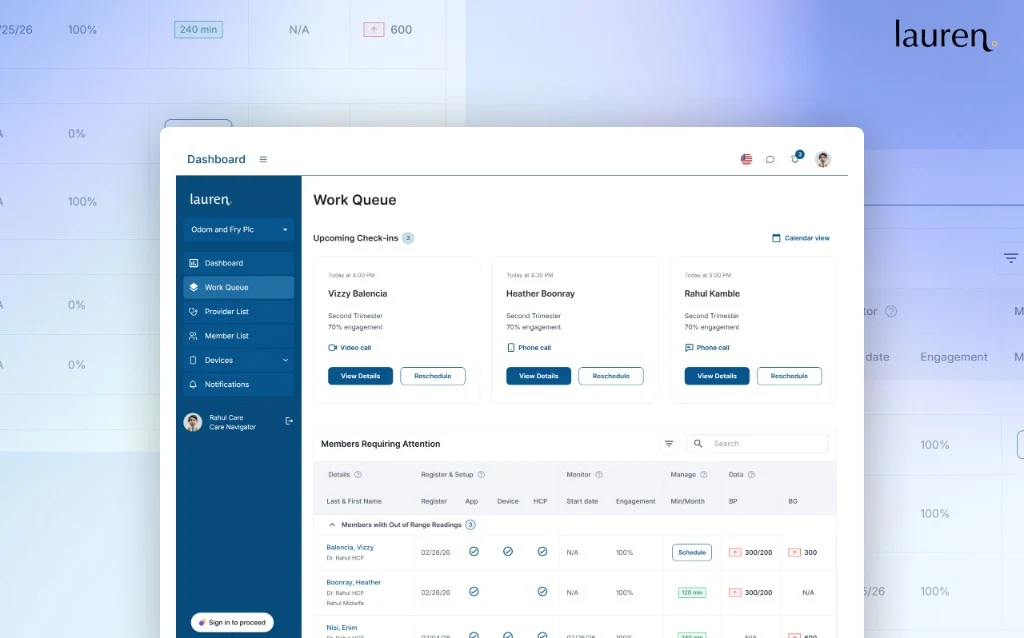
A HIPAA-ready maternal health platform enabling remote patient monitoring, care coordination, and personalized engagement from pre-pregnancy through postpartum.
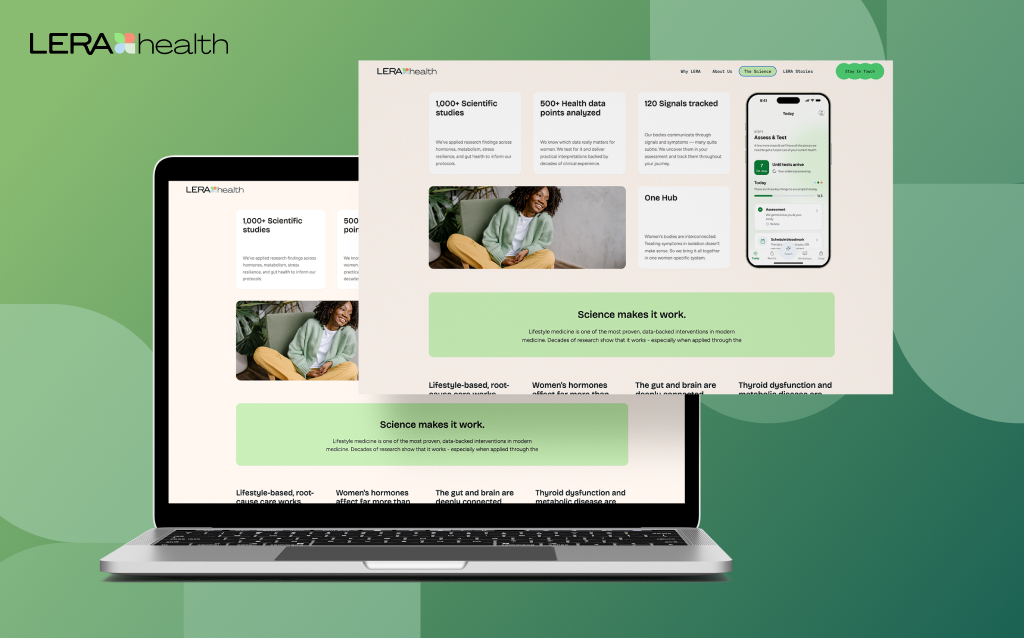
A women’s health product experience focused on guided care journeys, education, and compliance-aware workflows to support long-term engagement.
Teams that need data management software shaped to their own studies.
A CDMS that matches their SOPs and standard forms library.
Multi-sponsor EDC with study builds reused across clients.
eCRFs for device studies, with performance data from instruments.
Investigator-initiated studies across several hospitals.
Long-running observational data collection with periodic exports.
Clinical trials CDMS for startups building a data management product or service.
The systems that send data into the CDMS or take data out of it.
The lock readiness checklist we build into the data manager's dashboard, so each item shows as done or open at any time. Your SOPs decide the final list.
We build secure, scalable products designed for privacy, interoperability, and regulatory readiness from day one across every sector we serve.

Protect PHI with privacy-first architecture, encrypted storage and transmission, and strict access controls.

Implement lawful consent flows, data minimization, and secure processing for global data privacy.
We combine deep technical expertise with industry-specific knowledge to deliver solutions that aren't just functional, but transformational.
We implement rigorous security protocols and compliance standards (HIPAA, GDPR, SOC2) across all industrial solutions to protect sensitive data.
Our architectures are built to handle massive data loads and user bases, keeping performance steady whether you're serving ten or ten million.
Using our suite of internal tools and proven frameworks, we reduce development cycles and get your product to market 40% faster.
Beyond simple wrappers, we build deep-learning integrations and predictive analytics directly into the core of your industry-specific workflows.
How to build clinical trials CDMS software around one study first. Timing depends on scope, and we agree a fixed first release on the scoping call.
We agree the study, the forms library, the external data and the exports you need.
We go through your data management plan and edit check specification with your data managers.
eCRFs, edit checks and queries for one study, with audit trail and role-based access.
Medical coding, external data loads and CDISC exports added and tested against real study data.
Specifications and test evidence for your validation team, then support through lock under agreed terms.
Short facts behind clinical data management software, each linked to its primary source.
Under 21 CFR 312.62(b), an investigator must prepare and maintain adequate and accurate case histories for each individual in the investigation, and case histories include the case report forms and supporting data.
Source: 21 CFR 312.62(b) (eCFR)CDISC describes CDASH as a standard way to collect data consistently across studies and sponsors, so that data collection formats give clear traceability of submission data into SDTM.
Source: CDISC, CDASHCDISC states that SDTM is one of the required standards for data submission to FDA in the United States and PMDA in Japan, with FDA's requirements set out in its Data Standards Catalog.
Source: CDISC, SDTMCDISC describes ODM as a vendor-neutral, platform-independent format for exchanging and archiving clinical research data with their metadata and audit information, widely used to represent case report form content in EDC tools.
Source: CDISC, ODMICH E6(R3) says that before data are provided for final analysis and, where applicable, before the trial is unblinded, edit access to the data acquisition tools should be restricted.
Source: ICH E6(R3), section 3.16.1(r) (ICH)We don't just build products; we forge lasting partnerships. See how we've helped industry leaders transform their vision into technical reality.
“I can clearly see how Agnotic has a unique way of handling end-to-end development. They are always active on quick chat and provide support quickly.”

Aaron Phelan
Founder, Benchmark
“Agnotic combines deep technical expertise with strong domain knowledge. They understand the business context, anticipate challenges, and make collaboration smooth and effective.”

John Pasmore
Founder, Latimer
“Agnotic is the best technical team we evaluated. Their engineering excellence made our work dramatically easier and allowed us to stay focused on what matters most for maternal care outcomes. They took full ownership of the technical execution, and we are always happy to continue working together.”

Kim Smith
Founder, My Lauren
Pages for the systems that feed a CDMS or use its data.
The wider view of study software: recruitment, eConsent, participant apps and Part 11 controls.
The operational layer: sites, subjects, visit schedules, enrollment and monitoring.
Lab systems that produce the results a CDMS loads and reconciles.
EHR data read over HL7 FHIR R4, for studies that pull values from site records.
The safeguards we build into every system that holds patient data.
Explore other production-grade engineering platforms we deliver across healthcare.
The technical patterns behind this platform translate naturally into adjacent verticals.