

Patient-reported outcomes (ePRO)
Diaries and questionnaires the participant completes at home.
- Daily or event-driven diaries
- Entry windows set from the protocol
- Reminders and missed-entry alerts


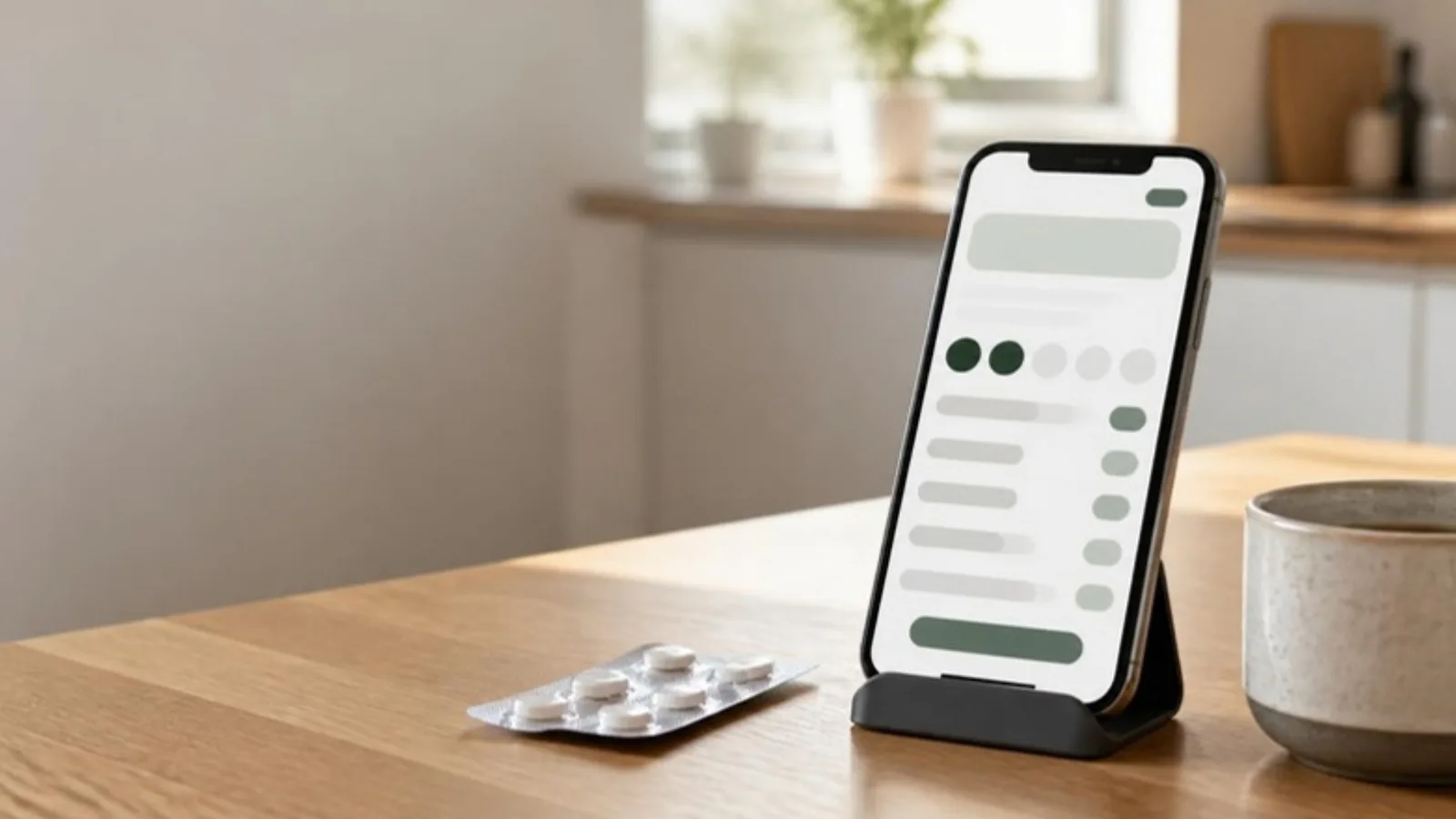
Outcome data is only usable when it is entered in its window, on the licensed wording, with a record of every change. Agnotic Technologies builds eCOA software for sponsors and CROs: patient diaries, clinician scales, reminders and offline capture, with audit trails designed in from the first release.
Trusted by global innovators











eCOA software for clinical trials captures clinical outcome assessments electronically: patient diaries and questionnaires (ePRO) and clinician, observer and performance scales, on a participant's phone or a provisioned device. Agnotic Technologies builds clinical trials eCOA with licensed instrument content, offline capture, compliance alerts and Part 11 audit trails for sponsors and CROs.
Each type has a different person entering the data, a different device and a different schedule. Most studies use more than one.
Diaries and questionnaires the participant completes at home.
Rating scales a trained clinician completes at a site visit.
Reports from a parent or caregiver who observes the participant.
Tasks the participant performs, timed or scored by the device.
Most eCOA problems surface weeks into enrollment, when they are hardest to fix.
Backfilled diaries: entries allowed outside their window, so a week of symptoms is typed in on visit day.
Changed instruments: wording, response order or layout altered on screen without the owner's approval or any equivalence review.
Lost entries: a diary completed offline never syncs, or syncs twice, and nobody notices until data review.
Wrong timestamps: device clocks and time zones not checked, so entries land on the wrong study day.
Late compliance signals: sites learn a participant stopped reporting only at the next visit.
Bring your own device (BYOD) and provisioned devices both work. The choice depends on the instrument, the population and the endpoint, and many studies offer a provisioned device to participants who cannot use their own.
| Question | BYOD (participant's own phone) | Provisioned device |
|---|---|---|
| How does the participant start? | Installs the study app and activates it with a site code | Receives a configured device at the site or by courier |
| How consistent is the screen? | Varies by phone model and text size, so layouts must adapt | Same model and settings for everyone |
| Who controls updates? | The phone's own operating system and app store | Your team, through mobile device management |
| Who can take part? | Participants with a compatible smartphone | Anyone the site trains on the device |
| What does logistics involve? | App support and activation help | Shipping, charging, replacement and return of devices |
| What must be tested? | A matrix of supported phones and operating system versions | One locked device image |
| When is it the better fit? | Long diaries in broad populations used to their own phones | Instruments needing a fixed layout, or populations without suitable phones |
Each entry has to show who entered it, when, on which device and against which version of the instrument. These are the rules we build first.
Each assessment opens and closes on its schedule, so late entries are blocked or flagged rather than silently accepted.
Device time is compared with server time and the participant's time zone at every sync, and drift is recorded.
Every response is tied to the participant or rater account and the device that captured it.
A correction never overwrites the original. It is added with a reason, and the earlier value stays in the audit trail.
Modules we build for an eCOA, alone or as one system around your protocol.
Licensed instruments rendered to the approved layout, with skip logic and scoring.
ClinRO and PerfO capture at visits, with rater sign-in and training checks.
Reminders to participants and alerts to site staff when entries are missed or a pattern needs follow-up.
Entries stored encrypted on the device and sent when a connection returns, with duplicate checks.
Versions, translations and license notes for every instrument, so a study build pulls the approved copy.
Completion by participant, site and assessment, without exposing blinded information.
The path we build for each entry, from the participant's screen to the data management team. Every step is logged.
The assessment schedule for this participant is sent to the device after activation and after each visit.
The participant completes the diary while the window is open; the app records device time and time zone.
The entry is saved encrypted on the device with an identifier, so it survives a lost signal or a closed app.
When a connection returns, queued entries are sent in order and the server confirms each one.
The server checks the window, rejects duplicates and records any clock drift before accepting the entry.
Accepted entries are written with their audit history and appear on the site dashboard.
Data moves to the EDC or data warehouse on an agreed schedule, in CDISC ODM or the agreed transfer format.
The apps, data formats and infrastructure behind the eCOA systems we build.
Measures we build reporting around, agreed with your clinical operations team before launch.
By participant, site and assessment.
Flagged to the site while there is still time to follow up.
Shows devices that have been offline too long.
With the reason and who approved each one.
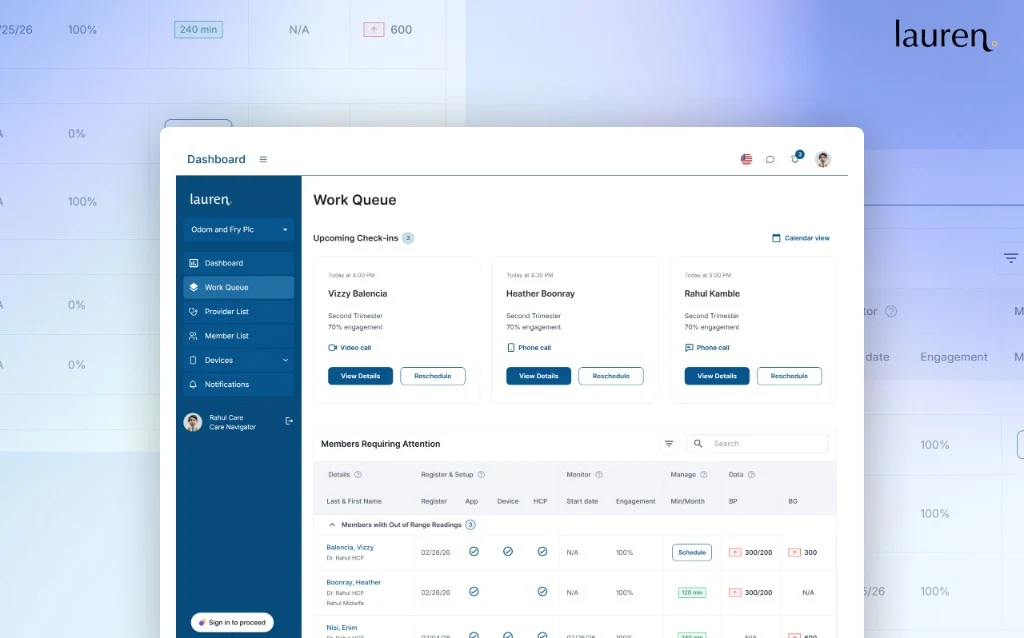
A HIPAA-ready maternal health platform enabling remote patient monitoring, care coordination, and personalized engagement from pre-pregnancy through postpartum.
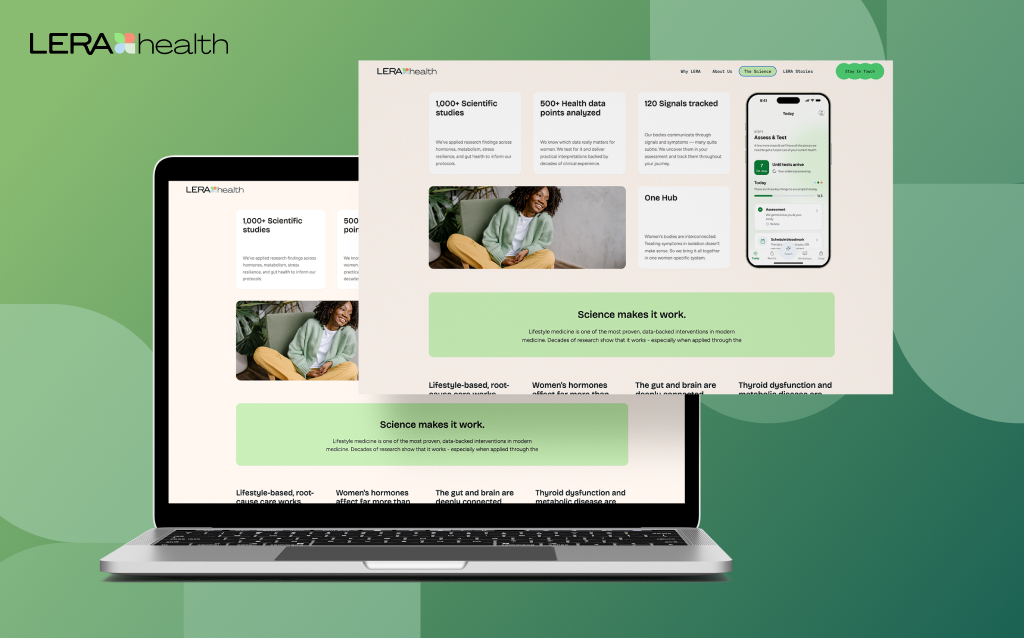
A women’s health product experience focused on guided care journeys, education, and compliance-aware workflows to support long-term engagement.
Teams whose study design needs more than a configured standard eCOA.
Questionnaires or performance tasks developed for one therapeutic area.
An eCOA layer that runs across several sponsors' studies.
Outcome capture inside the product being studied.
Investigator-led studies that need validated capture on a research budget.
Home-based diaries, wearables and remote visits in one participant app.
Clinical trials eCOA for startups building a study product or service.
The systems an eCOA reads its schedule from and sends its data to.
We build secure, scalable products designed for privacy, interoperability, and regulatory readiness from day one across every sector we serve.

Protect PHI with privacy-first architecture, encrypted storage and transmission, and strict access controls.

Implement lawful consent flows, data minimization, and secure processing for global data privacy.
We combine deep technical expertise with industry-specific knowledge to deliver solutions that aren't just functional, but transformational.
We implement rigorous security protocols and compliance standards (HIPAA, GDPR, SOC2) across all industrial solutions to protect sensitive data.
Our architectures are built to handle massive data loads and user bases, keeping performance steady whether you're serving ten or ten million.
Using our suite of internal tools and proven frameworks, we reduce development cycles and get your product to market 40% faster.
Beyond simple wrappers, we build deep-learning integrations and predictive analytics directly into the core of your industry-specific workflows.
How to build clinical trials eCOA one study at a time. Timing depends on scope, and we agree a fixed first release on the scoping call.
We agree the instruments, the device model and the systems the eCOA must connect to.
Your team confirms licenses with each instrument owner; we collect the approved text, layouts and translations.
Screens built to the approved layout and sent for owner or sponsor review where the license asks for it.
Specifications, traceability and test evidence delivered for your validation package and user acceptance testing.
Release under change control, with new versions of instruments or schedules handled as controlled updates.
Short facts behind electronic outcome capture, each linked to its primary source.
ICH E6(R3) defines a data acquisition tool as a paper or electronic tool that collects data from a data originator, and lists clinical outcome assessments, including patient-reported outcomes, interactive response technologies and wearable devices among its examples.
Source: ICH E6(R3) Guideline for Good Clinical Practice, Glossary (ICH)21 CFR 11.10(e) requires secure, computer-generated, time-stamped audit trails that independently record operator entries and actions that create, modify or delete electronic records, and record changes must not obscure previously recorded information.
Source: 21 CFR 11.10(e) (eCFR)ICH E6(R3) says the sponsor should allow correction of errors to data, including data entered by participants, where requested, and that such corrections should be justified and supported by source records around the time of original entry.
Source: ICH E6(R3), section 3.16.1(j) (ICH)ICH E6(R3) says the sponsor should not have exclusive control of data captured in data acquisition tools, in order to prevent undetectable changes.
Source: ICH E6(R3), section 3.16.1(l) (ICH)ICH E6(R3) says the investigator should have timely access to, and review, relevant data from external sources such as central laboratory data and, if appropriate, electronic patient-reported outcome (ePRO) data.
Source: ICH E6(R3), section 2.12.3 (ICH)We don't just build products; we forge lasting partnerships. See how we've helped industry leaders transform their vision into technical reality.
“I can clearly see how Agnotic has a unique way of handling end-to-end development. They are always active on quick chat and provide support quickly.”

Aaron Phelan
Founder, Benchmark
“Agnotic combines deep technical expertise with strong domain knowledge. They understand the business context, anticipate challenges, and make collaboration smooth and effective.”

John Pasmore
Founder, Latimer
“Agnotic is the best technical team we evaluated. Their engineering excellence made our work dramatically easier and allowed us to stay focused on what matters most for maternal care outcomes. They took full ownership of the technical execution, and we are always happy to continue working together.”

Kim Smith
Founder, My Lauren
Pages for the study software around an eCOA. Each covers its own system.
The wider view of study software: recruitment, eConsent, participant apps and Part 11 controls.
The operational layer: sites, subjects, visit schedules, enrollment and monitoring.
Wearables and home devices that feed sensor data into a study.
The safeguards we build into every system that holds patient data.
Explore other production-grade engineering platforms we deliver across healthcare.
The technical patterns behind this platform translate naturally into adjacent verticals.