

01
Sponsors with complex designs
Adaptive dosing, titration or several cohorts in one protocol.


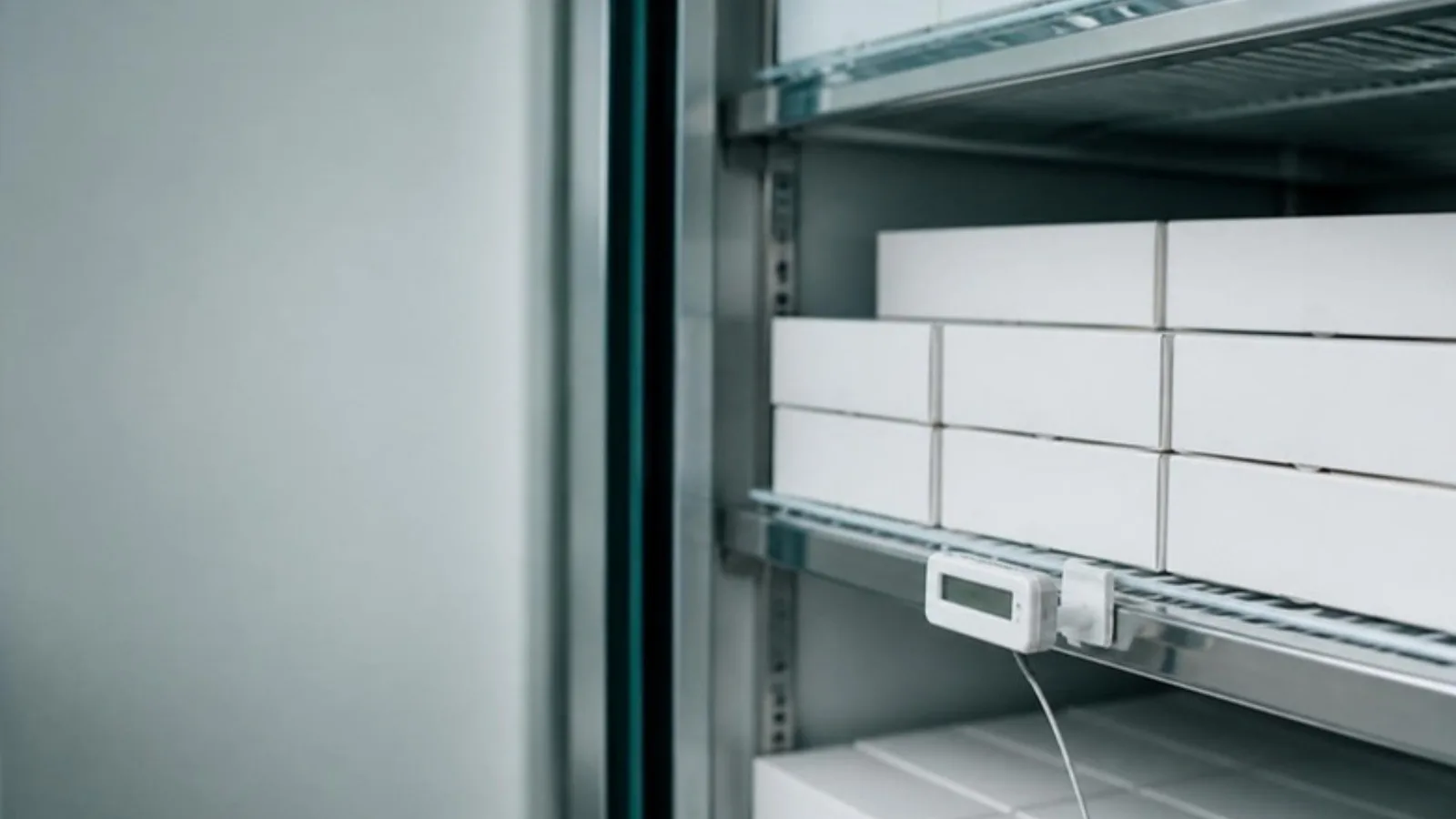
A wrong randomization, a site out of stock or an unblinding that cannot happen at night puts a study and its participants at risk. Agnotic Technologies builds IRT and RTSM software that randomizes to your protocol, keeps the blind, and moves the right kits to the right sites before they are needed.
Trusted by global innovators











Interactive response technology (IRT), also called RTSM, is the system that randomizes participants, assigns blinded kits at each visit and manages study drug supply from depot to site. Agnotic Technologies builds clinical trials IRT with tested randomization, emergency unblinding, resupply rules, temperature excursion handling and integration with your EDC.
IRT errors are expensive because they reach participants, kits and the analysis at the same time.
Randomization errors: a stratification factor or block set up wrongly and found only after participants are assigned.
Stockouts and waste: resupply rules that ship too late for a fast site or too much to a slow one.
Blind leaks: a report, an email or a kit number pattern that lets blinded staff infer the treatment arm.
Unblinding delays: an investigator who cannot unblind one participant quickly when there is a medical emergency.
Excursion kits dispensed: kits from a shipment that went out of range assigned before anyone reviewed them.
Two versions of the truth: IRT and EDC disagreeing on randomization or visit dates.
Your statistician chooses the method; the IRT has to carry it out exactly. This is how each common method changes what we build and test.
| Method | How it assigns | Typically used when | What the IRT must handle |
|---|---|---|---|
| Simple | Each participant assigned independently from a list | Large trials where chance imbalance is acceptable | A pre-generated list, consumed in order |
| Permuted block | Assignments balanced within blocks of a set size | Arms should stay balanced throughout enrollment | Block sizes hidden from blinded users |
| Stratified block | Separate block lists per combination of stratification factors | A few known factors, such as site or disease stage, affect outcome | Correct factor entry, with corrections controlled and logged |
| Minimization | Assignment that reduces imbalance across several factors as each participant enrolls | Many factors or small strata | The algorithm, its random element and a full log of each decision |
Blinding is a design property of the whole system, not one screen. These are the controls we build.
Only named unblinded roles, such as a pharmacist or supply manager, can see treatment information.
Kit numbers are drawn from a randomized list, so their sequence never points to an arm.
Reports, emails and data sent to the EDC are checked so they carry no treatment information for blinded users.
Emergency unblinding reveals one participant's treatment only, to the requesting investigator, and is logged.
Modules we build for an IRT or RTSM, configured from your protocol and supply plan.
The method your statistician specifies, run from a controlled list or algorithm, with stratification checks.
The right kit type assigned at each visit, matched to dose, titration and site stock.
Trigger and resupply levels per site, with shipments raised before stock runs short.
Depot stock, shipments, receipts and expiry dates, with lots released for use by an unblinded role.
Kits from an out-of-range shipment or storage period quarantined until a reviewer decides on their use.
Investigator unblinding at any hour, plus dispensing, returns and destruction records per kit.
The path we build for an emergency unblinding. It must work at any hour, and it must reveal no more than one participant's treatment.
The investigator authenticates with their own account; the action is limited to their site's participants.
The investigator selects the participant and records the reason, such as a medical emergency.
The system asks the investigator to confirm, so an unblinding is never done by accident.
The treatment for that one participant is shown to the investigator only, and other assignments stay hidden.
The sponsor's agreed contacts are told that an unblinding happened, without the treatment in the message to blinded staff.
Who unblinded, when, for which participant and why is stored in the audit trail for the trial records.
The interfaces, integrations and platforms behind the IRT and RTSM software we build.
Measures we build into the supply dashboard, agreed with your clinical supply lead.
By site and kit type.
So they are used, swapped or replaced in time.
With the shipment or storage event behind each one.
From each depot to each site.
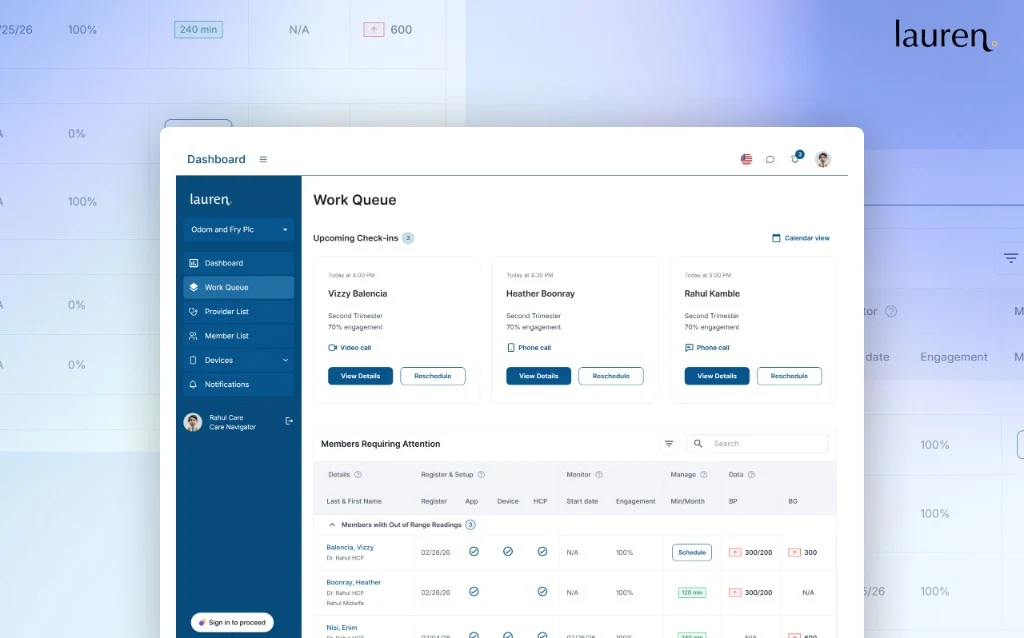
A HIPAA-ready maternal health platform enabling remote patient monitoring, care coordination, and personalized engagement from pre-pregnancy through postpartum.
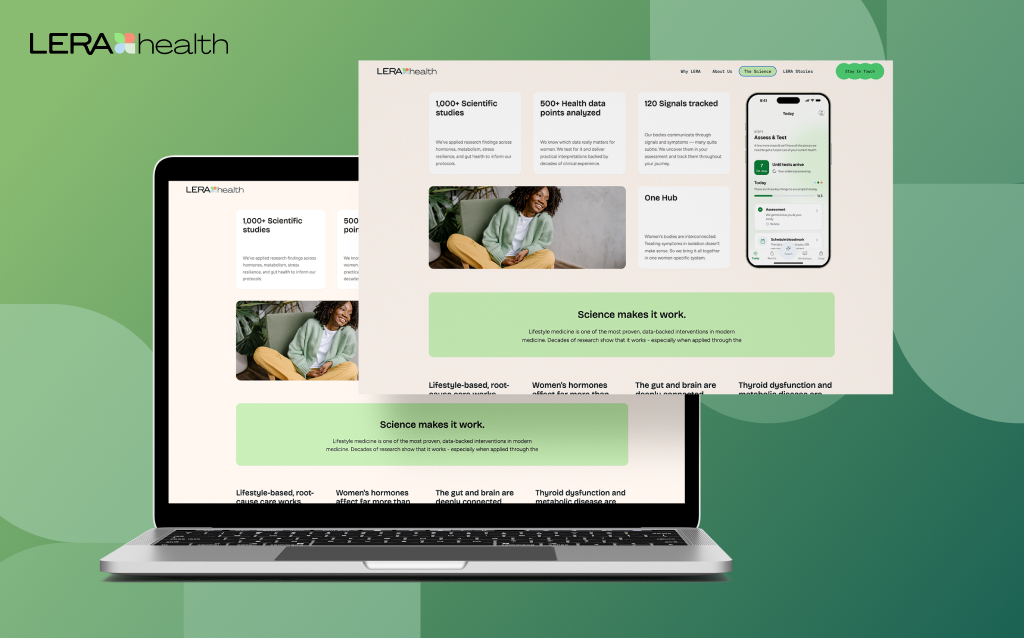
A women’s health product experience focused on guided care journeys, education, and compliance-aware workflows to support long-term engagement.
Teams whose randomization or supply needs go beyond a standard configuration.
Adaptive dosing, titration or several cohorts in one protocol.
Forecasting and resupply rules matched to their own depots.
IRT capability across several sponsors' studies.
Patient-specific products with tight chain of custody.
Randomization services for investigator-led trials.
Clinical trials IRT for startups building a randomization or supply product or service.
The systems that receive randomization and dispensing data from the IRT, or send it supply events.
The failure points we write test scripts for with your supply and statistics leads. Your validation plan decides the final set.
We build secure, scalable products designed for privacy, interoperability, and regulatory readiness from day one across every sector we serve.

Protect PHI with privacy-first architecture, encrypted storage and transmission, and strict access controls.

Implement lawful consent flows, data minimization, and secure processing for global data privacy.
We combine deep technical expertise with industry-specific knowledge to deliver solutions that aren't just functional, but transformational.
We implement rigorous security protocols and compliance standards (HIPAA, GDPR, SOC2) across all industrial solutions to protect sensitive data.
Our architectures are built to handle massive data loads and user bases, keeping performance steady whether you're serving ten or ten million.
Using our suite of internal tools and proven frameworks, we reduce development cycles and get your product to market 40% faster.
Beyond simple wrappers, we build deep-learning integrations and predictive analytics directly into the core of your industry-specific workflows.
How to build clinical trials IRT from your protocol and supply plan. Timing depends on scope, and we agree a fixed first release on the scoping call.
We agree the design, the randomization method, the supply chain and the systems to connect.
Randomization, dispensing, resupply and unblinding rules written up for sign-off by your statistics and supply leads.
Randomization, dispensing and emergency unblinding for one study, tested against the scenario checklist.
Depots, resupply, excursions and EDC integration added and tested with your supply team.
Test evidence for your validation package, then mid-study changes under change control and support under agreed terms.
Short facts behind randomization, blinding and drug supply software, each linked to its primary source.
Under 21 CFR 314.126(b)(4), an adequate and well-controlled study assigns patients to treatment and control groups in a way that minimizes bias, and in a concurrently controlled study assignment is ordinarily by randomization, with or without stratification.
Source: 21 CFR 314.126(b)(4) (eCFR)ICH E6(R3) says that in an emergency the investigator should be prepared and capable from the start of the trial to unblind without undue delay, and should promptly document and explain any premature unblinding to the sponsor.
Source: ICH E6(R3), section 2.11 (ICH)For blinded trials, ICH E6(R3) asks the sponsor for a mechanism that lets the investigator rapidly identify the product in a medical emergency while protecting the treatment assignment of the other participants.
Source: ICH E6(R3), section 3.15.2(d)(ii) (ICH)Under 21 CFR 312.57(a), a sponsor must keep records of the receipt, shipment or other disposition of the investigational drug, including the investigator it was shipped to and the date, quantity and batch or code mark of each shipment.
Source: 21 CFR 312.57(a) (eCFR)Under 21 CFR 312.62(a), an investigator must keep adequate records of the disposition of the drug, including dates, quantity and use by subjects, and return or otherwise dispose of unused supplies when the investigation ends.
Source: 21 CFR 312.62(a) (eCFR)We don't just build products; we forge lasting partnerships. See how we've helped industry leaders transform their vision into technical reality.
“I can clearly see how Agnotic has a unique way of handling end-to-end development. They are always active on quick chat and provide support quickly.”

Aaron Phelan
Founder, Benchmark
“Agnotic combines deep technical expertise with strong domain knowledge. They understand the business context, anticipate challenges, and make collaboration smooth and effective.”

John Pasmore
Founder, Latimer
“Agnotic is the best technical team we evaluated. Their engineering excellence made our work dramatically easier and allowed us to stay focused on what matters most for maternal care outcomes. They took full ownership of the technical execution, and we are always happy to continue working together.”

Kim Smith
Founder, My Lauren
Pages for the systems and teams around randomization and supply.
The operational layer: sites, subjects, visit schedules, enrollment and monitoring.
The wider view of study software: recruitment, eConsent, participant apps and Part 11 controls.
Software for pharma operations beyond the trial itself.
The safeguards we build into every system that holds patient data.
Explore other production-grade engineering platforms we deliver across healthcare.
The technical patterns behind this platform translate naturally into adjacent verticals.