

Sponsor
Records of the sponsor's own trial activities.
- Protocol and amendments
- Regulatory submissions and approvals
- Monitoring plans and reports



A trial master file fails an inspection when records are late, misfiled or missing a signature, not when the software lacks features. Agnotic Technologies builds eTMF software that classifies each record on upload, routes it through quality checks and shows what is still missing for every site and milestone.
Trusted by global innovators











An electronic trial master file (eTMF) is the system that holds a clinical trial's essential records, such as protocols, approvals, site and sponsor documents, filed, quality checked and kept ready for inspection and archiving. Agnotic Technologies builds clinical trials eTMF software with TMF Standard Model classification, completeness tracking, site workflows and retention controls.
Essential records come from several parties. The eTMF has to know who owns each record, who may see it and where the original is kept.
Records of the sponsor's own trial activities.
Records for activities the sponsor has transferred to them.
Records the investigator or institution generates and controls.
Records behind the systems used in the trial.
The same failure points come up again and again. Most are process problems the software can prevent.
Late filing: records uploaded months after the event, so the TMF does not show how the trial was run at the time.
Misclassification: a record filed under the wrong artifact cannot be found when an inspector asks for it.
Version gaps: a superseded document replaced with no history, so nobody can show which version was in use.
Missing signatures or dates: records filed without the approval they need, discovered at QC or at inspection.
Unknown locations: records held in another system or at a vendor, with no record of where they are.
Classification decides whether a record can ever be found again. These are the rules we build around.
Zones, sections and artifacts follow the TMF Standard Model, adapted to your SOPs and agreed before the first upload.
Study, country, site, artifact, version and document date captured when the record arrives, not added later.
Classification can be suggested from the content, but a person confirms it before the record is filed.
Records kept in another system are listed with where they are held, so the TMF stays complete.
Modules we build for an eTMF, alone or connected to the trial systems you already run.
Single and bulk upload, scanned paper capture and classification to your artifact list.
A review step for each record, with findings sent back to the person who filed it.
Expected records by study, country and site, with missing and overdue items shown.
A portal for sites to send records and receive sponsor documents, while their own ISF records stay under their control.
Read-only, time-limited access for monitors, auditors and inspectors, with every view logged.
Study close, archiving with full history and retention dates set per record type.
The path we build for every essential record. Each step is recorded with who did it and when.
A record arrives by upload, scan, email capture or a feed from another trial system.
The filer confirms the artifact and adds the metadata the taxonomy requires.
A reviewer checks the record is complete, legible, signed and dated where needed, and correctly classified.
The approved record is filed, earlier versions are kept, and the expected list for that site updates.
Study teams, monitors and sites see the records their role allows, and inspectors get read-only access.
At study close the TMF is reconciled, locked and archived with its audit history and retention dates.
The taxonomy, document handling and platforms behind the eTMF software we build.
An example of the expected-record list we configure. Your trial design and SOPs decide the real list; ICH E6(R3) notes that some essential records should generally be in place before the trial starts.
| Stage | Example records | Who usually files | What the eTMF checks |
|---|---|---|---|
| Before the trial starts | Investigator's Brochure, signed protocol, IRB/IEC approval and composition, sample case report forms and participant information | Sponsor or CRO | Present and approved before site activation |
| Site activation | Site staff qualifications, delegation records, site approvals | Site, through the exchange portal | Present for each site before its first participant |
| During the trial | Protocol amendments, safety notifications, monitoring reports, investigational product shipment records | Sponsor, CRO and sites | Filed within the agreed time and in the current version |
| Participant level | Signed and dated consent forms, enrollment log | Site, in the ISF | Location recorded; originals stay with the site |
| Close and archive | Product accountability and disposition, final reports, clinical trial report | Sponsor and sites | Reconciled, locked and given retention dates |
Measures we build into the TMF dashboard, agreed with your clinical operations lead.
By study, country and site.
How long records take to reach the TMF.
By finding type, so training targets the right people.
Assigned to an owner with a due date.
A HIPAA-ready maternal health platform enabling remote patient monitoring, care coordination, and personalized engagement from pre-pregnancy through postpartum.
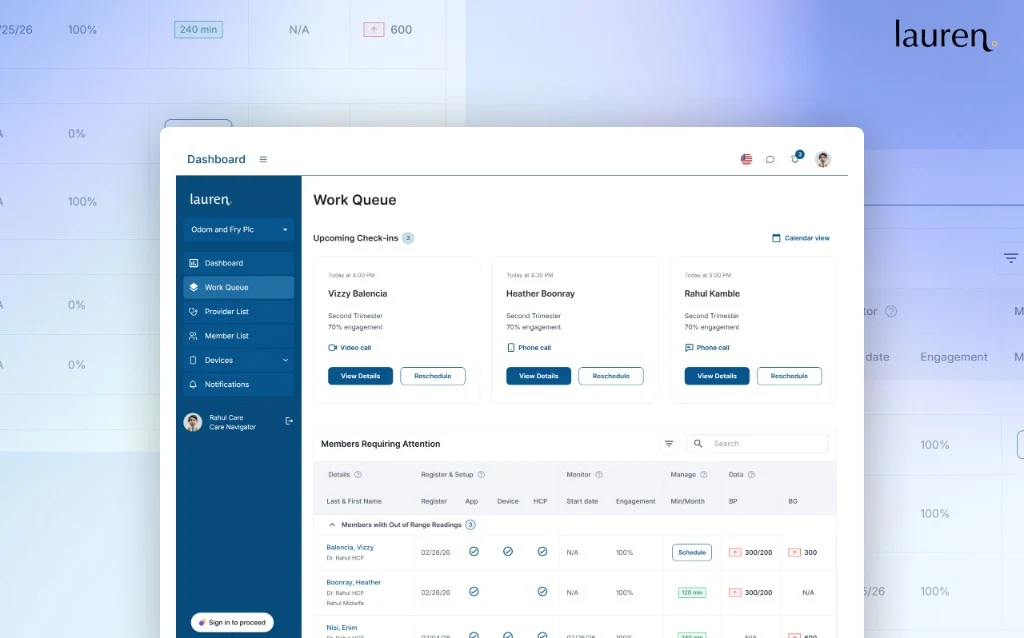
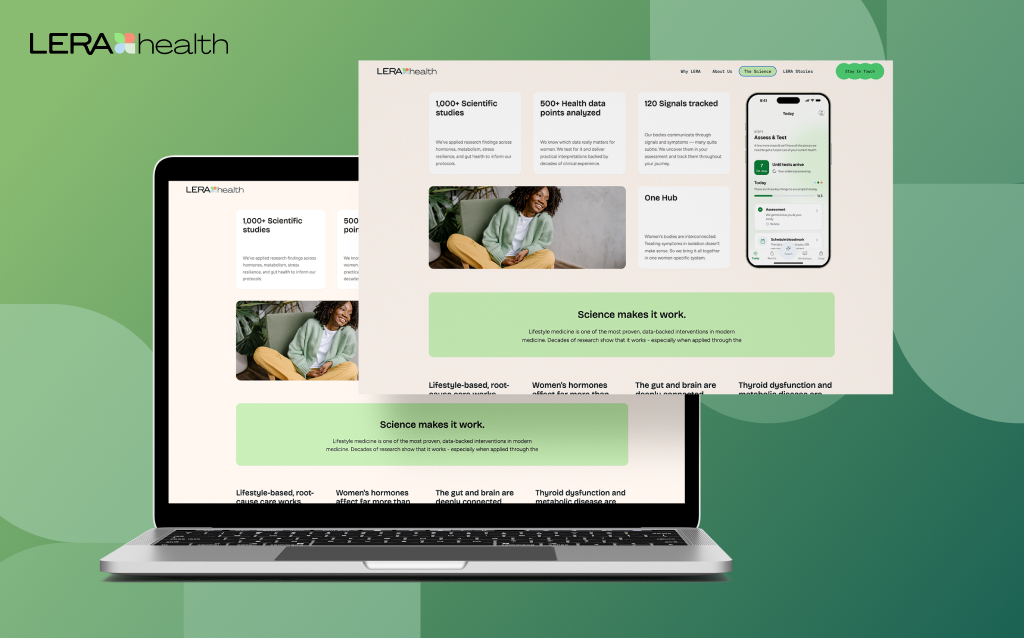
A women’s health product experience focused on guided care journeys, education, and compliance-aware workflows to support long-term engagement.
Teams whose trial records need a structure shaped to their own processes.
A first eTMF built around the SOPs they already follow.
One eTMF across many sponsors, with each sponsor's structure kept separate.
Electronic investigator site files across many research sites.
Trial records alongside device-specific documentation.
Investigator-led trials that need an inspection-ready TMF.
Clinical trials eTMF for startups building a trial operations product or service.
The systems that send records to the eTMF or read its status.
We build secure, scalable products designed for privacy, interoperability, and regulatory readiness from day one across every sector we serve.

Protect PHI with privacy-first architecture, encrypted storage and transmission, and strict access controls.

Implement lawful consent flows, data minimization, and secure processing for global data privacy.
We combine deep technical expertise with industry-specific knowledge to deliver solutions that aren't just functional, but transformational.
We implement rigorous security protocols and compliance standards (HIPAA, GDPR, SOC2) across all industrial solutions to protect sensitive data.
Our architectures are built to handle massive data loads and user bases, keeping performance steady whether you're serving ten or ten million.
Using our suite of internal tools and proven frameworks, we reduce development cycles and get your product to market 40% faster.
Beyond simple wrappers, we build deep-learning integrations and predictive analytics directly into the core of your industry-specific workflows.
How to build clinical trials eTMF software around your existing SOPs. Timing depends on scope, and we agree a fixed first release on the scoping call.
We agree the studies, the parties who file, the systems to connect and any records to migrate.
Your artifact list mapped to the TMF Standard Model, with metadata and expected lists agreed.
Upload, classification, QC and completeness tracking for one study.
Site exchange, inspection access, archiving and migration of records from paper or another system.
Specifications and test evidence for your validation team, then support under agreed terms.
Short facts behind trial master file software, each linked to its primary source.
ICH E6(R3) says essential records should be kept in repositories held by the sponsor and by the investigator or institution, which may be called the trial master file (TMF) and, at the site, the investigator site file (ISF).
Source: ICH E6(R3), Appendix C.2.3 (ICH)ICH E6(R3) says sponsors and investigators should keep a record of where essential records are located, and that storage systems used during the trial and for archiving should provide identification, version history, search and retrieval.
Source: ICH E6(R3), Appendix C.2.4 (ICH)ICH E6(R3) says essential records should be retained so they stay complete, readable and readily available, directly accessible on request by regulators, monitors and auditors, and any alteration should be traceable.
Source: ICH E6(R3), Appendix C.2.6 (ICH)CDISC describes the TMF Standard Model, formerly the TMF Reference Model, as a standardized taxonomy and metadata for TMF content that can be adapted to an electronic or paper TMF and does not require any specific technology.
Source: CDISC, Trial Master File StandardUnder 21 CFR 312.57(c), an IND sponsor must retain its required records and reports for 2 years after a marketing application is approved for the drug or, if it is not approved, until 2 years after shipment and delivery for investigational use is discontinued and FDA is notified.
Source: 21 CFR 312.57(c) (eCFR)We don't just build products; we forge lasting partnerships. See how we've helped industry leaders transform their vision into technical reality.
“I can clearly see how Agnotic has a unique way of handling end-to-end development. They are always active on quick chat and provide support quickly.”

Aaron Phelan
Founder, Benchmark
“Agnotic combines deep technical expertise with strong domain knowledge. They understand the business context, anticipate challenges, and make collaboration smooth and effective.”

John Pasmore
Founder, Latimer
“Agnotic is the best technical team we evaluated. Their engineering excellence made our work dramatically easier and allowed us to stay focused on what matters most for maternal care outcomes. They took full ownership of the technical execution, and we are always happy to continue working together.”

Kim Smith
Founder, My Lauren
Pages for the systems around the trial master file.
The operational layer: sites, subjects, visit schedules, enrollment and monitoring.
The wider view of study software: recruitment, eConsent, participant apps and Part 11 controls.
Scanned and faxed documents turned into classified, searchable records.
The safeguards we build into every system that holds patient data.
Explore other production-grade engineering platforms we deliver across healthcare.
The technical patterns behind this platform translate naturally into adjacent verticals.