

01
Infusion pump tracking
Pumps located by floor and room, with clean and dirty status, so units stop hoarding them.


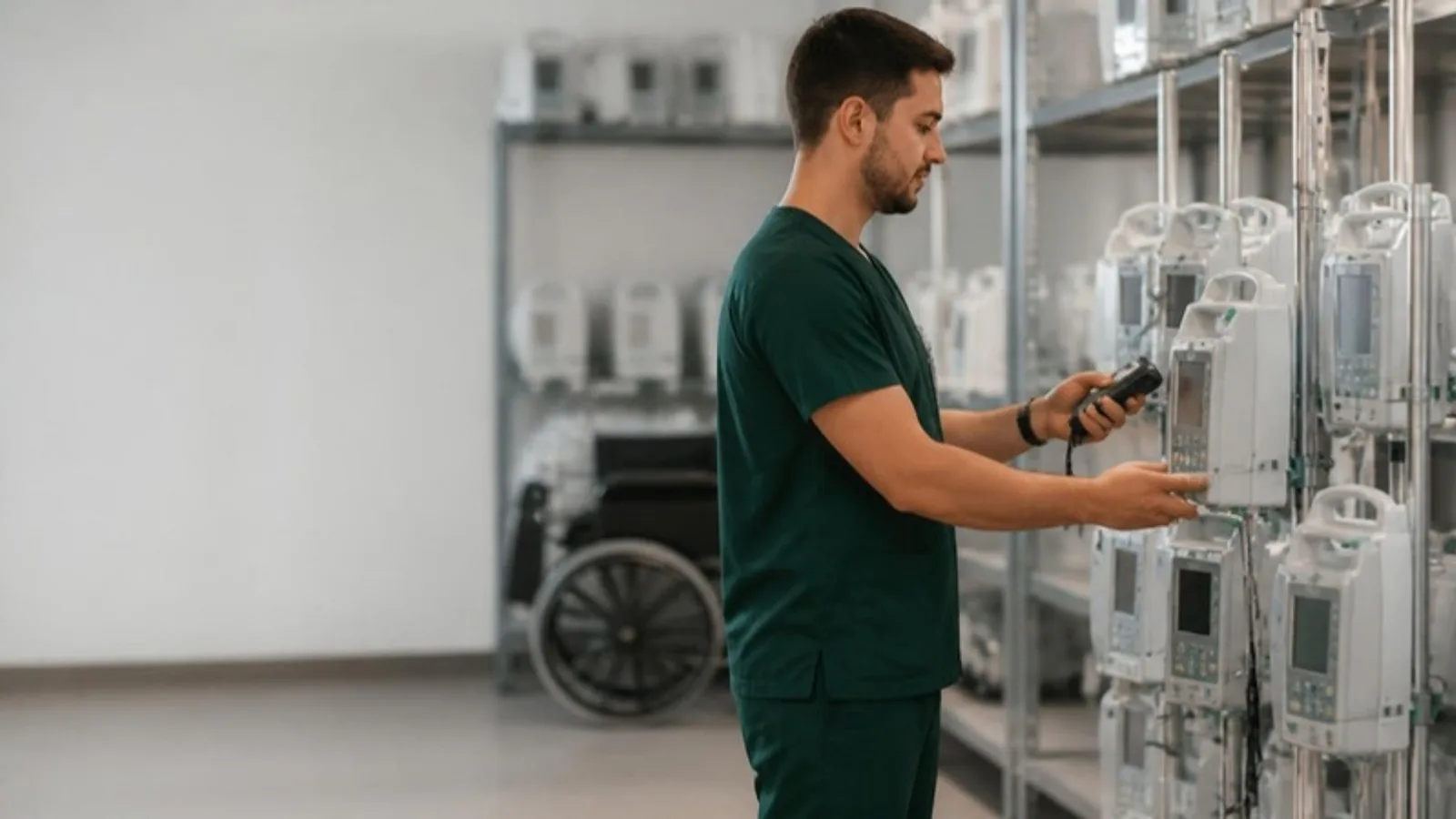
Nurses lose time hunting for pumps and wheelchairs, and biomedical teams cannot find devices that are due for maintenance. Agnotic Technologies builds RFID and RTLS software for hospitals that turns tag reads into locations, alerts and work orders, connected to your EHR and CMMS.
Trusted by global innovators











RFID in hospitals is the use of radio frequency tags and readers to locate equipment, patients, staff and supplies, and to track temperatures and sterile instrument trays. Agnotic Technologies builds the software around the hardware: location services, rules, dashboards and the interfaces that send tag events into the EHR and CMMS.
Most hospitals that struggle with RFID bought hardware that works. The failures sit in the software and the operating model around it.
Wrong accuracy for the job: zone-level reads used where staff need to know the exact room or bay.
Tags with no owner: nobody updates the asset record when a tag is replaced, so the map shows a pump that left months ago.
Reader gaps: stairwells, elevators and basements with no coverage, where equipment drops out of view.
Alerts nobody acts on: every par-level and temperature alert goes to a shared inbox.
Islands of data: tag events stay in the RTLS vendor console and never reach the CMMS work order or the EHR.
Interference not checked: readers installed near sensitive medical devices without a compatibility check by clinical engineering.
No single tag type covers every use case. This table is the starting point we use with clinical engineering; a site survey sets the final choice.
| Technology | Location accuracy | Tag power | Typical hospital use | Trade-off |
|---|---|---|---|---|
| Passive UHF RFID | Read zone at a portal or reader | No battery | Supplies, linen, sterile trays, doorway checkpoints | Knows only where a tag last passed a reader |
| Active RFID | Zone or floor | Battery | Large mobile equipment, wheelchairs, beds | Needs a battery replacement routine |
| Bluetooth Low Energy (BLE) | Room or zone, set by beacon density | Battery | Infusion pumps, staff badges, patient wristbands | Accuracy depends on beacon placement and tuning |
| Infrared or ultrasound | Room, bay or bed | Battery | Patient flow, room-level staff location | More hardware in every room |
| NFC or HF RFID | Touch or very short range | No battery | Instrument check-in, specimen and medication confirmation | Needs a deliberate scan by a person |
Three decisions on the scoping call shape the whole build. We make them with clinical engineering, nursing, facilities and IT security together.
Decide what each team needs to know, such as which floor a pump is on or which bay a patient is in, then choose the technology that answers it.
Agree which events create a CMMS work order, which update the EHR, and which only feed a dashboard.
A location linked to a patient is protected health information, so access, audit and retention rules apply from the first release.
The software around your tags and readers, built for your hospital and connected to the systems your teams already use.
Turns raw reads from RFID, BLE and infrared readers into floor, zone and room locations, with smoothing for noisy reads.
One record per tagged device, linked to its UDI, serial number and CMMS asset ID, with every tag swap recorded.
Room-level timestamps for patient journeys and staff presence, feeding bed boards and throughput dashboards.
Sensor tags in medication fridges, freezers and blood storage, with alerts escalated until someone acknowledges them.
Instrument trays scanned through decontamination, sterilization, storage and the operating room, so each tray's history is known.
Tag events sent to the EHR as HL7 v2 messages or FHIR resources, and to the CMMS as work orders.
Each tag read passes through five stages before anyone acts on it. We design and monitor each stage, because each has its own failure mode.
A passive, active, BLE or infrared tag is read by a fixed reader, a portal or a handheld scanner, which reports the tag ID and signal data.
Reads are filtered, de-duplicated and resolved to a floor, zone or room, with a confidence value attached.
The tag ID is matched to an asset, a patient wristband or a staff badge. Patient matches use the ADT feed, so a wristband maps to the current encounter.
Rules decide what happens next: a par-level alert, a temperature excursion, a device overdue for maintenance or a tray that skipped a step.
Maintenance events become CMMS work orders, patient location and device use go to the EHR over HL7 v2 or FHIR, and every event is written to an audit log.
Chosen to fit your existing readers, your EHR and your network team's tooling.
Measures we build dashboards around and review with your clinical engineering and nursing leads.
How long staff spend finding a pump, wheelchair or bed, before and after go-live.
Time each device type spends in use, idle or in maintenance, to guide purchasing.
Areas where tags are seen consistently, and the gaps that need more readers.
Temperature and par-level alerts acknowledged, and how long acknowledgement took.
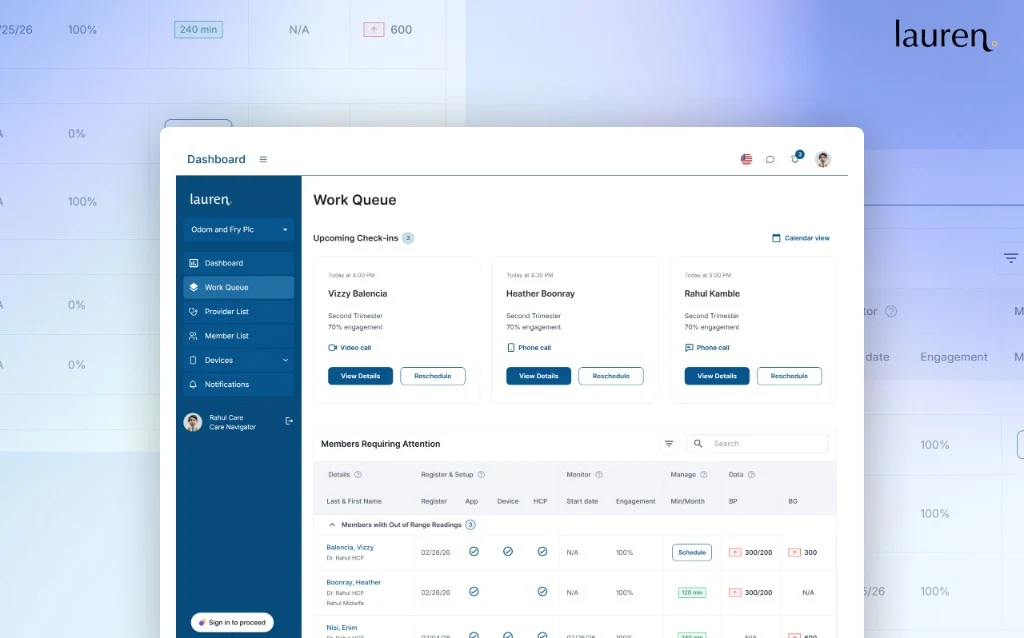
A HIPAA-ready maternal health platform enabling remote patient monitoring, care coordination, and personalized engagement from pre-pregnancy through postpartum.
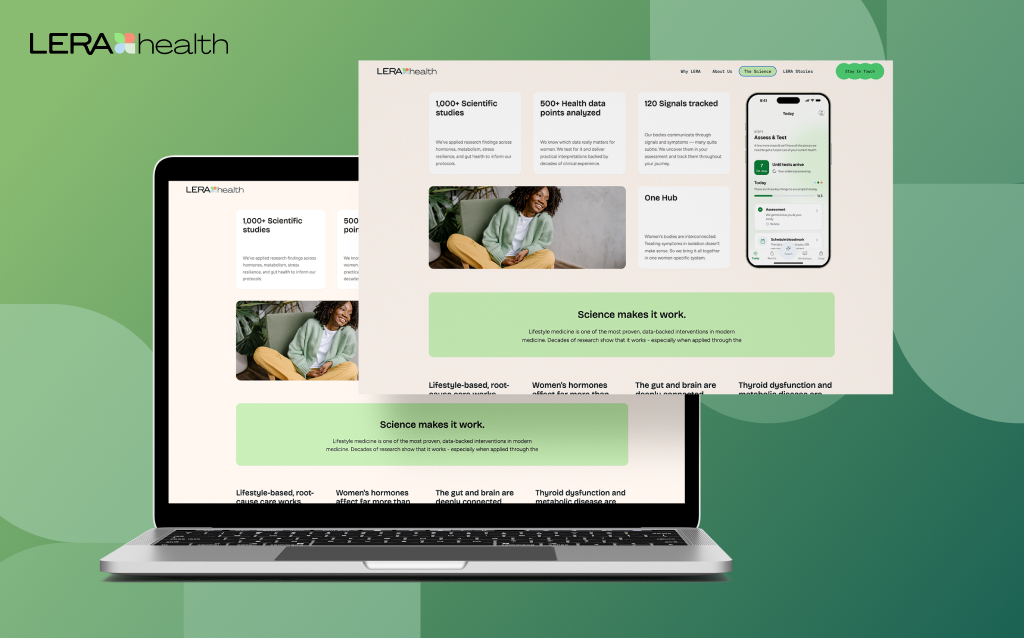
A women’s health product experience focused on guided care journeys, education, and compliance-aware workflows to support long-term engagement.
Common first releases, each scoped to one unit or one asset class before it spreads.
Pumps located by floor and room, with clean and dirty status, so units stop hoarding them.
Transport and patient flow teams see where free wheelchairs and beds are.
Devices due for inspection located automatically and pushed to CMMS work orders.
Medication and blood fridges monitored continuously, with escalating alerts.
Instrument tray history from decontamination to the operating room.
Room-level timestamps for emergency department and perioperative throughput.
The systems a hospital tracking program reads from and writes to.
We build secure, scalable products designed for privacy, interoperability, and regulatory readiness from day one across every sector we serve.

Protect PHI with privacy-first architecture, encrypted storage and transmission, and strict access controls.

Enabling standardized health data exchange through standards-based API mappings.
We combine deep technical expertise with industry-specific knowledge to deliver solutions that aren't just functional, but transformational.
We implement rigorous security protocols and compliance standards (HIPAA, GDPR, SOC2) across all industrial solutions to protect sensitive data.
Our architectures are built to handle massive data loads and user bases, keeping performance steady whether you're serving ten or ten million.
Using our suite of internal tools and proven frameworks, we reduce development cycles and get your product to market 40% faster.
Beyond simple wrappers, we build deep-learning integrations and predictive analytics directly into the core of your industry-specific workflows.
How to build RFID in hospitals without disrupting care: one asset class on one unit first. Timing depends on scope and the hardware already installed; we agree a fixed first release on the scoping call.
We agree the questions each team needs answered and the unit for the first release.
Existing readers, tags, network coverage and target systems reviewed, with clinical engineering checking interference risk near medical devices.
One asset class on one unit, running from tag read to CMMS or EHR record, with monitoring.
More units and use cases, such as temperature monitoring or patient flow, added on the same platform.
Reader health monitoring, tag lifecycle management and interface changes under agreed change control.
Short facts we design around, each linked to its primary source.
FDA describes RFID as a wireless system of tags and readers, states that it is not aware of adverse events associated with RFID, and notes concern about electromagnetic interference with electronic medical devices.
Source: FDA, Radio Frequency Identification (RFID)Under FCC rules, a Part 15 radio frequency device may operate only on the condition that it causes no harmful interference and accepts interference caused by other equipment.
Source: 47 CFR 15.5 (eCFR)FDA requires a medical device's unique device identifier (UDI) to be shown on the label in plain text and in an automatic identification and data capture (AIDC) form that can be entered into electronic systems automatically.
Source: 21 CFR 801.40 (eCFR)The HIPAA Security Rule requires administrative, physical and technical safeguards for electronic protected health information.
Source: 45 CFR Part 164 Subpart C (eCFR)We don't just build products; we forge lasting partnerships. See how we've helped industry leaders transform their vision into technical reality.
“I can clearly see how Agnotic has a unique way of handling end-to-end development. They are always active on quick chat and provide support quickly.”

Aaron Phelan
Founder, Benchmark
“Agnotic combines deep technical expertise with strong domain knowledge. They understand the business context, anticipate challenges, and make collaboration smooth and effective.”

John Pasmore
Founder, Latimer
“Agnotic is the best technical team we evaluated. Their engineering excellence made our work dramatically easier and allowed us to stay focused on what matters most for maternal care outcomes. They took full ownership of the technical execution, and we are always happy to continue working together.”

Kim Smith
Founder, My Lauren
This page covers RFID across the hospital. These pages go deeper on single parts of it.
An asset tracking platform with utilization dashboards, par levels and maintenance automation.
Maintenance work orders and schedules that tag events can feed.
Readings, settings and alarms from bedside devices filed into the EHR.
The safeguards we build into every system that handles patient location data.
Explore other production-grade engineering platforms we deliver across healthcare.
The technical patterns behind this platform translate naturally into adjacent verticals.