Mobile medical equipment
Pumps, ventilators, wheelchairs, and monitors tracked across units.


We build RTLS platforms that track equipment across a hospital with RFID and BLE tags: real-time location, utilization dashboards, and PAR-level and maintenance automation so staff stop hunting for pumps and wheelchairs.
Trusted by global innovators









Hospital asset management is tracking mobile medical equipment, such as infusion pumps, wheelchairs and monitors, so staff can find it, keep it maintained and buy only what is needed. Agnotic Technologies builds hospital asset tracking software for hospitals and health systems, using RFID or BLE tags and a real-time location system (RTLS).
Without it, nurses hunt for pumps, biomed cannot locate devices due for maintenance, and departments over-purchase because utilization is invisible.
We build the tag-to-dashboard pipeline: utilization dashboards that curb phantom purchases, PAR-level automation for every floor and maintenance scheduling tied to specific tagged devices.
What it is
Hospital asset management uses a real-time location system to track mobile equipment (pumps, wheelchairs, monitors) across a facility with RFID and BLE tags, so staff can find assets instantly.
The payoff is analytics: utilization data that curbs over-purchasing, PAR automation that keeps floors stocked, and maintenance tracking tied to specific devices. We build the pipeline that turns location into those outcomes.
See how we connect RFID/BLE tags, RTLS location engines, and utilization dashboards across the asset platforms we build.
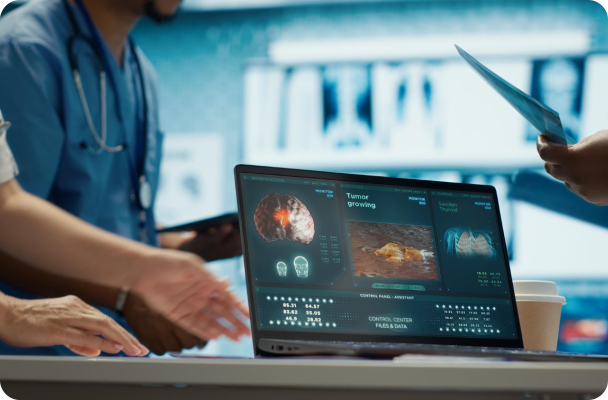
Each capability turns raw location data into an operational or financial outcome.
Pipelines that ingest reads from passive and active RFID, BLE beacons, and Wi-Fi RTLS infrastructure into a single normalized location stream across the facility.
Zone- and room-level positioning with map overlays and search, so staff find a specific pump or wheelchair in seconds instead of walking the floor.
Fleet-level analytics on how often each asset type is actually in use, revealing true demand so procurement stops over-buying against phantom shortages.
Automatic par-stock monitoring by unit with alerts when a floor drops below threshold, plus movement rules to rebalance equipment before shortages hit.
Preventive-maintenance schedules, service history, and recall handling tied to individual tagged devices so biomed acts on assets, not spreadsheets.
APIs into CMMS, ERP, and EHR systems plus configurable alerts for shrinkage, unauthorized egress, and temperature-sensitive equipment.
Where it runs
Pumps, ventilators, wheelchairs, and monitors tracked across units.
Preventive service and recall management tied to tagged devices.
Utilization data to inform right-sized capital purchasing.
Egress and missing-asset alerts to reduce equipment loss.
Automated par levels for consumable-adjacent mobile assets.
Temperature and condition monitoring for sensitive equipment.
Asset tracking only delivers when location becomes fewer purchases and less shrinkage. We build the analytics that make that happen.

Health Insurance Portability and Accountability Act
Protect PHI with privacy-first architecture, encrypted storage and transmission, strict access controls, and traceable audit logs.

General Data Protection Regulation
Implement lawful consent flows, data minimization, retention controls, and secure processing for sensitive health data.

Fast Healthcare Interoperability Resources
Enable standardized health data exchange across apps, care teams, and systems through standards-based FHIR APIs.

Health Level Seven International
Support enterprise-grade interoperability with HL7-based integrations for records, events, and clinical messaging workflows.

Health Information Trust Alliance
Align security programs to healthcare-specific control and risk management practices trusted by providers and ecosystem partners.

Health Information Technology for Economic and Clinical Health Act
Design with breach notification readiness, digital record safeguards, and operational controls that support regulated care programs.

FDA Software as a Medical Device
Plan software quality, traceability, and documentation pathways for products that may require SaMD review and submission.

Medical Device Regulation (European Union)
Prepare EU market-ready processes for risk classification, evidence tracking, and lifecycle governance under MDR expectations.

Substance Abuse and Mental Health Services Administration
Apply confidentiality controls and consent-aware sharing models for behavioral and mental health data experiences.
Standards we build against
Tag infrastructure, the location engine, and analytics are built together so location data becomes operational decisions, not just a live map.
We map the assets to track, RTLS technology mix, and facility zones, then define the utilization and PAR metrics that matter before building.
We build the RFID/BLE ingestion pipeline and location engine, validating positioning accuracy against real reads across zones.
We build utilization dashboards, PAR-level automation, and maintenance/recall tracking tied to individual assets.
CMMS/ERP integration, alert configuration, and phased rollout with utilization and shrinkage dashboards.
Short facts we design asset tracking around, each linked to its primary source.
FDA requires the label of a medical device to bear a unique device identifier (UDI), with exceptions set out in the regulation.
Source: 21 CFR 801.20 (eCFR)The HIPAA Security Rule's device and media controls govern hardware and electronic media containing ePHI that move into, out of and within a facility, and list a record of those movements and the person responsible as an addressable specification.
Source: 45 CFR 164.310(d) (eCFR)The HIPAA Security Rule requires administrative, physical and technical safeguards for electronic protected health information.
Source: 45 CFR Part 164 Subpart C (eCFR)Related proof of compliant delivery: on Lera Health we built reliable real-time data pipelines and analytics dashboards end to end, the same data-engineering rigor an RTLS platform needs to turn raw tag reads into decisions.
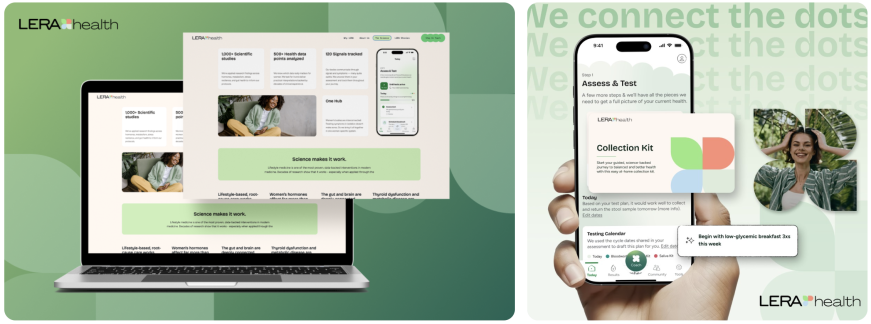
Asset tracking only pays off when data becomes decisions. We build the full pipeline, not just a map.
We handle noisy RFID and BLE reads and turn them into reliable zone-level location, the hard part most tracking projects underestimate.
We prioritize utilization and PAR analytics that cut over-purchasing and shrinkage: the metrics that justify the deployment.
Clean APIs into CMMS, ERP, and EHR so tracking data flows into the systems staff already use, not another silo.
We ingest whatever tag and reader mix you have or plan to buy, so you're not locked to one RTLS vendor.

Tell us your facility and the assets you need to track. We'll return a phased plan covering RFID/BLE ingestion, RTLS location, and utilization analytics.
contact@agnotic.com
Partnerships
contact@agnotic.com