


Build vs buy inspection and audit software: when each one fits
Buy a ready-made inspection tool when your checklists are standard and the records stay inside one team. Build custom inspection and audit software when inspections must follow your own asset model, work offline at remote sites, feed other systems or produce records a regulator will review.
Should you build or buy inspection and audit software?
Quick answer
Inspection and audit software is worth building when the inspection itself is part of how you run the business: your own asset hierarchy, scoring rules, offline sites and integrations. A ready-made tool fits standard checklists for one team. Many operators start with a bought tool and build custom software once those limits cost them time.
| Criterion | Buy a ready-made tool | Build custom |
|---|---|---|
| Checklist logic | Forms with the question types and branching the vendor supports | Any rule you need: scores, sampling, repeat checks and conditional follow-ups |
| Asset model | A generic list of locations or assets | Your own hierarchy of sites, systems, assets and components |
| Offline work | Depends on the product; often partial | Designed offline first, with conflict handling when records sync |
| Integrations | Exports, webhooks or connectors the vendor offers | Direct connections to your CMMS, ERP, EHS or client systems |
| Regulated records | Audit and retention features as the vendor defines them | Audit trail, retention and sign-off built to the rule your records fall under |
| Data ownership | Data lives in the vendor's cloud; export terms set by the contract | Data lives in your cloud account and database |
| Time to first inspection | Days, once checklists are configured | After a scoped first release is built and tested |
| Cost shape | A subscription that usually grows with users, sites or inspections | Build cost up front, then hosting and support you control |
What does each option mean in practice?
What is Buy a ready-made tool
A ready-made inspection tool is a subscription app with a form builder, photo capture, scheduled inspections and standard reports. You configure checklists in its editor and work inside the data model the vendor chose for every customer.
What is Build custom
Custom inspection and audit software is built for your assets, checklists and sites. Agnotic Technologies builds it for the client as a mobile app and back office that follow your scoring rules, store records in your own cloud account and connect to the systems that act on findings.
What really changes between buying and building?
Who owns the checklist and scoring rules?
With a bought tool, the vendor's form builder sets what a checklist can express. With a custom build, your scoring, sampling and follow-up rules are code your team owns, tested and versioned like any other business logic.
Which records must the software keep?
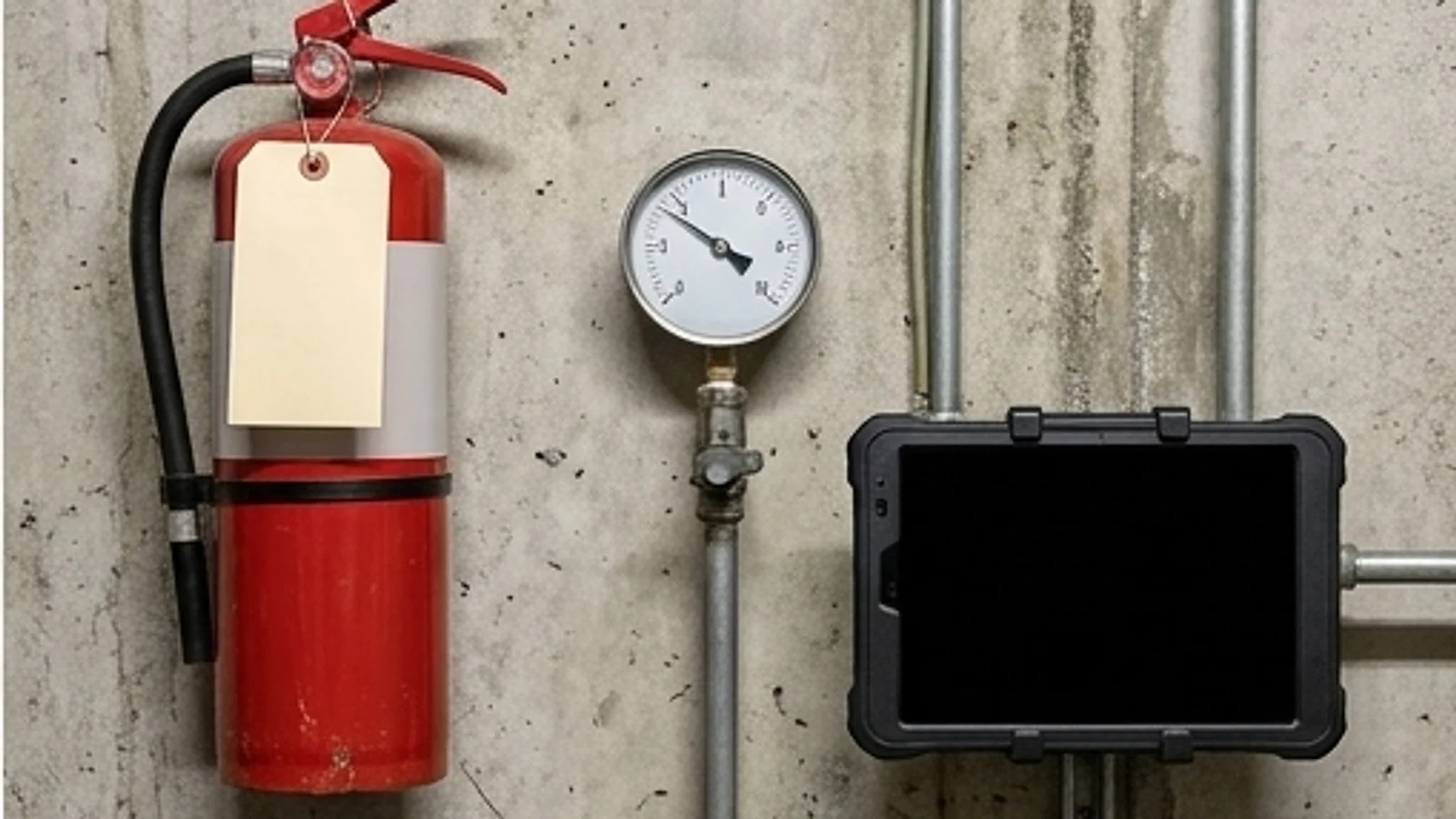
Many inspections carry their own record rules. For example, OSHA requires portable fire extinguishers to be visually inspected monthly, and the annual maintenance date to be recorded and kept for one year after the last entry or the life of the shell, whichever is less (29 CFR 1910.157(e)). The software has to hold each rule like that.
What does an audit trail need in regulated work?
Where FDA electronic records rules apply, 21 CFR 11.10(e) requires secure, computer-generated, time-stamped audit trails that record operator entries and actions that create, modify or delete records, and changes must not obscure what was recorded before. Check that a bought tool meets this before you rely on it.
How does the cost grow over time?
A subscription usually grows as you add inspectors, sites or inspections, and you pay it for as long as you use the tool. A custom build costs more before the first inspection, then runs on hosting and support you control. Which is cheaper depends on how many people inspect and for how long.
Where does each option fail?
Bought tools fail when inspectors keep paper on the side because the form cannot express a rule, or when findings are retyped into another system. Custom builds fail when the first release tries to cover every inspection type at once, or when nobody owns the checklists after launch.
When does each option fit?
When to use A ready-made inspection tool
- Your checklists are standard, such as daily safety walks or housekeeping rounds.
- One team runs the inspections and reads the reports.
- Inspectors work where there is reliable signal.
- The records do not need to reach a CMMS, ERP or client portal automatically.
- You need inspections running this month and can accept the tool's workflow.
When to use Custom inspection and audit software
- Inspections follow your own asset hierarchy, scoring or sampling rules.
- Inspectors work offline at remote sites and records must sync safely later.
- Findings must open work orders, update an ERP or reach a client portal.
- Regulated records need audit trails, retention and electronic sign-off.
- Inspection reports are part of the service you sell to your own clients.
How do you move from paper or a bought tool to custom software?
1. List every inspection type with its frequency, the records it must keep and who reads the result.
2. Pick the one inspection that costs the most retyping, rework or audit stress, and build it first.
3. Export the history from the current tool or scan the paper records, and map each field to the new data model.
4. Run both side by side for one inspection cycle, then compare the records before switching off the old one.
5. Connect findings to the system that acts on them, such as work orders in your CMMS.
A middle path also works: keep the bought tool for standard rounds and build only the integration and reporting layer around it.