

O&M managers
Need audit findings turned into work and tracked to closure across every site.


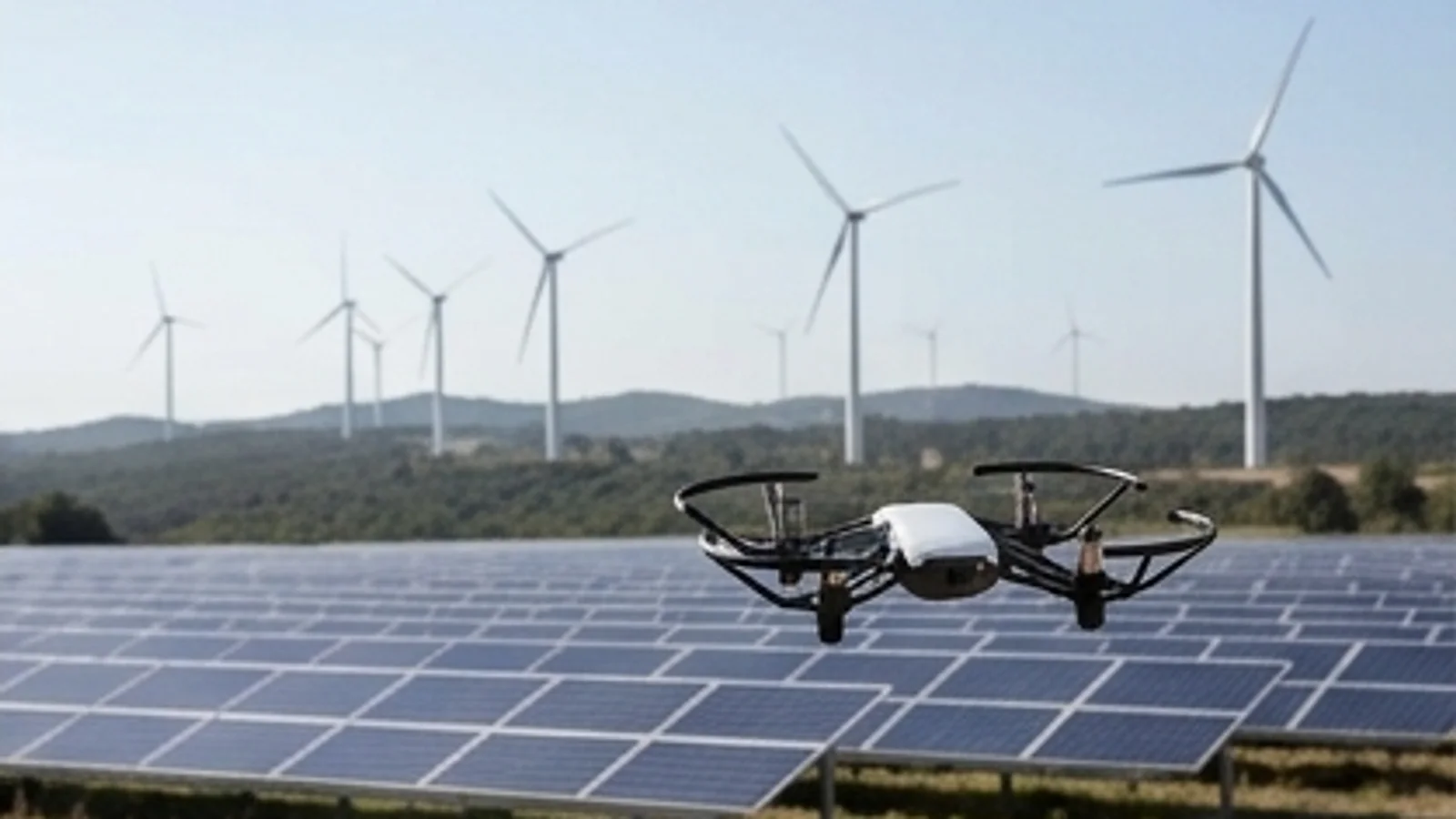
Renewable O&M teams collect audit data from remote sites, OEM reports in different formats and updates sent over chat. Agnotic Technologies builds wind turbine inspection software and solar plant audit automation that brings it into one audit record per asset, works offline at the site and turns findings into work orders.
Trusted by global innovators








Wind and solar asset audit automation is software that plans audits for each turbine, inverter and array, captures checklist answers, photos and drone images offline at the site, imports OEM reports and records every finding against the asset. Agnotic Technologies builds this wind turbine inspection software so findings reach the work order system and the portfolio report.
The same finding is used by several teams, each in its own way.
Need audit findings turned into work and tracked to closure across every site.
Complete checklists at the turbine or array, often with no mobile signal.
Want a consistent condition picture across sites, OEMs and contractors.
Deliver blade and module images that must land against the right asset.
The data exists. It arrives from too many places in too many formats.
Each OEM sends service and inspection reports in its own Excel or CSV layout.
Site updates arrive as chat messages and photos, and someone retypes them into a tracker.
Audit data is entered by hand, with no direct link to the SCADA or monitoring system.
Remote sites have little or no internet, so online tools fail at the asset.
Audit checklists are on paper, and findings are hard to compare between sites and years.
A finding from a drone survey and the same issue reported by a technician become two separate records.
Our starting map for a renewable audit project. Your OEMs, contracts and procedures set the final checklist.
| Asset | Typical audit items | How it is captured | What the finding feeds |
|---|---|---|---|
| Wind turbine blades | Leading edge erosion, cracks, lightning damage | Drone survey or rope access photos, tagged by blade and position | Blade repair work order and comparison with the last survey |
| Nacelle and drivetrain | Oil leaks, bolt condition, gearbox and generator checks | Technician checklist with photos, offline in the nacelle | Work order and OEM service record |
| Tower and foundation | Corrosion, bolt tension records, cracks at the base | Checklist and handheld photos at the tower | Structural finding log and work order |
| Solar PV modules | Cracked glass, soiling, hot spots, damaged cables | Drone visual and thermal flights, tagged by block and string | Module replacement or cleaning work order |
| Inverters and combiner boxes | Fault codes, ventilation, cabinet condition | Checklist with OEM fault log import | Work order and OEM warranty case |
| Trackers and mounting | Alignment, fasteners, corrosion, motor faults | Walk-down checklist with photos per row | Work order against the row |
Three decisions shape the build, and we make them with your O&M team first.
Turbines, blades, inverters, blocks and strings get one ID, so OEM files, drone images and technician checklists all land on the same asset.
Checklists, previous findings and asset details are on the device before the technician drives out, and sync when the site has coverage again.
Each OEM's Excel or CSV layout is mapped once, then imported and checked automatically, so no one copies reports by hand.
Modules that follow one finding from the site to a closed work order.
Audit schedules per site, asset type and contract, with the checklist each audit needs.
Checklists, photos and signatures on rugged tablets that work in the nacelle and across the array without coverage.
Excel and CSV reports from each OEM mapped to the asset register and checked for missing or mismatched assets.
Blade and module images tagged to the turbine, blade, block or string, with thermal and visual images paired.
Every finding with its asset, severity, evidence and status, deduplicated across sources.
Confirmed findings become work orders in your CMMS, and status comes back when they close.
Open findings, overdue audits and repeat issues compared across sites and OEMs.
Models that flag likely defects in drone images and read scanned reports, with a person confirming each one.
The flow we build for each site. Every source ends in the same finding register.
The audit is scheduled for a site with the checklists for each asset type.
Technicians complete checklists offline, and drone contractors upload tagged images.
OEM reports are imported and matched to the asset register.
Findings from all sources are deduplicated and confirmed by an engineer.
Confirmed findings become work orders, and warranty items go to the OEM.
Portfolio dashboards show open findings and audit status across every site.
Chosen around your sites, OEMs and contractors.
Measures that show whether audits lead to repairs, not just reports.
By site, asset type and contractor.
By severity and age, across the portfolio.
From a confirmed finding to a scheduled job.
Shows where repairs are not holding.
First releases scoped to one site or one asset type.
Paper audits replaced at one wind or solar site.
One OEM's reports mapped and imported automatically.
Drone blade images tagged and reviewed against the last survey.
Hot spots and module faults placed on the block and string map.
Fault logs turned into findings and warranty cases.
Audit status and open findings across every site.
Where audit data comes from and where findings go.
We build secure, scalable products designed for privacy, interoperability, and regulatory readiness from day one across every sector we serve.

Adhering to the international gold standard for managing information security risks.

Ensuring consistent quality in software delivery and operational process optimization.
We combine deep technical expertise with industry-specific knowledge to deliver solutions that aren't just functional, but transformational.
We implement rigorous security protocols and compliance standards (HIPAA, GDPR, SOC2) across all industrial solutions to protect sensitive data.
Our architectures are built to handle massive data loads and user bases, keeping performance steady whether you're serving ten or ten million.
Using our suite of internal tools and proven frameworks, we cut setup work so your first release reaches users sooner.
Beyond simple wrappers, we build deep-learning integrations and predictive analytics directly into the core of your industry-specific workflows.
We start with one site and the audits it already runs. It depends on scope; we agree a fixed first release on the scoping call.
We review your sites, OEMs, audit checklists, contractors and the CMMS that should receive findings.
We build the asset register and map one OEM's report layout.
Offline checklists, OEM import, the finding register and work order output for one site.
Technicians use the app on a scheduled audit, and we fix what the field finds.
More sites, OEMs, drone imagery and AI-assisted review.
Drone flight rules that shape blade and array surveys, and the safety standard for generation sites.
Under FAA Part 107, a small drone may fly higher than 400 feet above ground level only when it stays within a 400-foot radius of a structure and no higher than 400 feet above the structure's uppermost limit.
Source: 14 CFR 107.51(b), FAA (eCFR)FAA Part 107 requires the remote pilot in command, the visual observer if one is used, and the person at the controls to be able to see the small drone with unaided vision throughout the entire flight.
Source: 14 CFR 107.31, FAA (eCFR)OSHA's standard for electric power generation, transmission and distribution covers the operation and maintenance of power generation installations, including equivalent installations at industrial establishments.
Source: 29 CFR 1910.269(a)(1), OSHA (eCFR)We don't just build products; we forge lasting partnerships. See how we've helped industry leaders transform their vision into technical reality.
“I can clearly see how Agnotic has a unique way of handling end-to-end development. They are always active on quick chat and provide support quickly.”

Aaron Phelan
Founder, Benchmark
This page covers audits and inspections of renewable assets. These pages cover the monitoring and field tools around them.
Telemetry and models that flag turbines and inverters likely to fail.
The offline sync and conflict handling behind audits at remote sites.
Drone and camera image review with a qualified person confirming each defect.
Analytics for the storage systems often co-located with solar.
Maintenance management, where audit findings become work orders.
Showing 10 of 19 industries