

Lease operators and pumpers
Run the daily route, gauge tanks, read meters and record seal changes, usually on a rugged tablet or phone with patchy coverage.


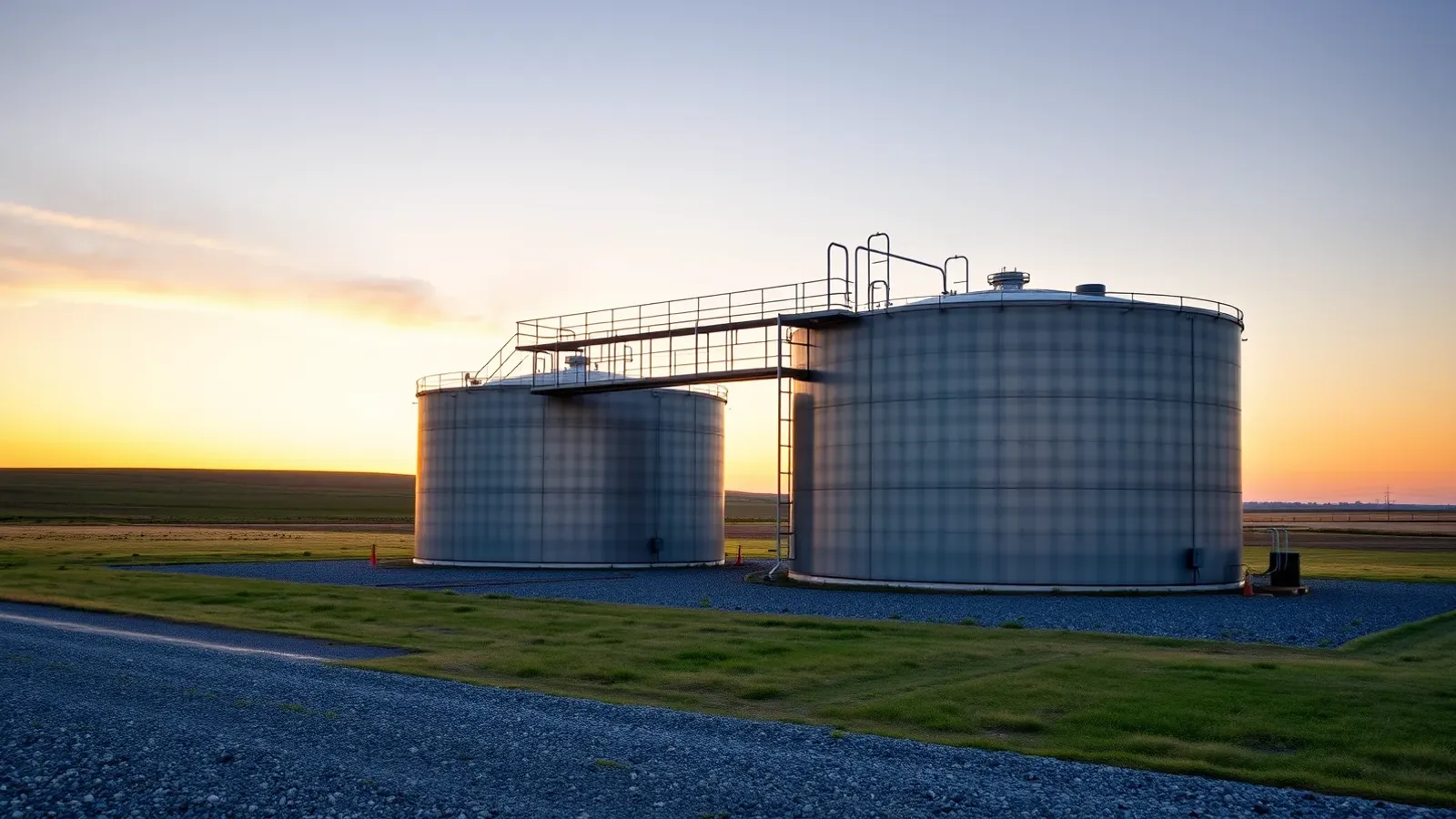
Gauge sheets on clipboards and readings typed in at the end of the week leave production accounting guessing. Agnotic Technologies builds the offline field app your lease operators use on every round, and the measurement records behind it, so tank gauges, run tickets and seal changes reach allocation complete and on time.
Trusted by global innovators











An oil and gas field operations app is the mobile tool lease operators use on daily rounds to record tank gauges, meter readings, run tickets and seal changes, often with no signal. Agnotic Technologies builds it with offline capture, checks on the device and a full edit history, so readings reach production accounting before the allocation cut-off.
One gauge reading passes through several hands before it becomes a reported volume. The app gives each role the screen and permissions it needs.
Run the daily route, gauge tanks, read meters and record seal changes, usually on a rugged tablet or phone with patchy coverage.
Assign routes, see which stops were missed and approve corrections before they leave the field.
Need complete, on-time volumes and tickets for daily allocation and month-end reporting, with a record of every change.
Take the load and sign the run ticket, so their copy and the operator's copy must carry the same numbers.
Answer audits on federal, Indian, state and fee leases from the same records the field created.
This failure-point list is what we check first when we review an operator's current rounds. Each item is a data problem the app has to prevent, not a training issue.
Duplicate readings after offline sync: a round is saved twice on a device that lost signal, or two operators gauge the same tank, and both records post.
A tank gauge entered against the wrong tank or the wrong calibration chart, so the observed volume is calculated from another tank's strapping table.
A run ticket closed without the numbers of the seals removed and installed, or without S&W and observed gravity, which leaves the sale unsupported.
Readings that arrive after the daily or month-end allocation cut-off, so production is allocated on estimates and corrected a month later.
Edits made in the office with no record of the original value, who changed it or why.
Gauges taken before the tank has settled, or with temperatures missing, so the volume cannot be corrected to standard conditions.
Three design choices decide whether the app helps accounting or just moves the clipboard onto a screen.
Required fields, tank and chart selection and range checks run on the device, so a missing seal number is fixed while the operator is still on the pad.
Each reading carries an ID created on the device, plus the round and the tank, so a second sync of the same record updates it instead of creating a duplicate.
The app shows which readings are due before the daily and month-end cut-offs and flags late ones, so allocation runs on measured volumes.
Modules for lease operators and the production accounting team behind them. Sensor telemetry and HSE inspections are separate builds; this app is for manual measurement.
Each operator's wells, tanks and meters in stop order, with what is due today and what was missed yesterday.
Opening and closing gauges, temperatures and samples, with observed volume calculated from each tank's own calibration chart.
Uniquely numbered tickets with S&W, gravity, seal numbers and signatures, closed only when every required field is present.
Every seal installed or removed, the valve or meter it sits on, the position it was sealed in and the reason it came off.
Pressures, meter totals, chemical levels and downtime reasons, entered once per stop.
Records queue on the device and sync on reconnect; two readings for the same tank and time go to the foreman instead of both posting.
Office corrections keep the original value, the new value, who changed it and why.
Validated daily volumes and tickets sent to your production accounting system on its schedule.
The measurement rules, devices and back-office systems the build has to fit.
On federal and Indian leases, BLM lists the fields a tank gauging measurement ticket must carry. We build each one into the app with a check that runs on the device before the ticket can close.
| Ticket field | Why it matters | Check the app applies |
|---|---|---|
| Unique ticket number, opening and closing dates and times | Makes each ticket traceable and orders the readings | Number issued per device, so offline tickets never collide |
| Lease, unit PA or CA number | Ties the volume to the right royalty and allocation point | Picked from the operator's assigned leases, never typed |
| Unique tank number and nominal capacity | Selects the tank's own calibration chart | Tank chosen from the facility list or scanned; chart version shown |
| Opening and closing gauges and temperatures | The volume removed comes from the difference, corrected for temperature | Closing gauge must be below opening; both temperatures required |
| Observed volume from the calibration chart | A wrong chart gives a wrong volume | Calculated by the app from the selected tank's chart, not entered by hand |
| Observed API gravity and temperature, and gravity at 60 °F | Needed to correct the volume and price the sale | Range check against the lease's recent tickets |
| S&W content percent | Separates merchantable oil from sediment and water | Required; values outside the lease's usual range ask for confirmation |
| Number of each seal removed and installed | Shows the tank valves were controlled before and after the load | Each seal scanned or entered; a removed seal must match one on record |
| Names of the gauger and the operator | Records who measured and for whom | Taken from the signed-in user and the lease record |
Measures we report to the foreman and the production accountant, not to the operator's manager alone.
Wells and tanks visited as planned, and the ones missed.
Run tickets that needed no follow-up from accounting.
Readings received before the daily and month-end cut-offs.
How often field values are changed later, and why.
First releases scoped to one route or field.
Gauges, samples and tickets on the device, with checks before close.
Seal installs and removals recorded against each valve and meter.
Pressures, meter totals and downtime reasons per stop.
End-of-month gauges scheduled and captured inside the allowed window.
Matching the operator's and the purchaser's copies of each ticket.
Structured reasons for wells that did not produce.
Where validated field data goes after sync.
We build secure, scalable products designed for privacy, interoperability, and regulatory readiness from day one across every sector we serve.

Adhering to the international gold standard for managing information security risks.

Ensuring consistent quality in software delivery and operational process optimization.
We combine deep technical expertise with industry-specific knowledge to deliver solutions that aren't just functional, but transformational.
We implement rigorous security protocols and compliance standards (HIPAA, GDPR, SOC2) across all industrial solutions to protect sensitive data.
Our architectures are built to handle massive data loads and user bases, keeping performance steady whether you're serving ten or ten million.
Using our suite of internal tools and proven frameworks, we cut setup work so your first release reaches users sooner.
Beyond simple wrappers, we build deep-learning integrations and predictive analytics directly into the core of your industry-specific workflows.
Oil and gas industry app solution services from Agnotic follow the same path. It depends on scope; we agree a fixed first release on the scoping call.
We go through current gauge sheets, run tickets and seal logs, and the cut-offs your accountants work to.
Record IDs, conflict rules and the checks that must run with no signal are agreed before screens are drawn.
Tank gauging, run tickets and the seal log for one route or field, syncing to a staging copy of your accounting import.
Paper and app side by side, reconciled by your accountants before paper is retired.
More routes, readings and interfaces, with rule changes under agreed change control.
BLM rules for federal and Indian leases. State rules and your own procedures may add more.
After oil is measured by tank gauging on a federal or Indian lease, the operator, purchaser or transporter must complete a uniquely numbered measurement ticket, on paper or electronically, with the tank number, opening and closing gauges and temperatures, observed gravity, S&W content and the number of each seal removed and installed.
Source: 43 CFR 3174.12(a) (eCFR)BLM requires tank gauging at a facility measurement point to follow API MPMS Chapter 18.1 or 18.2, and the tank must be isolated for at least 30 minutes, with its isolating valves closed and sealed, before gauging starts.
Source: 43 CFR 3174.6(b) (eCFR)For each seal, the operator must keep a record of its unique number and the valve or meter component it is used on, the date it was installed or removed, the position the valve was sealed in and the reason the seal was removed.
Source: 43 CFR 3173.9(b) (eCFR)The operator's end-of-month inventory records the total observed volume in storage, measured to the nearest half inch, and a gauged inventory must be taken within 3 days either side of the last day of the calendar month.
Source: 43 CFR 3173.9(a) (eCFR)Records relevant to the quality, quantity and disposition of production from federal leases, including source records, must be kept for seven years after they are generated.
Source: 43 CFR 3170.7(a) and (c) (eCFR)We don't just build products; we forge lasting partnerships. See how we've helped industry leaders transform their vision into technical reality.
“I can clearly see how Agnotic has a unique way of handling end-to-end development. They are always active on quick chat and provide support quickly.”

Aaron Phelan
Founder, Benchmark
“Agnotic combines deep technical expertise with strong domain knowledge. They understand the business context, anticipate challenges, and make collaboration smooth and effective.”

John Pasmore
Founder, Latimer
“Agnotic is the best technical team we evaluated. Their engineering excellence made our work dramatically easier and allowed us to stay focused on what matters most for maternal care outcomes. They took full ownership of the technical execution, and we are always happy to continue working together.”

Kim Smith
Founder, My Lauren
This page covers manual field measurement. These pages cover telemetry, safety and the wider operation.
The energy industry hub: grid, asset and energy data software Agnotic builds for utilities and renewable operators.
Sensor telemetry, historian integration and equipment health for upstream and midstream assets.
Analytics on SCADA rates and well tests to reduce deferred production.
Offline HSE checklists, permits and hazard reporting for rig crews.
Incident, audit and compliance workflows for oil and gas safety programs.
AI agents for asset and field teams, built on the data your operation already holds.
Scheduling, dispatch and work orders for field crews and contractors.
Explore other production-grade engineering platforms we deliver across energy.