Challenge
Interface access is brokered, not self-serve
Agnotic approach
We start MatrixCare partner and interface onboarding in week one and run mapping work in parallel so the schedule doesn't wait on access.


MatrixCare runs the record for skilled nursing, senior living, home health, and hospice. We build real integrations against its HL7 v2 interfaces, MDS 3.0 and OASIS-E data, eMAR, and CCDA exchange — not just familiarity with the LTPAC space.
Trusted by global innovators











MatrixCare is a long-term and post-acute care (LTPAC) EHR spanning skilled nursing (SNF), senior living, home health, and hospice. Integrating with it means working across HL7 v2 message feeds for census and results, MDS 3.0 resident assessments in nursing facilities, OASIS-E start-of-care and recertification data on the home-health side, eMAR and pharmacy interfaces, and C-CDA documents for care transitions.
The non-trivial part is that LTPAC data is assessment-driven and facility-configured. ADT events, MDS item sets, and med-pass records rarely map cleanly to acute-care assumptions, and access is brokered through MatrixCare's partner and interface program rather than a public developer sandbox. We scope the exact interfaces, message types, and coding systems up front so the integration reaches production instead of stalling in test.
See how we design resilient post-acute integrations — census feeds, assessment data, and pharmacy interfaces flowing cleanly into your platform.

Common failure modes
Challenge
Interface access is brokered, not self-serve
Agnotic approach
We start MatrixCare partner and interface onboarding in week one and run mapping work in parallel so the schedule doesn't wait on access.
Challenge
Assessment item sets change with CMS versions
Agnotic approach
We map against the active MDS 3.0 and OASIS-E versions and build the ingestion to tolerate version transitions instead of hard-coding one.
Challenge
Facility-specific configuration breaks assumptions
Agnotic approach
Per-facility discovery of event triggers, value sets, and unit structures before we finalize mappings.
Challenge
Result and med data don't match cleanly to residents
Agnotic approach
Deterministic matching with explicit fallback rules and a reconciliation queue for ambiguous records.
We name the exact technical surface — the interfaces, assessment data, and coding systems that carry LTPAC data.
ADT for census and bed movement, ORU for lab and diagnostic results, and SIU/MDM where facility workflows need them — delivered through MatrixCare's interface and partner program.
Minimum Data Set 3.0 resident assessments for SNF and OASIS-E start-of-care, recertification, and discharge data for home health — the assessment surface that drives LTPAC reimbursement and quality.
Electronic medication administration record data and pharmacy dispensing interfaces so medication events, orders, and reconciliation stay in sync across the facility and your platform.
Consolidated CDA exchange for admissions, transfers, and discharge summaries — parsing inbound documents and generating outbound ones for hospital and physician handoffs.
LOINC for results, RxNorm for medications, and ICD-10 for diagnoses, mapped against MatrixCare's facility-configured value sets so downstream analytics stay trustworthy.
Structured extracts for census, length-of-stay, and quality-measure reporting, feeding population dashboards, PDPM analysis, and value-based care programs.
Where it runs
Skilled-nursing tools with live census, MDS assessments, and results tied to residents.
Care and operations apps synced with MatrixCare census and clinical events.
OASIS-E-driven workflows and visit data flowing into your care platform.
Hospital-to-SNF handoffs with C-CDA parsing and structured referral intake.
PDPM analysis and CMS quality-measure reporting from structured extracts.
Cross-facility dashboards for occupancy, outcomes, and length-of-stay.
LTPAC integration lives or dies on interface access and assessment mapping. We treat both as real deliverables with a realistic go-live plan.

Health Insurance Portability and Accountability Act
Protect PHI with privacy-first architecture, encrypted storage and transmission, strict access controls, and traceable audit logs.

General Data Protection Regulation
Implement lawful consent flows, data minimization, retention controls, and secure processing for sensitive health data.

Fast Healthcare Interoperability Resources
Enable standardized health data exchange across apps, care teams, and systems through robust FHIR-ready APIs.

Health Level Seven International
Support enterprise-grade interoperability with HL7-based integrations for records, events, and clinical messaging workflows.

Health Information Trust Alliance
Align security programs to healthcare-specific control and risk management practices trusted by providers and ecosystem partners.

Health Information Technology for Economic and Clinical Health Act
Design with breach notification readiness, digital record safeguards, and operational controls that support regulated care programs.

FDA Software as a Medical Device
Plan software quality, traceability, and documentation pathways for products that may require SaMD review and submission.

Medical Device Regulation (European Union)
Prepare EU market-ready processes for risk classification, evidence tracking, and lifecycle governance under MDR expectations.

Substance Abuse and Mental Health Services Administration
Apply confidentiality controls and consent-aware sharing models for behavioral and mental health data experiences.
Standards we build against
We treat interface access, assessment mapping, and go-live as parallel tracks so your LTPAC integration reaches production on a predictable timeline.
We map the facilities, care settings, and exact interfaces in play — ADT, ORU, MDS 3.0, OASIS-E — and the coding systems each one uses before any code is written.
We initiate MatrixCare's partner and interface onboarding, provision the connection, and confirm message specifications and test data with the interface team.
We build the HL7 v2 parsers, C-CDA handlers, and assessment mappings, validating each against synthetic and interface-team-supplied messages.
Phased production cutover with interface health dashboards, message reconciliation, and alerting for missed ADT and result events.
Interface table
How we approach the main data flows — the method, the typical timeline, and the friction to expect.
| Data flow | Method | Typical timeline | Notes |
|---|---|---|---|
| Census / ADT | HL7 v2 ADT feed | 3–6 weeks | Facility-configured event triggers; validate against real census patterns. |
| Lab results | HL7 v2 ORU | 3–6 weeks | LOINC mapping and result-to-resident matching are the usual sticking points. |
| Assessments | MDS 3.0 / OASIS-E extract | 4–8 weeks | Item-set versions change; map to the active CMS version in use. |
| Care transitions | C-CDA document exchange | 4–8 weeks | Inbound parsing plus outbound generation for hospital and physician handoffs. |
| Medications | eMAR / pharmacy interface | 4–8 weeks | RxNorm normalization and reconciliation logic vary by pharmacy partner. |
Timelines assume interface access is granted and facility stakeholders are engaged. Access and configuration drive the schedule more than engineering does.
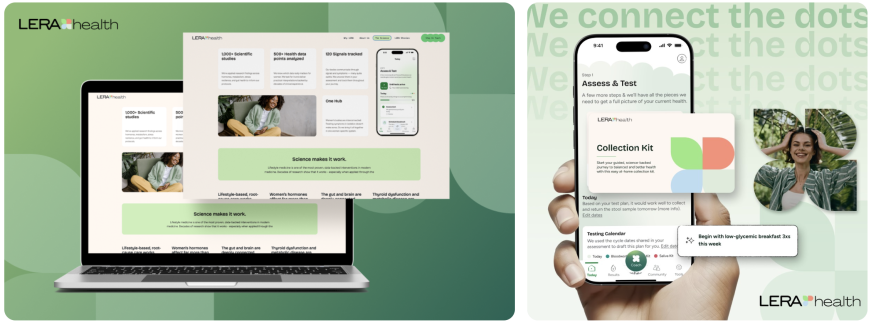
MatrixCare isn't the subject of this build, but Lera Health is honest proof of the same muscle: a privacy-first data layer, standards-based clinical data flows, and an integration-heavy platform delivered end to end under HIPAA constraints.
We bring the assessment-domain depth and interface discipline that post-acute integrations actually require.
HIPAA Privacy and Security controls designed into the integration from the first commit — BAAs, minimum-necessary access, and audit logging on every PHI flow.
We speak MDS, OASIS, PDPM, and census — your clinical and operations teams won't be teaching ours what a resident assessment is.
We plan interface onboarding and go-live into the timeline so the integration ships, rather than stalling in a perpetual test loop.
One accountable team owning discovery, build, QA, and monitoring — with a named engineer you can call when a feed goes quiet.

Real integrations, not just familiarity.
Tell us your care settings and target interfaces. We'll return a realistic plan with the interface-onboarding timeline and assessment-mapping scope.
contact@agnotic.com
Partnerships
contact@agnotic.com