Challenge
EVV rules differ by state and payer
Agnotic approach
We map EVV obligations per state and payer early and route to the correct aggregator, validating against its test environment before go-live.


AlayaCare runs scheduling, clinical documentation, and electronic visit verification for home care and home health agencies. We build real integrations against its REST API and webhooks — connecting visits, EVV, and care plans to your platform, not just knowing the product.
Trusted by global innovators











AlayaCare is a cloud home-care platform covering scheduling, clinical documentation, care plans, billing, and a caregiver mobile app for home health, home care, and community services. Integrating with it means working through its REST API and webhook events to move visit schedules, electronic visit verification (EVV) data, OASIS assessments, and care-plan updates between AlayaCare and your systems.
The hard part is that home care runs on visits, not encounters — thousands of short, geographically dispersed appointments with check-in/check-out, mileage, and EVV compliance obligations that vary by state and payer. EVV data often has to reach an aggregator such as Sandata or HHAeXchange as well as your platform. We scope the API resources, webhook events, and EVV routing up front so the integration holds up at real visit volume.
See how we design home-care integrations that stay correct at thousands of visits a day — schedules, EVV, and care plans flowing cleanly.

Common failure modes
Challenge
EVV rules differ by state and payer
Agnotic approach
We map EVV obligations per state and payer early and route to the correct aggregator, validating against its test environment before go-live.
Challenge
Webhooks arrive out of order or duplicated at volume
Agnotic approach
Idempotent handlers keyed on visit and event identity, with ordering tolerance and a replay path for missed events.
Challenge
Rate limits throttle bulk syncs
Agnotic approach
Backoff, pagination, and incremental sync so large agencies don't hit API ceilings during peak scheduling.
Challenge
Visits don't reconcile with authorizations or billing
Agnotic approach
Explicit visit-to-authorization matching with a reconciliation queue for exceptions before claims are generated.
The exact API surface, event model, and compliance interfaces that carry home-care data.
Authenticated REST endpoints for clients, caregivers, visits, schedules, and care plans — the core surface for reading and writing home-care data.
Event-driven webhooks for visit check-in and check-out, schedule changes, and status updates so your platform reacts in near real time instead of polling.
Electronic Visit Verification capture — GPS, telephony, and mobile check-in — routed to state aggregators such as Sandata and HHAeXchange alongside your own systems.
OASIS-E assessments, care plans, and visit notes moved between AlayaCare and downstream clinical, quality, and analytics systems.
Caregiver availability, visit assignment, and shift data synced with optimization, payroll, and workforce tools.
Structured visit and authorization data feeding claims, revenue-cycle reconciliation, and utilization dashboards.
Where it runs
Scheduling and visit apps synced with AlayaCare and EVV aggregators.
OASIS-driven clinical workflows and visit data flowing into your platform.
Authorization and utilization data extracts for managed-care partners.
Caregiver availability and assignment feeding routing and payroll tools.
Visit-to-authorization reconciliation ahead of claims submission.
Client-facing visit visibility and updates via authenticated API access.
Home care is high-frequency and geographically dispersed. We build integrations that stay correct and reconciled at real visit volume.

Health Insurance Portability and Accountability Act
Protect PHI with privacy-first architecture, encrypted storage and transmission, strict access controls, and traceable audit logs.

General Data Protection Regulation
Implement lawful consent flows, data minimization, retention controls, and secure processing for sensitive health data.

Fast Healthcare Interoperability Resources
Enable standardized health data exchange across apps, care teams, and systems through robust FHIR-ready APIs.

Health Level Seven International
Support enterprise-grade interoperability with HL7-based integrations for records, events, and clinical messaging workflows.

Health Information Trust Alliance
Align security programs to healthcare-specific control and risk management practices trusted by providers and ecosystem partners.

Health Information Technology for Economic and Clinical Health Act
Design with breach notification readiness, digital record safeguards, and operational controls that support regulated care programs.

FDA Software as a Medical Device
Plan software quality, traceability, and documentation pathways for products that may require SaMD review and submission.

Medical Device Regulation (European Union)
Prepare EU market-ready processes for risk classification, evidence tracking, and lifecycle governance under MDR expectations.

Substance Abuse and Mental Health Services Administration
Apply confidentiality controls and consent-aware sharing models for behavioral and mental health data experiences.
Standards we build against
We treat API access, EVV routing, and go-live as parallel tracks so your home-care integration reaches production predictably.
We map the API resources, webhook events, EVV obligations, and downstream systems in play before any code is written.
We provision AlayaCare API credentials, configure webhook subscriptions, and confirm rate limits and payloads in a sandbox.
We build the API clients, webhook handlers, and EVV routing, validating against synthetic visits and aggregator test environments.
Phased cutover with visit-volume dashboards, webhook retry handling, and EVV submission monitoring.
Interface table
How we approach the main data flows — method, typical timeline, and the friction to expect.
| Data flow | Method | Typical timeline | Notes |
|---|---|---|---|
| Visits & schedules | REST API | 3–5 weeks | Pagination and rate limits matter at agency scale; design for it early. |
| Visit events | Webhooks | 3–5 weeks | Handlers must be idempotent and retry-safe for check-in/check-out at volume. |
| EVV submission | Aggregator API (Sandata / HHAeXchange) | 4–8 weeks | Rules vary by state and payer; validate against the aggregator test environment. |
| Assessments | OASIS-E extract | 3–6 weeks | Map to the active OASIS version and reconcile against care plans. |
| Billing | Authorization & visit export | 3–6 weeks | Tie visits to authorizations before they reach claims. |
Timelines assume API credentials are provisioned and EVV requirements are known. State EVV variation is the usual schedule driver.
AlayaCare isn't the subject here, but Lera Health is honest proof of the same capability: a compliant, integration-heavy platform with a privacy-first data layer and standards-based clinical flows delivered end to end.
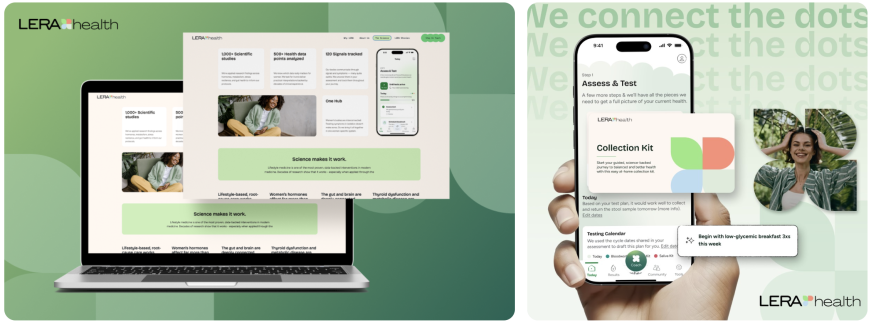
We bring the visit-scale engineering and EVV discipline that home-care integrations actually require.
HIPAA controls and state EVV mandates designed into the integration from the start — not retrofitted before an audit.
We understand visits, EVV, OASIS, and authorizations — your operations team won't be explaining check-in/check-out to ours.
We design for thousands of dispersed visits a day with idempotent webhooks and retry-safe pipelines, not a demo-scale happy path.
One accountable team across discovery, build, QA, and monitoring, with a named engineer on call for feed issues.

Real integrations, not just familiarity.
Tell us your agency footprint and EVV obligations. We'll return a realistic plan with the API-access timeline and aggregator-routing scope.
contact@agnotic.com
Partnerships
contact@agnotic.com