Challenge
API access is partner-gated
Agnotic approach
We begin partner credentialing in week one and design per-office onboarding so access never blocks the build.


Tebra (formed from Kareo and PatientPop) powers a large share of small and independent practices. We build real integrations against its practice-management, clinical, and FHIR R4 surfaces — not just vendor familiarity.
Trusted by global innovators











Kareo — now part of Tebra following its merger with PatientPop — is a cloud clinical, practice-management, and medical-billing platform built for the small-practice market: independent physicians, therapists, and specialty clinics. Integrating it means working with its practice-management and billing web-service API for demographics, scheduling, charges, and claims, plus the ONC-certified FHIR R4 endpoints exposed for patient access.
The challenge is that Tebra serves thousands of small offices with wide configuration variance and a billing-first data model. API access is partner-gated, throughput is modest, and the integration has to be resilient to per-office quirks. We scope the exact objects and the access path before committing to a timeline.
See how we design Tebra integrations that keep scheduling, clinical, and billing data consistent across many small offices.

Common failure modes
Challenge
API access is partner-gated
Agnotic approach
We begin partner credentialing in week one and design per-office onboarding so access never blocks the build.
Challenge
Per-office configuration varies widely
Agnotic approach
We build configurable mappings and profile each pilot office rather than hardcoding a single office's setup.
Challenge
Billing data must reconcile precisely
Agnotic approach
We build reconciliation and audit reporting so every charge and payment is traceable end to end.
Challenge
FHIR coverage is narrower than the PM API
Agnotic approach
We use FHIR R4 for standardized reads and the practice-management API for the scheduling and billing FHIR doesn't cover.
We build against the exact Tebra surface — the practice-management API, billing transactions, and certified FHIR endpoints.
Tebra's web-service API for patient demographics, providers, scheduling, and eligibility — the operational core small practices run on.
Charge capture, claim submission, and payment posting through the billing API, reconciled cleanly back to your ledger.
The ONC (g)(10)-certified FHIR R4 patient-access resources for standardized clinical reads such as Patient, Encounter, and Observation.
Per-office credential handling and least-privilege scoping so each independent practice's data stays isolated and secure.
Clinical document and lab-result exchange tied to the correct patient and encounter for a complete record.
A sync layer that tolerates per-office configuration variance and keeps data consistent across many small practices.
Where it runs
Digital front door that writes into Tebra scheduling.
Charge capture, claim status, and payment posting automated.
Reminders and portals driven by live appointment data.
Virtual-visit scheduling and documentation synced to the record.
Operational and financial dashboards built on Tebra extracts.
Consolidated views across independent practices you serve.
Tebra's footprint is thousands of small offices. We build for configuration variance so your integration works everywhere, not just the demo office.

Health Insurance Portability and Accountability Act
Protect PHI with privacy-first architecture, encrypted storage and transmission, strict access controls, and traceable audit logs.

General Data Protection Regulation
Implement lawful consent flows, data minimization, retention controls, and secure processing for sensitive health data.

Fast Healthcare Interoperability Resources
Enable standardized health data exchange across apps, care teams, and systems through robust FHIR-ready APIs.

Health Level Seven International
Support enterprise-grade interoperability with HL7-based integrations for records, events, and clinical messaging workflows.

Health Information Trust Alliance
Align security programs to healthcare-specific control and risk management practices trusted by providers and ecosystem partners.

Health Information Technology for Economic and Clinical Health Act
Design with breach notification readiness, digital record safeguards, and operational controls that support regulated care programs.

FDA Software as a Medical Device
Plan software quality, traceability, and documentation pathways for products that may require SaMD review and submission.

Medical Device Regulation (European Union)
Prepare EU market-ready processes for risk classification, evidence tracking, and lifecycle governance under MDR expectations.

Substance Abuse and Mental Health Services Administration
Apply confidentiality controls and consent-aware sharing models for behavioral and mental health data experiences.
Standards we build against
Partner access, mapping, and reconciliation run in parallel so your Tebra integration reaches production predictably.
We map which Tebra objects you need and confirm the partner-access path and per-office credential model.
We establish credentials, validate authentication, and profile the fields and limits your workflows will hit.
We build demographics, scheduling, and billing interfaces with reconciliation, validated against pilot-office data.
Phased per-office rollout with health dashboards, failed-transaction alerts, and reconciliation reporting.
Surface at a glance
How we think about each Tebra surface — method, use, and notes.
| Surface | Method | Typical use | Notes |
|---|---|---|---|
| Practice-management API | Web service | Demographics, scheduling | Partner access + per-office credentials required. |
| Billing API | Web service | Charges, claims, payments | Billing-first model; reconcile carefully. |
| FHIR R4 | REST + OAuth2 | Certified clinical reads | ONC (g)(10) scope; read-oriented. |
| Documents | API | Results, attachments | Tie to correct patient and encounter. |
Configuration variance across small offices, not engineering, usually drives the timeline.
Related proof of compliant, integration-heavy delivery for small-practice workflows: for Lera Health we built the privacy-first data layer and the operational plumbing a multi-office Tebra integration demands — the same reconciliation and go-live discipline applied end to end.
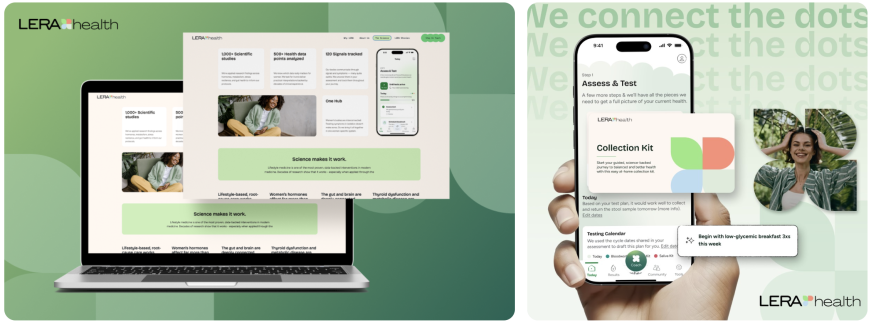
We build resilient integrations that tolerate the configuration variance of thousands of small offices.
HIPAA-ready handling and per-office isolation built in from sprint one, with BAA-covered infrastructure.
We navigate partner credentialing and per-office onboarding so access never stalls delivery.
We understand the operational reality of independent clinics — scheduling, eligibility, and billing land right.
We've shipped compliant clinical products end to end, so documentation and results flows are correct the first time.

Real Kareo / Tebra integrations, not just familiarity
Tell us which Tebra surfaces you need and how many offices you serve. We'll return a realistic plan with the partner-access path built in.
contact@agnotic.com
Partnerships
contact@agnotic.com