

Challenge
Inspections are initialed on a paper tag, or not recorded at all.
Agnotic approach
Each inspection opens from the ladder's tag and is stored with the time and the inspector.


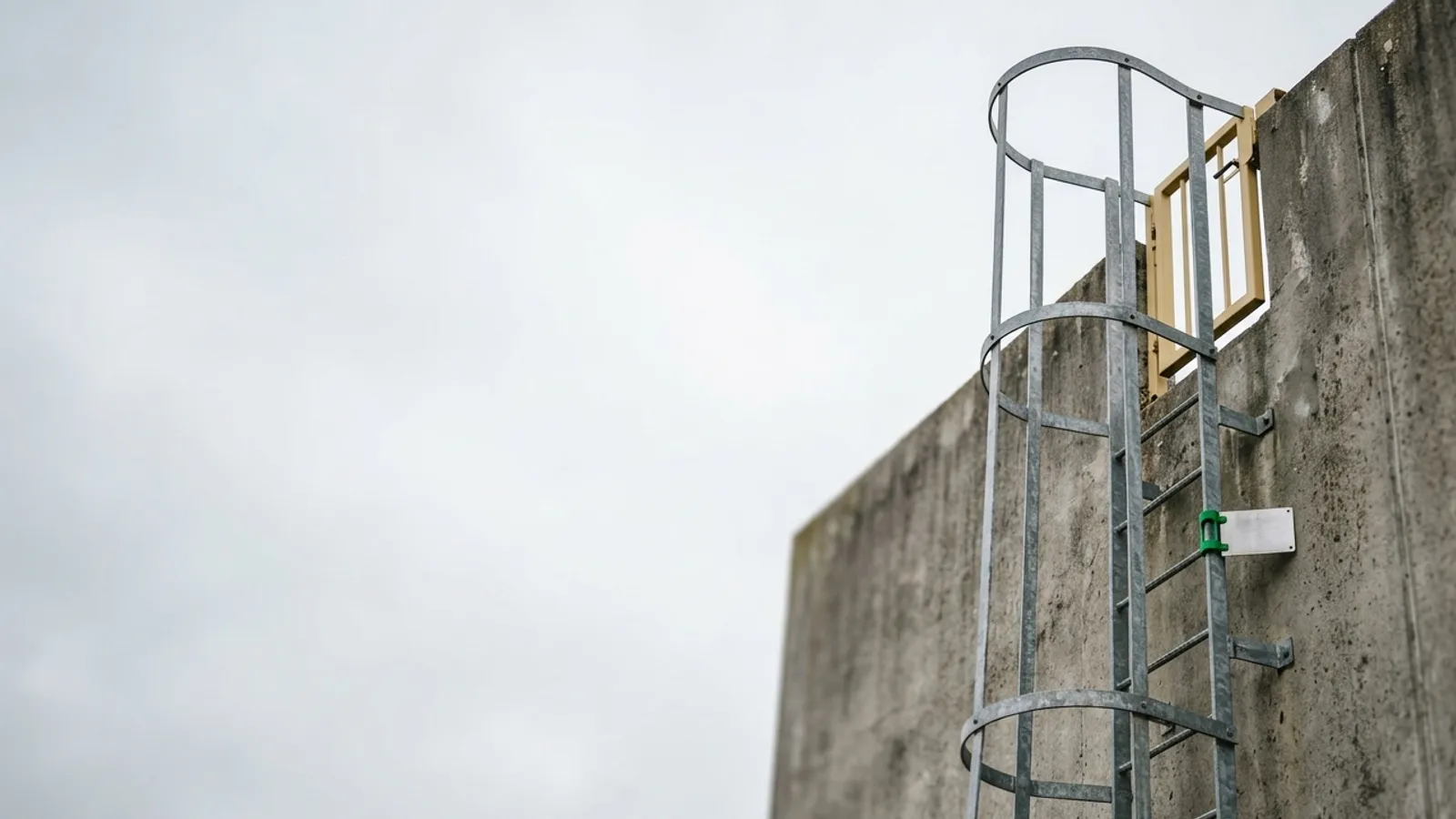
For safety and facilities managers who need proof that every fixed ladder, stairway, cage and anchor was inspected. Agnotic Technologies builds ladder inspection software with scan-to-open checklists, out-of-service control for defects and one register of every ladder across your buildings.
Trusted by global innovators









Proof for every ladder
Ladder inspection software proves every fixed ladder and stairway was inspected by giving each one a unique ID and an on-site tag, and running each inspection from a checklist that opens when the tag is scanned. The record shows who inspected which ladder, when, what they checked and what they found, with photos of any defect. A defective ladder is marked out of service in the app, tagged on site and sent to maintenance as a repair task. A dashboard shows which ladders and stairways are due, done or overdue in every building, so the inspection record itself is the proof.
Agnotic Technologies builds this as custom software for your safety and facilities teams, not as a subscription product. Your safety team owns the checklist and how often each ladder is inspected; the software makes sure it is followed and recorded. This page describes software, not legal advice.
Check the items your safety team's checklist names, built from the OSHA walking-working surfaces rules that apply to your sites, such as 29 CFR 1910.23 for ladders and 1910.25 for stairways. Record each item as pass, fail or not applicable, with a photo and a note for every fail.
An OSHA ladder inspection checklist app typically groups the items like this, and your safety team decides what applies to each ladder type:
Track them as components of each ladder, each with its own type, install date and condition, so the record shows exactly what fall protection a ladder has. Each building lists its ladders and stairways, and each ladder lists its cage or well, ladder safety system, anchors, gates and guardrails at the top.
Install and replacement dates matter because OSHA's fall protection rules for fixed ladders over 24 feet depend on when the ladder, or a section of it, was installed or replaced. The software flags ladders that still rely on a cage or well alone, so your team can plan the change.
Personal fall protection equipment used with a ladder safety system needs its own check before initial use in each workshift. Fall protection inspection software can tie that check to the climb, for example when a permit or work order sends someone up the ladder.
Fall protection
Based on 29 CFR 1910.28(b)(9), read on eCFR on 24 November 2026. The software records each ladder's install date and fall protection so your safety team can see which row applies; they decide what each ladder needs.
| Ladder situation | What 1910.28(b)(9) requires | What the software records |
|---|---|---|
| Installed before November 19, 2018 | A personal fall arrest system, ladder safety system, cage or well | Install date and the fall protection fitted |
| Installed on or after November 19, 2018 | A personal fall arrest system or ladder safety system | System type, install date and inspection history |
| A ladder, cage or well section is replaced | A personal fall arrest system or ladder safety system in at least the replaced section | Replacement date and the section affected |
| On and after November 18, 2036 | A personal fall arrest system or ladder safety system on every fixed ladder | Ladders still relying on a cage or well alone, flagged for planning |
Applies to fixed ladders that extend more than 24 feet above a lower level. Check the current regulation text with your safety team.
Failure points
Problems we see when ladder and stairway inspections run on paper tags and spreadsheets, and what the software changes.
Challenge
Inspections are initialed on a paper tag, or not recorded at all.
Agnotic approach
Each inspection opens from the ladder's tag and is stored with the time and the inspector.
Challenge
Nobody has a full list of fixed ladders and roof access points.
Agnotic approach
A site survey builds the register once, and new ladders are added when they are installed.
Challenge
A defective ladder is reported but stays in use.
Agnotic approach
A failed item marks the ladder out of service and creates a repair task.
Challenge
Cages, gates and anchors are not part of the record.
Agnotic approach
Each ladder lists its fall protection components, each with its own condition.
Challenge
Every building uses a different checklist.
Agnotic approach
One versioned checklist library is used across all sites.
Architecture
The components we build, what each one does and the technology we typically use. The exact stack follows your systems and hosting rules.
| Component | Purpose | Typical tech |
|---|---|---|
| Ladder and stairway register | Every ladder and stairway with ID, building, location, type, height and components | Database, imported from your asset register or built from a site survey |
| Tags and scanning | Opens the right checklist and shows the inspector was at the ladder | QR or NFC tags read by phone cameras or NFC |
| Mobile checklist | Pass, fail or not applicable items with photos and notes, with or without signal | Android or iOS app with offline storage |
| Out-of-service control | Keeps a failed ladder unusable until it is repaired and re-inspected | Status rules, repair tasks and sign-off |
| Scheduling and dashboard | Due, done and overdue inspections by building and site | Scheduler, notifications and a web dashboard |
| Integration layer | Sends repairs and safety records where they belong | REST APIs to your CMMS, EHS system and single sign-on |
Rollout
Five steps from the scoping call to every site on one register.
We review your sites, ladder and stairway types, current checklists and where repairs go today.
Ladders and stairways are listed with location, type and components, and each one is tagged.
Your safety team's checklists are configured per ladder and stairway type.
Inspectors run real rounds on one site, and their feedback goes into the next checklist version.
More sites follow, with the dashboard showing inspection coverage per building.
Ladder inspection records are most useful when repairs, permits and safety records use the same ladder IDs.
Repairs raised as work orders and closed back to the ladder record.
Findings, near misses and incidents linked to the ladder involved.
Climbs that need a permit check the ladder's status and fall protection first.
QR or NFC tags read on the devices your inspectors already carry.
Every inspection signed by a named user from your identity provider.
AI suggests a defect category from the photo as a draft; the inspector confirms or changes it.
Who it is for
Sites with many fixed ladders and stairways, and safety teams who must show they were inspected.
Fixed ladders to mezzanines, platforms and machine access points.
Ladders to roofs, platforms and high-level equipment.
Roof access ladders and plant room stairs across a building portfolio.
Tank, tower and structure ladders at remote sites with weak signal.
Firms inspecting ladders for several clients, each with its own register.
The size of a ladder inspection software build follows the number of sites and ladders, whether a site survey is needed to build the register, the tag type, how many checklist types you use and the systems it connects to. We do not publish prices; the first release is scoped on the scoping call.
Ladder inspections often start as one module of a wider safety audit software build, or are added to an existing OSHA compliance software record.
OSHA walking-working surfaces and fall protection rules, each linked to the regulation text on eCFR.
29 CFR 1910.23(b)(9) and (10) require ladders to be inspected before initial use in each work shift, and more often as necessary, for visible defects, and any ladder with structural or other defects to be tagged "Dangerous: Do Not Use" or similar and removed from service until repaired or replaced.
Source: 29 CFR 1910.23 (eCFR)29 CFR 1910.22(d) requires walking-working surfaces, defined in 1910.21 as any surface on or through which an employee walks, works or gains access to a work area, to be inspected regularly and as necessary, hazards to be corrected or guarded before the surface is used again, and structural repairs to be performed or supervised by a qualified person.
Source: 29 CFR 1910.22 (eCFR)Under 29 CFR 1910.28(b)(9), fixed ladders that extend more than 24 feet above a lower level and were installed on or after November 19, 2018 need a personal fall arrest system or ladder safety system, and from November 18, 2036 all such fixed ladders need one.
Source: 29 CFR 1910.28(b)(9) (eCFR)29 CFR 1910.28(b)(3)(iv) requires a guardrail system and toeboards on all exposed sides of a ladderway floor hole or ladderway platform hole, with a self-closing gate or an offset at the entrance.
Source: 29 CFR 1910.28(b)(3) (eCFR)29 CFR 1910.140(c)(18) requires personal fall protection systems to be inspected before initial use during each workshift for mildew, wear, damage and other deterioration, and defective components to be removed from service.
Source: 29 CFR 1910.140 (eCFR)Standards