

Challenge
Text still sits under the box
Agnotic approach
Redacted pages are re-rendered and the output is searched for every removed value before release.


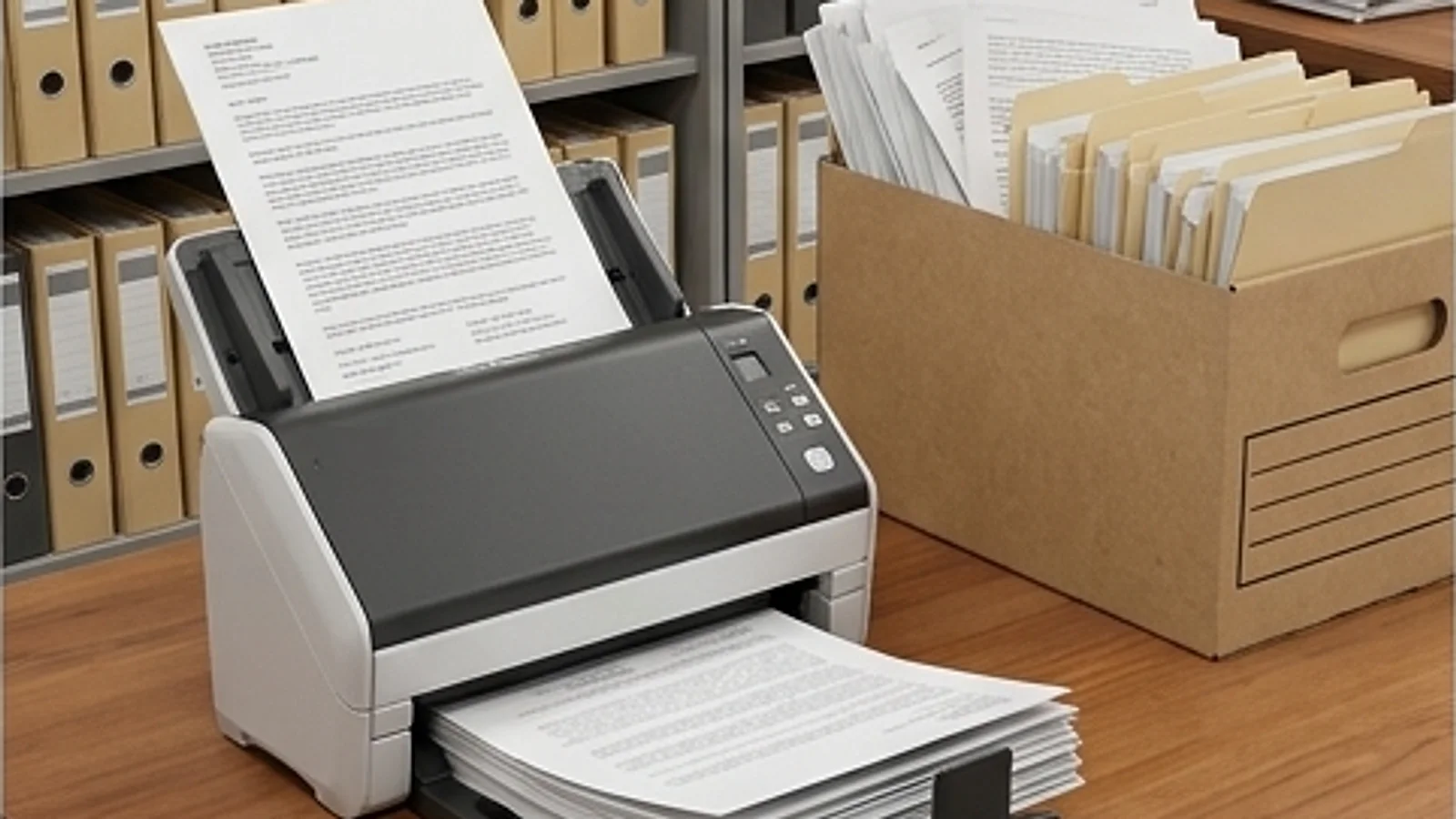
Your team downloads reports one by one and draws boxes over names in a PDF editor. Agnotic Technologies builds redaction software that finds identifiers and confidential data, extracts the fields you need, and sends every change through human review with an audit trail.
Trusted by global innovators









AI document redaction services find and remove personal identifiers and confidential data from business documents such as contracts, reports, scanned PDFs and research lab reports, then extract the fields your systems need. Agnotic Technologies builds this as software for the client: detection models, a human review queue, burned-in redaction and an audit trail of every change.
A typical starting point is a reporting team that downloads each report by hand, redacts names and IDs one page at a time, and retypes key values into a spreadsheet. The software takes over the finding, the boxing and the retyping. People keep the decision.
This page covers business and research documents. Documents that carry protected health information from a HIPAA covered entity follow healthcare rules and are scoped as a separate PHI project.
Pipeline
Seven steps, each logged, from the original file to the copy that leaves your team.
Files arrive from a portal download, a shared drive, email or a scanner, and the original is stored unchanged with a checksum.
Born-digital PDFs keep their text layer; scans and faxes go through OCR, and pages that read poorly are flagged rather than trusted.
Pattern rules catch structured IDs such as account and sample numbers, and a language model finds names, addresses and context-dependent details.
Values your systems need, such as test names, results, units and report dates, are pulled into structured fields before the identifiers are removed.
A reviewer sees each proposed redaction on the page, accepts, changes or adds to it, and low-confidence pages always go to a person.
The approved copy is rendered with the text, metadata and hidden layers removed, not just covered with a black box.
The redacted copy, the extracted fields and a log of who approved what are stored together, so any release can be traced later.
Decision table
Different documents hide identifiers in different places. We pick the detection method and the review depth per document type on the scoping call.
| Document type | What usually must be hidden | Detection approach | Where people review |
|---|---|---|---|
| Contracts and agreements | Party names, signatures, bank details, pricing clauses marked confidential | Clause and entity detection with a language model, plus patterns for account numbers | Every contract before external release |
| Scanned PDFs and faxes | Handwritten names, stamps, signatures, IDs in headers and footers | OCR with layout analysis, then entity detection on the recognised text | Pages with low OCR confidence or handwriting |
| Research and genomics lab reports | Participant names, dates of birth, sample and accession numbers, clinician names | Template rules for known report layouts, a model for free-text comments | A sample of each new report layout, and any page the rules do not match |
| HR and employee files | Home addresses, government ID numbers, salary and health notes | Patterns for ID formats, entity detection for names and addresses | Every file, since context decides what is sensitive |
| Financial and audit reports | Account numbers, customer names, figures marked commercially sensitive | Patterns for account formats, a model for names in tables and notes | Tables and appendices, where identifiers hide in cells |
Where the reader needs to follow who is who, consistent pseudonyms replace names instead of plain black boxes. Pseudonymised data can still count as personal data, so it is stored and shared under the same rules.
Failure points
Most redaction leaks are not missed names. They are text that is still in the file after the page looks clean.
Challenge
Text still sits under the box
Agnotic approach
Redacted pages are re-rendered and the output is searched for every removed value before release.
Challenge
Metadata and hidden layers carry the name
Agnotic approach
Author fields, comments, attachments, bookmarks and form fields are stripped from every released copy.
Challenge
An identifier is split across lines or cells
Agnotic approach
Detection runs on the reading order of the page, not line by line, so a wrapped name or ID is still caught.
Challenge
Details that identify someone only together
Agnotic approach
Quasi-identifiers such as a rare test with a date and a site are listed per document type and reviewed as a set.
Challenge
Over-redaction removes the meaning
Agnotic approach
Fields the reader needs are extracted first and kept, and reviewers see what was removed so they can restore it.
Outputs
The right output depends on who reads the document next. One pipeline can produce all three.
Example: A contract or report shared with a third party, a court or the public.
Approach: Identifiers and confidential text removed and burned in; the original stays in restricted storage.
Example: Research or audit files where analysts must tell records apart without knowing who they are.
Approach: Each name or ID replaced by a consistent token, with the key held separately under tighter access.
Example: Lab results or contract terms loaded into a database, LIMS or dashboard.
Approach: Structured fields with units and source page references, and no identifiers unless a field needs them.
The parts that turn a manual PDF routine into a pipeline your team can trust and audit.
Pattern rules and a language model tuned on your own documents, tested on held-out samples.
AI data extraction from lab reports into typed fields: test, result, unit, reference range and date.
Side-by-side page view with proposed boxes, keyboard shortcuts and a second reviewer for sensitive releases.
Rules per document type and per recipient, so the same report can be released two ways.
Connections to portals, shared drives, email and the systems that receive the redacted copies.
Who uploaded, reviewed, changed and released each document, with the policy version that applied.
Who uses it
Any team that releases documents outside the group that created them.
Reports downloaded from instruments or partner portals, redacted before they reach collaborators or a dataset.
Contracts, disclosures and productions with party details and privileged text removed.
Employee files and investigation records shared with advisers or in response to requests.
Statements and working papers shared with auditors, buyers or regulators.
Claim files and supporting documents shared with adjusters, reinsurers or counsel.
Records released under access requests, where every redaction must be justified.
Scope drivers
We size the work on a scoping call rather than quote a price. These factors move the effort most.
Each new layout needs its own rules and test samples.
Clean born-digital PDFs are faster to handle than faxes, photos and handwriting.
Redaction alone is smaller than redaction plus structured extraction into another system.
Reviewing every page costs more reviewer time than reviewing only flagged pages.
Running models inside your own cloud account adds setup compared with a hosted model provider.
Each portal, drive or database the pipeline reads from or writes to is one integration.
References
Your counsel sets the rules for each document type. These references shape how we build them in.
Short facts behind our redaction and pseudonymisation choices, each linked to its primary source.
NIST SP 800-122, Guide to Protecting the Confidentiality of Personally Identifiable Information (April 2010), gives context-based guidance for identifying PII and deciding what level of protection is appropriate for each instance of it.
Source: NIST SP 800-122NIST SP 800-188 (September 2023) describes de-identification by removing identifiers, transforming quasi-identifiers and generating synthetic data, and warns that not all tools that merely mask personal information are sufficient for de-identification.
Source: NIST SP 800-188The European Commission states that data which has been de-identified, encrypted or pseudonymised but can still be used to re-identify a person remains personal data under the GDPR, and that for data to be truly anonymised the anonymisation must be irreversible.
Source: European Commission, data protection explainedUnder the Common Rule for human subjects research, identifiable private information is private information for which the identity of the subject is or may readily be ascertained by the investigator or associated with the information (45 CFR 46.102(e)(5)).
Source: 45 CFR 46.102 (eCFR)