

Ship first: wellness and logging
Features that support healthy choices or simply record and share data.
- Meal, activity and sleep coaching
- Reading log shared with the care team
- Claims kept to healthy lifestyle support


A diabetes app can be a wellness product or a regulated medical device, and one new feature can move it across that line. Agnotic Technologies builds diabetes management apps for digital health teams and maps every feature to its likely FDA position before it reaches the backlog.
Trusted by global innovators











Diabetes management app development services cover the design, build and release of an app that helps people live with diabetes, from coaching and logging to alerts, dose calculators and pump control. Agnotic Technologies builds these apps and decides with your regulatory lead which features stay general wellness and which become regulated device software.
We sort the backlog into three groups before estimating anything. Each group carries different obligations, so it ships on a different track.
Features that support healthy choices or simply record and share data.
Features whose position depends on exactly what they say and do.
Features that analyze readings for the user or act on treatment.
Most teams do not plan to build a medical device. These are the changes that turn a wellness app into one.
A marketing page promises the app will help manage blood sugar, and the claim, not the code, changes the product's position.
A trend chart gains a red band and a push notification for low readings, which turns logging into alerting.
A carbohydrate counter grows a suggested insulin dose, because users asked for one.
A partnership adds a pump connection, and the app is now sending commands to another device.
Device features are built in the same codebase and release train as the wellness features, so every release carries device obligations.
The likely position of each feature, the rule or guidance it points to, and what it changes in the build. Your regulatory lead makes the final call; this table is where that conversation starts.
| App feature | Likely FDA position | Rule or guidance | What it changes in the build |
|---|---|---|---|
| Healthy eating, activity and weight coaching for people living with type 2 diabetes | General wellness, while claims stay on healthy lifestyle choices | FDA General Wellness guidance (January 2026) | Claims review on screens and store listings; no disease thresholds, alarms or dosing prompts |
| Logging readings from a meter to share with the care team | Not a device | FDA device software functions guidance, Appendix A | Standard app build with HIPAA-ready controls; no analysis of the values |
| Alerts when glucose readings fall outside a set range | Device software function | FDA device software functions guidance, section V.A | Design controls, risk analysis, verification and labeling |
| A secondary alarm that repeats CGM alerts on another device | Class II, exempt from premarket notification within limits | 21 CFR 862.1350 | Protection against unauthorized access, and the required labeling warnings |
| Insulin dose calculator or patient-specific dosing advice | Device software function | FDA device software functions guidance, section V.A; General Wellness guidance | Premarket pathway decision, design controls, clinical input validation and labeling |
| Sending dose commands to a connected insulin pump | Device software function; the pump side is an alternate controller enabled pump | FDA device software functions guidance; 21 CFR 880.5730 | Interoperability with an authorized pump, command and confirm messaging, cybersecurity documentation |
| Algorithm that calculates and commands doses automatically | Class II interoperable automated glycemic controller | 21 CFR 862.1356 | Clinical performance evidence and full design controls inside a quality system |
Once a feature is device software, the work around the code grows more than the code itself. We plan these four things from the first sprint of that feature.
Requirements, design reviews and traceability from each user need to its tests, kept inside your quality system. Since 2 February 2026, FDA's Quality Management System Regulation incorporates ISO 13485:2016.
A dose calculator is only as safe as its inputs, so carbohydrate entries, glucose values, units and settings are range checked and tested at their limits.
Intended use, warnings and instructions appear where the user acts, and change only through controlled releases.
The device module ships on its own versioned release with its own change control, so wellness features can still move quickly.
Features we build, each placed on the decision table before work starts.
Meal, activity and sleep goals framed as healthy lifestyle support.
Meter readings logged and shared with the care team or uploaded to the record.
Alerts on readings outside set limits, built as device software with its own tests.
Patient-specific bolus calculation built under design controls, with clinician-set parameters.
Command and confirm messaging with an authorized pump through the manufacturer's interface.
Read-only access for family members the user invites, with clear limits on what they see.
Store listings, onboarding and in-app text kept in one reviewed source, so wording changes are tracked.
Traceability, test evidence and release records generated from the pipeline.
The apps, data formats and engineering practices behind the diabetes apps we build.
Measures we build reporting around, agreed with your product and quality leads.
Logging and coaching use by week, for wellness features.
Users sharing readings with a clinician or caregiver.
Reports tied to the device module, routed to quality review.
Device module releases with complete test evidence.
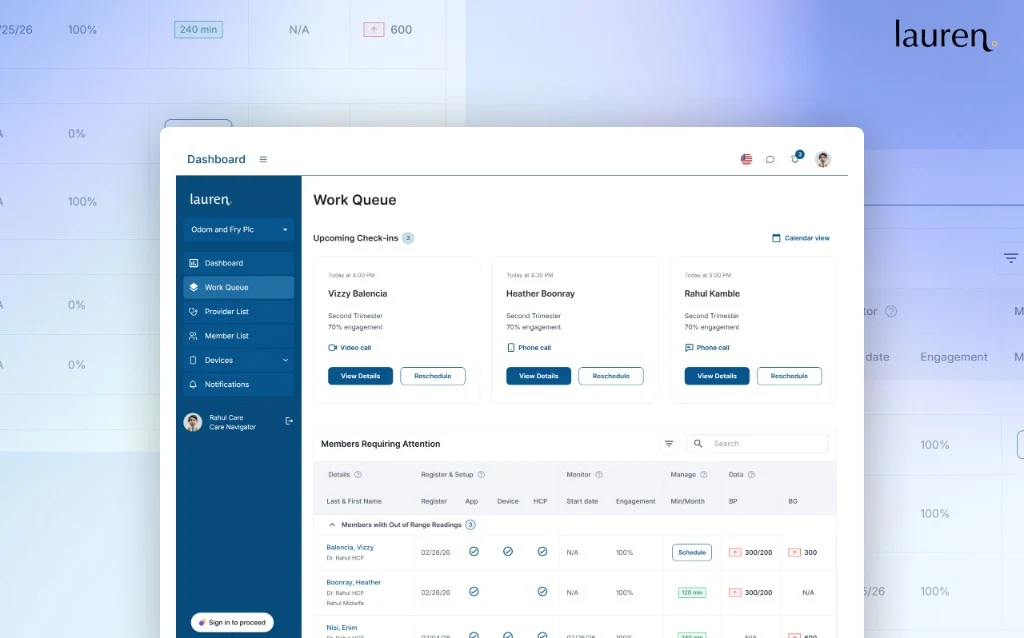
A HIPAA-ready maternal health platform enabling remote patient monitoring, care coordination, and personalized engagement from pre-pregnancy through postpartum.
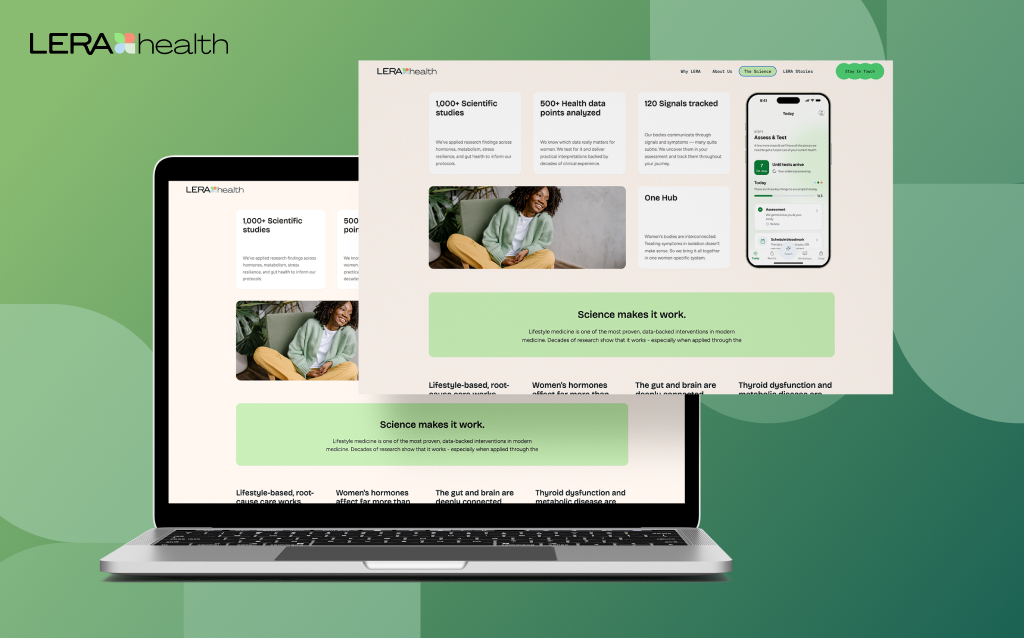
A women’s health product experience focused on guided care journeys, education, and compliance-aware workflows to support long-term engagement.
Teams that need the regulatory line drawn before the first release.
Diabetes management app development services for startups planning a wellness launch first.
Companion apps for meters and pumps, built inside the manufacturer's quality system.
Coaching and logging for prevention and self-management programs.
Patient apps that link readings to the care team.
Support apps around a diabetes therapy.
Study apps that collect readings and lifestyle data.
The devices and systems a diabetes app reads from or sends to.
Work through these with your regulatory lead before a dose calculator or pump connection enters the backlog.
We build secure, scalable products designed for privacy, interoperability, and regulatory readiness from day one across every sector we serve.

Protect PHI with privacy-first architecture, encrypted storage and transmission, and strict access controls.

Implement lawful consent flows, data minimization, and secure processing for global data privacy.

Enabling standardized health data exchange through standards-based API mappings.
We combine deep technical expertise with industry-specific knowledge to deliver solutions that aren't just functional, but transformational.
We implement rigorous security protocols and compliance standards (HIPAA, GDPR, SOC2) across all industrial solutions to protect sensitive data.
Our architectures are built to handle massive data loads and user bases, keeping performance steady whether you're serving ten or ten million.
Using our suite of internal tools and proven frameworks, we cut setup work so your first release reaches users sooner.
Beyond simple wrappers, we build deep-learning integrations and predictive analytics directly into the core of your industry-specific workflows.
How to build a diabetes management app in releases that each carry only the obligations they need. Timing depends on scope; we agree a fixed first release on the scoping call.
We list the features you have in mind and place each one on the decision table with your regulatory lead.
Coaching, logging and sharing launched without device functions, with claims reviewed.
Intended use, risk analysis and the design control plan for the first regulated feature.
The regulated feature built, verified and documented inside your quality system.
Controlled releases, field issue handling and updates when FDA guidance changes.
Short facts from FDA guidance and classification regulations, each linked to its primary source.
FDA's General Wellness guidance, issued 6 January 2026, says products are not general wellness products when they measure or report physiologic values for managing a disease, naming blood glucose meters and continuous glucose monitors, or when their outputs are used to make treatment decisions such as medication dosing.
Source: FDA, General Wellness: Policy for Low Risk Devices (January 2026)The same FDA guidance lists software that lets a user record data such as blood glucose from a device, to share with a health care professional or upload to an EHR, a personal health record or a cloud database, among software functions that are not medical devices.
Source: FDA, Policy for Device Software Functions and Mobile Medical Applications (2022), Appendix AFDA's device software functions guidance gives mobile apps that control insulin delivery on an insulin pump, and software that analyzes blood glucose readings and alerts the user to readings outside a set range, as examples of device software functions under its oversight.
Source: FDA, Policy for Device Software Functions and Mobile Medical Applications (2022), section V.AA CGM secondary alarm system is a Class II device exempt from premarket notification within set limits, and its labeling must warn that dosing decisions should not be made based on the device.
Source: 21 CFR 862.1350 (eCFR)An interoperable automated glycemic controller, a device that automatically calculates drug doses from inputs such as glucose and commands their delivery from a connected infusion pump, is a Class II device with special controls.
Source: 21 CFR 862.1356 (eCFR)We don't just build products; we forge lasting partnerships. See how we've helped industry leaders transform their vision into technical reality.
“I can clearly see how Agnotic has a unique way of handling end-to-end development. They are always active on quick chat and provide support quickly.”

Aaron Phelan
Founder, Benchmark
“Agnotic combines deep technical expertise with strong domain knowledge. They understand the business context, anticipate challenges, and make collaboration smooth and effective.”

John Pasmore
Founder, Latimer
“Agnotic is the best technical team we evaluated. Their engineering excellence made our work dramatically easier and allowed us to stay focused on what matters most for maternal care outcomes. They took full ownership of the technical execution, and we are always happy to continue working together.”

Kim Smith
Founder, My Lauren
This page covers where a diabetes app sits under FDA rules. These pages cover glucose data, clinic workflows and nutrition.
Dexcom and FreeStyle Libre data, glucose UX and safe alerting.
Glucose data through Dexcom's API into apps and clinical systems.
Clinic workflows, time in range and device data for diabetes care teams.
Classification, IEC 62304 and design controls for device software.
Food logging and nutrition coaching apps.
Explore other production-grade engineering platforms we deliver across healthcare.
The technical patterns behind this platform translate naturally into adjacent verticals.