

Data coming in
Files and feeds that put members, providers and claims into the core.
- 834 enrollment files from employer groups and exchanges
- Provider roster and credentialing loads
- 837 claims from clearinghouses



A health plan that has bought its core administration platform still has to feed it, connect it and test it every time it changes. Agnotic Technologies builds the enrollment and claims interfaces, portals, APIs and regression suites around the HealthEdge platform your plan runs, and supports them after go-live.
Trusted by global innovators











Integration around HealthEdge healthcare platforms is the engineering a health plan needs after it buys a core administration platform: enrollment and claims feeds, provider data loads, member and broker portals, APIs and regression tests for each upgrade. Agnotic Technologies builds and supports this work around the platform your plan already runs, without changing the platform itself.
The core holds members, benefits, providers and claims. These are the four areas of work we build around it. Agnotic Technologies is independent of HealthEdge; we build for the plan, not for the vendor.
Files and feeds that put members, providers and claims into the core.
What leaves the core for providers, partners and your own teams.
The screens people use instead of calling the plan.
The layer that keeps the core reachable and its changes safe to release.
Buying a core platform puts the plan's benefit and claims rules in one system. The data and apps around that system stay the plan's job.
Employer groups send 834 files with their own quirks, and each new group means another mapping and another round of test files.
Provider data arrives from credentialing, contracting and roster spreadsheets that do not match what the core loads.
A platform upgrade or benefit change can alter how a claim prices or adjudicates, and manual test scripts are slow to rerun.
Member and provider portals read from the core, so a changed interface shows up as wrong balances or missing claims.
Finance, actuarial and quality teams need extracts in a shape the core does not produce.
CMS-0057-F asks impacted payers for FHIR APIs, and the data behind them sits in the core and the systems around it.
The first question we ask about every request. Keeping the core close to its supported configuration makes upgrades easier; custom logic goes where it can be tested and changed on its own.
| Request | Where it belongs | Why | What we build |
|---|---|---|---|
| New benefit plan or rider | Core configuration, set by your configuration team | Benefit rules belong in the system that adjudicates against them | Regression cases that show the new plan prices claims as expected |
| New employer group with its own 834 layout | Around the core | Group-specific layouts change often and should not touch core logic | A mapping and validation layer that turns each group's file into a clean 834 for the core |
| Provider roster from a delegated group | Around the core | Roster formats vary by group and need checks before load | Roster intake, validation, an exception queue and the load file |
| Claims and accumulators in the member portal | Around the core | Members need a fast read model, not a call to the core on every page view | A portal backend with a read store refreshed from the core's interfaces |
| Provider Access or Payer-to-Payer API | Around the core | The FHIR resources combine core data with clinical and authorization data | A FHIR R4 API layer, mapping from core extracts, consent and access controls |
| Replacing the core itself | A separate project | Building or replacing a core is its own decision with its own risks | Covered on our payer core administration page |
Four rules keep the core stable while the systems around it change.
We connect through the files, APIs and extracts your platform supports and your vendor agreement allows, never through direct writes to its database.
Inbound files are checked against the X12 implementation guide and your plan's rules first, so bad records land in an exception queue, not in member data.
Group mappings, portal logic and reporting live in services you own, so a platform upgrade does not overwrite them.
A regression suite of known members, benefits and claims runs before each upgrade or configuration release.
Integration, data and application work for health plans and TPAs that run a HealthEdge platform.
Per-group mapping, validation against the 005010X220 guide, change detection and an exception queue before a file reaches the core.
837 intake from clearinghouses with front-end edits, and 835 files from the core delivered to providers and clearinghouses.
Roster, credentialing and contract data cleaned, matched and loaded, with a report of what changed in each load.
Web and mobile apps that show eligibility, claims, accumulators and ID cards from data the core publishes.
Provider Access, Payer-to-Payer and Prior Authorization APIs on FHIR R4, fed from core extracts and other plan systems.
Scheduled extracts into your data warehouse for finance, actuarial, quality and audit teams.
Member, accumulator, provider and claim history moved from a legacy system into the new platform, with reconciliation reports.
Automated suites of members, benefits and claims rerun on every platform upgrade or configuration release, with the differences reported.
The flow we set up so a platform upgrade or benefit change ships with evidence. It runs in a non-production environment with synthetic members.
Synthetic members, groups, providers and benefit plans that cover your products, loaded into a test environment.
Test claims run through the current version, and the priced and adjudicated results are stored as the expected outcome.
Your team or the vendor applies the upgrade or configuration release in the test environment.
The same claims, enrollment files and portal calls run again, and every difference in pricing, adjudication or output files is listed.
Your configuration and claims leads mark each difference as expected or as a defect.
The signed-off comparison is kept as the release record for audit and as the baseline for the next upgrade.
The transactions, APIs and tooling behind the work we build around a payer core platform.
Measures we build reporting around, agreed with your operations and IT leads.
By group and reason, so recurring errors are fixed at the source.
Time from an 834 arriving to the change being live in the core.
Claims whose price or adjudication changed after an upgrade, expected or not.
How far behind the core the member and provider portals run.
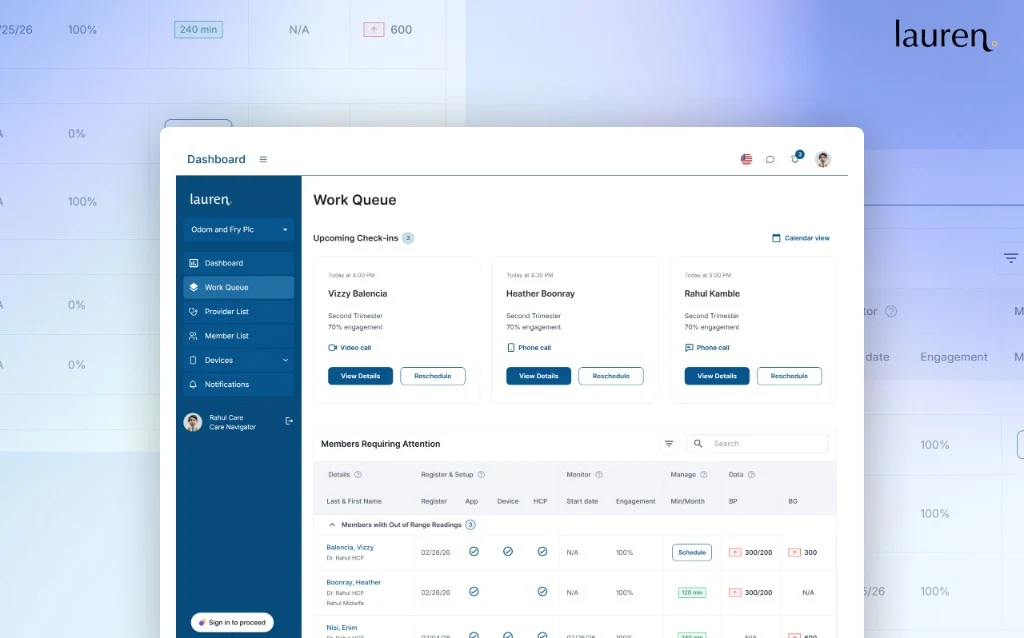
A HIPAA-ready maternal health platform enabling remote patient monitoring, care coordination, and personalized engagement from pre-pregnancy through postpartum.
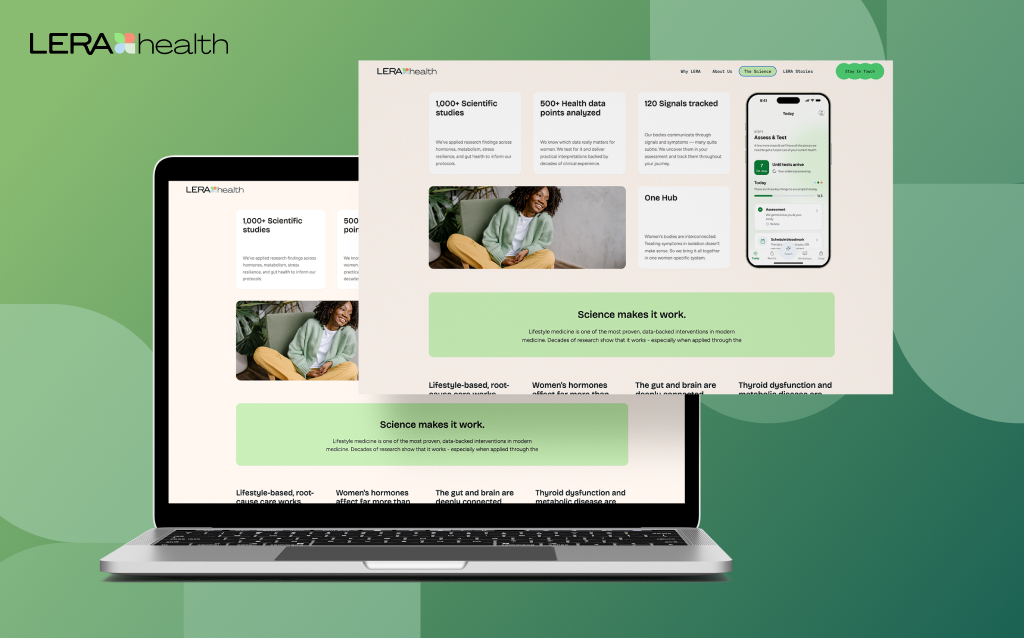
A women’s health product experience focused on guided care journeys, education, and compliance-aware workflows to support long-term engagement.
Teams that run a purchased core platform and need engineering around it.
Plans that run the core themselves and need interfaces, portals and testing around it.
Plans with CMS-0057-F API work and regulatory reporting fed from the core.
TPAs that load many employer groups, each with its own 834 layout and reporting needs.
Teams moving onto a new core platform who need data conversion and interface builds.
Teams that need interfaces supported and regression tested on each upgrade.
Health systems that run a plan and need its core connected to their own systems.
The systems on either side of the work we build.
We build secure, scalable products designed for privacy, interoperability, and regulatory readiness from day one across every sector we serve.

Protect PHI with privacy-first architecture, encrypted storage and transmission, and strict access controls.

Enabling standardized health data exchange through standards-based API mappings.
We combine deep technical expertise with industry-specific knowledge to deliver solutions that aren't just functional, but transformational.
We implement rigorous security protocols and compliance standards (HIPAA, GDPR, SOC2) across all industrial solutions to protect sensitive data.
Our architectures are built to handle massive data loads and user bases, keeping performance steady whether you're serving ten or ten million.
Using our suite of internal tools and proven frameworks, we reduce development cycles and get your product to market 40% faster.
Beyond simple wrappers, we build deep-learning integrations and predictive analytics directly into the core of your industry-specific workflows.
We start with one interface or one test suite. Timing depends on scope; we agree a fixed first release on the scoping call.
We agree the first piece of work, the systems involved and who owns the vendor relationship.
The files, APIs and environments we may use are confirmed in writing with your team and, where needed, your platform vendor.
One interface or one regression suite built and tested end to end, often the 834 intake or the upgrade test bed.
Further interfaces, portals or APIs, one at a time, each with its own tests.
Interfaces and test suites kept current through each platform upgrade under agreed support terms.
Short facts from HIPAA and the CMS interoperability rule, each linked to its primary source.
HIPAA adopts the ASC X12 834 Benefit Enrollment and Maintenance transaction (005010X220) as the standard for enrollment and disenrollment in a health plan.
Source: 45 CFR 162.1502 (eCFR)HIPAA names the ASC X12 837 Health Care Claim technical reports, including 005010X222 for professional claims and 005010X223 for institutional claims, as standards for the health care claims transaction.
Source: 45 CFR 162.1102 (eCFR)HIPAA adopts the ASC X12 835 Health Care Claim Payment/Advice (005010X221) as the standard for health care remittance advice.
Source: 45 CFR 162.1602(d)(2) (eCFR)A HIPAA covered entity may use a business associate to conduct all or part of a standard transaction, and must require that business associate, and any agent or subcontractor, to comply with the Part 162 requirements.
Source: 45 CFR 162.923(c) (eCFR)CMS-0057-F requires impacted payers to build a FHIR-based Prior Authorization API, along with Provider Access and Payer-to-Payer APIs, with compliance dates generally beginning January 1, 2027.
Source: Federal Register, February 8, 2024 (CMS-0057-F)We don't just build products; we forge lasting partnerships. See how we've helped industry leaders transform their vision into technical reality.
“I can clearly see how Agnotic has a unique way of handling end-to-end development. They are always active on quick chat and provide support quickly.”

Aaron Phelan
Founder, Benchmark
“Agnotic combines deep technical expertise with strong domain knowledge. They understand the business context, anticipate challenges, and make collaboration smooth and effective.”

John Pasmore
Founder, Latimer
“Agnotic is the best technical team we evaluated. Their engineering excellence made our work dramatically easier and allowed us to stay focused on what matters most for maternal care outcomes. They took full ownership of the technical execution, and we are always happy to continue working together.”

Kim Smith
Founder, My Lauren
This page covers work around a core your plan already runs. These pages cover building the core, the operations around it and claims adjudication.
Building core modules, or replacing a legacy core one module at a time.
Service, appeals and authorization workflow tools for health plan teams.
Adjudication systems for payers and TPAs, from intake to remittance.
CMS-0057-F APIs, prior authorization, member and provider portals.
834, 837, 835, 270/271 and 276/277 transactions with trading partners.
The safeguards we build into every system that holds patient or member data.
Explore other production-grade engineering platforms we deliver across healthcare.
The technical patterns behind this platform translate naturally into adjacent verticals.