

01
Onboarding tracker for the next acquisition
The checklist and extract templates ready before the deal closes.



Every practice an MSO acquires or affiliates brings its own EHR, billing setup, payer contracts and patient list. Agnotic Technologies builds the software that brings each one into central operations: an onboarding sequence in the right order, a clear decision on each EHR, billing queues across tax IDs and one view of patients across practices.
Trusted by global innovators











MSO software development is building the systems a management services organization uses to run billing, reporting and operations for many affiliated physician practices. Agnotic Technologies builds it as a services engagement: acquired practice onboarding, a keep, bridge or migrate decision for each EHR, central billing queues across tax IDs and a patient index across practices.
The first few practices are onboarded by heroics. After that, the gaps show up in cash, reports and agreements.
Each new practice is onboarded from a fresh spreadsheet, so interface work starts before payer changes are filed and claims stall at cutover.
Billing staff log in to several practice management systems to work one day's denials.
Each practice defines a visit, a provider and a location differently, so the board report is rebuilt by hand every month.
The same patient sits in three practices' records with no link, and outreach letters arrive twice.
Business associate agreements were signed practice by practice on different terms, and nobody can say which data the MSO may combine.
An old EHR contract renews automatically because nobody owned the decision to keep or retire it.
We make this call per practice with the MSO's operations and clinical leaders, using four criteria. Specialty EHR extension work is covered on our specialty practices page.
| Decision | Specialty fit | Contract end | Data volume | Interfaces in use |
|---|---|---|---|---|
| Keep | The EHR serves a specialty the central EHR serves poorly | Far off, or exit costs are high | Any; the data stays where it is and feeds the central model | Many local interfaces that work well |
| Bridge | Acceptable for now, with consolidation planned | Within the next planning cycle | Large; migration needs time to map and test | Some can move to the interface engine now |
| Migrate | Duplicates what the central EHR already does | Near, or renewal is not wanted | Small to medium, or already exported cleanly | Few, or easy to repoint |
Three design rules keep a multi-practice platform from mixing data it should not mix.
Each record carries its practice, tax ID, billing NPI and location, so one platform serves many legal entities without blending their data.
Billing works from one queue while each practice's own system stays the record until its cutover, so nothing is lost during the move.
What the MSO may combine across practices follows each business associate agreement, recorded in the platform and checked before a cross-practice report is built.
Software for the MSO's central teams. NPI, CAQH and payer enrollment steps for a new location are on our new practice technology checklist.
The dependency-ordered checklist for each acquired practice, with owners, blockers and dates.
Repeatable extracts from common EHR and practice management systems, mapped to the central data model.
Denials, edits and follow-up across tax IDs and NPIs in one queue, routed by payer and practice.
Patients matched across practices, with uncertain pairs sent to a person for review.
One definition of visit, provider, location and payer, with the practice as a dimension.
HL7 v2 and FHIR feeds repointed or bridged while a practice moves systems.
Business associate terms per practice and the data uses each one permits.
Providers, NPIs, tax IDs, locations and effective dates as one source for billing and reporting.
The layers we build for an MSO platform, from the practices' own systems to the central teams.
Each practice's EHR and practice management system remains the system of record until its cutover date.
Scheduled extracts and HL7 v2 feeds through the interface engine, each tagged with practice, tax ID and load date.
The provider roster and the enterprise patient index resolve who is who across practices before anything is joined.
Billing queues and reporting tables share one set of definitions, so a denial rate means the same thing everywhere.
Users see data by role and practice, and combined views are allowed only where the agreement register permits them.
We connect to what each practice already runs and add the central layers around it.
Views we build for the MSO's operations, finance and integration teams.
Each acquired practice by stage, owner and blocker.
Open work by tax ID, payer and age.
Patients linked across practices and pairs awaiting review.
The same measure definitions for every practice.
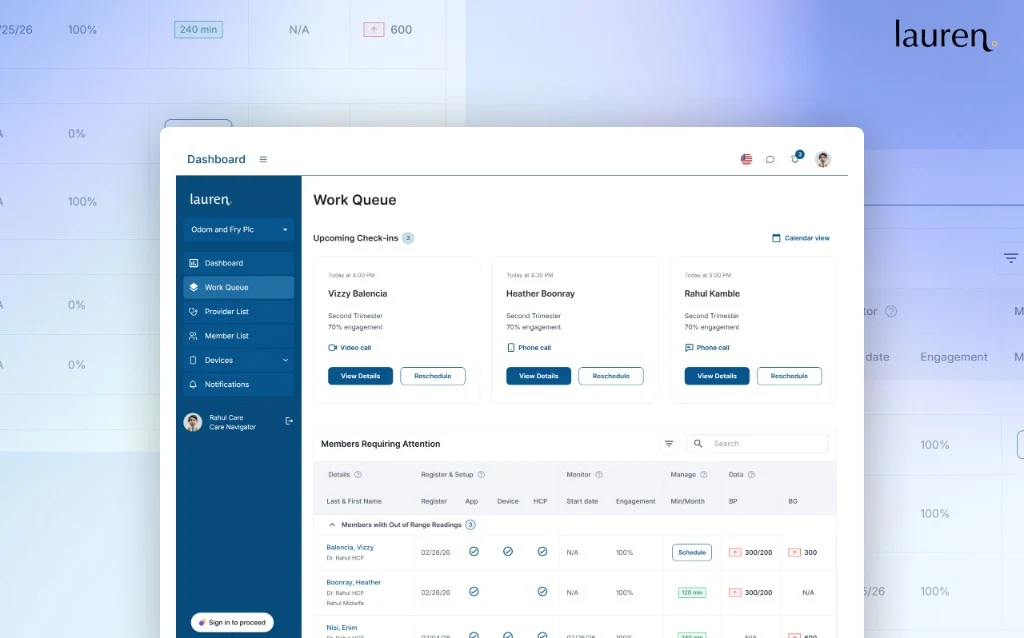
A HIPAA-ready maternal health platform enabling remote patient monitoring, care coordination, and personalized engagement from pre-pregnancy through postpartum.
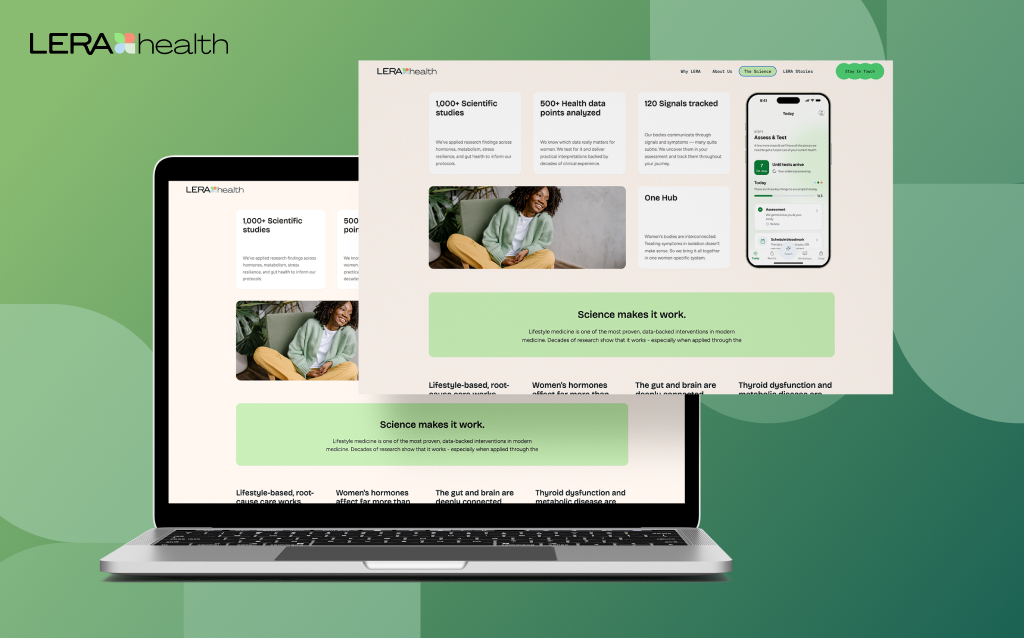
A women’s health product experience focused on guided care journeys, education, and compliance-aware workflows to support long-term engagement.
First releases we scope, each tied to the next real event in the MSO's year.
The checklist and extract templates ready before the deal closes.
One queue for the practices already on board, keyed by tax ID and payer.
Shared definitions and a monthly report that no longer needs rebuilding.
Matching across the largest practices first, with a review queue.
A new MSO with its first few practices, built so practice ten onboards like practice two.
The keep, bridge or migrate decision made for every practice, with dates.
The systems an MSO platform reads from and writes to, practice by practice.
This is the sequence we build into the onboarding tracker. Each area depends on the one before it, which is why starting interfaces first so often stalls claims.
We build secure, scalable products designed for privacy, interoperability, and regulatory readiness from day one across every sector we serve.

Protect PHI with privacy-first architecture, encrypted storage and transmission, and strict access controls.

Enabling standardized health data exchange through standards-based API mappings.

Supporting enterprise-grade interoperability for clinical messaging and record workflows.
We combine deep technical expertise with industry-specific knowledge to deliver solutions that aren't just functional, but transformational.
We implement rigorous security protocols and compliance standards (HIPAA, GDPR, SOC2) across all industrial solutions to protect sensitive data.
Our architectures are built to handle massive data loads and user bases, keeping performance steady whether you're serving ten or ten million.
Using our suite of internal tools and proven frameworks, we cut setup work so your first release reaches users sooner.
Beyond simple wrappers, we build deep-learning integrations and predictive analytics directly into the core of your industry-specific workflows.
We start with one practice and one central function. Timing depends on the systems involved, and we agree a fixed first release on the scoping call.
Practices, EHRs, billing setup and the next acquisition on the calendar.
Systems, interfaces, tax IDs and agreements listed for every practice.
One practice onboarded through the tracker into the central billing queue.
Each new practice follows the same sequence and data model.
Bridges retired and migrations run as contracts end, under change control.
Short facts we design around, each linked to its primary source. Legal structure questions belong with your counsel.
HIPAA defines a business associate as a person who creates, receives, maintains or transmits protected health information on behalf of a covered entity for functions that include billing, practice management, data analysis and utilization review.
Source: 45 CFR 160.103 (eCFR)A business associate contract must set the permitted uses and disclosures of protected health information, and may permit the business associate to provide data aggregation services relating to the covered entity's health care operations.
Source: 45 CFR 164.504(e)(2)(i) (eCFR)Medicare may pay an agent that furnishes billing and collection services to a supplier, and payment to an agent is always made in the name of the supplier or of the employer, facility or system it bills for.
Source: 42 CFR 424.80(b)(5) (eCFR)A covered health care provider that uses business associates to conduct standard transactions on its behalf must require them to use its NPI and other NPIs as the transactions require.
Source: 45 CFR 162.410(a)(5) (eCFR)We don't just build products; we forge lasting partnerships. See how we've helped industry leaders transform their vision into technical reality.
“I can clearly see how Agnotic has a unique way of handling end-to-end development. They are always active on quick chat and provide support quickly.”

Aaron Phelan
Founder, Benchmark
“Agnotic combines deep technical expertise with strong domain knowledge. They understand the business context, anticipate challenges, and make collaboration smooth and effective.”

John Pasmore
Founder, Latimer
“Agnotic is the best technical team we evaluated. Their engineering excellence made our work dramatically easier and allowed us to stay focused on what matters most for maternal care outcomes. They took full ownership of the technical execution, and we are always happy to continue working together.”

Kim Smith
Founder, My Lauren
This page covers running many practices centrally. These pages cover the pieces next to it.
Specialty EHR extensions and the extend or replace decision.
NPI, enrollment and systems for opening a new location.
EMPI, matching thresholds and merge history.
Claims, denials and payment posting for provider organizations.
Shared savings operations for accountable care organizations.
Moving HL7 v2 and FHIR routes to a new engine.
Explore other production-grade engineering platforms we deliver across healthcare.
The technical patterns behind this platform translate naturally into adjacent verticals.