Challenge
Teams treat the managed store as the whole platform
Agnotic approach
We build the ingestion, validation, and analytics layers that turn an empty store into a usable canonical record.


We stand up and integrate managed FHIR stores on AWS HealthLake and the Google Cloud Healthcare API — FHIR R4, HL7v2, and DICOM stores with the analytics and pipelines a real platform needs.
Trusted by global innovators











AWS HealthLake and the Google Cloud Healthcare API are managed services that give you a FHIR R4 datastore without running your own server. Both expose FHIR REST APIs, ingest HL7v2 and (in Google's case) DICOM into dedicated stores, and connect to the cloud's analytics stack — HealthLake into Athena and integrated NLP, Google's stores into BigQuery for SQL-scale analytics.
The managed store is the easy part; the platform around it is the work. You still design ingestion pipelines, terminology and profile validation, de-identification, IAM and BAA-covered access, export to analytics, and the sync between these stores and the EHRs and apps that feed them. We build that surrounding architecture so the FHIR store becomes a usable canonical record, not just an empty endpoint.
See how we design ingestion, validation, and analytics around a managed FHIR store on AWS or Google Cloud.

Common failure modes
Challenge
Teams treat the managed store as the whole platform
Agnotic approach
We build the ingestion, validation, and analytics layers that turn an empty store into a usable canonical record.
Challenge
Managed-service costs spiral at scale
Agnotic approach
We design ingestion, storage tiers, and export jobs with cost controls and monitoring.
Challenge
Data lands unvalidated and inconsistent
Agnotic approach
US Core and custom profile validation on ingest, with quarantine for non-conformant resources.
Challenge
Access controls miss BAA requirements
Agnotic approach
Least-privilege IAM, encryption, and BAA-covered configurations validated before PHI lands.
The exact managed-service surface behind a cloud-native healthcare data platform.
Managed FHIR R4 datastore with integrated medical NLP and export to Amazon Athena and S3 for analytics.
FHIR, HL7v2, and DICOM stores with streaming export to BigQuery for SQL-scale analytics and ML.
IAM, encryption, BAA-covered configurations, and audit logging for HIPAA-eligible deployments.
HL7v2-to-FHIR conversion, bulk import/export, profile validation, and sync with EHRs and apps.
Where it runs
A FHIR store as the single source of truth across systems.
FHIR to Athena or BigQuery for population and outcomes analytics.
De-identified FHIR and NLP-extracted features for model training.
Consolidate HL7v2, C-CDA, and FHIR feeds into one managed store.
Combine DICOM and clinical records in Google's healthcare stores.
AWS HealthLake and Google Healthcare API remove server ops. The ingestion, validation, and analytics around them are the real work.

Health Insurance Portability and Accountability Act
Protect PHI with privacy-first architecture, encrypted storage and transmission, strict access controls, and traceable audit logs.

General Data Protection Regulation
Implement lawful consent flows, data minimization, retention controls, and secure processing for sensitive health data.

Fast Healthcare Interoperability Resources
Enable standardized health data exchange across apps, care teams, and systems through robust FHIR-ready APIs.

Health Level Seven International
Support enterprise-grade interoperability with HL7-based integrations for records, events, and clinical messaging workflows.

Health Information Trust Alliance
Align security programs to healthcare-specific control and risk management practices trusted by providers and ecosystem partners.

Health Information Technology for Economic and Clinical Health Act
Design with breach notification readiness, digital record safeguards, and operational controls that support regulated care programs.

FDA Software as a Medical Device
Plan software quality, traceability, and documentation pathways for products that may require SaMD review and submission.

Medical Device Regulation (European Union)
Prepare EU market-ready processes for risk classification, evidence tracking, and lifecycle governance under MDR expectations.

Substance Abuse and Mental Health Services Administration
Apply confidentiality controls and consent-aware sharing models for behavioral and mental health data experiences.
Standards we build against
The store is managed; the ingestion, validation, and analytics around it are the real build.
We choose AWS HealthLake or Google Healthcare API based on your cloud, analytics, and imaging needs.
We provision the FHIR, HL7v2, and DICOM stores with IAM, encryption, and BAA-covered access.
We build ingestion, HL7v2-to-FHIR conversion, validation, and analytics export, validated with real data.
Production rollout with pipeline monitoring, cost controls, and data-quality checks.
Platform comparison
How we choose between the two managed FHIR platforms.
| Capability | AWS HealthLake | Google Cloud Healthcare API | Notes |
|---|---|---|---|
| FHIR R4 store | Yes | Yes | Both expose FHIR REST APIs. |
| HL7v2 ingest | Via pipeline | Native HL7v2 store | Google has a dedicated HL7v2 store. |
| DICOM store | No native | Native DICOM store | Choose Google when imaging is in scope. |
| Analytics | Athena / S3 | BigQuery | Both integrate with the cloud's warehouse. |
| Built-in NLP | Integrated medical NLP | Via Vertex AI | HealthLake bundles medical NLP. |
The right platform usually follows your existing cloud footprint and whether DICOM and NLP are in scope.
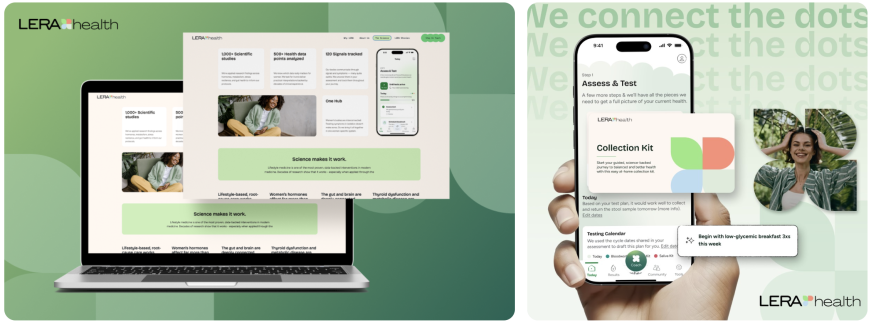
Lera Health is related proof of compliant, data-heavy delivery — a privacy-first platform built end to end. Managed FHIR store work draws on the same strengths: cloud data architecture, FHIR modelling, and HIPAA-grade access control.
Real cloud data platforms, not just a provisioned store.
BAA-covered configurations, IAM least-privilege, encryption, and audit logging from day one.
We work fluently across AWS HealthLake, Google Healthcare API, FHIR R4, and the analytics stack.
We wire FHIR into Athena and BigQuery so your data is queryable, not locked in an endpoint.
We design ingestion and storage with cost controls, because managed services bill for scale.

Tell us your cloud, data sources, and analytics goals. We will return a realistic platform architecture and plan.
contact@agnotic.com
Partnerships
contact@agnotic.com