Bed management
Recommend placements that match acuity and isolation while relieving ED boarding.


An agent that turns live capacity signals into concrete recommendations for beds, staffing, and OR scheduling — surfacing the next best move to bed managers, nurse leaders, and OR coordinators for approval instead of running blind.
Trusted by global innovators











Bed managers, charge nurses, and OR coordinators make high-stakes calls all day — which patient goes where, whether staffing matches acuity, how to sequence the OR — often from whiteboards, phone calls, and a census that's already out of date. Bottlenecks in the ED, mismatched staffing, and idle OR blocks are the visible cost of decisions made without a live, connected picture.
Reference architecture for how this agent connects to your EHR and data systems.

Concrete capacity recommendations — beds, staffing, and OR — grounded in live operational data.
Ingests HL7 ADT feeds, bed-management status, staffing rosters, and the OR board into one continuously updated operational view.
Projects near-term admissions, discharges, and unit-level census so managers can see building pressure before it becomes a bottleneck.
Suggests placements that match acuity, isolation, and unit constraints, ranking options and flagging conflicts for the bed manager to approve.
Compares forecast demand and acuity against the roster and recommends shifts, float moves, or flex staff to close gaps.
Who runs it
Recommend placements that match acuity and isolation while relieving ED boarding.
Feed forecasts and next-best-move suggestions into the command-center view.
Align shift staffing to forecast demand and acuity across units.
Surface block-utilization gaps and sequencing improvements for coordinators.
Directional impact, validated per deployment rather than guaranteed.

Health Insurance Portability and Accountability Act
Protect PHI with privacy-first architecture, encrypted storage and transmission, strict access controls, and traceable audit logs.

General Data Protection Regulation
Implement lawful consent flows, data minimization, retention controls, and secure processing for sensitive health data.

Fast Healthcare Interoperability Resources
Enable standardized health data exchange across apps, care teams, and systems through robust FHIR-ready APIs.

Health Level Seven International
Support enterprise-grade interoperability with HL7-based integrations for records, events, and clinical messaging workflows.

Health Information Trust Alliance
Align security programs to healthcare-specific control and risk management practices trusted by providers and ecosystem partners.

Health Information Technology for Economic and Clinical Health Act
Design with breach notification readiness, digital record safeguards, and operational controls that support regulated care programs.

FDA Software as a Medical Device
Plan software quality, traceability, and documentation pathways for products that may require SaMD review and submission.

Medical Device Regulation (European Union)
Prepare EU market-ready processes for risk classification, evidence tracking, and lifecycle governance under MDR expectations.

Substance Abuse and Mental Health Services Administration
Apply confidentiality controls and consent-aware sharing models for behavioral and mental health data experiences.
Standards
Four stages: capture operational feeds, forecast and optimize under an advisory guardrail, present ranked recommendations, and write approved decisions back.
HL7 ADT events, bed status, staffing rosters, and the OR schedule stream in to form a real-time picture of capacity and demand.
Demand forecasting and optimization models weigh constraints — acuity, isolation, block time — to generate feasible options, never a single opaque answer.
Ranked recommendations with rationale go to the bed manager, nurse leader, or OR coordinator, who approves, adjusts, or overrides.
Approved moves post to the bed-management, staffing, and OR systems over HL7 v2 and APIs, and the decision and its rationale are logged.
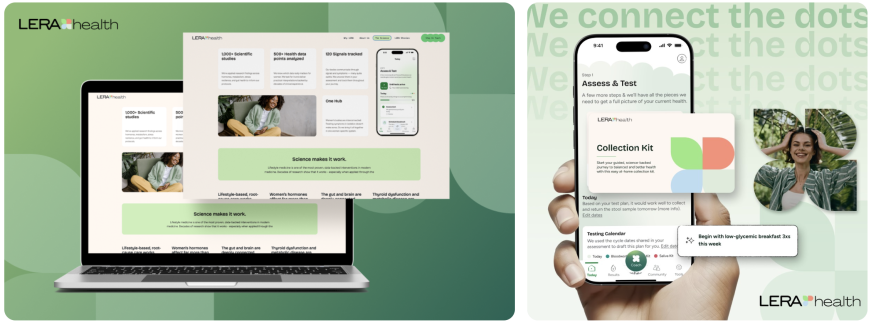
Related delivery proof from our compliant, AI-assisted healthcare work — not this exact agent.
In healthcare, the guardrails matter as much as the capability.
Operational and patient data run under a BAA on HIPAA-ready infrastructure, encrypted throughout, with access scoped to capacity-management roles.
The agent is advisory by design — bed managers, nurse leaders, and OR coordinators approve every move; nothing changes a schedule automatically.
Each recommendation shows the constraints, forecast, and trade-offs behind it, so a manager can see why an option was ranked first.
Every recommendation, the manager's decision, and the resulting write-back are logged for operational review and accountability.
Tell us your workflow and systems, and we'll return an architecture review and a phased rollout plan.
contact@agnotic.com
Partnerships
contact@agnotic.com