

01
Standing order generation
Recurring dialysis and therapy rides created from rules, with closures and holds applied.



By mid-morning, cancellations, late vehicles and will-call returns have broken the plan your dispatchers made at dawn. Agnotic Technologies builds NEMT dispatch engines that know each rider's level of service and time limits, re-plan only what changed and log every manual move.
Trusted by global innovators











Custom NEMT dispatch software development is building the engine that assigns non-emergency medical trips to vehicles and drivers, then re-plans the day as rides change. Agnotic Technologies builds dispatch engines that model level of service, pickup windows, ride-time limits, shared-ride rules, standing orders and will-call returns, with every dispatcher override logged.
The trip list is rarely the problem. The rules behind each trip are missing from the data, so the board cannot respect them when the day changes.
Level of service is a free-text note, so a stretcher trip lands on an ambulatory sedan and the driver has to turn back.
Standing orders are copied by hand each week, and a holiday closure at the dialysis center is missed.
Will-call returns have no time until the clinic calls, so the board either holds a vehicle idle or forgets the rider.
Shared rides are grouped by distance alone, ignoring riders whose program or condition rules out sharing.
The optimizer re-plans the whole day on every change and moves drivers who are already on their way.
Manual moves leave no trace, so nobody can explain later why a pickup was late.
Every constraint is either a hard rule the engine never breaks, a soft penalty it trades against others, or a call left to the dispatcher. We agree this table with your operations lead before writing the solver.
| Constraint | How the engine treats it | Data field it needs |
|---|---|---|
| Level of service (ambulatory, wheelchair, stretcher, bariatric) | Hard rule: the trip goes only to a vehicle and driver qualified for it | Trip level of service, vehicle capability, driver qualification flags |
| Vehicle capacity and securement positions | Hard rule: seats and securement positions are counted on every leg, including attendants | Vehicle seat map, securement positions, lift capacity, attendant count |
| Pickup window | Hard at the edges, soft inside: early arrival costs a small penalty, late needs a dispatcher override | Window start and end, appointment time, facility hours |
| Maximum ride time | Hard rule per rider, from the program or broker contract | Maximum on-board minutes per trip or program |
| Shared-ride eligibility | Hard exclusion when the rider or program rules it out; otherwise a soft preference to group | Shared-ride flag with reason code, program rules |
| Driver shift and breaks | Hard on shift end; soft on break timing within the allowed range | Shift start and end, break rules, time on duty |
| Will-call return | Unscheduled until the call, then inserted with a response target as a soft penalty | Will-call flag, expected pickup range, facility contact |
| Dispatcher override | Always wins, and is logged with the rule it broke | User, time, reason code, constraint broken |
Three design choices separate an engine dispatchers trust from one they work around.
Level of service, capacity and shift end are rules. Grouping riders and arriving early are preferences with a cost. Keeping them apart stops the solver trading safety for mileage.
Trips already en route or about to start are frozen. A change re-plans only the vehicles it touches, so drivers are not reshuffled across the whole day.
Dispatchers will always know things the engine does not. Each override records the rule it broke and a reason, and the reasons feed back into the rules.
How to build custom NEMT dispatch software that holds up on a busy day. The driver app, broker import and billing are separate modules around this engine.
Level of service, window, ride-time limit, attendants and shared-ride eligibility stored as fields on every trip, never as notes.
Recurrence rules for dialysis, therapy and treatment series, with facility closures, rider holds and review dates, generated ahead of the service day.
A vehicle routing model, for example built on Google OR-Tools, that respects the hard rules and scores the soft ones for your fleet.
Return trips waiting for the clinic's call, each with an expected range, so the engine keeps a qualified vehicle within reach.
Cancellations, no-shows, late vehicles and new trips trigger a local re-plan that dispatchers see as a list of proposed changes.
Riders grouped only where the program and the rider allow it, with every leg checked against each rider's ride-time limit.
Map, unassigned queue and vehicle timelines, where a drag to reassign is checked against the rules before it is saved.
Every manual change with user, time, reason and the constraint it broke, searchable by trip, driver and day.
The loop that runs each time something changes after the morning plan is published.
A cancellation, no-show, will-call, late vehicle or new same-day trip enters the event log with its time.
Trips already en route, or starting within your agreed lead time, are locked so drivers are not pulled off a pickup.
Only vehicles whose routes touch the changed trip are solved again, which keeps the change small and fast.
Any candidate plan that breaks level of service, capacity, ride time or shift end is rejected before anyone sees it.
Proposed moves appear as a short list. The dispatcher accepts, edits or rejects them, and each choice is logged.
Updated manifests go to drivers and status updates to riders and facilities through the channels your operation already uses.
Chosen to fit your fleet size, service area and existing trip systems.
Measures we build into the dispatch dashboard and review with your operations lead.
Arrivals inside the window, split by ambulatory, wheelchair, stretcher and bariatric trips.
Time from the clinic's call to the vehicle's arrival for return trips.
Shared legs as a share of eligible trips, never of all trips.
Manual moves grouped by reason code, which shows which rules need changing.
A HIPAA-ready maternal health platform enabling remote patient monitoring, care coordination, and personalized engagement from pre-pregnancy through postpartum.
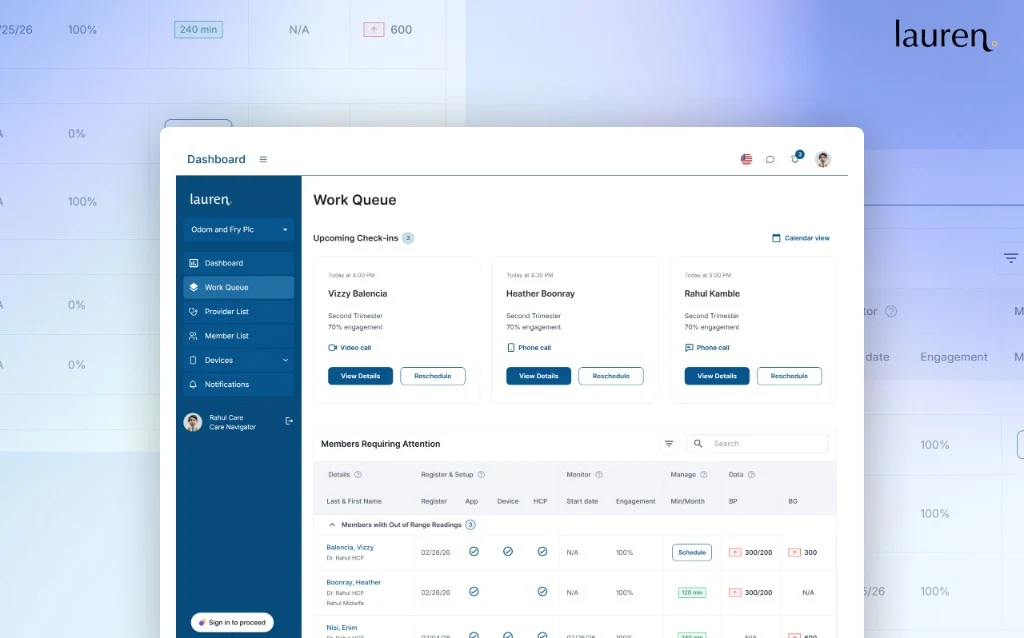
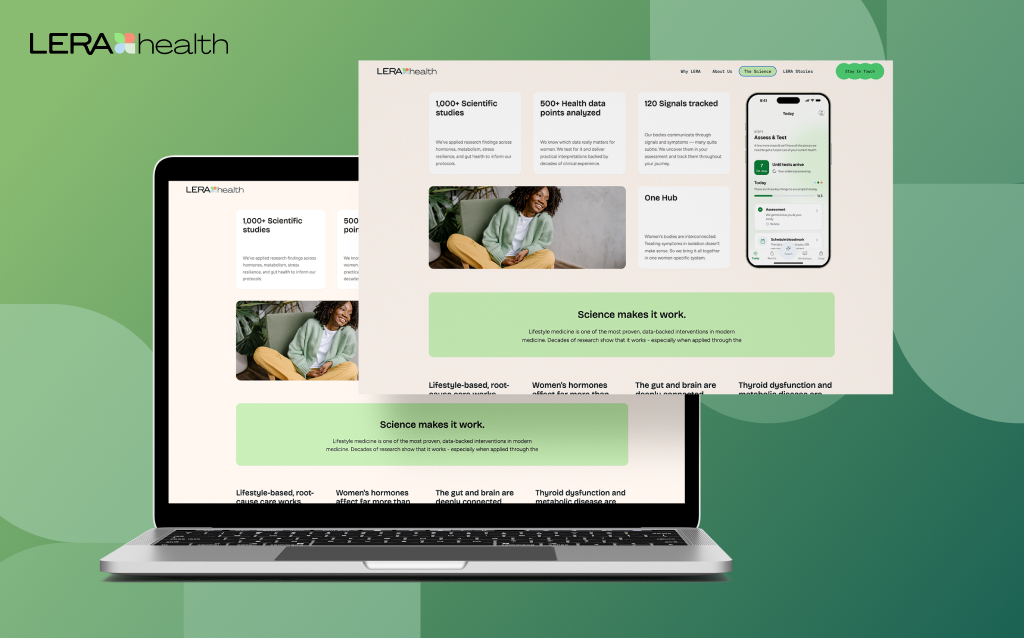
A women’s health product experience focused on guided care journeys, education, and compliance-aware workflows to support long-term engagement.
First releases we scope, each one a single part of the dispatch problem.
Recurring dialysis and therapy rides created from rules, with closures and holds applied.
Level of service and securement checks for operators running sedans, wheelchair vans and stretcher vehicles.
A queue and re-planning loop for return trips that wait on the clinic.
Grouping that respects program rules and every rider's ride-time limit.
Moving a small operator's daily plan from spreadsheets to an engine with an audit trail.
Assignment and re-planning added to a dispatch product that exposes its trips through an API.
The engine reads trips and vehicle positions, and writes assignments back.
We work through this list with your operations lead before the solver goes live. Every unchecked item becomes a dispatcher workaround later.
We build secure, scalable products designed for privacy, interoperability, and regulatory readiness from day one across every sector we serve.

Protect PHI with privacy-first architecture, encrypted storage and transmission, and strict access controls.
We combine deep technical expertise with industry-specific knowledge to deliver solutions that aren't just functional, but transformational.
We implement rigorous security protocols and compliance standards (HIPAA, GDPR, SOC2) across all industrial solutions to protect sensitive data.
Our architectures are built to handle massive data loads and user bases, keeping performance steady whether you're serving ten or ten million.
Using our suite of internal tools and proven frameworks, we cut setup work so your first release reaches users sooner.
Beyond simple wrappers, we build deep-learning integrations and predictive analytics directly into the core of your industry-specific workflows.
We start with one part of the dispatch problem. Timing depends on scope; we agree a fixed first release on the scoping call.
We walk through a real day of trips with your dispatchers and pick the first problem to solve.
Your operations lead and our engineers fill in the constraint table, rule by rule.
The engine plans past days from your own trip history, and dispatchers compare its plan with what happened.
One module, such as standing orders or will-call handling, live beside your dispatchers.
Rule changes, new programs and fleet changes under agreed change control.
Short facts the dispatch rules rest on, each linked to its primary source.
A State Medicaid plan must specify that the Medicaid agency will ensure necessary transportation for beneficiaries to and from providers, and describe the methods it will use to do so.
Source: 42 CFR 431.53 (eCFR)Medicaid travel expenses can include the cost of an attendant to accompany the beneficiary when necessary, along with the attendant's transportation, meals and lodging.
Source: 42 CFR 440.170(a)(3) (eCFR)The ADA accessibility specifications for vans and buses set a wheelchair lift design load of at least 600 pounds and a clear floor area of 30 by 48 inches for each securement location.
Source: 49 CFR 38.23(b) and (d) (eCFR)We don't just build products; we forge lasting partnerships. See how we've helped industry leaders transform their vision into technical reality.
“I can clearly see how Agnotic has a unique way of handling end-to-end development. They are always active on quick chat and provide support quickly.”

Aaron Phelan
Founder, Benchmark
“Agnotic combines deep technical expertise with strong domain knowledge. They understand the business context, anticipate challenges, and make collaboration smooth and effective.”

John Pasmore
Founder, Latimer
“Agnotic is the best technical team we evaluated. Their engineering excellence made our work dramatically easier and allowed us to stay focused on what matters most for maternal care outcomes. They took full ownership of the technical execution, and we are always happy to continue working together.”

Kim Smith
Founder, My Lauren
This page covers the dispatch engine. These pages cover the rest of an NEMT operation and the routing patterns behind it.
What to evaluate across intake, dispatch, driver apps, broker workflows and billing.
Routing and live re-optimization patterns from freight and delivery fleets.
GPS and vehicle data that feed live positions into dispatch.
Planning, execution and carrier management for transport operations.
Explore other production-grade engineering platforms we deliver across healthcare.
The technical patterns behind this platform translate naturally into adjacent verticals.