

01
Vaccination awareness
Lessons for parents and young people, with reminders and clinic finders.


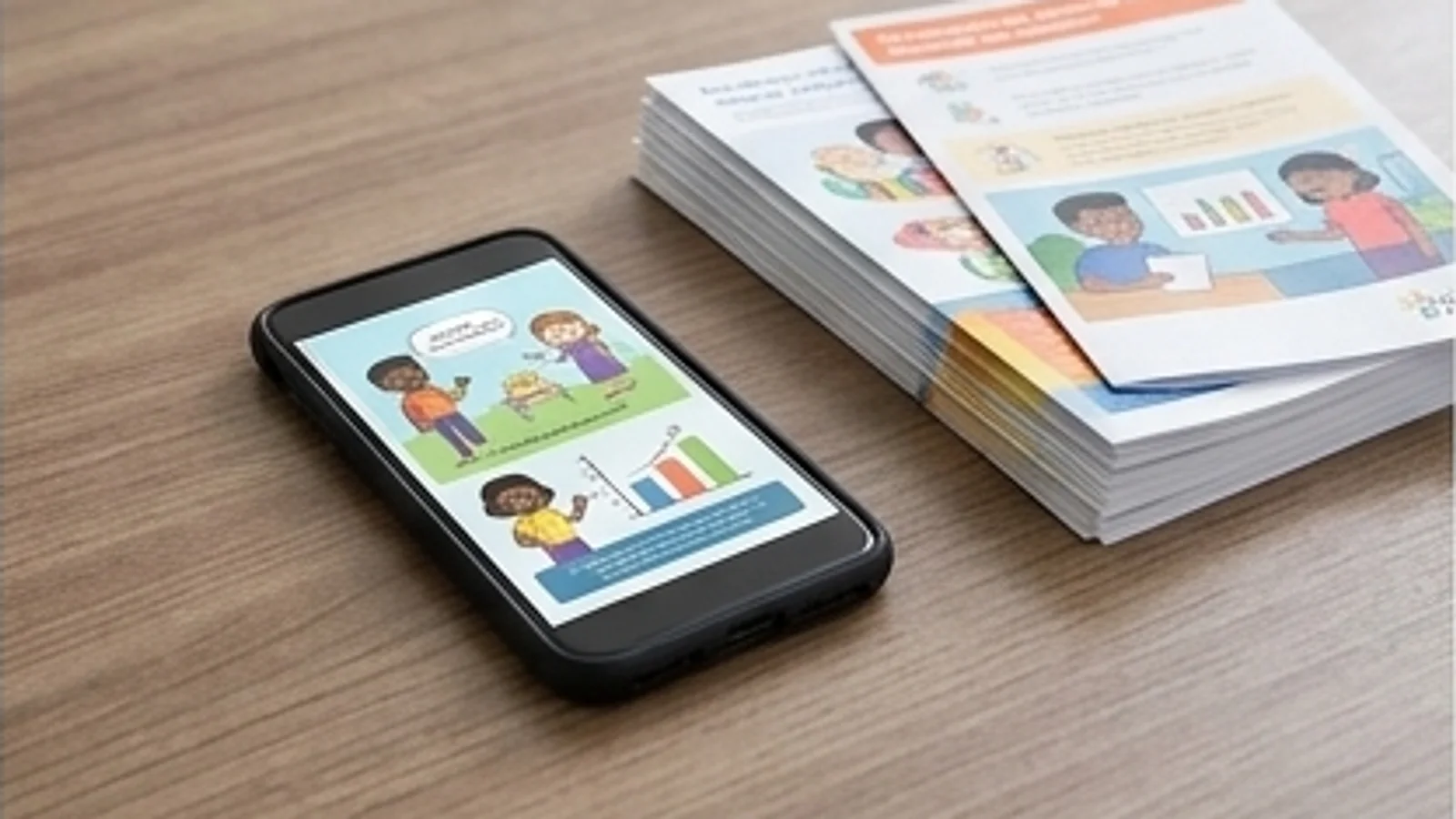
Awareness campaigns, vaccination drives and screening programs need people to understand a health topic and then act on it. Agnotic Technologies builds health education apps with clinically reviewed content, short interactive lessons and reminders, designed for the age, language and reading level of the people you need to reach.
Trusted by global innovators











A health education app teaches a specific audience about a health topic, such as vaccination, screening or a chronic condition, through short lessons, quizzes, videos and reminders that prompt the next step. Agnotic Technologies builds health education apps with clinical content review, plain-language writing, accessibility and privacy designed in from the start.
The content is usually right. The way it reaches people is not.
Lessons are written for clinicians, not for the teenager or parent who needs them.
Content is in one language when the community speaks several.
There is no next step: users learn about a vaccine or screening but are never helped to book it.
Content goes out of date because there is no review cycle or owner.
The app collects more personal data than it needs, which raises privacy duties and lowers trust.
Nobody can tell whether the app changed what people know or do.
The two are often confused. A health education app reaches the public before care; a patient education platform supports people already in care.
| Question | Health education app | Patient education platform |
|---|---|---|
| Who is it for? | The public, parents, students or a community at risk | Patients of a provider or health plan |
| What triggers the content? | A campaign, age group or topic the user chooses | A diagnosis, procedure or step in the care journey |
| Which data does it hold? | Little or none; often anonymous use | Protected health information linked to the patient record |
| Which rules usually apply? | Consumer privacy rules, COPPA for under-13 users, accessibility | HIPAA, plus the provider's own policies |
| How is success measured? | Knowledge gained and actions taken, such as booked vaccinations | Adherence, readiness for a procedure and fewer avoidable calls |
Three principles run through the design.
Short lessons at the right reading level and in the right languages, tested with people from the audience before launch.
Every lesson ends with a clear next step: a reminder, a clinic finder or a booking link for the vaccination or screening it covers.
Anonymous use where possible, and consent and parental controls where personal data is truly needed.
The modules we build for awareness and prevention programs.
Lessons, videos and infographics organized by topic, age group and language.
Every lesson drafted, reviewed and approved by a named clinician, with a review date.
Short quizzes before and after lessons that show what users learned.
Opt-in reminders and links to book a vaccination, screening or consultation.
Content and interface in several languages, with right-to-left support where needed.
Screen reader support, captions, adjustable text size and contrast, built to WCAG 2.2.
Anonymous modes, consent capture and parental consent flows for younger users.
Completion, quiz results and actions taken, reported without identifying individuals.
Chosen around your audience, their devices and how your content team works.
Measures that show whether people learned and acted, not just installed.
By topic, language and age group.
Shows which lessons work.
Reminders accepted and booking links used.
Should stay at zero.
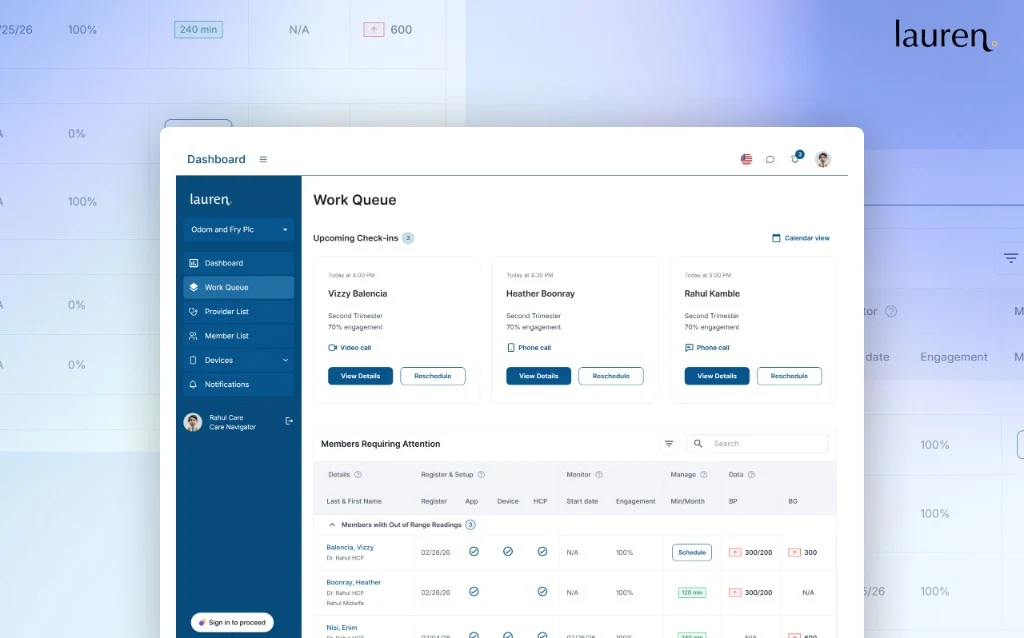
A HIPAA-ready maternal health platform enabling remote patient monitoring, care coordination, and personalized engagement from pre-pregnancy through postpartum.
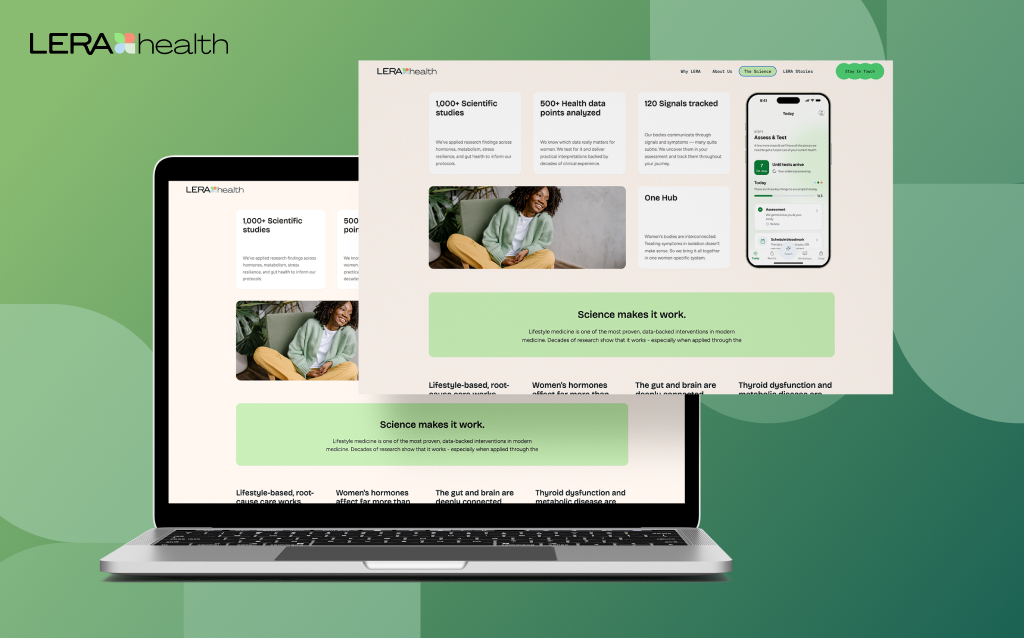
A women’s health product experience focused on guided care journeys, education, and compliance-aware workflows to support long-term engagement.
Programs where understanding has to come before action.
Lessons for parents and young people, with reminders and clinic finders.
Who should be screened, how and where to book.
Private, age-appropriate education with anonymous use.
Diabetes, asthma or heart health basics for newly diagnosed people.
Week-by-week guidance for parents.
Teaching materials used in home visits and outreach.
Where content and bookings come from, and where program data goes.
The launch checks we run with your clinical, legal and community teams.
We build secure, scalable products designed for privacy, interoperability, and regulatory readiness from day one across every sector we serve.

Protect PHI with privacy-first architecture, encrypted storage and transmission, and strict access controls.

Implement lawful consent flows, data minimization, and secure processing for global data privacy.
We combine deep technical expertise with industry-specific knowledge to deliver solutions that aren't just functional, but transformational.
We implement rigorous security protocols and compliance standards (HIPAA, GDPR, SOC2) across all industrial solutions to protect sensitive data.
Our architectures are built to handle massive data loads and user bases, keeping performance steady whether you're serving ten or ten million.
Using our suite of internal tools and proven frameworks, we cut setup work so your first release reaches users sooner.
Beyond simple wrappers, we build deep-learning integrations and predictive analytics directly into the core of your industry-specific workflows.
Health education app development starts with one topic and one audience. It depends on scope; we agree a fixed first release on the scoping call.
We review the topic, audience, languages, partners and what action the program wants people to take.
Your clinicians and our team plan lessons, reading level and the next step for each.
Lessons for one topic, quizzes, reminders and the review workflow.
People from the audience use the app, and we change what confuses them.
More topics, languages, partners and program analytics.
Device scope, children's privacy, health data breaches and accessibility, each linked to its source.
FDA's guidance on device software functions focuses oversight on software that meets the definition of a medical device and could put patient safety at risk if it does not work as intended.
Source: FDA, Policy for Device Software Functions and Mobile Medical ApplicationsThe FTC's COPPA Rule defines a child as an individual under 13 and generally requires an operator of a website or online service directed to children to obtain verifiable parental consent before collecting personal information from a child.
Source: 16 CFR 312.2 and 312.3, FTC (eCFR)The FTC's Health Breach Notification Rule applies to vendors of personal health records and related entities that are not covered by HIPAA, and requires them to notify affected individuals and the FTC after a breach of unsecured health information.
Source: 16 CFR 318.1 and 318.3, FTC (eCFR)W3C's WCAG 2.2 gives recommendations for making web content more accessible to people with disabilities, including blindness and low vision, deafness and hearing loss, limited movement and some learning and cognitive limitations.
Source: W3C, Web Content Accessibility Guidelines (WCAG) 2.2We don't just build products; we forge lasting partnerships. See how we've helped industry leaders transform their vision into technical reality.
“I can clearly see how Agnotic has a unique way of handling end-to-end development. They are always active on quick chat and provide support quickly.”

Aaron Phelan
Founder, Benchmark
“Agnotic combines deep technical expertise with strong domain knowledge. They understand the business context, anticipate challenges, and make collaboration smooth and effective.”

John Pasmore
Founder, Latimer
This page covers education for the public before care. These pages cover education and engagement inside care.
Clinically reviewed content delivered to patients along their care journey.
Messaging, reminders and self-service for patients of a provider.
Ordering screening and lab tests online once people decide to act.
Native and cross-platform apps for iOS and Android.
How HIPAA shapes the way we build healthcare software.
Showing 10 of 19 industries