










Two blank white member cards, one with a deep green band, overlapping beside a silver pen and a folded printed sheet on a pale grey desk
    Healthcare / Secondary Claims and COB

    Secondary claims and coordination of benefits software

    The primary payer has paid, and the hard part starts: a secondary claim that carries the primary's decision exactly, and a second payer that has to work out what it owes. Agnotic Technologies builds software for both sides of coordination of benefits, for providers, billing companies, health plans and TPAs.

    835 to 837
    Primary payment carried onto the secondary claim
    Both sides
    Provider billing and payer adjudication
    Order first
    Which plan pays first, settled before billing

    Trusted by global innovators

    Benchmark
    Chibasco
    Fundency
    Lantimer
    Lauren
    Lera
    One Minute
    Pento Pix
    TAP
    Xtrium
    Healthevolve
    Benchmark
    Chibasco
    Fundency
    Lantimer
    Lauren
    Lera
    One Minute
    Pento Pix
    TAP
    Xtrium
    Healthevolve
    Benchmark
    Chibasco
    Fundency
    Lantimer
    Lauren
    Lera
    One Minute
    Pento Pix
    TAP
    Xtrium
    Healthevolve
    Benchmark
    Chibasco
    Fundency
    Lantimer
    Lauren
    Lera
    One Minute
    Pento Pix
    TAP
    Xtrium
    Healthevolve
    Industry Overview

    What is secondary claims and COB software?

    Secondary claims and COB software handles everything after the first payer pays. On the provider side it builds a clean secondary 837 from the primary 835 remittance. On the payer side it confirms the order of coverage and calculates the secondary plan's share. Agnotic Technologies builds this software for providers, billing companies, health plans and TPAs.

    Two sides

    Which side of COB are you building for?

    The same transaction looks different from each end. Most of our COB projects sit on one side, and some billing companies and TPAs need both.

    Provider and billing company side

    Turning the primary remittance into the next claim, then posting what the secondary pays.

    • Secondary 837 built from the 835
    • Order of coverage held per patient and date of service
    • Crossover claims tracked so they are not billed twice
    Health plan and TPA side

    Receiving a claim where another plan has already paid, and deciding what this plan owes.

    • Other coverage on file and checked
    • Primary adjudication read from the claim
    • Secondary share calculated by the plan's own COB rules
    Industry Challenges

    Where do secondary claims go wrong?

    Most secondary problems are data problems: something from the primary payer's decision did not travel to the next claim.

    • Wrong order: the plan billed as secondary is really primary, so the first claim was denied as covered by another payer and the second one never should have gone out in that form.

    • Lost line detail: the primary paid by service line, but the secondary claim reports only a claim total, so the second payer cannot apply its benefits line by line.

    • Adjustments that do not balance: charge, paid amount and adjustments on a line do not add up, and the claim is rejected before anyone looks at it.

    • Reason codes rewritten: group or reason codes from the primary remittance are changed or dropped, so the secondary payer cannot tell deductible from a contractual write-off.

    • Duplicates with crossovers: a claim the primary forwarded automatically to the secondary is also billed by the provider.

    • Stale coverage: the patient changed plans, but the order of coverage on file still reflects last year.

    Field mapping

    Which primary 835 data must reach the secondary claim?

    Each row is a piece of the primary payer's decision, where it goes on the secondary 837 and the edit we build to stop a claim that is missing it. Segment and element detail follows the X12 implementation guides your team licenses.

    Primary 835 remittance data, its place on the secondary 837 and the edit that catches it when missing
    From the primary 835Where it goes on the secondary 837Edit that catches it when missing
    Primary payer identity and the payer's claim control numberThe other payer section of the secondary claimBlock release when the other payer on the claim does not match the payer that sent the remittance
    Claim-level paid amountOther payer paid amount at claim levelPaid amount present, and equal to the sum of line payments when the primary paid by line
    Service line payments (835 Loop 2110)Line adjudication detail for each matching line (837 Loop 2430), with the adjudication dateEvery billed line matched to a primary line, or explained as denied or not covered
    Adjustments with group and reason codes (CO, OA, PI, PR)Adjustments carried at the same level, with the group and reason codes unchangedCharge, paid and adjustment amounts reconcile on each line before release
    Patient responsibility: deductible, coinsurance and co-payment (reason codes 1, 2 and 3)Reported in the patient responsibility adjustments the secondary uses to apply its benefitsWarn when the primary applied a deductible but the claim carries no patient responsibility
    Reason code 22 (care may be covered by another payer)Not a secondary claim yet: the order of coverage needs reviewRoute to coverage review instead of building a secondary claim
    Our Approach

    How does a secondary payer decide what it owes?

    On the payer side, the share is a calculation the plan has to be able to explain on appeal. We build it as configured rules, not code changes.

    Confirm the order

    Other coverage on file is checked against the claim. If this plan should be primary, the claim pends for coverage review instead of paying as secondary.

    Read the primary decision

    The primary payer's paid amount and adjustments come from the claim itself, so the calculation starts from what the other plan actually did.

    Apply the plan's COB method

    Each plan's coordination method sits in its benefit configuration, with an effective date, so a change in plan design does not need a release.

    Handle Medicare as secondary

    Where Medicare is the secondary payer, its own rules set the amount, including the lowest of three amounts and no payment when the provider accepts the primary payment in full.

    Capabilities

    What do we build for secondary claims and COB?

    Modules we build for providers, billing companies, health plans and TPAs.

    Secondary claims editor

    A work queue that builds the secondary claim from the primary remittance and shows each edit failure in plain words.

    Order of coverage engine

    Coverage on file per patient and date of service, with the reason each plan sits in its position.

    835 parsing and line matching

    Primary remittances parsed and matched to the original claim lines, including split and bundled lines.

    Crossover tracking

    Claims the primary forwards to the secondary are flagged, so the provider does not bill them again.

    Payer-side share calculation

    The secondary plan's payment calculated from the primary decision and the plan's COB method, with every step stored.

    Tertiary and beyond

    The same logic run again for a third payer, carrying both earlier decisions.

    COB analytics

    Secondary claims waiting, rejected or paid, by payer, reason and age.

    AI help with review

    Drafting a summary of why a secondary claim failed or suggesting likely other coverage from claim history, always reviewed by a biller or examiner.

    How It Works

    How is a secondary claim built from the primary remittance?

    The provider-side path we build, from the 835 arriving to the secondary payment posted.

    Receive the 835

    The primary remittance is received from the clearinghouse and parsed, and each claim payment is matched to the original claim.

    1

    Check the order

    Coverage on file confirms who is next. A reason code 22 denial goes to coverage review, not to a secondary claim.

    2

    Copy the primary decision

    Payer identity, paid amounts, line adjudication and adjustments are copied onto the secondary claim without rewriting codes.

    3

    Run the secondary edits

    Line matching, balancing and patient responsibility checks run before the claim can leave.

    4

    Skip crossovers

    If the primary forwarded the claim to the secondary itself, the system waits for that payment instead of billing again.

    5

    Submit and follow

    The secondary 837 goes out, acknowledgments and status are tracked, and the next 835 is posted against it.

    6
    Engineering Stack

    Standards and technologies for COB work

    The transactions, code sets and tools behind the secondary claims software we build.

    Transactions

    X12 837P, 837I and 837D Version 5010X12 835 remittanceX12 270/271 eligibilityX12 276/277 claim status

    Code sets

    Claim adjustment group codesClaim adjustment reason codesRemittance advice remark codes

    Rules and data

    Rules engine with effective datesPostgreSQLEvent queues for remittance intake

    Backend and infra

    Node.jsPythonJavaAWS or Azure in your account
    Measured Impact

    What should COB reporting show?

    Measures we build dashboards around, agreed with your billing or claims leads.

    Waiting
    Secondaries not yet sent

    Primary paid, secondary not built, by age and payer.

    Rejected
    Front-end rejections

    Secondary claims rejected, grouped by the edit that would have caught them.

    Order
    Coverage disputes

    Claims denied as covered by another payer, and how long review takes.

    Balance
    Patient balance timing

    Time from the last payer's payment to the patient statement.

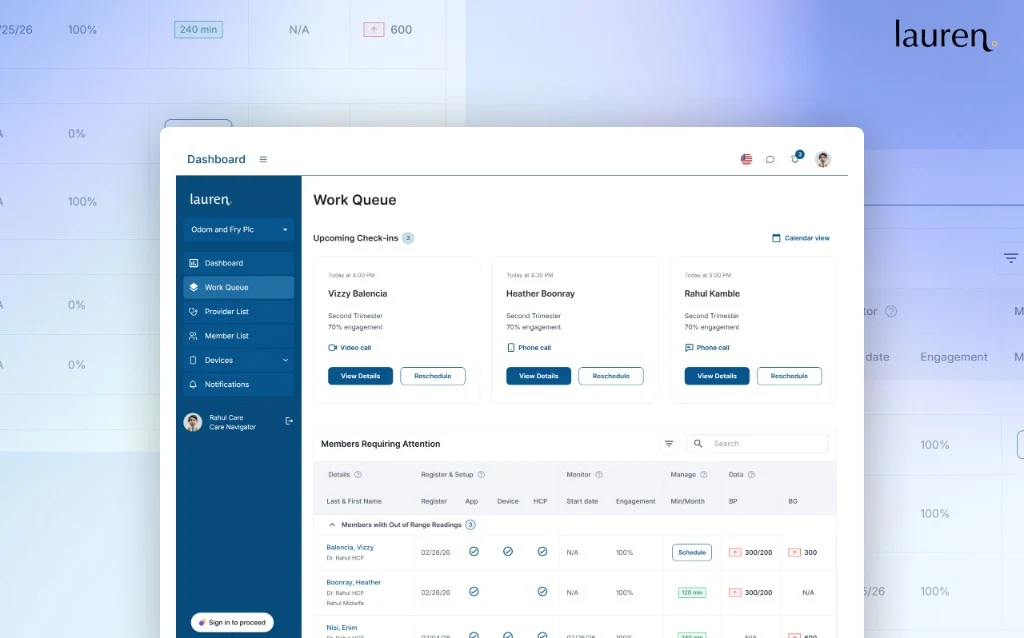
    My Lauren Maternal Health Platform | Built by Agnotic

    A HIPAA-ready maternal health platform enabling remote patient monitoring, care coordination, and personalized engagement from pre-pregnancy through postpartum.

    Case Study
    My Lauren Maternal Health Platform | Built by Agnotic
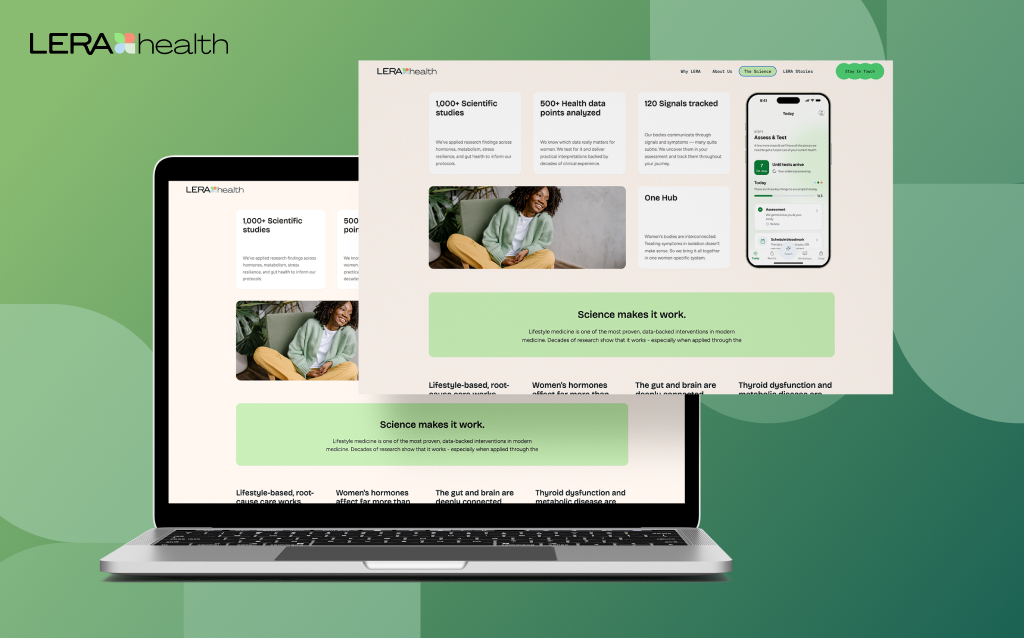
    LERA Health: Women's Health App Platform

    LERA Health: Women's Health App Platform

    A women’s health product experience focused on guided care journeys, education, and compliance-aware workflows to support long-term engagement.

    Case Study
    Use Cases

    Where do COB projects start?

    Common first releases, each scoped to one workflow.

    01

    Secondary claim work queue

    Secondaries built from the 835 with edits, for a billing team that does them by hand today.

    02

    Order of coverage cleanup

    Coverage records reviewed and corrected before claims go out.

    03

    Crossover reconciliation

    Forwarded claims matched to payments so nothing is billed twice.

    04

    Payer COB calculation

    A secondary share engine for a plan or TPA that calculates it manually.

    05

    Medicare secondary billing

    Workflows for claims where Medicare pays after another plan.

    06

    Billing company platform

    One secondary process across many provider clients and payers.

    Integrations

    Which systems does COB software connect to?

    The systems that hold coverage, claims and payments.

    Claims

    Practice management and EHR billing

    837 and 835 exchange

    Clearinghouses

    Other coverage

    Eligibility services

    Remittance

    Payment posting

    Payer membership and benefits

    Core administration systems

    Balances

    Patient statements

    Compliance-First Development Services Backed by Global Standards

    We build secure, scalable products designed for privacy, interoperability, and regulatory readiness from day one across every sector we serve.

    HIPAA logo

    Health Insurance Portability and Accountability Act

    Protect PHI with privacy-first architecture, encrypted storage and transmission, and strict access controls.

    Our Edge

    Why Global Leaders Choose Us

    We combine deep technical expertise with industry-specific knowledge to deliver solutions that aren't just functional, but transformational.

    Enterprise-Grade Security

    We implement rigorous security protocols and compliance standards (HIPAA, GDPR, SOC2) across all industrial solutions to protect sensitive data.

    High-Performance Scaling

    Our architectures are built to handle massive data loads and user bases, keeping performance steady whether you're serving ten or ten million.

    Accelerated Time-to-Market

    Using our suite of internal tools and proven frameworks, we cut setup work so your first release reaches users sooner.

    Embedded AI Integration

    Beyond simple wrappers, we build deep-learning integrations and predictive analytics directly into the core of your industry-specific workflows.

    Engagement Model

    How does a COB engagement run?

    We start from your own rejected and stuck secondary claims. Timing depends on scope; we agree a fixed first release on the scoping call.

    01

    Scoping call

    We look at your claim volumes by payer, your clearinghouse and where secondaries stall today.

    02

    Claim sample review

    Your team shares de-identified remittances and rejected secondaries; we map each failure to an edit.

    03

    Fixed-scope first release

    One workflow, such as the secondary work queue for your main payers, live with audit logging.

    04

    Widen

    More payers, tertiary claims, crossovers or the payer-side calculation added on the same rules.

    05

    Support

    Rule and code set updates when X12 code lists or payer requirements change, under agreed change control.

    Facts and sources

    Which rules govern coordination of benefits?

    Short facts behind the transactions and calculations, each linked to its primary source.

    • HIPAA defines the coordination of benefits transaction as the transmission from any entity to a health plan of claims or payment information, for the purpose of determining the relative payment responsibilities of the health plan.

      Source: 45 CFR 162.1801 (eCFR)
    • For the coordination of benefits transaction, HIPAA adopts the ASC X12 837 Version 5010 claim standards for professional (005010X222), institutional (005010X223) and dental (005010X224) claims, and the NCPDP Telecommunication Standard for retail pharmacy drug claims.

      Source: 45 CFR 162.1802 (eCFR)
    • X12 claim adjustment reason code 22 says the care may be covered by another payer per coordination of benefits, and code 23 reports the impact of prior payer adjudication, including payments and adjustments, for use only with group code OA.

      Source: X12, Claim Adjustment Reason Codes
    • For services paid on a fee schedule or reasonable charge basis, the Medicare secondary payment is the lowest of three amounts: the charge minus the primary payment, what Medicare would pay with no primary payer, or the higher of the Medicare amount and the primary payer's allowable charge minus the primary payment.

      Source: 42 CFR 411.33(a) (eCFR)
    • Medicare makes no secondary payment when the provider or supplier is obligated to accept, or voluntarily accepts, as full payment a primary payment that is less than its charges.

      Source: 42 CFR 411.32(b) (eCFR)

    Voice of success

    We don't just build products; we forge lasting partnerships. See how we've helped industry leaders transform their vision into technical reality.

    Benchmark

    “I can clearly see how Agnotic has a unique way of handling end-to-end development. They are always active on quick chat and provide support quickly.”

    Aaron Phelan

    Aaron Phelan

    Founder, Benchmark

    Latimer

    “Agnotic combines deep technical expertise with strong domain knowledge. They understand the business context, anticipate challenges, and make collaboration smooth and effective.”

    John Pasmore

    John Pasmore

    Founder, Latimer

    My Lauren

    “Agnotic is the best technical team we evaluated. Their engineering excellence made our work dramatically easier and allowed us to stay focused on what matters most for maternal care outcomes. They took full ownership of the technical execution, and we are always happy to continue working together.”

    Kim Smith

    Kim Smith

    Founder, My Lauren

    Related services

    Related claims and revenue cycle services

    This page covers the claim after the first payer pays. These pages cover the primary claim and the payer systems around it.

    Cross-Industry Reach

    The Same Engineering Patterns, Across Other Industries

    The technical patterns behind this platform translate naturally into adjacent verticals.

    Frequently Asked Questions

    It is the set of checks a secondary claim passes before it is sent: the primary payer's decision is present, lines match, amounts balance and patient responsibility is carried over. We build it as a work queue, so a biller sees exactly which check failed and why.