

Nurse to covering clinician
Questions and requests about a patient, sent to whoever covers that patient now.
- Routed by care team and schedule
- Patient context attached
- Response time tracked


A page to the wrong resident, a critical result nobody acknowledged, an order typed into chat and never entered: hospital messaging fails at the handoffs. Agnotic Technologies builds secure clinical messaging apps for hospitals and health systems that route by role and on-call schedule, escalate until someone acknowledges and keep every thread with the patient's record.
Trusted by global innovators











Secure clinical messaging is the system care teams inside a hospital use to message each other about patients: routed to roles and on-call schedules, escalated for critical results and alarms, tied to the patient's record and retained with an audit trail. Agnotic Technologies builds secure clinical messaging apps for hospitals and health systems.
Each message type has a sender, a receiver and an expected response. The app is designed around those, not around chat.
Questions and requests about a patient, sent to whoever covers that patient now.
Lab and imaging results that need a clinician to act.
Requests from one service to another, with the question and urgency.
Events from monitoring and nurse call systems sent to the right phone.
The failure points we design against first. Each one is a gap between a message and the action it should cause.
Messages go to a person instead of the on-call role, so they reach a clinician who went home an hour ago.
A critical result is delivered but acknowledged by nobody, and the app has no rule for what happens next.
An order is typed into chat and never entered in CPOE, so it is never carried out or never authenticated.
Push notifications show patient names and results on a locked screen anyone at the nurses' station can read.
Threads are deleted on a short default timer before the hospital's retention period ends.
A lost phone still holds cached messages because the app does not respond to a remote wipe.
A secure clinical messaging build is sized by the sites, roles and users it serves, where the on-call schedule lives, the message types and escalation paths, the EHR, lab and alarm feeds, whether phones are shared or personal, and the retention and legal hold rules. Agnotic Technologies maps these with your informatics and security leads before scoping.
| Driver | Question to answer before scoping | What it changes in the build |
|---|---|---|
| Sites, roles and users | How many hospitals, units and clinical roles go live first, and is there one directory for all of them? | More sites mean more role definitions, directory sync and local routing rules to test with each unit. |
| Where the on-call schedule lives | Is on-call kept in a scheduling system with an API, in the EHR, or in spreadsheets per department? | A schedule with no API needs an import or a scheduling module before role-based routing can work. |
| Message types and escalation paths | Which message types are in the first release, and how many escalation chains does each service use? | Each type needs its routing rule, response time, escalation chain and report, agreed with the service that owns it. |
| EHR, lab and alarm feeds | Which feeds must reach the app: ADT for location, results for critical values, nurse call or monitoring alarms? | Every feed adds an interface, a filtering rule and testing with the vendor, and alarms add delivery time checks. |
| Shared or personal devices | Do clinicians use unit-owned shared phones, their own phones, or both, and which device management tool is in place? | Shared phones need fast sign-in and sign-out; personal phones need app-level protection and remote wipe through device management. |
| Retention and legal hold | How long does your records policy keep clinical messages, and who can place a legal hold? | Sets the message store design, deletion jobs, hold workflow and the export your records team will need. |
Three decisions we make with your clinical informatics, nursing and security leads.
Messages go to roles such as the covering hospitalist for a unit, resolved against the on-call schedule at the moment of sending.
Critical messages carry an expected response time and an escalation path, and the app follows it until someone acknowledges.
The app routes order requests to CPOE according to your policy instead of becoming a second, unauthenticated place to give orders.
The secure messaging services we scope for hospitals and health systems.
Roles, care teams and schedules kept in sync with your scheduling system.
Expected response times, escalation chains and recorded acknowledgement.
Threads tied to the patient and encounter, with context from the EHR.
Order requests routed to CPOE, or blocked, according to hospital policy.
Notifications that say a message is waiting, with content shown only after sign-in.
Retention periods set by your records policy, with legal hold that stops deletion.
Shared and personal phones under your mobile device management, with remote wipe.
Every message, read, acknowledgement and escalation logged and searchable.
Chosen to fit your EHR, scheduling and device setup. We build in your cloud account.
The routing table we agree with your clinical leads. The app enforces it; your teams own the response times.
| Message type | Routing | Escalation | Record kept |
|---|---|---|---|
| Critical lab or imaging result | Responsible clinician role for the patient | Next role in the chain after the agreed time without acknowledgement | Delivery, acknowledgement and escalation times |
| Nurse to covering clinician | Covering role for the patient's unit and team | Charge nurse alerted if unanswered past the agreed time | Message, response and responder |
| Consult request | On-call role of the consulting service | Service lead if not accepted | Request, acceptance and linked consult order |
| Monitoring alarm | Assigned nurse's device | Next nurse, then charge nurse, by rule | Alarm, delivery and response |
| Order request | Ordering clinician, with a prompt to enter it in CPOE | None in the app; the order lives in CPOE | Request and the linked CPOE order |
| Shift handoff note | Incoming clinician for the patient | None | Note, sender, receiver and read time |
Views we build with your nursing and clinical informatics leads.
Critical messages acknowledged in time, and those that escalated.
Share of messages addressed to roles rather than individuals.
Phones enrolled in device management and current on the app.
Threads on legal hold and deletions by policy.
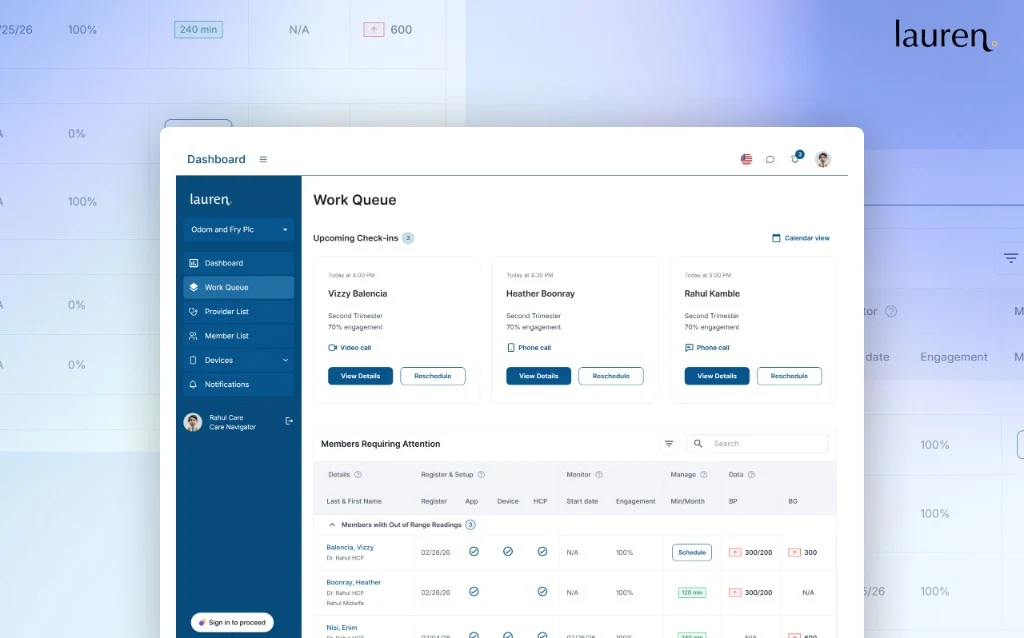
A HIPAA-ready maternal health platform enabling remote patient monitoring, care coordination, and personalized engagement from pre-pregnancy through postpartum.
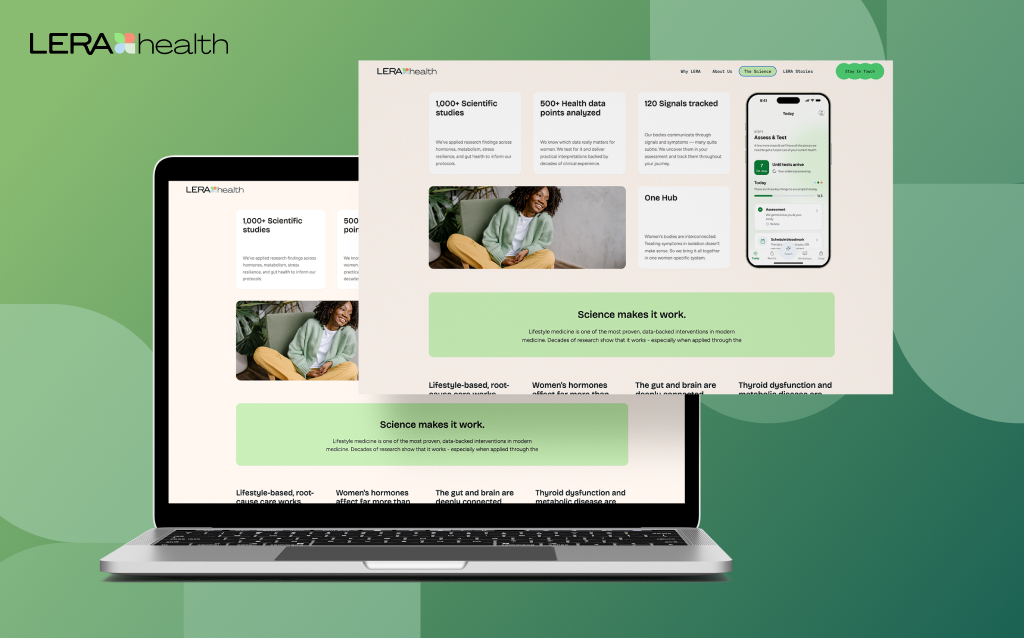
A women’s health product experience focused on guided care journeys, education, and compliance-aware workflows to support long-term engagement.
First releases we scope, each one replacing a risky workaround.
Results routed to roles with recorded acknowledgement.
Role-based messaging for one department before hospital-wide rollout.
Moving pager traffic to managed phones with read receipts.
Monitoring alarms routed to the assigned nurse's phone.
Unit phones with fast sign-in and sign-out between shifts.
Secure messaging added to a clinical app your teams already use.
The systems a clinical messaging app reads from or writes to, agreed during scoping.
We build secure, scalable products designed for privacy, interoperability, and regulatory readiness from day one across every sector we serve.

Protect PHI with privacy-first architecture, encrypted storage and transmission, and strict access controls.

Enabling standardized health data exchange through standards-based API mappings.

Supporting enterprise-grade interoperability for clinical messaging and record workflows.
We combine deep technical expertise with industry-specific knowledge to deliver solutions that aren't just functional, but transformational.
We implement rigorous security protocols and compliance standards (HIPAA, GDPR, SOC2) across all industrial solutions to protect sensitive data.
Our architectures are built to handle massive data loads and user bases, keeping performance steady whether you're serving ten or ten million.
Using our suite of internal tools and proven frameworks, we cut setup work so your first release reaches users sooner.
Beyond simple wrappers, we build deep-learning integrations and predictive analytics directly into the core of your industry-specific workflows.
Messaging rolls out one message type or one service at a time. The first release is scoped with your clinical informatics team.
We review your EHR, scheduling, devices and current paging or messaging tools.
Clinical leads fill the message handling table, including response times and escalation chains.
One message type or service end to end, with audit logging and device management in place.
Staff use it on real shifts, and routing rules are tuned before wider rollout.
More units, message types and integrations under change control.
Short facts we design access, transport, orders and devices around, each linked to its primary source.
The HIPAA Security Rule requires hardware, software or procedural mechanisms that record and examine activity in information systems that contain or use electronic protected health information.
Source: 45 CFR 164.312(b) (eCFR)Under the HIPAA Security Rule, a covered entity must have procedures that confirm anyone seeking access to electronic protected health information is who they claim to be.
Source: 45 CFR 164.312(d) (eCFR)The HIPAA Security Rule requires technical security measures that guard against unauthorized access to electronic protected health information sent over an electronic communications network.
Source: 45 CFR 164.312(e)(1) (eCFR)Hospital Conditions of Participation require all orders, including verbal orders, to be dated, timed and authenticated promptly by the ordering practitioner or another practitioner responsible for the patient's care.
Source: 42 CFR 482.24(c)(2) (eCFR)NIST SP 800-124 Revision 2 gives recommendations for deploying, using and disposing of mobile devices across their lifecycle, covering both organization-provided and personally owned devices and centralized device management.
Source: NIST SP 800-124 Rev. 2We don't just build products; we forge lasting partnerships. See how we've helped industry leaders transform their vision into technical reality.
“I can clearly see how Agnotic has a unique way of handling end-to-end development. They are always active on quick chat and provide support quickly.”

Aaron Phelan
Founder, Benchmark
“Agnotic combines deep technical expertise with strong domain knowledge. They understand the business context, anticipate challenges, and make collaboration smooth and effective.”

John Pasmore
Founder, Latimer
“Agnotic is the best technical team we evaluated. Their engineering excellence made our work dramatically easier and allowed us to stay focused on what matters most for maternal care outcomes. They took full ownership of the technical execution, and we are always happy to continue working together.”

Kim Smith
Founder, My Lauren
This page covers clinician messaging inside a hospital. These pages cover patient messaging, exchange between organizations and PHI security.
Secure messaging between patients and their care team.
Referrals and Direct exchange between organizations.
How we build software that handles PHI.
Encryption, access and audit controls for patient data.
Software and AI for hospitals.
Explore other production-grade engineering platforms we deliver across healthcare.
The technical patterns behind this platform translate naturally into adjacent verticals.