

01
Assay developers
Analysis software and LIVD files for tests that run on partner instruments.


An IVD test is only as good as the software that runs the instrument, calculates the result and gets it into the customer lab's system. Agnotic Technologies builds that software for IVD manufacturers, with the design records, mapping files and connectivity kits that ship with every release.
Trusted by global innovators











IVD software development is building the software an in vitro diagnostics manufacturer ships with its tests and instruments: instrument control and result software, assay analysis algorithms, LIVD files that map test codes to LOINC, and the connectivity kit customer labs install. Agnotic Technologies builds this software for IVD makers, with the design records their regulatory teams need.
The failure points we plan around, because each one either delays a submission or reaches a customer lab.
An assay algorithm changes after verification, and the whole instrument has to be tested again because the code is not separated.
Every customer lab maps result codes by hand, so the same test arrives in different LIS systems under different codes.
The connectivity specification is a PDF that does not match the shipped software version.
Nobody can say which instruments in the field run which software and assay versions when a fix is ready.
The operator manual describes screens from the previous release.
Field error logs and complaints are not linked to the software version that produced them.
The software type decides how it is regulated, how much of IEC 62304 applies and what the customer lab receives. The regulatory position in each row is the usual starting point; your regulatory team confirms it for your device.
| Software type | Usual regulatory position | IEC 62304 involvement | What the customer lab receives |
|---|---|---|---|
| Embedded instrument control (motion, fluidics, temperature, detection) | Part of the IVD instrument, reviewed with the device | Yes, as device software, with the class set by the risk analysis | The instrument, its software and the operator manual |
| Result calculation and interpretation (curve fitting, cut-offs, flags) | Part of the test's intended use; every change goes through design control | Yes, and often the highest safety class in the system | Results, flags and interpretations on screen and in the export |
| Standalone IVD analysis software | Can be a device in its own right, outside the instrument | Yes | Installable software or a hosted service with its own labeling |
| Connectivity kit (ASTM or LIS2-A2, HL7 v2, POCT1-A) | Decided by the manufacturer's regulatory team, often device documentation or an accessory | Where it can change or drop a result | Interface specification, LIVD file and test messages |
| Field service and installation tools | Often outside the device, unless they change calibration or results | Only where they touch device behaviour | Nothing directly; your service engineers use them |
Three decisions that make later assay updates and field releases cheaper.
Assay parameters and analysis modules sit behind a defined interface, so a new assay or a corrected cut-off does not force a full instrument regression.
Each software and assay version ships with its LIVD file, generated from the same source as the instrument's test menu, so labs receive codes that match what the instrument sends.
Serial number, software version and assay versions for every instrument in the field, updated by the update package itself.
Software we build alongside your engineering, assay and regulatory teams.
Run control, sample tracking, quality control screens and result review on the instrument.
Curve fitting, cut-offs and flags as versioned modules with their own verification.
Vendor test codes mapped to suggested LOINC codes, produced per software version.
Host interface drivers, the specification and a set of test messages for customer LIS teams.
Signed packages for field updates, with version checks and rollback.
Which instrument runs which software and assay versions, at which site.
Instrument error logs and events routed into complaint handling with the version attached.
Requirements, risk controls, tests and releases traced in the records your QMS keeps.
The standards we build to, and the platforms we build on.
Measures we report on release by release.
Instruments on each software and assay version, by region.
Tests on the menu with a published LOINC suggestion.
Issues raised by customer LIS teams per release.
Error logs and complaints tied to the software that produced them.
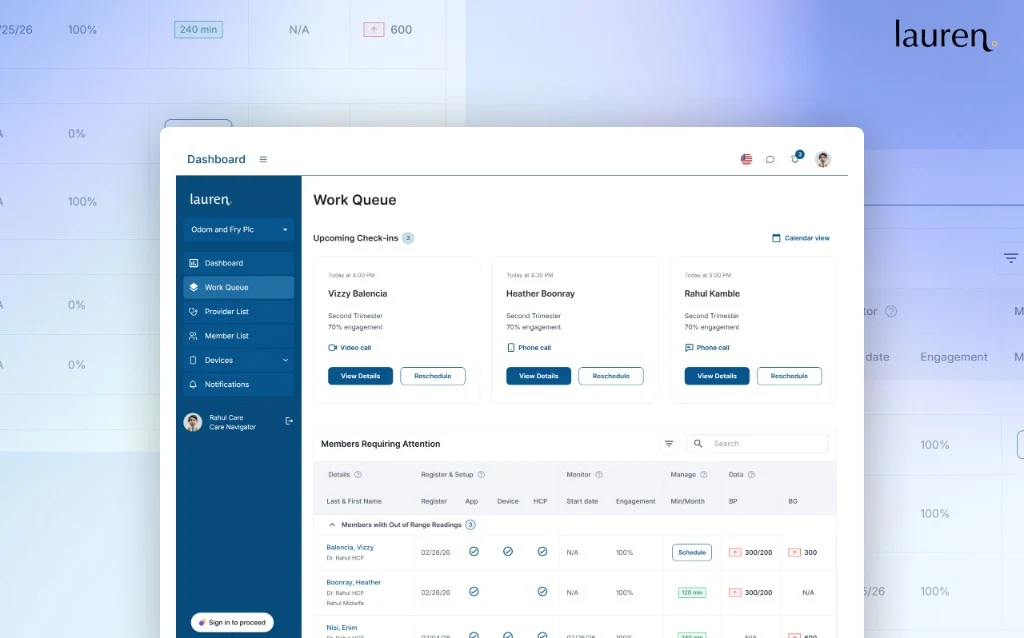
A HIPAA-ready maternal health platform enabling remote patient monitoring, care coordination, and personalized engagement from pre-pregnancy through postpartum.
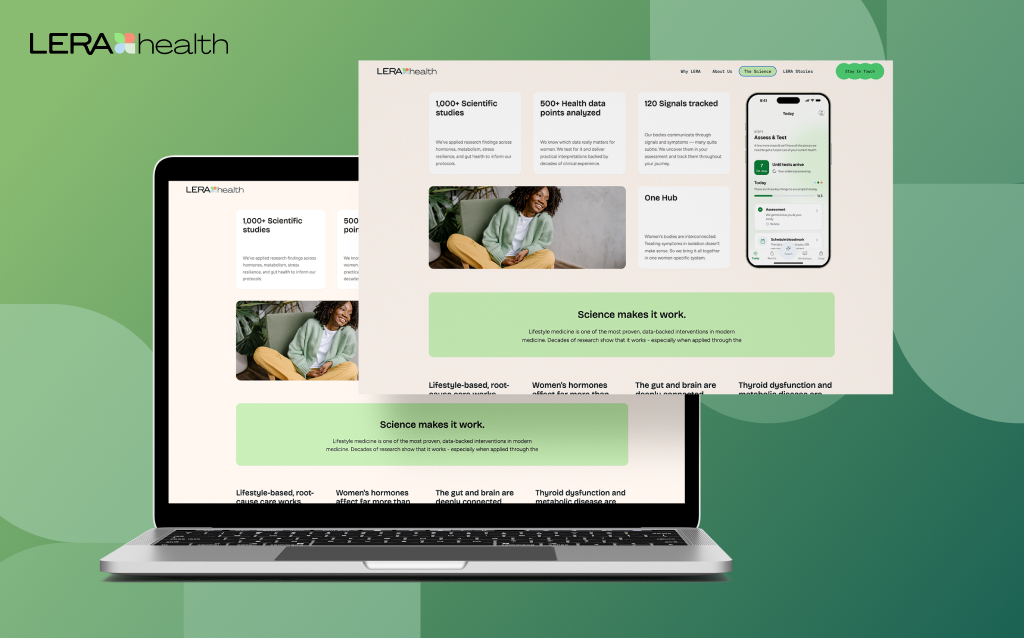
A women’s health product experience focused on guided care journeys, education, and compliance-aware workflows to support long-term engagement.
Manufacturers at different stages, from first instrument to a large installed base.
Analysis software and LIVD files for tests that run on partner instruments.
Embedded control, operator UI and the host interface.
Device software and POCT1-A connectivity for clinics and wards.
A first instrument release with records ready for review.
Connectivity kits and update tooling for a large installed base.
Software that moves samples and results between instruments.
The systems on both sides: your company and your customer labs.
We build secure, scalable products designed for privacy, interoperability, and regulatory readiness from day one across every sector we serve.

Ensuring consistent quality in software delivery and operational process optimization.

Enabling standardized health data exchange through standards-based API mappings.

Supporting enterprise-grade interoperability for clinical messaging and record workflows.
We combine deep technical expertise with industry-specific knowledge to deliver solutions that aren't just functional, but transformational.
We implement rigorous security protocols and compliance standards (HIPAA, GDPR, SOC2) across all industrial solutions to protect sensitive data.
Our architectures are built to handle massive data loads and user bases, keeping performance steady whether you're serving ten or ten million.
Using our suite of internal tools and proven frameworks, we cut setup work so your first release reaches users sooner.
Beyond simple wrappers, we build deep-learning integrations and predictive analytics directly into the core of your industry-specific workflows.
We work inside your quality management system. Timing depends on scope; we agree a fixed first release on the scoping call.
We review the instrument, the assay menu, the target markets and the software records you already hold.
Development plan, safety classification inputs and traceability set up in your QMS tools.
One instrument function or assay module built, verified and documented end to end.
Host interface, LIVD file and test messages prepared with your field applications team.
Update packages, installed base tracking and fixes under change control.
Short facts we design the software and its records around, each linked to its primary source.
FDA defines in vitro diagnostic products as reagents, instruments and systems intended for use in the diagnosis of disease or other conditions, used in the collection, preparation and examination of specimens taken from the human body, and treats them as devices.
Source: 21 CFR 809.3(a) (eCFR)IVD labeling for instruments must state the use or function, installation procedures, principles of operation, performance characteristics and specifications, operating instructions and calibration procedures, among other items.
Source: 21 CFR 809.10(b)(6) (eCFR)The HL7 LIVD implementation guide gives an industry standard way for an IVD manufacturer to publish suggested mappings from a device's proprietary test codes to LOINC codes, for the LIS analyst who connects and configures the device.
Source: HL7, LOINC/IVD Mapping (LIVD) FHIR implementation guideFDA's June 2023 guidance on premarket submissions for device software functions sets two documentation levels: Enhanced, where a software failure could present a hazardous situation with a probable risk of death or serious injury, and Basic for all other submissions.
Source: FDA, Content of Premarket Submissions for Device Software Functions (June 2023), section VWe don't just build products; we forge lasting partnerships. See how we've helped industry leaders transform their vision into technical reality.
“I can clearly see how Agnotic has a unique way of handling end-to-end development. They are always active on quick chat and provide support quickly.”

Aaron Phelan
Founder, Benchmark
“Agnotic combines deep technical expertise with strong domain knowledge. They understand the business context, anticipate challenges, and make collaboration smooth and effective.”

John Pasmore
Founder, Latimer
“Agnotic is the best technical team we evaluated. Their engineering excellence made our work dramatically easier and allowed us to stay focused on what matters most for maternal care outcomes. They took full ownership of the technical execution, and we are always happy to continue working together.”

Kim Smith
Founder, My Lauren
This page covers what the IVD maker ships. These pages cover the lab side and the device rules around it.
Connecting analyzers to a lab's LIS, middleware rules and go-live testing.
The LIS the customer lab runs.
Device software, companion apps and connected platforms.
Classification and submission for software as a medical device.
Intake, investigation and reporting of field complaints.
Keeping released instrument software current and safe.
Explore other production-grade engineering platforms we deliver across healthcare.
The technical patterns behind this platform translate naturally into adjacent verticals.