

01
Pharma RWE and HEOR teams
Research-ready data for observational studies and evidence programs.


EHR, claims and registry data were collected for care and payment, not for research. Agnotic Technologies builds the platform that turns them into research-ready real world data, with de-identification, linkage, OMOP mapping and a record of where every value came from.
Trusted by global innovators











A real world data platform is the system that turns EHR, claims and registry data into research-ready real world data: it ingests each source, de-identifies it, links records with privacy-preserving tokens, maps them to the OMOP common data model, checks quality and records provenance. Agnotic Technologies builds these platforms for pharma companies, data partners and research networks.
The common blockers, most of which are about process rather than technology.
A source arrives without a data dictionary, so mapping starts with guesswork.
De-identification was done once by hand and cannot be repeated on the next refresh.
Each data partner uses a different linkage token, so the same patient cannot be followed across sources.
The OMOP mapping drops source values, and researchers cannot see what a concept was built from.
Quality checks run only after a researcher finds a problem.
Nobody recorded which data release a finished study used.
Access is granted to the whole warehouse instead of to the data a project was approved for.
HIPAA offers two de-identification methods. The choice changes what the platform keeps, especially dates and geography, which longitudinal research often needs. Your privacy officer or counsel makes the decision; we build the pipeline for either.
| Question | Safe Harbor (45 CFR 164.514(b)(2)) | Expert determination (45 CFR 164.514(b)(1)) |
|---|---|---|
| What is removed | The listed identifiers, including names, geography smaller than a State (with a limited three-digit ZIP exception) and all elements of dates except year | Whatever the expert's analysis requires; dates and geography may be shifted or generalized instead of removed |
| Who decides | The covered entity, which must also have no actual knowledge that the remaining data could identify someone | A qualified expert, who documents the methods and results |
| Fit for longitudinal research | Limited, because dates are cut to the year | Often better, because intervals between events can be kept |
| What the platform builds | Rule-based removal that runs on every refresh, with tests | The transformations the expert specifies, re-run and re-checked on every refresh |
Three principles that keep the data usable for research and defensible later.
Raw source data, the mapping rules and the OMOP output are all kept, so any value can be traced back to the record it came from.
De-identification and tokenization run automatically on every refresh, with tests, instead of as a one-off manual job.
Each data release has a version, and every study records the version it used, so results can be reproduced.
Components we build on your cloud, sized to your sources and studies.
FHIR Bulk Data exports from EHRs, claims files and registry extracts, each landed unchanged.
Field-level profiles of every source, so mapping starts from facts.
Safe Harbor rules or the expert's specified transformations, run on every refresh.
Linkage tokens created where identifiers are allowed to be, and records matched across sources.
Source codes mapped to OMOP standard concepts, with source values kept.
Completeness, conformance and plausibility checks run before each release.
Every release versioned, with lineage from source file to OMOP table.
Project-level access to approved data, with analysis tools and logged exports.
The platform we build, step by step, with the owner of each step. Clear ownership is what makes the data defensible when a study is reviewed.
EHR data through FHIR Bulk Data export, claims files and registry extracts land in a raw zone per source, unchanged. Owner: the data partner supplies the data; Agnotic builds and runs the connectors.
Identifiers are turned into linkage tokens inside the environment of the party allowed to hold them. Owner: the data partner or its tokenization provider.
Safe Harbor rules or the expert's specified transformations are applied, and identifiers are removed. Owner: the privacy officer or the qualified expert signs off the method.
Records are mapped to OMOP tables and standard concepts, keeping source values. Owner: Agnotic data engineering with your clinical informatics lead.
Checks run on every release, and failures block publication. Owner: your data quality lead.
The release is versioned, with lineage from source file to table. Owner: the platform owner.
Approved projects get access to the data they were approved for, and exports are logged. Owner: your research governance board.
Open standards first, so the data and the code outlive any one vendor.
Measures published with every data release.
Share of source codes mapped to standard concepts, by domain.
Quality checks passed and failed for the release.
Time from a source update to a published release.
Tables with lineage back to source files.
A HIPAA-ready maternal health platform enabling remote patient monitoring, care coordination, and personalized engagement from pre-pregnancy through postpartum.
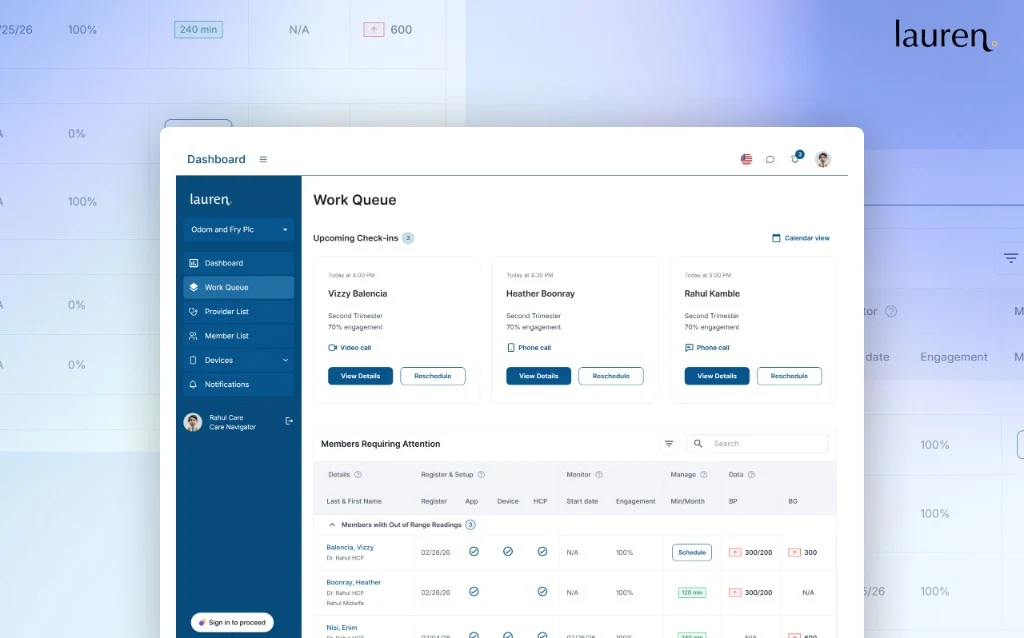
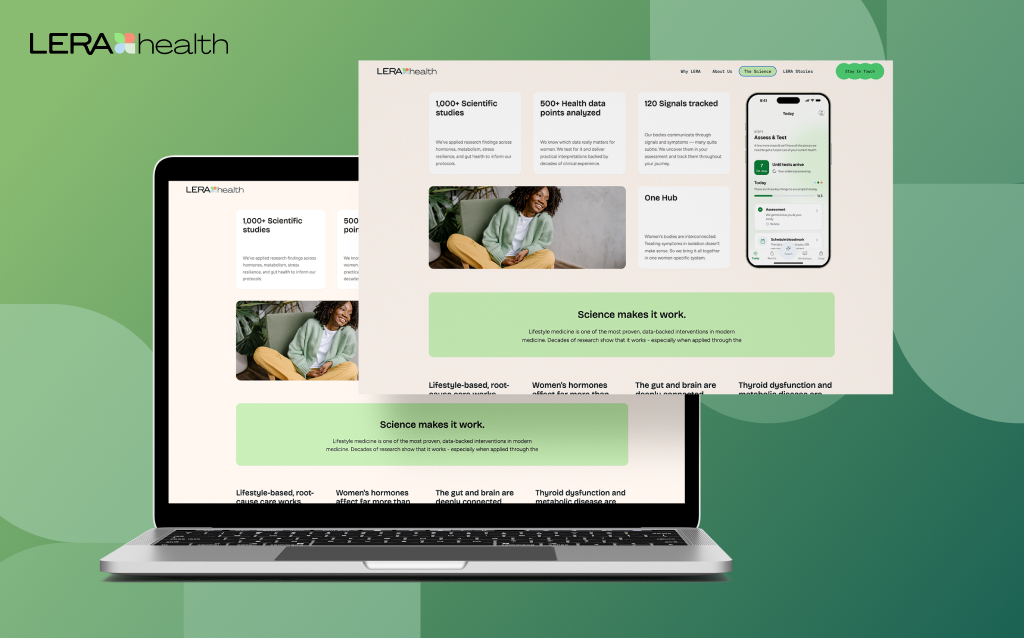
A women’s health product experience focused on guided care journeys, education, and compliance-aware workflows to support long-term engagement.
Organizations that hold or use real world data for research.
Research-ready data for observational studies and evidence programs.
EHR data prepared for research partners under data use agreements.
Several sites mapped to one model so the same analysis runs everywhere.
Registry data linked to EHR and claims with privacy-preserving tokens.
Licensable data sets with documented provenance and quality.
Study data sets built from versioned releases.
Sources and tools on both ends of the pipeline.
We build secure, scalable products designed for privacy, interoperability, and regulatory readiness from day one across every sector we serve.

Protect PHI with privacy-first architecture, encrypted storage and transmission, and strict access controls.

Implement lawful consent flows, data minimization, and secure processing for global data privacy.

Enabling standardized health data exchange through standards-based API mappings.
We combine deep technical expertise with industry-specific knowledge to deliver solutions that aren't just functional, but transformational.
We implement rigorous security protocols and compliance standards (HIPAA, GDPR, SOC2) across all industrial solutions to protect sensitive data.
Our architectures are built to handle massive data loads and user bases, keeping performance steady whether you're serving ten or ten million.
Using our suite of internal tools and proven frameworks, we cut setup work so your first release reaches users sooner.
Beyond simple wrappers, we build deep-learning integrations and predictive analytics directly into the core of your industry-specific workflows.
We start with one source and one research question. Timing depends on scope; we agree a fixed first release on the scoping call.
We review your sources, data agreements, research questions and privacy approach.
Profile the first source and agree the de-identification route with your privacy lead.
Ingest, de-identification, OMOP mapping, quality checks and a versioned release for one source.
Additional sources added and linked with tokens.
Scheduled refreshes, releases and workspace support.
Short facts we design the pipeline, privacy and data model around, each linked to its primary source.
FDA defines real-world data as data relating to patient health status or the delivery of health care routinely collected from a variety of sources, such as electronic health records, medical claims, product or disease registries and digital health technologies.
Source: FDA, Real-World EvidenceUnder the HIPAA expert determination method, a qualified expert must determine that the risk is very small that an anticipated recipient could identify an individual, and must document the methods and results of the analysis.
Source: 45 CFR 164.514(b)(1) (eCFR)HIPAA lets a covered entity keep a re-identification code for de-identified data only if the code is not derived from or related to information about the individual and the mechanism for re-identification is not disclosed.
Source: 45 CFR 164.514(c) (eCFR)The OHDSI standardized vocabularies are a central component of the OMOP Common Data Model, standardizing medical terms across clinical domains so the same analytics can run across data sources.
Source: OHDSI, OMOP Common Data ModelThe HL7 FHIR Bulk Data Access implementation guide (v3.0.0) defines an asynchronous export of data for all patients, a defined group of patients or a whole server, and requires servers to support Newline Delimited JSON output.
Source: HL7, FHIR Bulk Data Access, Export operationWe don't just build products; we forge lasting partnerships. See how we've helped industry leaders transform their vision into technical reality.
“I can clearly see how Agnotic has a unique way of handling end-to-end development. They are always active on quick chat and provide support quickly.”

Aaron Phelan
Founder, Benchmark
“Agnotic combines deep technical expertise with strong domain knowledge. They understand the business context, anticipate challenges, and make collaboration smooth and effective.”

John Pasmore
Founder, Latimer
“Agnotic is the best technical team we evaluated. Their engineering excellence made our work dramatically easier and allowed us to stay focused on what matters most for maternal care outcomes. They took full ownership of the technical execution, and we are always happy to continue working together.”

Kim Smith
Founder, My Lauren
This page covers building the real world data platform. These pages cover the trial, analytics and privacy work around it.
Trial operations and real-world evidence pipelines into trials.
Software for sponsors, CROs and research teams.
Analytics and dashboards on clinical and operational data.
Tokenization, de-identification and protection of patient data.
Pipelines, warehouses and data platforms.
Risk-based monitoring analytics across studies.
Explore other production-grade engineering platforms we deliver across healthcare.
The technical patterns behind this platform translate naturally into adjacent verticals.