

01
Dry bulk export terminals
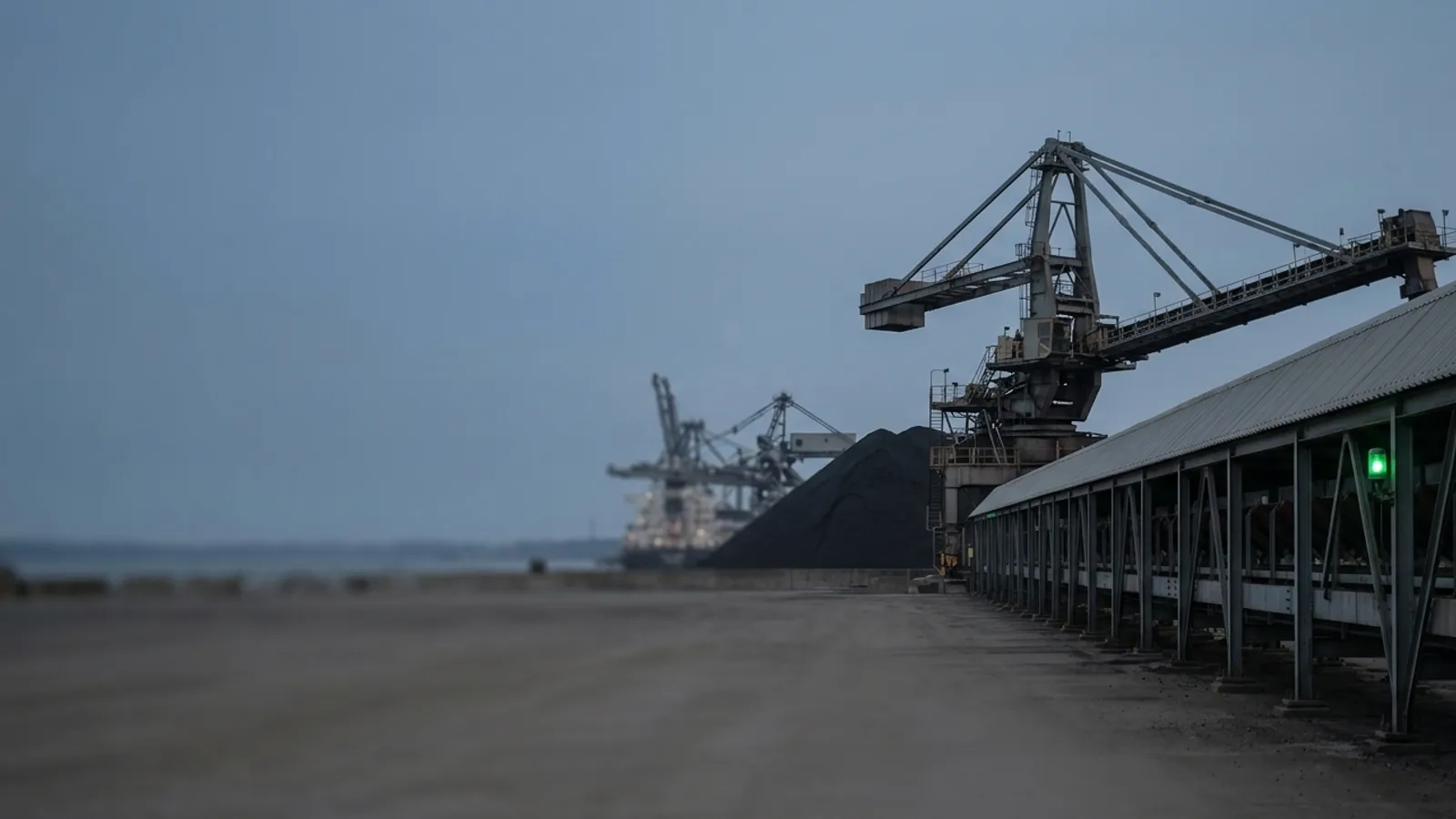
Coal, ore and mineral terminals running long conveyor routes from stockyard to shiploader.


For maintenance and reliability managers whose conveyors, ship unloaders, stacker reclaimers and wagon loaders still run on paper checklists and a CMMS nobody trusts. Agnotic Technologies builds terminal maintenance software around your equipment and your CMMS, with shutdowns planned against vessel and rake schedules.
Trusted by global innovators









Maintenance for conveyors, ship unloaders and wagon loaders is digitized by giving every machine, conveyor section, belt splice and critical idler set an asset record, then moving inspections, defects and work orders onto tablets that feed one CMMS such as SAP PM. Port and bulk terminal maintenance software adds what a general CMMS lacks: condition readings by asset, failure codes that match terminal equipment, and shutdown windows planned against vessel and rake schedules. Start with one conveyor route from ship to stockyard to wagon loader, standardize its records and checklists, then extend the same model across the terminal.
Plan shutdowns from the same calendar operations uses: vessel arrivals and berth plans, rake or train slots, and stockyard levels. The software shows the gaps where a conveyor route, an unloader or a wagon loader can stop without holding a ship or a train.
Planned work is grouped into those windows by asset and route, with parts, permits and crews checked before the window opens. When a vessel is delayed or a rake is moved, the planner sees which jobs are affected and can move them to the next gap.
Yes, and on a bulk terminal they should be. Each belt carries its splices as child records with location, type, date made and inspection history, and idler sets and pulleys sit under their conveyor section.
Crews then record splice condition, belt wear and idler or pulley findings against the exact item, not just the conveyor. Repeat failures on one splice or one idler station show up in the history, which is where root cause analysis starts.
Usually yes. Most terminals keep SAP PM or their current CMMS as the record for work orders and costs, and add mobile inspections, condition data and shutdown planning around it. We build the connection through the interfaces your system offers, and our SAP PM integration services cover the SAP side.
Where the CMMS itself is the problem, a custom CMMS built around terminal equipment is an option. If several terminals run different systems, multi-site maintenance standardization gives them one asset model and one set of failure codes first.
Condition-based maintenance on a bulk terminal means acting on readings from the equipment instead of a fixed calendar. Typical inputs are vibration and temperature on drives, gearboxes and pulley bearings, motor current, belt thickness and rip detection, and thermal scans of idler lines.
Readings land on the asset record, and a reading past its limit raises a work request for the planner to approve. Condition monitoring software collects and trends the signals, and predictive maintenance software adds failure prediction once enough history exists.
If you are not sure where your maintenance process breaks today, a maintenance process audit maps it before anything is built.
Failure points we see on bulk terminals, and each one can be designed out.
Conveyors are one asset in the CMMS, so splice, idler and pulley history is lost.
Inspection checklists are on paper and typed in days later, or never.
Shutdown work is planned without the vessel or rake schedule, and jobs are cut at the last minute.
Each terminal uses its own failure codes, so repeat failures cannot be compared.
Certificates for cranes, unloaders and spouts sit in folders, not on the asset record.
Dust and spillage findings are reported by radio and never become work orders.
Record each asset type at the level where it fails. The table is a typical starting model; your equipment, manufacturers' manuals and maintenance strategy decide the final one.
| Asset | Common failure points | What to record | Condition signals |
|---|---|---|---|
| Ship unloaders | Wire ropes, grabs, slew and hoist drives, hydraulics | Rope changes, grab repairs, certificates and examinations | Drive vibration, motor current, hydraulic pressure |
| Stacker reclaimers | Bucket wheel, slew bearing, boom conveyor, travel drives | Bucket and tooth changes, bearing checks, boom inspections | Bearing temperature, vibration, slew drive current |
| Belt conveyors and splices | Splice failure, belt wear, tracking, rips | Each splice with location and date made, belt thickness | Belt thickness, rip detection, splice scans |
| Idlers and pulleys | Seized idlers, bearing failure, lagging wear | Findings by idler station and pulley position | Thermal scans, acoustic checks, bearing vibration |
| Wagon and rake loaders | Chute gates, load cells, hydraulics, telescopic chutes | Load cell checks, gate repairs, loading faults | Load cell drift, cycle times, hydraulic pressure |
| Dust and spillage control | Spray nozzles, filters, skirting and seals | Cleaning rounds, spillage reports, filter changes | Water pressure, filter differential pressure |
Agnotic Technologies builds the software layer between the people on the berth and the CMMS in the office, designed with your maintenance and operations teams.
We build the asset hierarchy down to splices, idler stations and pulleys, and one set of failure codes for terminal equipment.
Inspections, defects and photos captured on tablets that work offline in conveyor galleries and on the berth.
Shutdown windows planned against vessel and rake schedules, with work orders and costs kept in SAP PM or your CMMS.
Modules we build for terminal maintenance teams, connected to the systems you already run.
Conveyors, belts, splices, idler stations and pulleys in one hierarchy.
Checklists, readings and photos on tablets, synced when the signal returns.
Vibration, temperature, current and belt thickness stored against each asset.
Planned work grouped into gaps between vessels and rake slots.
Crane, unloader and spout certificates held on the asset, with due dates.
Findings from cleaning rounds turned into work requests with a location.
Inspection notes and photos turned into draft failure codes and work requests that a planner approves.
Repeat failures, backlog and planned work by route, asset type and terminal.
The path from a finding on the berth or a sensor reading to work done in a shutdown window, with the CMMS kept as the record.
A crew member records a defect on an inspection round, or a condition reading passes its limit.
A work request is raised against the exact asset, with photos, readings and a draft failure code.
The planner reviews the request, sets the priority and confirms the failure code.
The job is placed in the next shutdown window that fits the vessel and rake schedule, with parts and permits checked.
The crew isolates the equipment, does the work and records what was found and replaced.
The work order closes in SAP PM or your CMMS, and the asset history updates for the next review.
What we typically use; the final stack follows your systems and hosting rules.
Measures agreed before the first release, so the program is judged on the equipment, not on screens delivered.
Share of maintenance hours done in shutdown windows rather than breakdowns.
Splices, idlers or drives that fail again within your review period.
Planned jobs completed in the window they were planned for.
How long approved work waits, by route and asset type.
Terminals where a stopped conveyor route holds a ship or a train.
Coal, ore and mineral terminals running long conveyor routes from stockyard to shiploader.
Captive jetties feeding power, steel or cement plants by conveyor.
Ship and rail handling with dust control and seasonal peaks.
Wagon loaders and tipplers tied to rake slots.
Several terminals that need one asset model and comparable records.
Where maintenance data comes from and where it needs to go.
We build secure, scalable products designed for privacy, interoperability, and regulatory readiness from day one across every sector we serve.

Ensuring consistent quality in software delivery and operational process optimization.
We combine deep technical expertise with industry-specific knowledge to deliver solutions that aren't just functional, but transformational.
We implement rigorous security protocols and compliance standards (HIPAA, GDPR, SOC2) across all industrial solutions to protect sensitive data.
Our architectures are built to handle massive data loads and user bases, keeping performance steady whether you're serving ten or ten million.
Using our suite of internal tools and proven frameworks, we cut setup work so your first release reaches users sooner.
Beyond simple wrappers, we build deep-learning integrations and predictive analytics directly into the core of your industry-specific workflows.
We start with one conveyor route. The size of each step depends on scope, which we agree on the scoping call.
We hear which equipment fails most, how maintenance is planned today and which CMMS you run.
We walk one route from ship to stockyard to wagon loader and build its asset hierarchy.
Checklists, failure codes and condition limits agreed with your maintenance team.
Crews run inspections and requests on tablets, connected to your CMMS.
The same model goes to other routes, then to other terminals.
For US terminals, OSHA's marine terminals standard sets rules for maintaining and certifying terminal equipment, each linked to the regulation text on eCFR.
OSHA's marine terminals standard, 29 CFR part 1917, applies to employment within a marine terminal, including the loading, unloading and handling of cargo and the use and routine maintenance of terminal facilities and equipment.
Source: 29 CFR 1917.1 (eCFR)29 CFR 1917.48(i) requires marine terminal conveyors to be stopped, with their power sources locked out and tagged out, during maintenance, repair and servicing, unless power is necessary for testing.
Source: 29 CFR 1917.48 (eCFR)Under 29 CFR 1917.50(c)(1), each crane and derrick at a marine terminal must be tested as a unit every four years and examined every year, with the certificates of tests and examinations readily available for inspection.
Source: 29 CFR 1917.50 (eCFR)29 CFR 1917.50(c)(2) requires bulk cargo spouts and suckers at marine terminals, with any portable extensions and the rigging or outriggers supporting them, to be examined every year, with certificates readily available for inspection.
Source: 29 CFR 1917.50 (eCFR)29 CFR 1917.45 applies to every kind of crane and derrick at a marine terminal and to other equipment performing their functions, and it prohibits using any crane or derrick with a visible or known defect that affects safe operation.
Source: 29 CFR 1917.45 (eCFR)We don't just build products; we forge lasting partnerships. See how we've helped industry leaders transform their vision into technical reality.
“I can clearly see how Agnotic has a unique way of handling end-to-end development. They are always active on quick chat and provide support quickly.”

Aaron Phelan
Founder, Benchmark
This page covers maintenance on ports and bulk terminals. These pages cover the systems a terminal maintenance program usually adds.
One asset model, one set of failure codes and comparable records across sites.
A custom CMMS built around your equipment, crews and work orders.
Failure prediction from condition history on drives, bearings and belts.
Vibration, temperature and current collected and trended by asset.
Work orders, notifications and asset data synced with SAP PM.
The transportation hub: logistics, fleet and terminal software.
The technical patterns behind this platform translate naturally into adjacent verticals.
Showing 10 of 19 industries