

01
Clearance tracking
Pre-admission calls and history and physical tracking for every booked case.


An ambulatory surgery center runs a full surgical day in hours: cases booked, patients cleared, rooms turned, implants logged and every patient sent home with a responsible adult. Agnotic Technologies builds ASC software for that day, with the Conditions for Coverage records captured on the screens staff already use.
Trusted by global innovators











ASC software is the system an ambulatory surgery center uses to book cases and block time, clear patients before surgery, track supplies and implants on preference cards, document the operative and recovery record, discharge under the Conditions for Coverage and send facility claims. Agnotic Technologies builds it for surgery centers and their physician owners.
The failure points we design against first, because each one delays a case or leaves a gap in the record.
The history and physical is still missing on the morning of surgery, and the case is held while staff chase the surgeon's office.
Block time goes unused because release rules live in a scheduler's head, not in the system.
An implant is used but its lot and serial number are written on a sticker sheet, not captured in the record.
A preference card lists supplies the surgeon stopped using, so trays are opened and wasted.
A patient is ready to leave but has no confirmed escort, and nobody knew until recovery.
The facility claim goes out without the implant charges, because supply data never reached billing.
Three decisions we make with your administrator, nursing leads and billing team.
A case cannot move to the day's schedule as ready until the required history, physical and pre-surgical assessment are in the record.
An implant scanned in the room updates the operative record, inventory and the claim from the same scan.
The responsible adult and the discharge instructions are confirmed before surgery, so recovery is not where the gaps are found.
Modules for how to build ASC software around one surgical day.
Requests from surgeon offices, block schedules with release rules and room assignment.
History and physical tracking, pre-admission calls and clearance gates per case.
Cards per surgeon and procedure, with supply use and UDI scanning for implants.
Findings, techniques, anesthesia entries and specimens recorded during the case.
Post-surgical assessment, discharge order, written instructions and escort confirmation.
Rights notices and consent captured before the procedure starts.
Facility claims with procedure, supply and implant data, sent through your clearinghouse.
The data elements your quality reporting needs, captured during the day.
The path we build for a single case, from the booking request to the claim.
The surgeon's office requests a case in a block; the room, time and preference card are set.
The pre-admission call, history and physical and test results are tracked until the case is cleared.
On arrival, the pre-surgical assessment records allergies and the rights notice and consent are captured.
The operative and anesthesia record is completed, and supplies and implants are scanned.
The post-surgical assessment is documented and post-surgical needs go into the discharge notes.
The signed discharge order, written instructions and the responsible adult are confirmed.
The facility claim is built from the case, supplies and implants and sent to the payer.
Chosen to fit your EHR, inventory and billing setup. We build in your cloud account.
Views we build with your administrator and nursing leads.
Upcoming cases missing a history, physical or test.
Booked and released block time by surgeon.
Implants with full UDI data in the record and on the claim.
Patients with confirmed escort and instructions before surgery.
A HIPAA-ready maternal health platform enabling remote patient monitoring, care coordination, and personalized engagement from pre-pregnancy through postpartum.
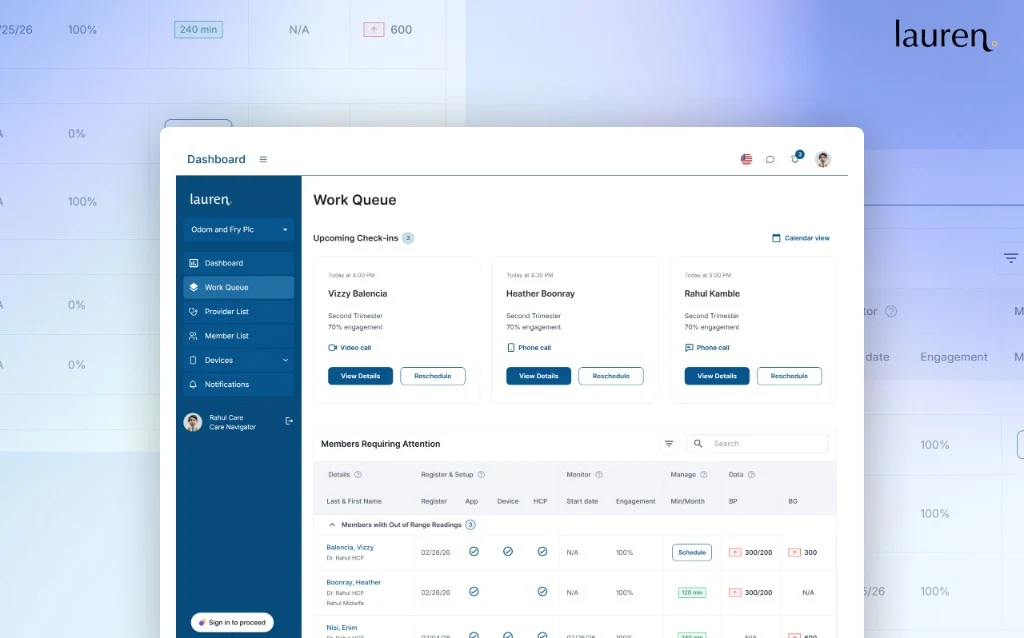
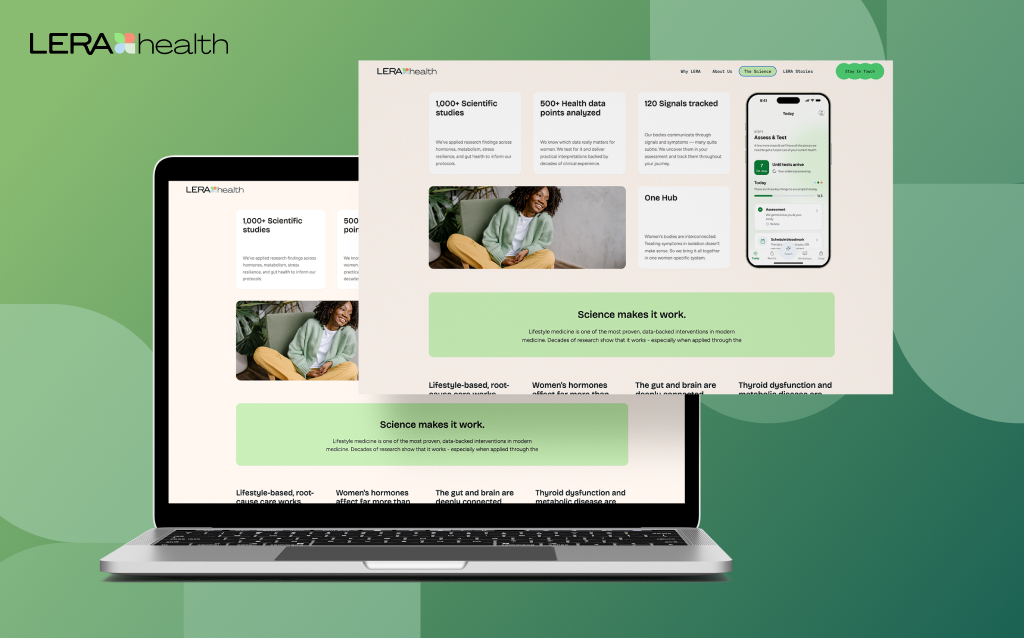
A women’s health product experience focused on guided care journeys, education, and compliance-aware workflows to support long-term engagement.
First releases we scope, each one small enough to run alongside your current systems.
Pre-admission calls and history and physical tracking for every booked case.
UDI scanning in the room, feeding the record, inventory and claim.
Block rules and release for surgeon offices.
Cards rebuilt from actual supply use.
Escort confirmation and instructions from booking to recovery.
Operations software for a center preparing for its first cases.
The systems a surgery center platform reads from or writes to, agreed during scoping.
The checklist we map to screens and records with your administrator and nursing leads.
We build secure, scalable products designed for privacy, interoperability, and regulatory readiness from day one across every sector we serve.

Protect PHI with privacy-first architecture, encrypted storage and transmission, and strict access controls.

Enabling standardized health data exchange through standards-based API mappings.

Supporting enterprise-grade interoperability for clinical messaging and record workflows.
We combine deep technical expertise with industry-specific knowledge to deliver solutions that aren't just functional, but transformational.
We implement rigorous security protocols and compliance standards (HIPAA, GDPR, SOC2) across all industrial solutions to protect sensitive data.
Our architectures are built to handle massive data loads and user bases, keeping performance steady whether you're serving ten or ten million.
Using our suite of internal tools and proven frameworks, we cut setup work so your first release reaches users sooner.
Beyond simple wrappers, we build deep-learning integrations and predictive analytics directly into the core of your industry-specific workflows.
Centers pick one part of the surgical day to fix first. That release is scoped and scheduled around your case calendar.
We review your EHR, scheduling, inventory and billing setup and the first workflow.
We follow one surgical day with your staff and map the checklist to screens.
One workflow end to end, such as clearance or implant capture, with audit logging.
Rollout by room or service line, with changes from the first weeks of use.
More workflows, integrations and reports under change control.
Short facts from the ASC Conditions for Coverage and the UDI rule, each linked to its primary source.
Each ASC medical record must include patient identification, significant history and physical examination results, pre-operative studies, findings and techniques of the operation, allergies, anesthesia entries, documentation of informed consent and the discharge diagnosis.
Source: 42 CFR 416.47(b) (eCFR)On admission, each ASC patient must have a pre-surgical assessment that documents allergies to drugs and biologicals, and any medical history and physical examination must be in the record before the procedure.
Source: 42 CFR 416.52(a) (eCFR)An ASC must give each patient written discharge instructions, have a discharge order signed by the physician who performed the procedure, and discharge every patient in the company of a responsible adult unless the attending physician exempts them.
Source: 42 CFR 416.52(c) (eCFR)Before the procedure starts, an ASC must give the patient or their representative verbal and written notice of patient rights, including the state agency complaint contact and the Medicare Beneficiary Ombudsman website.
Source: 42 CFR 416.50(a) (eCFR)A unique device identifier has a fixed device identifier for the model and labeler, and a production identifier that can carry the lot or batch, serial number and expiration date shown on the label.
Source: 21 CFR 830.3 (eCFR)We don't just build products; we forge lasting partnerships. See how we've helped industry leaders transform their vision into technical reality.
“I can clearly see how Agnotic has a unique way of handling end-to-end development. They are always active on quick chat and provide support quickly.”

Aaron Phelan
Founder, Benchmark
“Agnotic combines deep technical expertise with strong domain knowledge. They understand the business context, anticipate challenges, and make collaboration smooth and effective.”

John Pasmore
Founder, Latimer
“Agnotic is the best technical team we evaluated. Their engineering excellence made our work dramatically easier and allowed us to stay focused on what matters most for maternal care outcomes. They took full ownership of the technical execution, and we are always happy to continue working together.”

Kim Smith
Founder, My Lauren
This page covers surgery center operations. These pages cover the specialties, practices and billing around it.
Software for orthopedic practices, a large share of ASC cases.
Scheduling and billing for the surgeon offices that book cases.
Claims, payment posting and denials.
Bed, staff and operating room capacity in hospitals.
The safeguards we build into every system that holds patient data.
Explore other production-grade engineering platforms we deliver across healthcare.
The technical patterns behind this platform translate naturally into adjacent verticals.