

01
Primary care practices
An AWV workflow inside the EHR the practice already uses.



Medicare annual wellness visits only work when the right patients are booked, the visit type is right and every element is captured before the claim goes out. Agnotic Technologies builds annual wellness visit software for practices, medical groups and value-based care organizations.
Trusted by global innovators











Annual wellness visit software runs a Medicare AWV program from start to finish: it checks eligibility and visit type, books and prepares patients, splits the visit between staff and clinician, produces the personalized prevention plan, applies billing and frequency edits, and reports results. Agnotic Technologies builds it for primary care practices, medical groups and value-based care teams.
The visit itself is short. The losses happen before and after it.
Wrong visit type: a patient in their first Part B year is booked for an AWV instead of the Welcome to Medicare visit, and the claim is denied.
Booked too early: the last visit was less than 12 months ago, which nobody checked because the history sits in another system.
Missing elements: cognitive assessment or the functional and safety review was not documented, so the visit does not meet the definition.
No plan handed over: the written screening schedule is drafted but never given to the patient or saved to the chart.
Outreach lists built by hand: staff export patient lists each month and miss people who changed coverage.
Clinician time on clerical work: the clinician enters height, weight and history that trained staff could have captured first.
The software has to choose between three visit types before anything is booked. This table shows the rule behind each one and what the software checks. How the 12 months are counted for billing is set from your payer guidance, not hard-coded.
| Visit type | Eligibility rule | HCPCS code | What the software checks |
|---|---|---|---|
| Initial preventive physical examination (Welcome to Medicare visit) | Within 1 year after the effective date of the first Part B coverage period (42 CFR 410.16) | G0402 | Part B effective date on file, and no earlier IPPE in the record |
| First annual wellness visit | Past the first 12 months of Part B coverage, with no IPPE or AWV in the past 12 months (42 CFR 410.15) | G0438 | No earlier first AWV, and the last IPPE or AWV date is outside the lookback |
| Subsequent annual wellness visit | Same eligibility, for a patient who has already had a first AWV (42 CFR 410.15) | G0439 | Date of the last AWV, and the updated history, provider list and screening schedule from it |
Medicare lets a team of medical professionals under a physician's direct supervision furnish the visit. We build the workflow so each person does the part they are allowed to do, in order.
Staff confirm eligibility, send the health risk assessment, and update the list of current providers and suppliers.
A medical assistant records height, weight, body mass index and blood pressure, and starts the history from the previous visit.
The clinician reviews the assessment answers, the cognitive and depression findings, and the functional and safety review, then sets the plan.
The prevention plan goes to the patient, the referrals are sent, and the claim waits until every required element is marked complete.
Modules for an AWV program, built alone or around your EHR.
Part B dates and preventive visit history checked to pick IPPE, first AWV or subsequent AWV before booking.
Patients due for a visit found from coverage and visit history, with calls, texts and letters tracked.
The health risk assessment sent ahead of the visit and the previous history and provider list pulled forward.
Each required element shown as done or open during the visit, by role, so nothing is left for later.
The written screening schedule and risk factor list drafted from the visit, edited by the clinician and handed to the patient.
Visit code matched to visit type, and claims held when a required element or the lookback check fails.
Visits due, booked, completed and billed, by clinic, clinician and payer.
Drafting the plan summary from the clinician's notes and screening answers, always reviewed and signed by the clinician.
The path we build for each patient. Every step is visible on the program dashboard.
Coverage and visit history mark the patient as due and set the visit type.
Staff book the visit, send the health risk assessment and confirm the patient's other providers.
Measurements and history updates are recorded by staff before the clinician joins.
Assessment review, screening results and personalized health advice, with referrals where needed.
The written screening schedule and risk factor list are finalized and given to the patient.
Billing edits pass, the claim goes out, and the next eligible date is set for outreach.
Chosen to fit your EHR and your outreach tools.
A health risk assessment for the Medicare AWV must collect self-reported information, take no more than 20 minutes, and cover six minimum topics set in 42 CFR 410.15. We build each topic as FHIR Questionnaire items with coded answers, and the form fails its build check if any topic has no item.
| HRA topic (42 CFR 410.15) | Example questions | FHIR item type and answers | LOINC codes | Who completes it |
|---|---|---|---|---|
| Demographic data | Date of birth, sex, race and ethnicity | date and choice items, pre-filled from the Patient record | 21112-8 Birth date; 76689-9 Sex assigned at birth; 32624-9 Race; 69490-1 Ethnicity | Registration staff, confirmed by the patient |
| Self-assessment of health status, frailty and physical functioning | In general, would you say your health is; do you have serious difficulty walking or climbing stairs | choice with a coded answer list; boolean | 61577-3; 69859-7 | Patient |
| Psychosocial risks | PHQ-2 depression items, stress level, loneliness or isolation, pain severity | choice items with scored answers; integer 0 to 10 for pain | 55757-9 PHQ-2; 93038-8 Stress level; 93159-2 Loneliness or isolation; 72514-3 Pain severity | Patient |
| Behavioral risks | Tobacco use, days of physical activity, alcohol use, plus seat belt use, home safety, nutrition, oral and sexual health | choice; integer; choice | 72166-2 Tobacco smoking status; 89555-7 Physical activity days; 72109-2 AUDIT-C; items with no LOINC code are marked as local codes | Patient |
| Activities of daily living | Difficulty dressing or bathing; falls in the past year | boolean, with follow-up items when the answer is yes | 69860-5; 52552-7 | Patient, with staff follow-up on positive answers |
| Instrumental activities of daily living | Difficulty doing errands such as shopping; transport to appointments; managing medicines and money | boolean; choice | 69861-3; 93030-5 | Patient, or a caregiver on the patient's behalf |
Measures we build reporting around and review with your quality and billing leads.
Patients due for an IPPE or AWV, by clinic and clinician.
Patients contacted, booked and seen, by channel.
Visits with every required element documented.
Visits billed, held for an edit or denied, with the reason.
A HIPAA-ready maternal health platform enabling remote patient monitoring, care coordination, and personalized engagement from pre-pregnancy through postpartum.
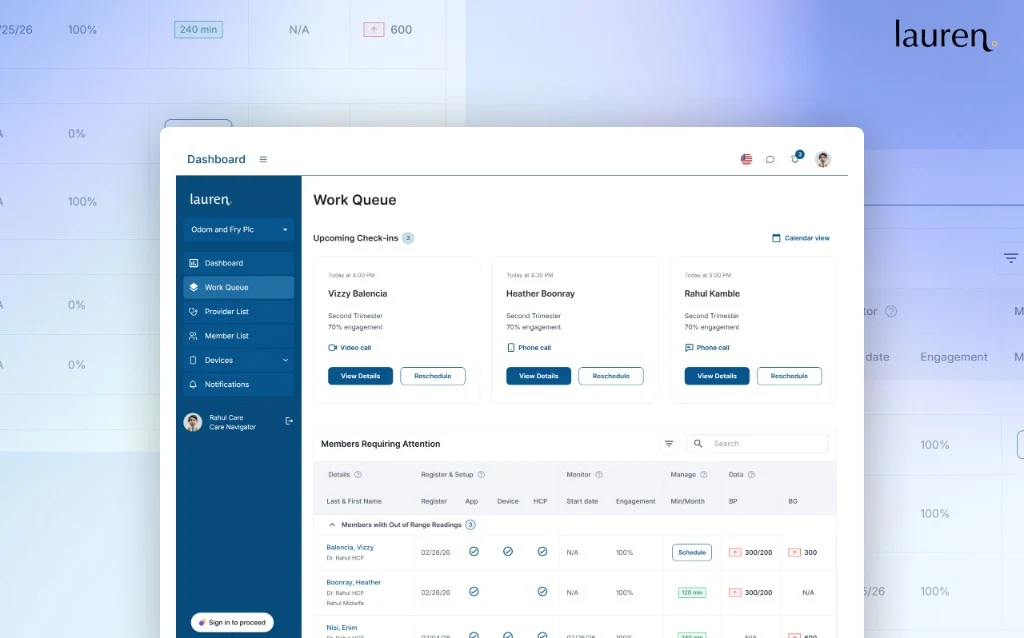
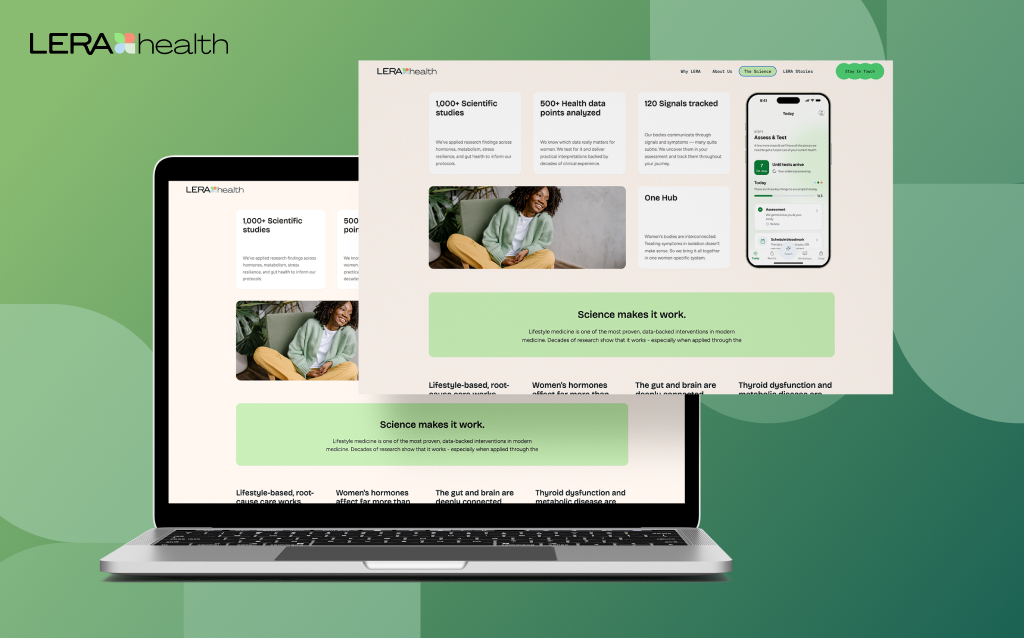
A women’s health product experience focused on guided care journeys, education, and compliance-aware workflows to support long-term engagement.
Teams that run AWVs at volume and need them right the first time.
An AWV workflow inside the EHR the practice already uses.
One program across many clinics, with central outreach.
AWVs tied to care gap and quality work for attributed patients.
Wellness visit scheduling across a large senior panel.
Visit workflows for clinicians who see patients at home or on video.
Annual wellness visit software for startups selling to practices.
The systems that hold coverage, the chart and the claim.
What an annual wellness visit workflow needs before it scales. Any gap is a candidate for the first release.
We build secure, scalable products designed for privacy, interoperability, and regulatory readiness from day one across every sector we serve.

Protect PHI with privacy-first architecture, encrypted storage and transmission, and strict access controls.

Enabling standardized health data exchange through standards-based API mappings.
We combine deep technical expertise with industry-specific knowledge to deliver solutions that aren't just functional, but transformational.
We implement rigorous security protocols and compliance standards (HIPAA, GDPR, SOC2) across all industrial solutions to protect sensitive data.
Our architectures are built to handle massive data loads and user bases, keeping performance steady whether you're serving ten or ten million.
Using our suite of internal tools and proven frameworks, we cut setup work so your first release reaches users sooner.
Beyond simple wrappers, we build deep-learning integrations and predictive analytics directly into the core of your industry-specific workflows.
How to build annual wellness visit software one clinic at a time. Timing depends on scope; we agree a fixed first release on the scoping call.
We review your EHR, how AWVs are booked and documented today, and where visits are lost.
We sit in on visits, remotely or on site, and map each element to the person who does it.
Eligibility checks, the due list and the element tracker for one clinic, with audit logging.
Prevention plan generation and claim edits added once the visit workflow is stable.
Rule updates each year when the Physician Fee Schedule or the AWV definition changes.
Short facts from Medicare regulations and the screening body the plan relies on, each linked to its primary source.
Medicare defines an eligible beneficiary for the annual wellness visit as someone no longer within 12 months after the effective date of their first Part B coverage period who has not received an initial preventive physical examination or an annual wellness visit within the past 12 months.
Source: 42 CFR 410.15(a) (eCFR)Medicare covers the initial preventive physical examination only when it is received not more than 1 year after the effective date of the beneficiary's first Part B coverage period.
Source: 42 CFR 410.16(a) (eCFR)The first annual wellness visit includes a written screening schedule, such as a checklist for the next 5 to 10 years, based on United States Preventive Services Task Force and Advisory Committee on Immunization Practices recommendations and the person's health risk assessment, health status and screening history.
Source: 42 CFR 410.15(a) (eCFR)The CY 2026 Physician Fee Schedule final rule identifies HCPCS code G0402 as the code for the Welcome to Medicare visit and G0438 and G0439 as the codes for the annual wellness visits.
Source: Federal Register, November 5, 2025 (CY 2026 Physician Fee Schedule final rule), on govinfo.govThe U.S. Preventive Services Task Force assigns each recommendation one of five letter grades: A, B, C, D or I.
Source: U.S. Preventive Services Task Force, Grade DefinitionsWe don't just build products; we forge lasting partnerships. See how we've helped industry leaders transform their vision into technical reality.
“I can clearly see how Agnotic has a unique way of handling end-to-end development. They are always active on quick chat and provide support quickly.”

Aaron Phelan
Founder, Benchmark
“Agnotic combines deep technical expertise with strong domain knowledge. They understand the business context, anticipate challenges, and make collaboration smooth and effective.”

John Pasmore
Founder, Latimer
“Agnotic is the best technical team we evaluated. Their engineering excellence made our work dramatically easier and allowed us to stay focused on what matters most for maternal care outcomes. They took full ownership of the technical execution, and we are always happy to continue working together.”

Kim Smith
Founder, My Lauren
This page covers the AWV program. These pages cover the forms, outreach and care programs around it.
Building the health risk assessment and other forms, and writing answers back to the EHR.
Software for the primary care practices that run AWV programs.
Registries, risk lists and outreach across a patient population.
Quality, attribution and analytics for value-based contracts.
Care plans and follow-up for patients the AWV flags for support.
Explore other production-grade engineering platforms we deliver across healthcare.
The technical patterns behind this platform translate naturally into adjacent verticals.