Appointment reminders
Multi-channel reminders with confirm and reschedule in the reply.


One agent that orchestrates reminders, follow-up, and aftercare across SMS, voice, and email, sending the right message on the right channel, tracking responses into the record, and honoring opt-out.
Trusted by global innovators









Patient communication automation is software that sends appointment reminders, follow-ups, recall notices and aftercare messages by SMS, voice and email, then records each reply in the EHR. Agnotic Technologies builds automated patient communication software for providers, with consent checks, opt-out handling and HIPAA safeguards designed in.
Today reminders, instructions and recall lists often live in separate systems or spreadsheets, so messages hit the wrong channel and patients who replied STOP still get texts.
The agent unifies outreach: it picks each patient's channel, personalizes from the visit and care plan, and moves from SMS to voice to email when unanswered. Every send, reply and opt-out is written back as a FHIR Communication resource.
An orchestration pipeline: an EHR event trigger, a consent and preference check, channel selection across SMS/voice/email, delivery, and a response write-back with opt-out enforcement.

Concrete outreach behaviors: cross-channel, consent-aware, and closed-loop.
Sends over SMS, automated voice, or email by patient preference, escalating channels when a message goes unacknowledged.
Generates reminders, prep, and aftercare from the appointment and care plan.
Checks consent before every send and processes STOP/UNSUBSCRIBE in real time, recording the opt-out to halt that channel.
Understands replies (confirm, reschedule, 'not feeling better') routing actionable ones to staff or the scheduling agent.
Runs recall and care-gap campaigns from problem and observation data, writing every message and reply to the EHR as a FHIR R4 Communication.
Who runs it
Multi-channel reminders with confirm and reschedule in the reply.
Aftercare instructions and check-ins timed to the discharge or visit.
Overdue screenings and annual visits from problem and observation data.
Outreach for CCM cohorts with symptom replies routed to nurses.
Timed prep instructions with confirmation of acknowledgement.
Statements and payment links on the patient's preferred channel.
Impact framed as manual work removed, measured against your own outreach data in a pilot.

Health Insurance Portability and Accountability Act
Protect PHI with privacy-first architecture, encrypted storage and transmission, strict access controls, and traceable audit logs.

General Data Protection Regulation
Implement lawful consent flows, data minimization, retention controls, and secure processing for sensitive health data.

Fast Healthcare Interoperability Resources
Enable standardized health data exchange across apps, care teams, and systems through standards-based FHIR APIs.

Health Level Seven International
Support enterprise-grade interoperability with HL7-based integrations for records, events, and clinical messaging workflows.

Health Information Trust Alliance
Align security programs to healthcare-specific control and risk management practices trusted by providers and ecosystem partners.

Health Information Technology for Economic and Clinical Health Act
Design with breach notification readiness, digital record safeguards, and operational controls that support regulated care programs.

FDA Software as a Medical Device
Plan software quality, traceability, and documentation pathways for products that may require SaMD review and submission.

Medical Device Regulation (European Union)
Prepare EU market-ready processes for risk classification, evidence tracking, and lifecycle governance under MDR expectations.

Substance Abuse and Mental Health Services Administration
Apply confidentiality controls and consent-aware sharing models for behavioral and mental health data experiences.
Standards
Four stages: capture the trigger, choose channel and content under consent guardrails, deliver, and write the outcome back.
An EHR event (booked visit, discharge, overdue screening) fires the workflow with patient and care context.
The agent verifies consent and channel preference, composes a personalized message, and suppresses anyone opted out.
It sends on the preferred channel, escalates SMS → voice → email on non-response, and routes actionable replies.
Sends, replies, and opt-outs are recorded as FHIR R4 Communication resources, keeping the record and consent status current.
Short facts we design patient outreach around, each linked to its primary source.
Under the HIPAA Privacy Rule, a covered health care provider must permit patients to request, and must accommodate reasonable requests, to receive communications of protected health information by alternative means or at alternative locations.
Source: 45 CFR 164.522(b) (eCFR)FCC rules bar calls to a wireless number using an artificial or prerecorded voice unless the call is made for emergency purposes or with the prior express consent of the called party.
Source: 47 CFR 64.1200(a)(1) (eCFR)In HL7 FHIR R4, the Communication resource is a record of a communication, even one that was planned or failed, and its listed uses include patient educational material sent by a provider to a patient.
Source: HL7 FHIR R4, CommunicationA HIPAA covered entity may share protected health information with a business associate, such as a software vendor, only under a business associate agreement that commits the vendor to safeguard it.
Source: 45 CFR 164.502(e) and 164.504(e) (eCFR)Related proof of compliant, AI-assisted delivery, not this exact outreach agent. On Lera Health we built consented, patient-facing communication and a privacy-first data layer on the same standards.
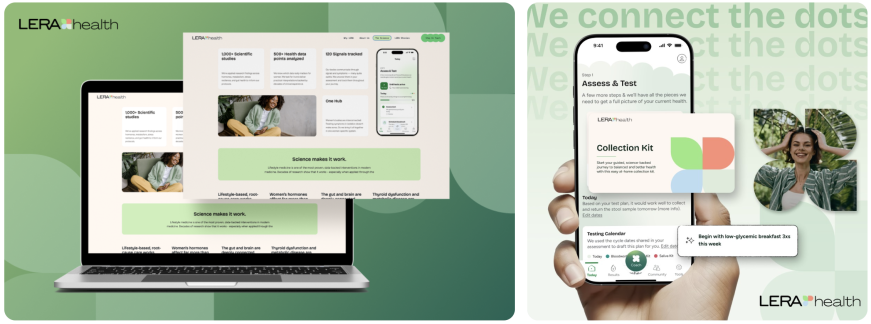
Automated outreach is a compliance surface. These four controls keep it safe and accountable.
Messages run under a BAA on HIPAA-ready infrastructure; content is minimized so identifiers aren't exposed on unsecured channels.
Clinical replies and anything urgent route to staff; sensitive campaigns can require approval before the first send.
Each message links to the triggering event, consent state, and template behind it, so any outreach can be justified.
Every send, delivery receipt, reply, and opt-out is time-stamped and stored as a defensible consent record.
Tell us your EHR and the journeys to automate. We'll return an integration scope and a rollout plan starting with reminders.
contact@agnotic.com
Partnerships
contact@agnotic.com