

Challenge
The production code drifts from the validated algorithm during a rewrite.
Agnotic approach
The algorithm is packaged unchanged and must reproduce your reference outputs before each release.


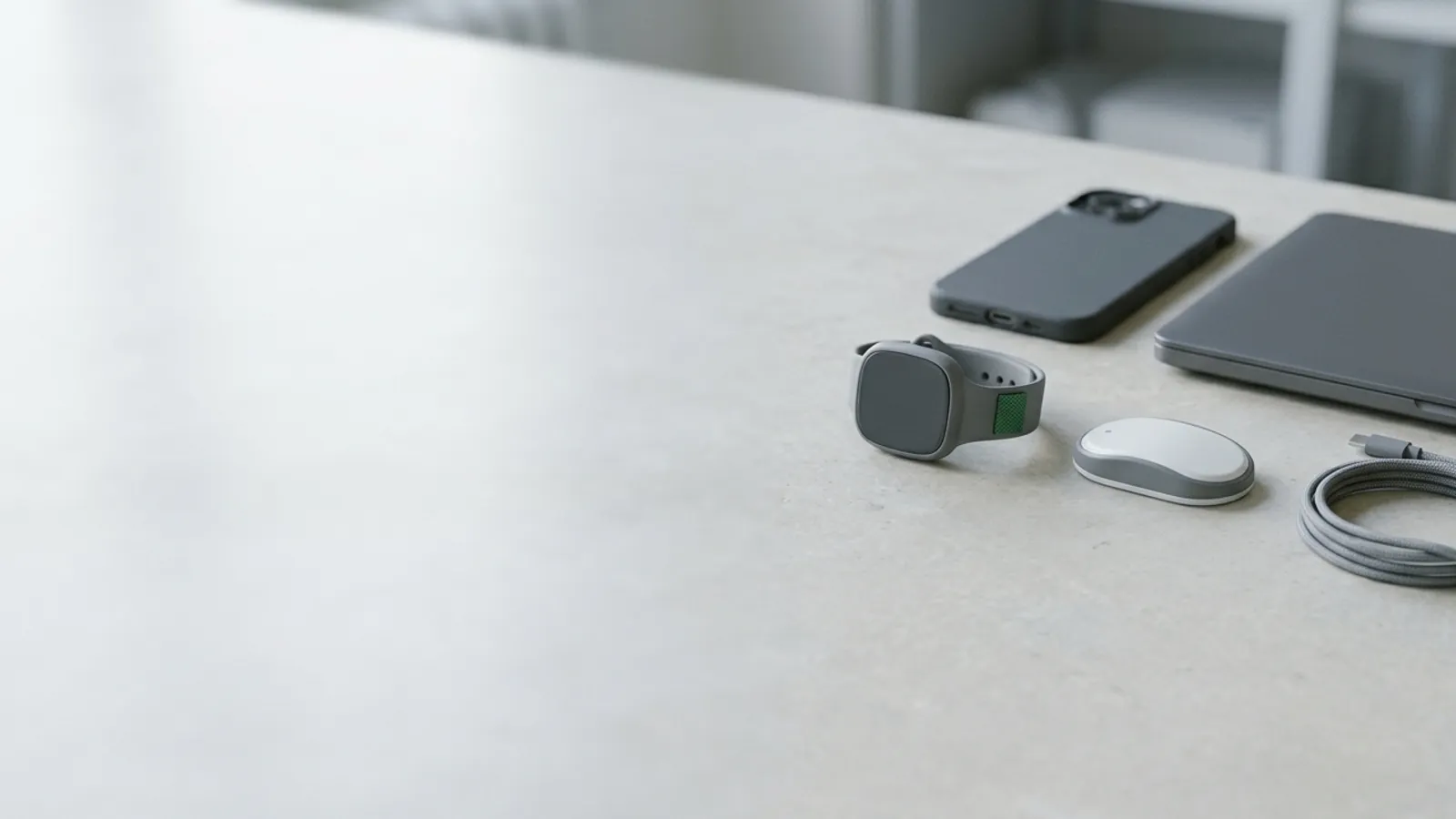
For digital health and life sciences teams whose science is done and whose platform is not. Agnotic Technologies builds the software around your validated algorithm: sensor ingestion, provenance, trial-grade records, a patient app and dashboards, with the algorithm kept exactly as you validated it.
Trusted by global innovators








From validated science to a platform
Yes. A digital biomarker platform built around a validated algorithm treats that algorithm as a locked, versioned component and builds everything else around it: wearable and sensor ingestion, data provenance, the patient app, clinician and sponsor dashboards, audit trails and data export. Agnotic Technologies wraps your algorithm without changing it, records which version produced every result and never retrains or tunes it outside your own change process. Raw sensor data, the algorithm version and each output stay linked, so any biomarker value can be traced back to the readings, device and firmware it came from.
We build the platform as a service for your team, and you own the code. Your scientists keep ownership of the algorithm and its validation; we own the engineering around it and document it so your quality and regulatory teams can review every part.
We package the algorithm exactly as your team delivers it, give it a fixed version and an input and output contract, and run it behind a service that rejects data outside its validated conditions. A checksum confirms the running code matches the released version.
Changing the algorithm goes through your change process, not ours. A new version arrives from your scientists, runs side by side with the old one on reference data, and goes live only when your team approves it. Results always state which version produced them.
Yes. For trial use we build the records to the 21 CFR Part 11 controls: unique user log-ins, role-based access, electronic signatures where your process needs them and a time-stamped audit trail of every entry and change.
Sensor data is written once to a durable data store, with its device, firmware, timestamps and algorithm version, and every later step reads from it. Blinding rules decide what participants and site staff see. Your validation of the system follows your quality process; we supply the specifications, test evidence and traceability it needs, and data can flow to your clinical trial management and data management systems.
Any device that can share its data: consumer and medical-grade wearables, Bluetooth sensors, connected scales, spirometers and phone sensors. We connect through the maker's cloud API, a health data platform or a direct Bluetooth link from the patient app, whichever keeps the raw data your algorithm needs.
Device model and firmware are recorded with every reading, because a firmware update can change what the algorithm sees. Our wearable integration work covers the device connections in more depth.
Engineering documentation: software requirements, architecture, risk-related design decisions, test plans and results, traceability from requirement to test, and release records for each version. Your regulatory team decides the strategy and owns any FDA submission; we make sure the software evidence it needs exists and is easy to review.
If the platform's software functions may be a medical device, see our page on FDA software as a medical device for how that shapes the engineering, and plan the documentation from the first release.
Architecture
The components of a typical build, what each one does and the technology we usually choose. The stack follows your hosting, data and regulatory needs.
| Component | Purpose | Typical tech |
|---|---|---|
| Device ingestion | Collect raw sensor data from wearables, phones and connected devices | Maker cloud APIs, Bluetooth Low Energy in the app, message queues |
| Raw data store | Keep every reading once, with device, firmware and timestamps | Write-once object storage, time-series database |
| Algorithm service | Run your locked algorithm and record the version for each result | Containerized model service, versioned releases, checksums |
| Provenance and audit | Link each output to its inputs and log every entry and change | Lineage records, append-only audit log, electronic signatures |
| Patient app | Pair devices, collect tasks and diaries, and show what the protocol allows | React Native or native iOS and Android, offline sync |
| Dashboards | Clinician, site and sponsor views with blinding by role | Web app, role-based access, scheduled reports |
| Export and interfaces | Send results to EHRs, EDC and analysis systems | HL7 FHIR R4 Observation, CSV and SAS-ready exports, REST APIs |
Hosting is in your cloud account or ours under a business associate agreement. Raw data, results and audit trails stay in storage you control.
Failure points
Problems we design out between a validated algorithm and a platform people rely on.
Challenge
The production code drifts from the validated algorithm during a rewrite.
Agnotic approach
The algorithm is packaged unchanged and must reproduce your reference outputs before each release.
Challenge
A wearable firmware update quietly changes the signal.
Agnotic approach
Firmware is recorded with every reading, and new versions are flagged for your team to assess.
Challenge
Nobody can show which raw data produced a reported value.
Agnotic approach
Each output links to its inputs, device, firmware and algorithm version.
Challenge
Low wear time or gaps produce scores that look valid.
Agnotic approach
Inputs outside the validated conditions are flagged and not scored.
Challenge
Trial data is edited without a trace.
Agnotic approach
An append-only, time-stamped audit trail records every change, with the old value kept.
Challenge
Participants see results the protocol meant to keep blind.
Agnotic approach
Display rules by role and study arm decide what the app and dashboards show.
A biomarker platform takes data from devices and hands results to clinical and research systems.
Device maker APIs, health data platforms and Bluetooth devices paired in the patient app.
Results sent to Epic, Oracle Health (Cerner) and athenahealth as HL7 FHIR R4 resources where your organization has access.
Results and source data references sent to the electronic data capture and trial management systems a study uses.
Exports for statisticians and data scientists, with the algorithm version on every row.
Single sign-on for staff and consent records that control what data is collected.
Delivered by your team as code or a model file, run unchanged as a versioned service.
Compliance as engineering
Engineering decisions we make from the first release, not certifications.
Scope
We do not publish prices. These are the drivers we size on the scoping call.
How many device types, how raw the data is and how often it arrives.
The language and form the algorithm comes in, and how heavy it is to run.
Part 11 controls, blinding, electronic signatures and validation evidence.
iOS, Android or both, device pairing, tasks and diaries, and languages.
Clinician, site and sponsor views, and who may see what.
EHR, EDC and analysis exports, and the standards each one uses.
We start from your algorithm, its reference data and the study or clinical use it is for.
We go through the algorithm, the devices, the intended use and your quality and regulatory process.
ScopeThe algorithm is packaged unchanged and shown to reproduce your reference outputs.
LockDevice ingestion, raw data store, algorithm service, audit trail and one dashboard.
BuildThe patient app, blinding by role and the EHR or EDC exports the study needs.
ExtendSpecifications and test evidence for your validation, then support and new algorithm versions through your approval.
RunWho it is for
Teams with validated science that now needs to run every day.
Founders with a validated biomarker who need a platform for pilots, studies and customers.
Clinical teams using a digital endpoint in trials and needing trial-grade records.
Research groups moving a published algorithm into a study or clinical service.
CROs running remote data collection across several sponsors and studies.
Teams adding a software biomarker to a sensor they already make.
FDA guidance and regulations behind device data, source data and audit trails, each linked to its primary source.
FDA's December 2023 guidance on digital health technologies for remote data acquisition defines verification as confirming that the parameter a DHT measures, such as acceleration, temperature or pressure, is measured accurately and precisely, and validation as confirming that the DHT appropriately assesses the clinical event or characteristic in the proposed participant population.
Source: FDA, Digital Health Technologies for Remote Data Acquisition in Clinical Investigations, section IV.CFor data collected directly from trial participants through DHTs, the same FDA guidance says FDA considers the electronic data in the first durable electronic data repository to which the data are transferred to be the source data.
Source: FDA, Digital Health Technologies for Remote Data Acquisition in Clinical Investigations, section IV.GThe FDA guidance recommends that sponsors keep a record of the timing and nature of any updates to each DHT during a clinical investigation, and make sure an updated DHT remains fit-for-purpose so that its measurements are not affected.
Source: FDA, Digital Health Technologies for Remote Data Acquisition in Clinical Investigations, section IV.H.421 CFR 11.10(e) requires closed electronic record systems to use secure, computer-generated, time-stamped audit trails that record the date and time of operator entries and actions that create, modify or delete records, and changes must not obscure previously recorded information.
Source: 21 CFR 11.10 (eCFR)
Health Insurance Portability and Accountability Act
Protect PHI with privacy-first architecture, encrypted storage and transmission, strict access controls, and traceable audit logs.

General Data Protection Regulation
Implement lawful consent flows, data minimization, retention controls, and secure processing for sensitive health data.

Fast Healthcare Interoperability Resources
Enable standardized health data exchange across apps, care teams, and systems through standards-based FHIR APIs.

Health Level Seven International
Support enterprise-grade interoperability with HL7-based integrations for records, events, and clinical messaging workflows.

Health Information Trust Alliance
Align security programs to healthcare-specific control and risk management practices trusted by providers and ecosystem partners.

Health Information Technology for Economic and Clinical Health Act
Design with breach notification readiness, digital record safeguards, and operational controls that support regulated care programs.

FDA Software as a Medical Device
Plan software quality, traceability, and documentation pathways for products that may require SaMD review and submission.

Medical Device Regulation (European Union)
Prepare EU market-ready processes for risk classification, evidence tracking, and lifecycle governance under MDR expectations.

Substance Abuse and Mental Health Services Administration
Apply confidentiality controls and consent-aware sharing models for behavioral and mental health data experiences.