Medical & nursing schools
On-demand history-taking and reasoning practice beyond scheduled SP sessions.


A simulation agent that plays a synthetic patient so learners can practice history-taking, differential reasoning, and communication as many times as they need — safe, repeatable, non-clinical, built on synthetic data with no real PHI.
Trusted by global innovators











Learning clinical reasoning takes repetition, but standardized-patient sessions are costly to staff, hard to schedule, and impossible to run on demand. This agent supplies those reps: it plays a synthetic patient — a consistent case with history, symptoms, and personality — that a learner can interview and reason about. It's explicitly educational and non-clinical: it never touches a real patient or real PHI, and it doesn't give clinical advice. After each session it scores the learner against a rubric and explains what a strong workup would have covered.
Synthetic case data drives a patient-simulation agent and a separate assessment agent — structured feedback, no real PHI in the loop.
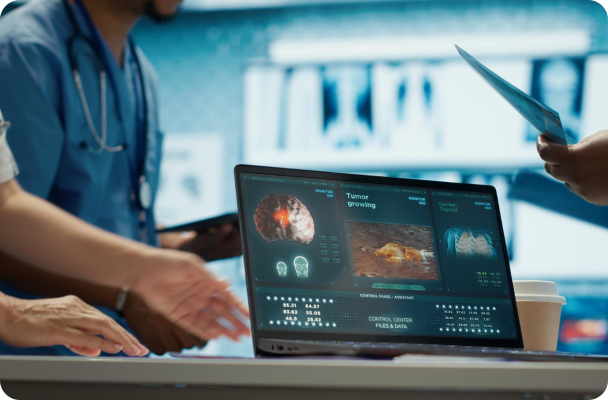
Education and simulation built on synthetic patients — repeatable practice with rubric-based feedback and hard non-clinical guardrails.
A consistent virtual patient with a defined history, presentation, and affect that responds in character — the same case, runnable as many times as needed.
Learners rehearse open questioning, difficult disclosures, and shared decision-making, with the agent reacting realistically to tone and completeness.
Every case is generated or curated synthetic data. No real patient records and no PHI enter the system, so practice carries zero patient-privacy risk.
A separate assessment agent scores each session against an educator-defined rubric and returns structured, explainable feedback, staying strictly non-clinical.
Who runs it
On-demand history-taking and reasoning practice beyond scheduled SP sessions.
Residents rehearse difficult disclosures and complex cases repeatedly, safely.
Learners drill exam-style stations with rubric feedback before high-stakes assessments.
Practicing clinicians refresh communication and reasoning through simulated encounters.
Expected impact, not guarantees — depends on case design and how programs integrate the agent.

Health Insurance Portability and Accountability Act
Protect PHI with privacy-first architecture, encrypted storage and transmission, strict access controls, and traceable audit logs.

General Data Protection Regulation
Implement lawful consent flows, data minimization, retention controls, and secure processing for sensitive health data.

Fast Healthcare Interoperability Resources
Enable standardized health data exchange across apps, care teams, and systems through robust FHIR-ready APIs.

Health Level Seven International
Support enterprise-grade interoperability with HL7-based integrations for records, events, and clinical messaging workflows.

Health Information Trust Alliance
Align security programs to healthcare-specific control and risk management practices trusted by providers and ecosystem partners.

Health Information Technology for Economic and Clinical Health Act
Design with breach notification readiness, digital record safeguards, and operational controls that support regulated care programs.

FDA Software as a Medical Device
Plan software quality, traceability, and documentation pathways for products that may require SaMD review and submission.

Medical Device Regulation (European Union)
Prepare EU market-ready processes for risk classification, evidence tracking, and lifecycle governance under MDR expectations.

Substance Abuse and Mental Health Services Administration
Apply confidentiality controls and consent-aware sharing models for behavioral and mental health data experiences.
Standards we build against
Load a synthetic case, run the encounter under guardrails, assess against a rubric, and update the learner's record.
An educator selects or generates a synthetic case with defined history, findings, and learning objectives. No real PHI is involved.
The learner interviews the synthetic patient; the agent responds in character while non-clinical guardrails keep it educational and block real medical advice.
An assessment agent scores the session against the educator's rubric — thoroughness, reasoning, communication — with what a strong workup would have covered.
Scores, feedback, and progress write back to the LMS, so educators track competency over time and learners see their growth.
Related proof of compliant, AI-assisted product delivery — not this exact agent. For Lera Health we built engaging, guardrailed AI experiences over health content, the craft a simulation-and-assessment agent depends on.
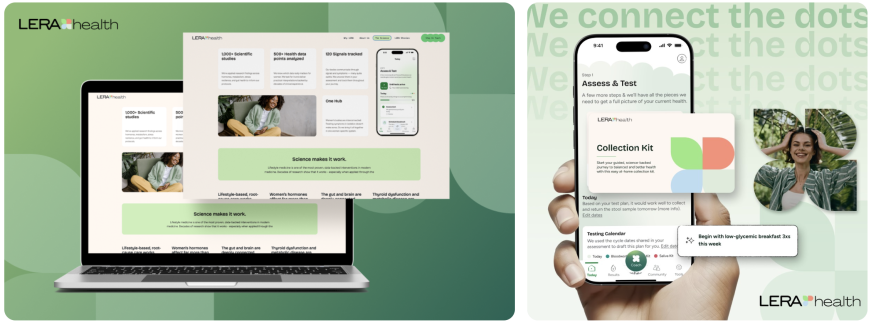
A training agent earns trust by never touching real patients and never pretending to be a clinical tool.
There is no PHI to handle — every case is synthetic. Learner data is limited to performance records, kept inside your training platform's boundary.
Educators author the cases and rubrics and review progress. The agent supports instruction; faculty own assessment standards and sign-off.
Feedback is tied to the rubric — each score comes with the reasoning and what a strong response would have included.
The agent is clearly labeled educational, refuses real medical advice, and redirects if used as a live clinical tool.
Tell us your curriculum and competencies. We'll design synthetic cases, rubrics, and a non-clinical simulation agent that integrates with your LMS — and prove it with a cohort pilot.
contact@agnotic.com
Partnerships
contact@agnotic.com